
Here is the question in its plainest form: does restoration add value, enough to get back what you spent? Usually the car is worth more after the work. Usually it is not worth more by the amount of the invoices. Those are two different sentences, and most sellers who lose money on a restoration lost it in the gap between them.
Market & Values
8 min read
Does a Restoration Add Value? Cost vs Sale Price
Does restoration add value? Where the money goes, what buyers actually credit, when a restoration pays and how to decide before you spend.
This article walks through why that gap exists, where the money goes on a typical job, the cases where a restoration does pay, and how to decide before you cut the next piece of metal. Setting the actual asking price from comps and condition tiers has more on this in the main guide. Here we stay on the cost side of the ledger.
Why the invoices rarely come back
Start with how a buyer prices a car. He looks at what similar cars sold for in the same condition tier. He does not look at your receipts first. The receipts help him believe the condition, but the comps set the ceiling. If finished #2 examples of your model trade at a certain number, that is roughly the most a buyer will pay for yours, whether you spent half that or twice that getting there.
Now look at what a restoration costs. Labor is the big line. A proper body-off job on a common American car can run well past a thousand shop hours. Writing for Hagerty, Colin Comer recalls that the old rule of thumb for a high-end 1960s muscle car restoration was 1,000 hours of labor plus rust repair, and says that today the number is easily doubled. Shop rates for this kind of work commonly sit somewhere around $85 to $150 an hour depending on region and shop, with published averages near $125 and top concours shops charging more. Do that multiplication before you do anything else. On a lot of mid-market cars, the labor alone outruns the finished value.
Then there is the hidden part of the work. Rust repair is the clearest example. Cut out a rotten quarter panel and you find the inner wheelhouse is gone too, and the trunk drop-off, and the bottom of the rear window channel. Every one of those repairs is real and necessary. Not one of them shows in a photo of the finished car. The buyer pays for a straight, solid body. He does not pay extra for the forty hours it took to get there.
Where the money goes, and how much of it a buyer sees
Break the job into stages and the pattern gets clear. The figures below are our rough ranges for a professional shop on a typical American classic, cross-checked against published shop and lender cost guides, not quotes. Your car, your region and your shop will move them, sometimes a lot, and a rusty shell at today's labor rates can blow past the top of any range.
| Stage | Rough cost range | How much a buyer gives you credit for |
|---|---|---|
| Teardown, media blast, metal repair | $10,000 to $40,000+ | Low. He sees a solid body, not the hours. |
| Body and paint | $10,000 to $30,000+ | High, if the panel gaps and finish are right. Bad paint costs you twice. |
| Engine and drivetrain rebuild | $3,000 to $15,000+ | Medium. More if the engine is original and documented. |
| Chassis, suspension, brakes | $3,000 to $10,000 | Low to medium. Expected on a restored car. |
| Interior and trim | $5,000 to $15,000 | High. Buyers sit in it on day one. |
| Chrome, brightwork, wiring, final assembly | $5,000 to $20,000 | Medium. Small parts add up fast and show only when they're missing. |
Read the right-hand column, not the middle one. The stages a buyer can see and touch, paint, interior, brightwork, get the most credit. The stages that hold the car together get the least, even though they cost the most and matter the most. That is not fair. It is just how the market reads a car.
When a restoration does pay
There are cases where the numbers work. They share one thing: the gap between a rough car and a finished car on that model is wider than the cost of closing it.
High-value cars with a deep tier gap. On blue-chip models, the difference between a #3 and a #2 can be large enough to cover a full professional job and leave room over. Correct restorations on documented, high-option cars are where this happens most.
Owner labor. If you do the metal, the assembly and the wiring yourself, you take the biggest line off the invoice. You still pay for parts, paint materials, machine work and the jobs you can't do in a home garage. The market doesn't pay you for your hours, but it doesn't charge you for them either.
A rising market. If values on your model climb during the two or three years the car is apart, the gap can close by itself. That's a bet, not a plan. I wouldn't start a job on it.
Correctness. A restoration to factory specification holds value better than one that wanders off it. Wrong paint codes, modern upholstery patterns and reproduction parts where original was available all cost you when the car is judged by someone who knows. If you're going to spend, spend toward correct.
The reverse cases lose money every time. A full professional job on a common driver-grade model. A custom build priced like a restoration. A restoration that stops at 80 percent, which is the most expensive place to stop, because the buyer prices it like a project and you paid for most of a finished car.
"Price the finished car first, then price the job, then subtract. If the answer is negative, you're building it for yourself. That's fine. Just know it before you cut anything."
Ray Delgado
Selling a restored car without giving the work away
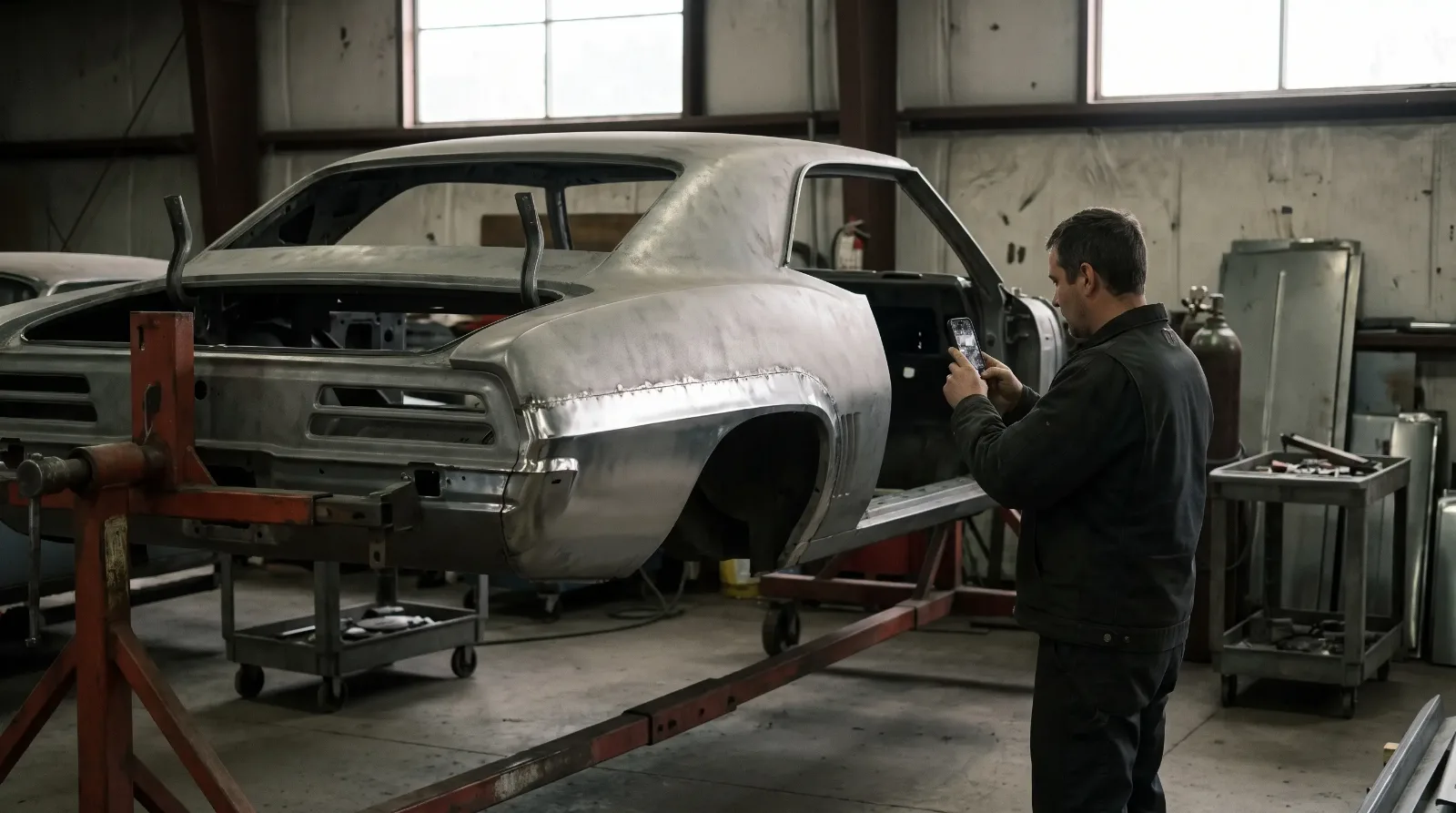
You can't make a buyer pay for every hour. You can make sure he pays for the ones he can verify. The way to do that is documentation, built as you go, not pieced together the week you list.
Photograph each stage. The bare shell after blasting. Every patch panel before and after welding. The frame on the jig. The engine on the stand with the machinist's tags. A buyer looking at a finished car has to take your word that the metal under the paint is right. A buyer looking at a sequenced photo record doesn't.
Keep every receipt, sorted by stage, with the shop names and dates. Keep the paint code and the materials list. If a known shop did the work, say so, and say what they did, because a recognized name on the invoice is worth something to a buyer.
One more thing about the numbers on paper. After a restoration, many owners raise their insurance to an agreed value that reflects the finished car. That figure is a coverage number, not a sale price, and buyers treat it that way. Why the two differ, and why you shouldn't lead your listing with the policy figure, that's covered separately.
Deciding before you spend the next dollar
If the car is already apart, the question changes. Money you've spent is gone either way, so it shouldn't drive the decision. The only question is whether the next dollar brings back more than a dollar in sale price, or whether it brings you a car you want to keep. Finish a stage that a buyer can see and trust, like a straight body in primer with documented metal work, and stop there if the rest won't pay. A clean, documented stopping point sells better than a half-done everything.
If the car still runs and drives, think hard about the order of things. Sometimes the right move is to fix what's broken, sort the obvious cosmetic faults, and sell it as an honest driver to someone who wants to restore it on his own terms. Where and how to sell it once you've decided is laid out in the main overview.
A restoration adds value. It almost never adds all of it back. Measure the finished car first, measure the job second, and decide with both numbers in front of you.
Sources and notes
- Hagerty: Before you dive into a restoration, read this (Colin Comer)
- Hagerty: What does it cost to restore my classic car?
- Hillbank: how much does it cost to restore a classic car (labor rates, hours, stage costs)
- Hagerty: What does a car's "condition" really look like?
- Hagerty: how condition affects value
Stage cost ranges are our estimates for a typical American classic, not quotes. Get written estimates from shops near you.
Related Reading
#classic car restoration cost
#restoration documentation
#selling a classic car
#condition ratings
#does restoration add value
#restoration vs sale price

About the author
Ray Delgado
Metal fabricator and chassis builder who has spent 25 years turning flat sheet and mild steel into hot rods, gassers and restomod underpinnings.
More in Market & Values
Comments (1)
F
Frank DeLuca
5 days ago
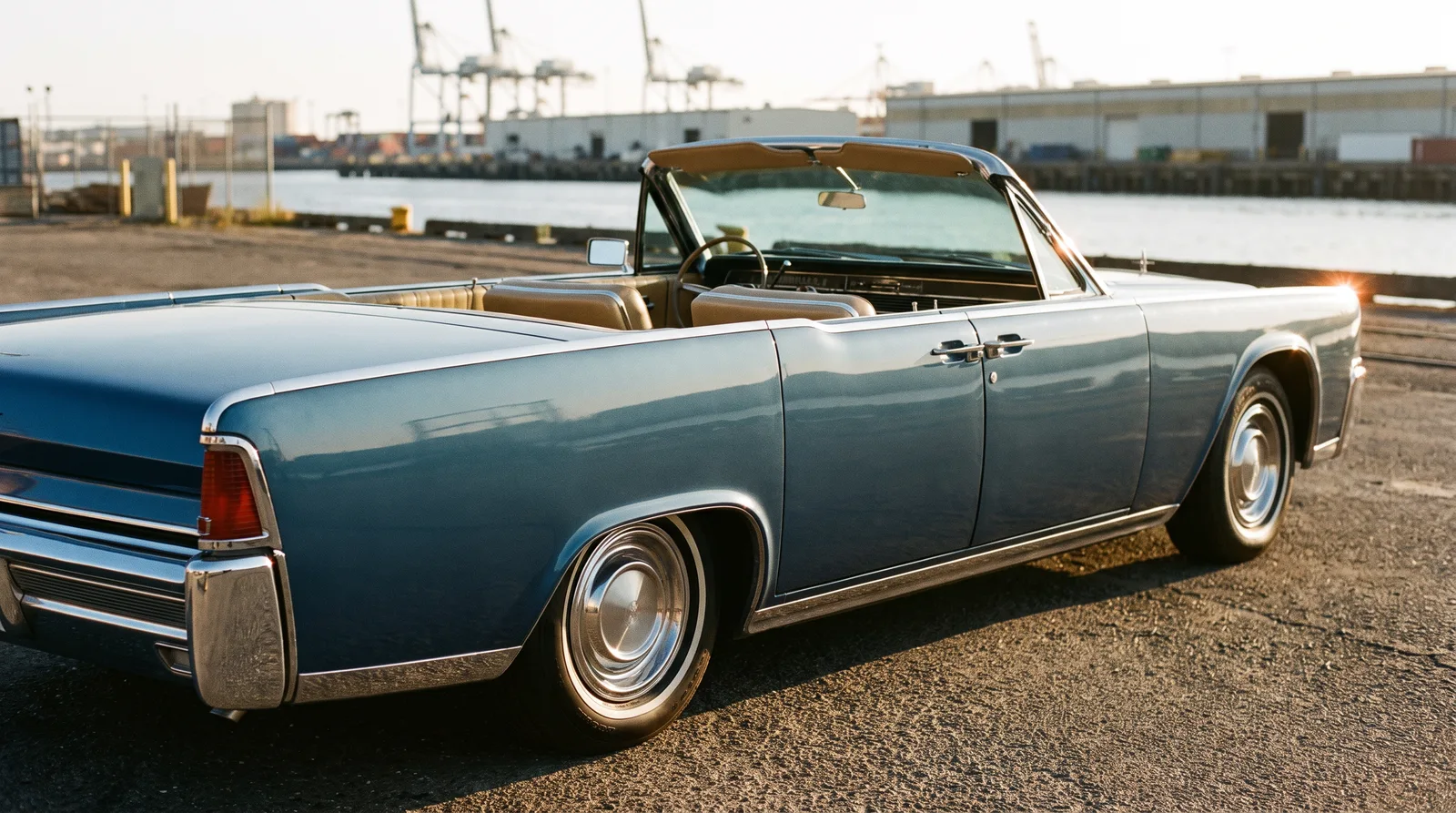
So the 80 percent car is the Worst place to stop. My Lincoln is sitting at maybe 30 percent and needs Everything. Do I sell it now as a project or push through?
Frank, at 30 percent you have not spent the expensive money yet, so you still have a clean decision. Price a finished #2 Lincoln, price the job from where it sits, subtract. If the answer is negative and you would not drive it finished, sell it as a project now. If it's the car you're after, finish it knowing the number. Just do not stop at 80.