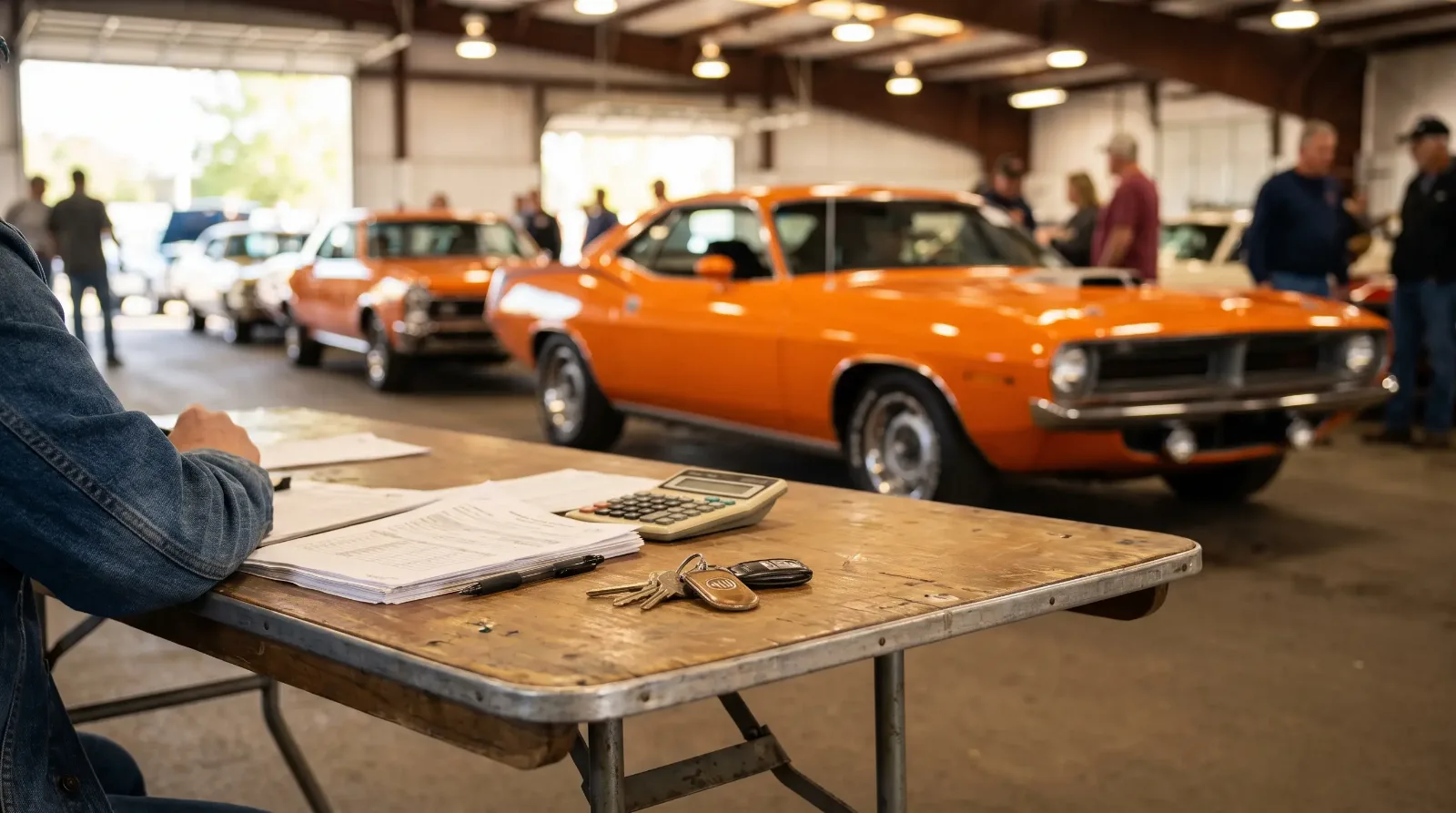
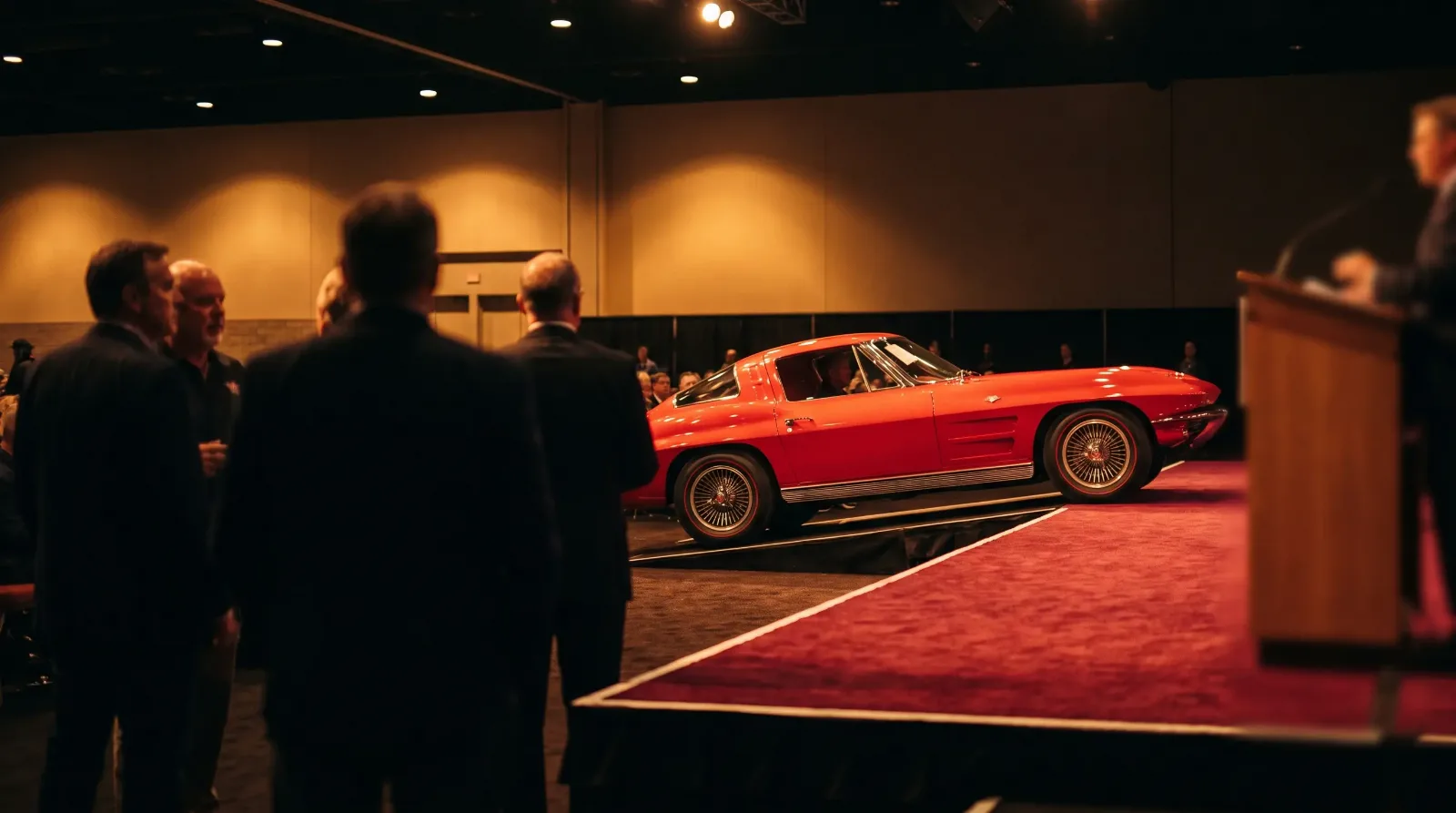
Most owners who consign a car to a live auction spend the weeks beforehand thinking about the hammer price. The number that decides whether the sale was a good one arrives later, on the settlement statement, after the entry fee, the seller's commission, the trucking bill and the money spent getting the car ready have all come off the top. On a car that hammers at $50,000, those deductions can pass $7,000. If the reserve is not met, some of them are still owed.
Search "sell car at auction" and you will find plenty of auction-house marketing about record results and prime-time television. What you will not find is a seller's ledger. That is what this piece builds, for the live houses only: the tents, the ballrooms and the televised weekends. If you have not yet settled whether an auction is the right method for your car at all, start here and come back once the answer is yes.
What a live auction house charges the seller
Live houses take money from you in up to three ways. The entry fee, also called a consignment or listing fee, is paid up front and is nonrefundable whether the car sells or not. The seller's commission is a percentage of the hammer price, charged only when the car sells. The third charge lands on the buyer, not on you, but it still moves your result: the buyer's premium. Bidders who know they will owe an extra 10% stop bidding sooner, so part of that premium is effectively paid out of your hammer.
Published terms at the three houses US sellers ask about most look like this in 2026:
| House | Seller entry fee | Seller's commission | Buyer's premium |
|---|---|---|---|
| Mecum | $350 to $1,000, halved for no-reserve lots | 6% at no reserve, 10% with a reserve | 10% in person, 12% phone and online ($1,000 minimum) |
| Barrett-Jackson | Varies by sale and lot placement | 8% | 10% on site |
| RM Sotheby's | Marketing fee set in the consignment agreement | 10% standard on motor cars, negotiable | 12% up to $250,000, 10% above |
The Mecum line is worth reading twice. The house cuts the entry fee in half and drops its commission from 10% to 6% when you agree to sell with no reserve. That is not generosity. A no-reserve lot is a guaranteed transaction for the house, and guaranteed transactions are worth paying for. At the top of the market, seller terms tend to be negotiated car by car, so ask for yours in writing before you compare them with anyone else's.
Then there are the costs that never appear on a fee schedule. Enclosed transport to a major sale commonly runs from under $1,000 for a few hundred miles to $2,000 or more across the country. Add a detail, small mechanical fixes and insurance while the car is away.
Choosing the house, the sale and the slot
Matching the car to the room matters more than the name on the tent. A six-figure car with matching numbers and a factory paper trail belongs in front of bidders who buy that kind of car, and the catalog-driven houses with smaller, curated sales are built for it. A $35,000 driver-grade muscle car will usually do better at a sale where hundreds of similar cars cross the block and the bidders came specifically to buy one.
Then look at the slot. Entry fees at the big houses vary with where a lot lands on the docket (Mecum, for one, sets the fee by the assigned lot number), because a weekend afternoon in front of the television audience draws more active bidders than a weekday morning. Mecum's largest sales run for a week or more with thousands of lots (Kissimmee 2026 offered roughly 3,800), and a mid-market car on an early weekday can cross the block to a half-empty room. My read of the results is that run time explains a real share of the spread between two similar cars at the same event.
Smaller regional auction companies deserve a look for cars under about $30,000. Their fees are sometimes lower, and your car stands out on a short docket instead of disappearing into a long one. The tradeoff is a thinner bidder pool, which makes the reserve decision matter more.
Reserves on the block
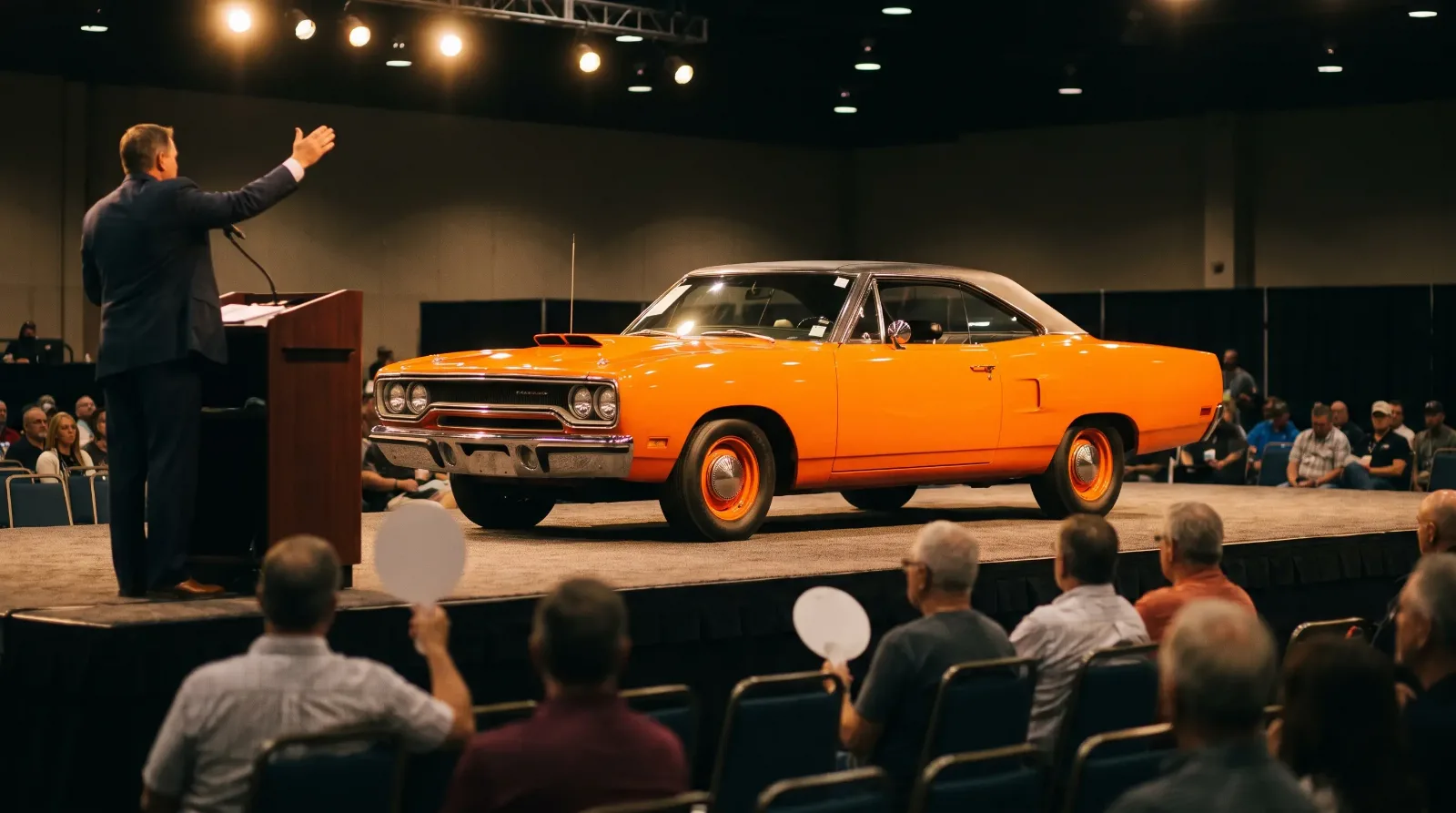
At a live house the reserve is written into your consignment contract. You can usually lower it during the sale, often with a quick word to the consignment desk while the car is on the block, but you cannot raise it. RM Sotheby's writes exactly that into its consignor conditions. If bidding stalls below the reserve, the auctioneer declares a no-sale and the high bid becomes part of the record. Many houses keep working the deal after the car leaves the block, bringing the high bidder and the seller together to try to close the gap.
Run the numbers on one hypothetical car at Mecum's published rates. Say it hammers at $50,000. With a reserve, an entry fee of $600, the 10% commission ($5,000), transport at $1,200 and prep at $1,000 leave you about $42,200. Offered at no reserve with the same hammer, the entry fee halves to $300 and the commission falls to $3,000, which leaves about $44,500. That $2,300 difference is what the house pays you to accept the risk of a soft room. Whether that is a good trade depends on how deep the buyer pool is for your particular car, and the full argument for and against a no reserve auction deserves its own reading before you sign anything.
Preparing the car and the paperwork
The big sales fill their dockets well ahead. Barrett-Jackson advises sellers to start planning four to six months before an event, because the best time slots go to early consignments and the house needs time to photograph cars, write catalog descriptions and promote the docket. The description is drawn from what you tell the house, and it becomes the basis on which bidders buy. If you call the engine original and it is a replacement block, the buyer may have grounds to challenge the sale, and consignment contracts typically put responsibility for those statements on you. RM Sotheby's conditions, for one, make the consignor solely liable for what is said about a car's authenticity and condition. When in doubt, be conservative.
Bidders at a live sale get a minute or two of block time plus whatever inspection they managed in the staging area. That should shape where your preparation money goes. Fix what a bidder notices in a short walk-around under bright lights. Leave the deep work alone, because you rarely get it back on the hammer.
After the hammer falls
A sold car is not yet cash. The buyer has a set period to pay, the house collects the funds, you deliver the title if you have not already, and the house then sends you the hammer price minus its commission and any outstanding fees. Settlement commonly takes a few weeks: RM Sotheby's, for example, aims to pay within 21 business days after the buyer's funds clear, and your consignment contract states its own timeline. Read that clause before you sign, along with the one covering what happens if a buyer fails to pay.
A no-sale leaves you with three options. You can accept a negotiated deal with the high bidder after the block, which is often the quickest exit. You can re-consign to the next sale, and since entry fees are charged per sale, expect to pay another one unless the house agrees otherwise. Or you can truck it home and sell it another way, knowing the published high bid will follow it.
"The hammer price is the headline. The settlement statement is the story. I have watched sellers celebrate a number on the screen that netted them less than the private offer they turned down in the spring."
— David Mercer
My view: a live auction makes sense for a documented car with plenty of recent comparable sales, usually above about $40,000, where the fixed costs shrink to a small share of the result. Below that level, entry fees, trucking and prep take a bigger bite, and a single quiet afternoon can cost more than the commission. Build the ledger before you fill out the consignment form, and the decision usually makes itself.
Sources and notes
- RM Sotheby’s, Consignor’s Conditions of Business (Arizona 2025): 10% seller’s commission on motor cars, reserves may be lowered but not raised, payout timing, buyer’s premium
- CLASSIC.com, auction fees and prices: Mecum, Barrett-Jackson and RM Sotheby’s seller and buyer fees
- Buick Club of America, consigning a car with Mecum: entry fee based on assigned lot number, Bid Goes On
- Street Muscle, what happens to cars that don’t sell at auction (high-bid sticker, post-block negotiation)
- FreightWaves, car shipping costs in 2026: enclosed transport by distance
- ClassicCars.com Journal, Arizona auction week report listing high bids on no-sales