
The email arrives at 2 a.m. your time, written in careful English, from someone in Hamburg or Perth or Rotterdam who has studied every photo in your listing. They ask about the VIN, the paint code and a cold-start video, then whether you would accept an international wire. A lot of sellers get nervous here, and some of that is justified. A cross-border sale has more failure modes than a local one. Most of them are predictable, though, and a predictable failure mode is a manageable one.
Market & Values
9 min read
Selling a Classic Car to an Overseas Buyer
How to sell a classic car to an overseas buyer: safe international payment, US export paperwork, shipping, inspections and the contract.
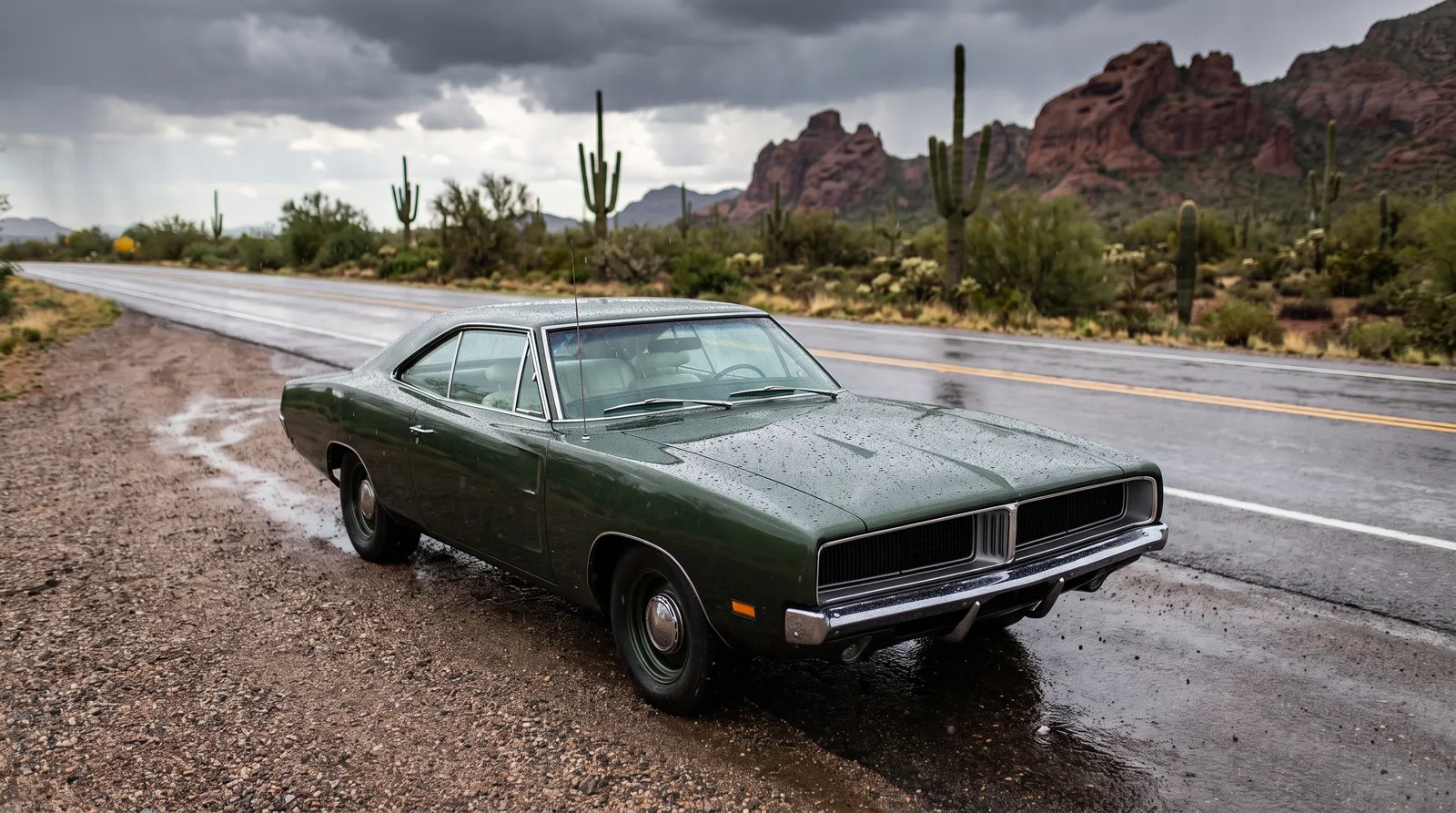
If you decide to sell a classic car overseas, the sale itself works like any other private sale. You still set a price, answer questions and transfer the title. What changes is the sequence: how money moves, what US Customs wants before the car can leave, who arranges the ship, and what the contract says when something goes wrong 5,000 miles away. If you haven't settled on the best way to sell a classic car in general, start there. This piece is about the international version of a private sale, step by step.
Why foreign buyers are looking at US cars
The US has the largest stock of old American cars in the world, and plenty of European ones that were sold new here and spent their lives in dry climates. For a buyer in Europe or Australia, a rust-free California or Arizona car can be worth the cost of shipping, because the equivalent car at home may need new floors and sills.
Import rules on the buyer's side also shape demand. Many countries treat old vehicles differently from new ones. The European Union can classify qualifying vehicles at least 30 years old in original condition as collectors' items for customs purposes, which removes the usual 10 percent import duty, and several member states also charge a lower import VAT rate on them. The United Kingdom taxes qualifying historic vehicles on a reduced import value, which works out to an effective VAT rate of 5 percent instead of 20. Australia lets in vehicles at least 25 years old through a concessional entry pathway that needs a federal import approval. None of that is your legal responsibility, but it explains why a buyer may ask detailed questions about originality: your answers can affect what they pay at their border.
Getting paid without getting scammed
This is where the risk lives, so I treat it like a protocol rather than a judgment call. The rule is simple: the car does not move, and the title is not signed over, until cleared funds are in your account and your bank confirms they are final. Everything else is detail.
| Payment method | How it works | Risk to the seller | Verdict |
|---|---|---|---|
| International wire (SWIFT) | Buyer's bank sends USD or foreign currency to your bank | Low once credited and confirmed by your bank; watch for currency conversion fees | Standard choice for a cross-border sale |
| Licensed escrow service | Buyer pays the escrow company, which releases funds after agreed conditions are met | Low if you pick the escrow company yourself and verify it independently | Good for higher values or nervous buyers |
| Cashier's or foreign check | Paper instrument deposited at your bank | High; a deposit can show as available before the check is confirmed good | Avoid |
| PayPal, Venmo, Zelle | App transfer | PayPal and Venmo purchase protection exclude motor vehicles; Zelle has no purchase protection | Not for the car itself |
The FTC warns that money showing up in your account doesn't mean a check is good, and a fake can take weeks to surface. That is why paper instruments have no place in an international sale. With a wire, ask your bank how it confirms an incoming international transfer as final, and wait for that confirmation rather than the first balance update.
The common scams follow a few patterns. A buyer "accidentally" sends more than the price and asks you to wire back the difference. A buyer insists on an escrow site you've never heard of, which turns out to be a copy of a real one. A buyer says their shipping agent will collect the car and asks you to pay the agent's fee, to be reimbursed later. Each of these breaks the core rule in a different way. If any of them shows up, stop the conversation.
Price the car in US dollars so currency risk sits with the buyer. If they want to pay in euros or pounds, first check what your bank will credit after conversion.
Export paperwork: what US Customs wants from you
A used vehicle can't simply be put on a ship. US Customs and Border Protection requires the exporter to present the vehicle and its ownership documents at the port before export. Under CBP's rules, the original Certificate of Title, or a certified copy, plus two complete copies and a document showing the VIN, must reach CBP at least 72 hours before the car is exported. Used self-propelled vehicles also need an Electronic Export Information filing through the government's Automated Export System (AES), regardless of value or destination, and that filing is also due 72 hours before export.
In practice, the buyer's freight forwarder or shipping company normally handles the filing and port presentation. Your job as the seller is to make that possible:
- Hold a clean title in your own name. If there is a lien, CBP needs a written statement from the lender expressly allowing the export, which in a private sale usually means paying the loan off and getting a release first.
- Make sure the VIN on the title matches the VIN on the car exactly.
- Sign a bill of sale that lists the buyer's full name and foreign address, the price, the date and the VIN.
- Release the original title to the buyer's forwarder only after cleared payment, and keep copies of everything.
Some states also expect you to file a notice of transfer or release of liability after a sale. California, for example, wants its Notice of Transfer and Release of Liability within 5 days. Do that on the same timeline you would for a local buyer.
Shipping, inspections and who pays for what
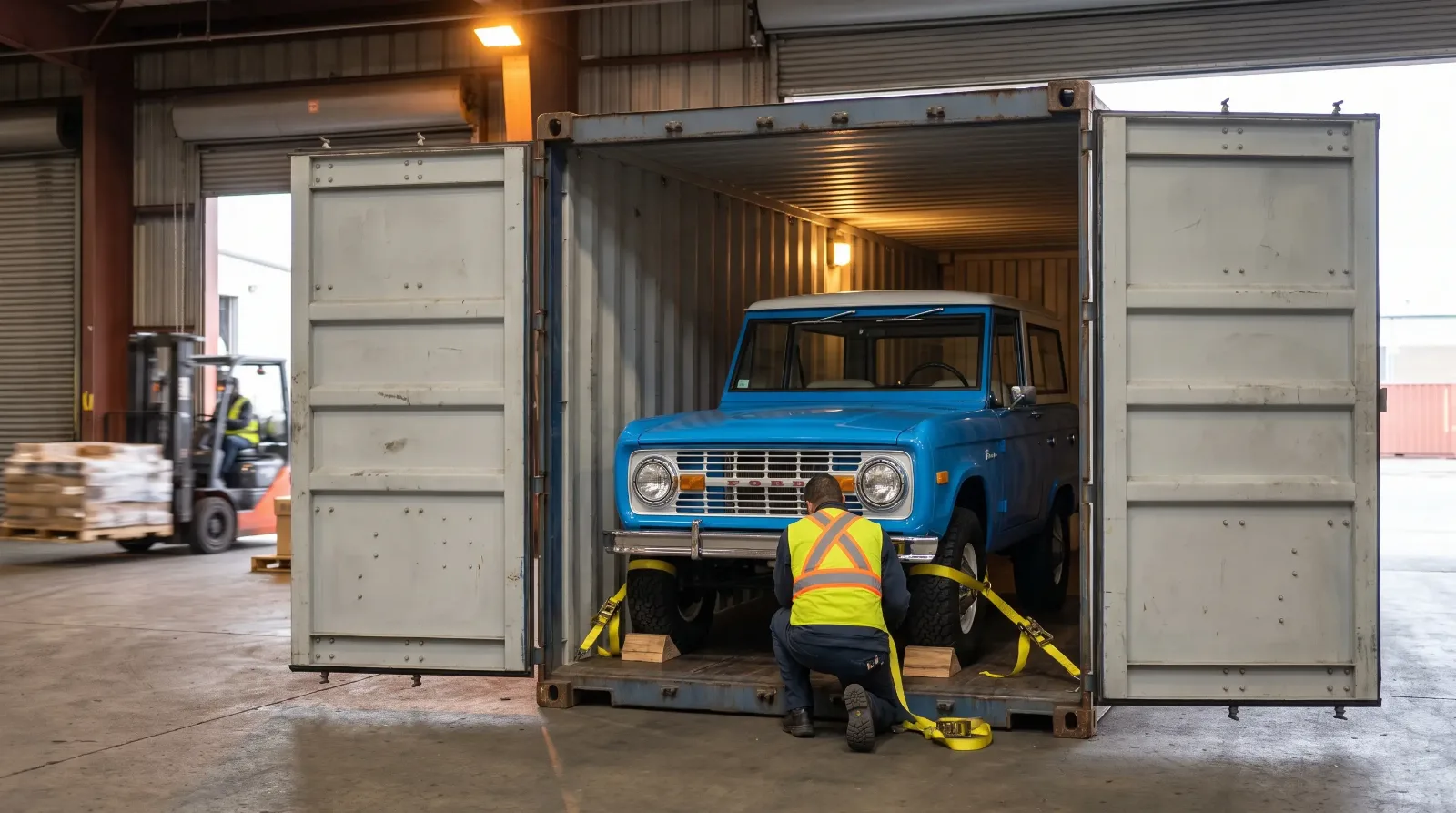
In most overseas sales the buyer arranges and pays for shipping, and the deal is effectively "ex works": the buyer takes responsibility once the car leaves your driveway on their transporter. That's the cleanest setup for a private seller. You never become the shipper, never sign a shipping contract, and never carry the car's risk on the water.
The buyer usually chooses between roll-on/roll-off, where the car is driven onto a vehicle carrier like a parking garage, and container shipping, where it is strapped inside a steel box. Container shipping generally costs more but protects the car better from weather, salt and handling, and it is the common choice for valuable classics. Neither choice is yours to pay for, but expect questions about whether the car runs and drives: roll-on/roll-off needs a car that starts, steers and brakes, so a non-runner usually has to go in a container.
A serious overseas buyer will almost always want an independent inspection before sending money. Welcome it. A third-party inspector hired by the buyer visits the car, photographs the underside, checks the VIN and gives the buyer an objective report. It costs you an afternoon. I'd also send a cold-start video, a walk-around with the VIN plate visible, and clear photos of the frame and floors without being asked. Documentation is how you replace the test drive they can't take.
"An overseas buyer can't kick the tires, so give them data instead. Every photo, every receipt, every video you send closes a gap they would otherwise fill with doubt, or with a lower offer."
Emily Chen
On your side, the costs are small but real: your bank's incoming wire fee, any currency conversion spread if you accept foreign currency, and your time with the forwarder. If you want to compare that against the fees of other routes, our breakdown of the cost of selling a classic totals each method line by line.
The contract that keeps everyone honest
A local private sale often runs on a handshake and a bill of sale. An international one deserves a short written purchase agreement, signed by both parties before any money moves. It doesn't need to be long. It needs to answer the questions that cause disputes:
- The car is sold as-is, as described and as inspected by the buyer's chosen inspector.
- Payment in full, in US dollars, by wire, cleared before the title or the car is released.
- The buyer is responsible for shipping, export filing through their forwarder, import duties, taxes and compliance in their country.
- A pickup deadline and storage terms if the forwarder is late, since your garage space has a value too.
- Which state's law governs the agreement.
For a high-value car, an hour of a lawyer's review is cheap insurance. Either way, an overseas buyer who pushes back on cleared funds before release is telling you something important about the deal. Real buyers expect this protocol, because it protects them too.
Sources and notes
- CBP: export requirements for motor vehicles (72 hours, title, lienholder)
- US Census Bureau: Foreign Trade Regulations and AES filing for used vehicles
- UK Trade Tariff: heading 9705 and the note on collectors' motor vehicles
- GOV.UK: how to value goods for import VAT, including collectors' items
- FTC: how to spot, avoid and report fake check scams
Related Reading
Have a
Classic Car
for Sale?
Reach thousands of serious classic car collectors across the US.
Sell It Here →
Are You a Classic Car Dealer?
List your full inventory and connect with targeted classic car buyers.
Join as a Dealer →
#private sale
#car shipping
#sell a classic car
#escrow
#wire transfer
#export a classic car
#international buyers

About the author
Emily Chen
Bay Area engineer with a deep focus on vintage Japanese and European performance cars. Approaches classic car research and restoration with an analytical eye.

Comments
Be the first to comment on this article.