
Most sellers compare selling methods by the headline fee. That is the wrong anchor. A 10% commission is visible, so people argue about it. The $200 a month in insurance and storage while the car sits unsold is invisible, so nobody argues about it at all, and over a long listing it can cost more than the fee they were trying to avoid. The real cost of selling a classic car is everything standing between the price a buyer pays and the amount that clears in your account. Most of it never appears on a rate card.
Market & Values
8 min read
The Hidden Costs of Every Selling Method, Totaled
One $40,000 classic run through nine selling routes, with fees, prep, transport and holding cost added up to the real net.
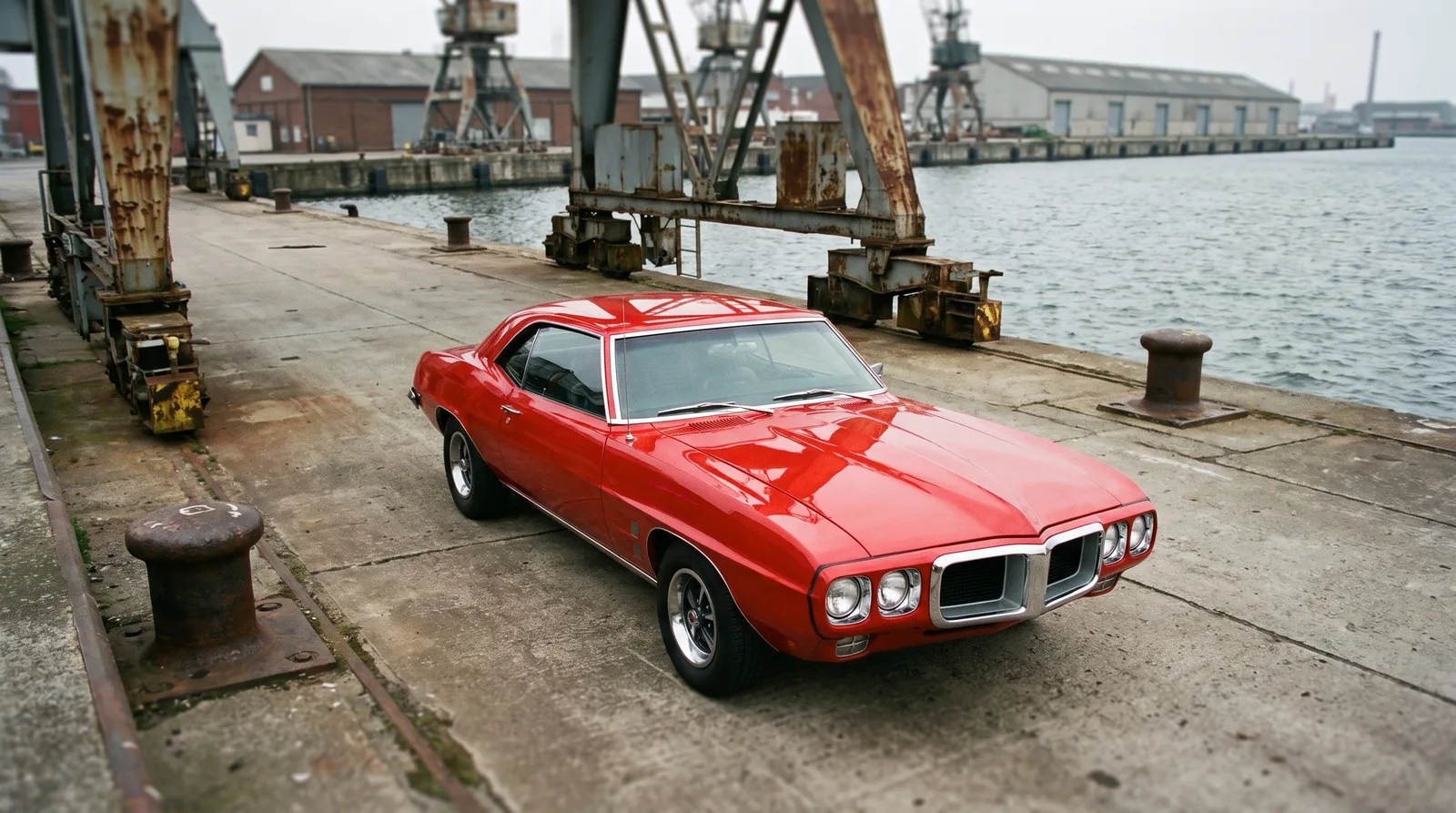
What follows is one hypothetical car run through nine outcomes, with every line item written down and the arithmetic shown. It is an illustration, not a quote. If you are still choosing between methods, start with the private sale, auction or consignment guide. This page totals what each route actually costs.
The costs that never make the rate card
The platform fee is the one cost every seller sees. It is rarely the largest. The expenses of a sale fall into five groups, and only the first is printed on anyone's website.
- Venue fees. Listing fees, insertion fees, entry fees, seller's commissions, consignment commissions.
- Preparation. A proper detail, photographs, video, sometimes a pre-sale inspection or an independent appraisal, which published fees put at roughly $200 to $500.
- Movement. Transport to an auction or a dealer, and your own travel if you go along.
- Holding cost. Insurance, storage and registration for every month the car is on the market and not sold.
- Price concession. The gap between fair private value and what the venue actually produces. In a private sale that is the negotiation. At an auction it is partly the buyer's premium, because bidders subtract it before they bid.
The fifth group moves the net most, and sellers model it least.
One car, nine outcomes, fully totaled
The subject is a #3 driver-grade car on Hagerty's condition scale, which is where the vast majority of collector cars sit. Recent comparable private sales put its fair value at $40,000. Every figure that is not a published fee is our assumption; replace each with your own. Detail: $400. Professional photographs: $300, or $600 with video for an online auction. Holding cost: $200 a month, made up of about $50 in agreed-value insurance and $150 in indoor storage. Classic car policies commonly run about $400 to $1,000 a year, and indoor storage units start around $125 a month, so both sit inside published ranges. Enclosed transport to a live auction: $1,200 each way, about what 2026 enclosed rates quote for a trip of roughly 1,000 miles. Owner travel to the event: $800. The sale prices are our estimates of where each venue tends to settle for a car like this.
| Method (illustrative) | Sale or hammer price | Venue fees | Prep, transport, travel | Holding cost | Net to seller |
|---|---|---|---|---|---|
| Facebook Marketplace, local | $37,500 | $0 | $400 (detail, own photos) | $600 (3 months) | $36,500 |
| eBay Motors, national | $39,000 | $107 ($79 insertion fee + 2.8% of a $1,000 deposit through eBay checkout) | $700 (detail, photos) | $400 (2 months) | $37,793 |
| ClassicCars.com, Regular ad | $40,000 | $149.99 | $700 | $600 (3 months) | $38,550 (rounded) |
| Flat-fee site, Featured listing | $40,000 | $99 | $700 | $600 (3 months) | $38,601 |
| Online auction | $38,500 | $100 listing fee | $1,000 (detail, photos and video) | $200 (1 month) | $37,200 |
| Live auction with reserve, sold | $36,500 | $4,150 ($500 entry + 10% commission of $3,650) | $2,400 (detail $400, transport one way $1,200, travel $800) | $200 (1 month) | $29,750 |
| Live auction with reserve, not sold | None | $500 entry | $3,600 (detail $400, transport both ways $2,400, travel $800) | $200 (1 month) | Minus $4,300, car comes home |
| Consignment dealer | $42,000 | $4,200 (10% commission) | $700 (dealer prep $300, transport $400) | $150 (insurance only, 3 months) | $36,950 |
| Dealer cash offer | $30,000 | $0 | $0 | $0 | $30,000 |
Each net is the sale price minus the three cost columns. The $36,500 live hammer assumes bidders with $40,000 all-in who hold back roughly 10% for the buyer's premium. The dealer cash offer uses the midpoint of the 20% to 30% discount we estimate dealers need for reconditioning, holding cost and margin. That range is our estimate, not a published statistic.
Reading the table line by line
Start with the private rows. The spread between Facebook Marketplace and the paid classic sites is about $2,000, and almost none of it is fees. It is price. A smaller local audience produces lower offers. eBay Motors sits between the two: a negligible fee and a national audience, but vehicle bids are non-binding, so a winner who walks away costs you another listing cycle and another month of holding.
The two paid classic listing sites differ by $51 in fees. Treat that as noise. ClassicCars.com reports a newsletter of about 180,000 subscribers, much larger than our list of 15,000+. If a larger audience shortens the sale by even one month, it saves $200 in holding cost, which outweighs the fee difference. Choose on audience, not on the $51.
The online auction row looks cheap on fees and middling on price. The buyer's premium, usually 4% to 7% with a minimum and a cap, is the reason the hammer lands below fair private value: bidders subtract it before they bid. The format earns its place with a firm deadline, not with net. How it compares with a listing site is a separate question, and the details are here.
The live auction rows are where sellers get hurt. Sold, this car nets $10,250 less than its fair private value. Unsold, the owner writes checks for $4,300 and trailers the car home. A Mecum-style event charges an entry fee of $350 to $1,000 and a seller's commission of 10% with a reserve or 6% at no reserve, and the 10% buyer's premium pushes the hammer down again. That makes live auctions a tool for cars whose documentation and rarity can pull the hammer well above private value, which a #3 driver usually cannot.
Consignment produces the highest gross price and gives most of it back. A 10% commission on $42,000 is $4,200, and consignment commissions run from about 5% to 15% or a flat fee, so your actual number could be better or worse. You are buying the absence of work: no calls, no strangers in the driveway. That has a value. Price it honestly.
"A cheap venue that produces a weak price is not cheap. The fee is the cost you can see. The concession is the cost you pay."
Marcus Feld
Holding cost and the lines outside the table
Holding cost is the fee that runs by the month, and it compounds with a bad asking price. At our $200 a month assumption, a six-month listing costs $1,200, more than any listing fee in the table. An overpriced car sits, and the eventual cut usually lands where fair value was on day one. You pay the holding cost and the discount both. Realistic time to sell, method by method, matters as much as the fee schedule, and you can read more on that separately.
Three more costs sit outside any rate card. First, closing: Pennsylvania and Ohio require a notarized seller signature on the title, a bank wire typically costs $25 to $30 to send and up to about $15 to receive, and California expects a Notice of Transfer and Release of Liability within 5 days of the sale. Second, payment risk: PayPal and Venmo purchase protection exclude motor vehicles, Zelle has none, and the FTC warns that funds showing in your account do not mean a check is good; a fake can take weeks to surface. One counterfeit cashier's check costs more than every fee in the table. Third, tax. Collectibles held longer than a year are taxed at a long-term rate of up to 28%, plus 3.8% net investment income tax for higher earners, reported on Form 8949 and Schedule D. A car bought for $25,000 and sold for a net $38,601 shows a gain of $13,601. At 28%, that is $3,808.28 in federal tax before any NIIT. A loss on personal-use property is not deductible. This is general information, not tax advice.
How to shrink the total before you list
The levers are the same for every method. Price against completed sales so the car does not sit, and put the paperwork in the listing so buyers stop discounting for uncertainty. Then pick the venue whose cost structure suits the car's condition tier.
For a driver-grade car with honest paperwork, the arithmetic in this example favors a flat-fee private listing with a realistic price: the fee is fixed, there is no commission, and the buyer pays you directly. Here that means $49, $99 or $179 once, with the listing staying up until the car sells. If that is where your own numbers point, the sell my classic car page has the three tiers side by side. If they point elsewhere, follow them. The method that nets the most is the one whose costs you counted first.
Sources and notes
- InsuranceQuotes: guide to classic car insurance and typical annual premiums
- Hagerty: Guaranteed Value coverage compared with daily driver insurance
- RecNation: vehicle storage cost guide (indoor and climate-controlled rates)
- FreightWaves: what it costs to ship a car in 2026, open and enclosed
- Bankrate: wire transfer fees at major banks
All sale prices, holding periods and the dealer discount in the worked example are illustrative assumptions, not quotes. Platform fees reflect published terms checked in October 2026.
Related Reading

Have a
Classic Car
for Sale?
Reach thousands of serious classic car collectors across the US.
Sell It Here →
Are You a Classic Car Dealer?
List your full inventory and connect with targeted classic car buyers.
Join as a Dealer →
#private sale
#consignment
#sell a classic car
#selling costs
#net proceeds
#classic car auction fees
#holding cost

About the author
Marcus Feld
Accredited collector-car appraiser who reads the market through hammer prices, condition tiers and risk.


Comments
Be the first to comment on this article.