
A photo shows a buyer what the car looks like. A video shows what it does. That's the whole case for a car walkaround video and a cold start clip, and it's a bigger deal than most sellers think. Thirty photos can't tell anyone whether the engine fires on the second crank or the fifth, whether it smokes for ten seconds or ten minutes, whether the lifters tick and then quiet down. Two minutes of honest footage can.
Market & Values
8 min read
Walkaround and Cold-Start Videos: Filming Your Classic
How to film a car walkaround video and a cold start that buyers trust: one take, tailpipe in frame, real engine sound, flaws on camera.
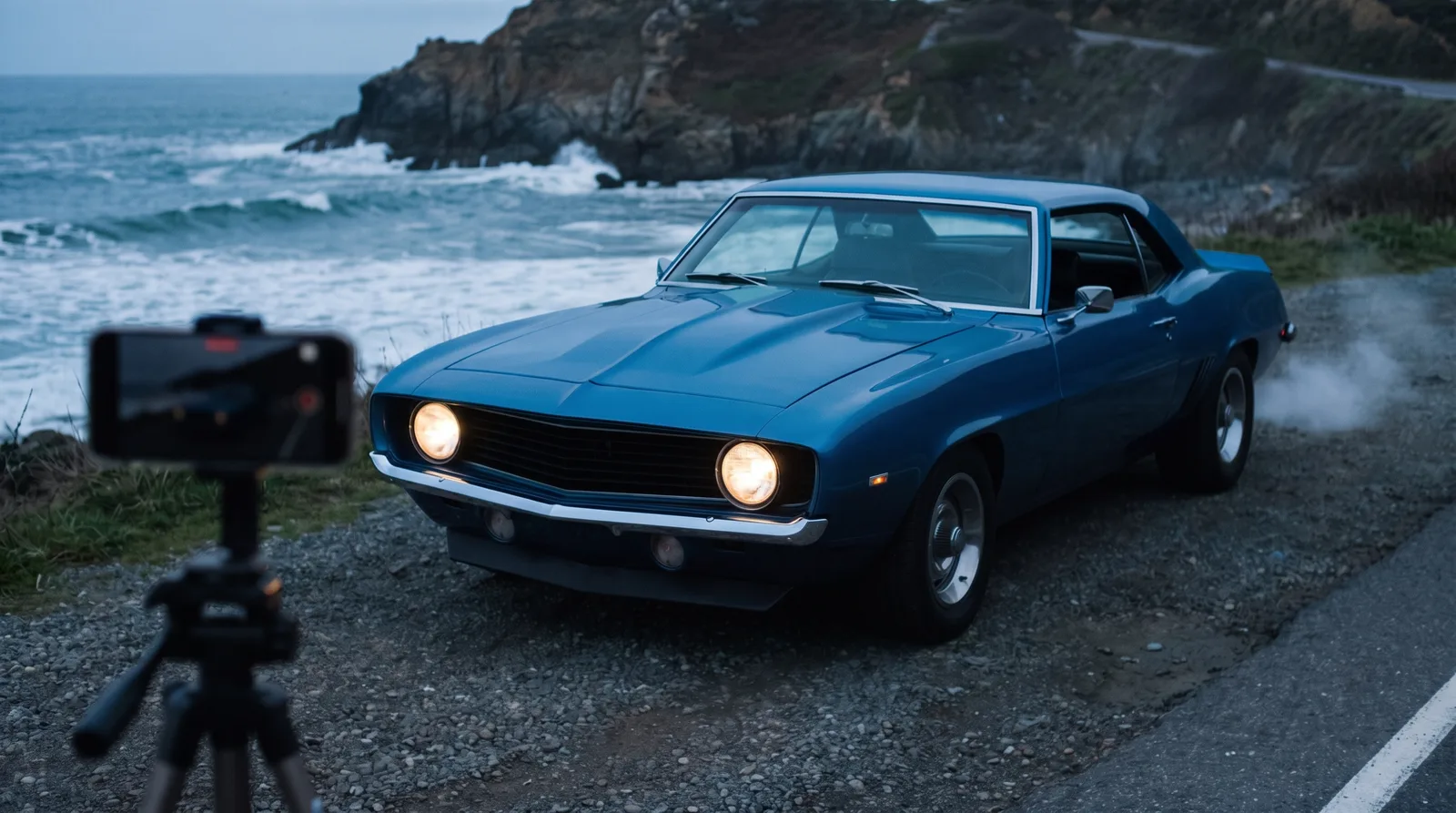
Most buyers of a used classic will never hear the engine before they commit to the trip, the inspection or the deposit. Your video is the closest they get. Shoot it badly and it raises questions. Shoot it right and it answers the ones that stall a sale. This article covers the filming only. For the full process of pricing, listing and replying, see the guide on how to sell classic car fast.
What a cold start actually tells a buyer
An engine that's been sitting overnight is the most honest version of itself. Oil has drained back to the pan. The choke has to work. The battery, starter and fuel delivery all have to do their jobs with no help. A warm engine hides most of that, which is why experienced buyers ask for a cold start and get suspicious when the hood is already hot.
Here's what a knowledgeable viewer is measuring when they watch your clip. How long it cranks before it catches. Whether it catches clean or stumbles and needs pedal. What comes out of the tailpipe in the first thirty seconds and the first two minutes. Whether the oil pressure gauge comes up quickly. Whether there's a tick, knock or rattle that fades as the oil gets around, or one that doesn't. How the idle settles as the choke comes off. None of those need a dyno. They need a microphone near the engine and a camera that doesn't cut away.
That last point matters. Don't stop recording at the first puff. A buyer who sees smoke and then sees the cut has to assume the worst. Keep rolling until the exhaust runs clear, and the doubt goes away on its own.
How to film the cold start, step by step
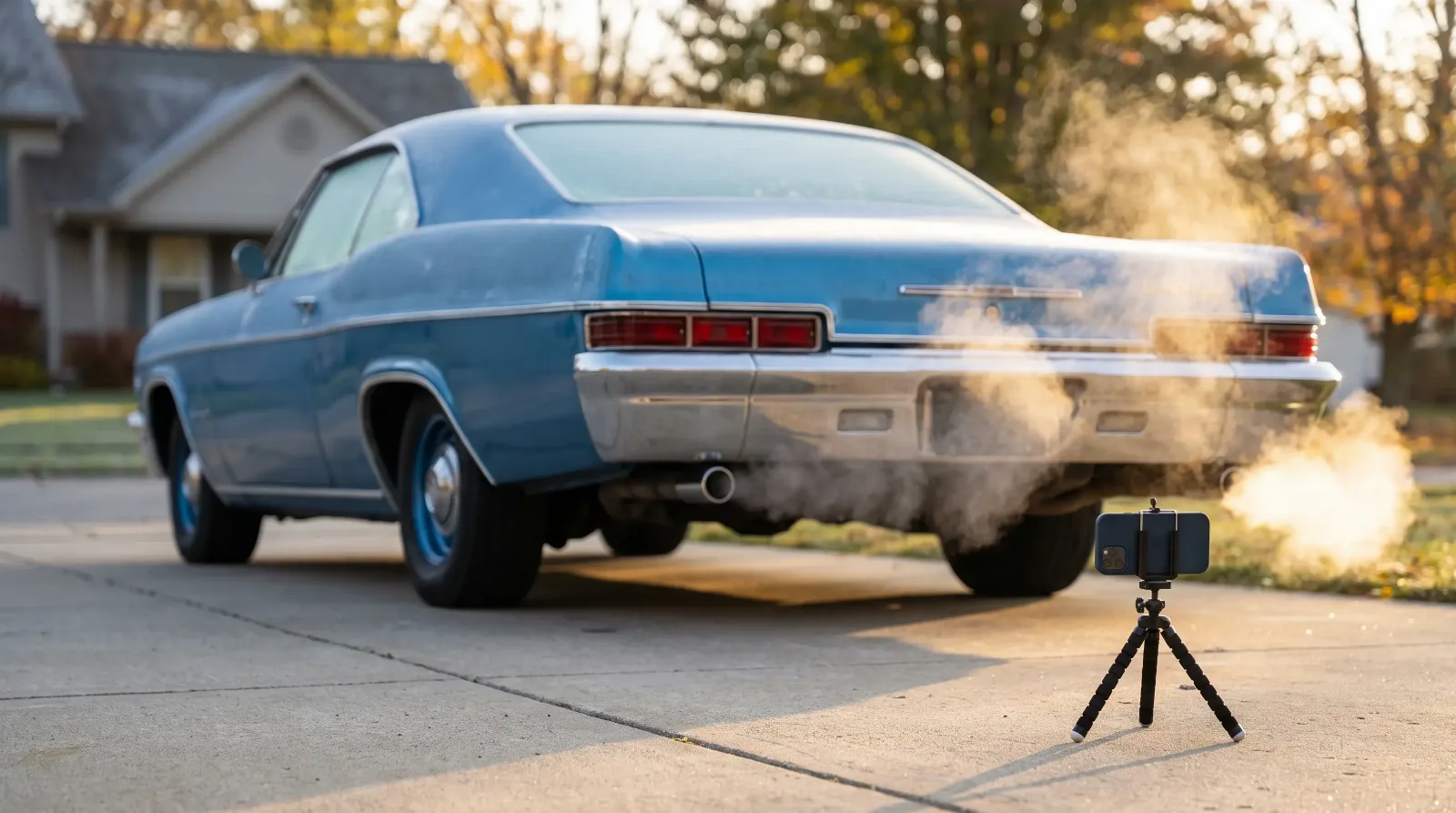
Let the car sit at least overnight. Don't start it "just to check" in the morning, because then it isn't cold anymore and the clip is worth less. Set up before you touch the key: hood open, phone or camera ready, and a second person if you have one. Two people make this much easier. One operates the car, one holds the camera.
Shoot it as one continuous take. Cuts make buyers wonder what you trimmed. Here's a sequence that covers what people want to see, with rough timings. Treat the times as a guide, not a rule.
| Step | What to show | Rough length |
|---|---|---|
| 1. Proof it's cold | Hand on the radiator cap area or exhaust manifold, engine bay at rest | 5 to 10 seconds |
| 2. Dash before start | Gauges, odometer, warning lights with the key on | 5 to 10 seconds |
| 3. The start | Camera on the dash or engine bay as the key turns, audio running | Until it fires |
| 4. Oil pressure | Gauge coming up in the first seconds | 10 seconds |
| 5. Tailpipe | Exhaust from behind the car, close enough to see vapor or smoke | 30 to 60 seconds |
| 6. Engine bay at idle | Slow pass around the engine, close to the valve covers for sound | 30 to 60 seconds |
| 7. Gentle revs | A few light blips, then back to idle | 10 to 20 seconds |
| 8. Warm idle | Idle after the choke has come off, tailpipe again | 15 to 30 seconds |
Total is roughly two to four minutes, depending on how long the engine takes to warm. Don't rev it hard on a cold engine. It looks bad on video and it's bad for the engine. A few gentle blips tell the buyer what they need to hear about throttle response and any knock under load.
If the car has a quirk, show it and say it out loud. "It always needs two pumps of the pedal when it's cold" or "the tick goes away in about twenty seconds." You'll hear it in the clip anyway. Saying it first makes it a known item instead of a red flag.
The walkaround: one take, slow, flaws included
The walkaround is a separate clip from the cold start. Keep them apart so a buyer who only cares about the engine can find that part fast.
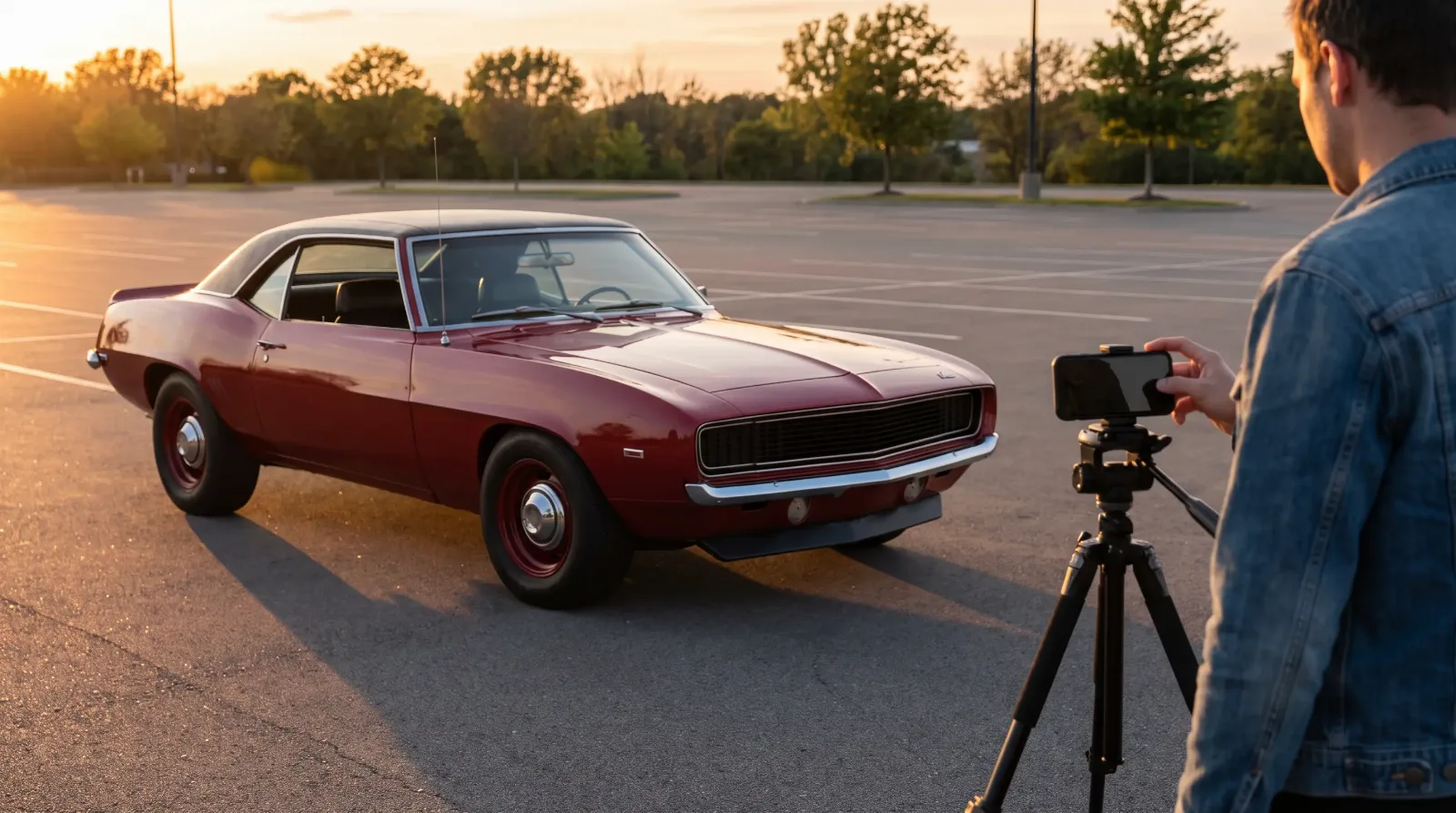
Start at the front three-quarter and walk the whole car at about half your normal pace. Hold the camera at roughly headlight height. Pause at each corner. Get low enough to show the rocker panels and the bottoms of the doors. Open the doors, the trunk and the hood on the way around. If there's a dent, a chip or a rust bubble, stop on it for two seconds and name it. The same flaws should already be in your photos and your description. The video confirms you're consistent, and consistency is what turns a viewer into a caller.
A short drive clip helps if you can shoot it safely. Mount the camera, never hold it while driving. Show the car pulling away, shifting through the gears and braking to a stop. Twenty seconds of the car moving under its own power answers "does it drive" better than any sentence.
"A seller can write 'runs strong' all day long. Ninety seconds of a cold start with the tailpipe in frame is the only proof that counts. Everything else is opinion."
Dan Reeves
Gear, sound and settings that matter
A recent smartphone is enough. Spending money on a camera won't sell the car faster. Spending ten minutes on setup will. The details that make a difference are simple.
Shoot horizontal. Cars are wide, and most listing sites and video players are built for horizontal footage. 1080p is plenty for a listing. 4K is fine if your phone handles it, but the file gets big and most viewers won't notice. Lock the exposure on the car's paint so the picture doesn't flicker brighter and darker as you walk around it. Shoot in open shade or soft morning or late afternoon light, the same conditions that work for stills. If you need a refresher on light, angles and the order of shots, the photo shot list for selling a classic lays it out, and here's how that works.
Sound is where most seller videos fail. Wind noise across a phone microphone drowns out the engine. Film in a sheltered spot, or put the phone close to the engine and away from the breeze. Turn off any music, tell the dog to go inside, and don't talk over the engine while it starts. Narrate before and after, not during. The buyer wants to hear the motor, not you.
Don't edit beyond trimming the dead time at the start and end. No filters, no music, no speed changes. Anything that looks produced reads as something being hidden.
Where the video goes once it's shot
Upload it somewhere that plays on any device. An unlisted YouTube link works on nearly every listing site and in every Facebook group. Put the link near the top of your description, not buried at the bottom. Some platforms host video directly: ClassicCars.com says its listings can carry as many as 100 photos along with video, and here the Featured and Premium plans both include a video with the listing. Whatever plan you choose, the clip is worth shooting, because you'll send that same link to every serious buyer who messages you.
A video doesn't fix a bad number, though. If the price is off, buyers won't click far enough to watch it, and that problem is its own subject: car listing price psychology covers how the asking price decides who sees the listing at all.
Get the price right, shoot the cold start before anything else, and keep the walkaround honest. Then put both clips where buyers can find them. If you're comparing plans that include video, see the seller options and pick the one that fits the car.
Sources and notes
Related Reading
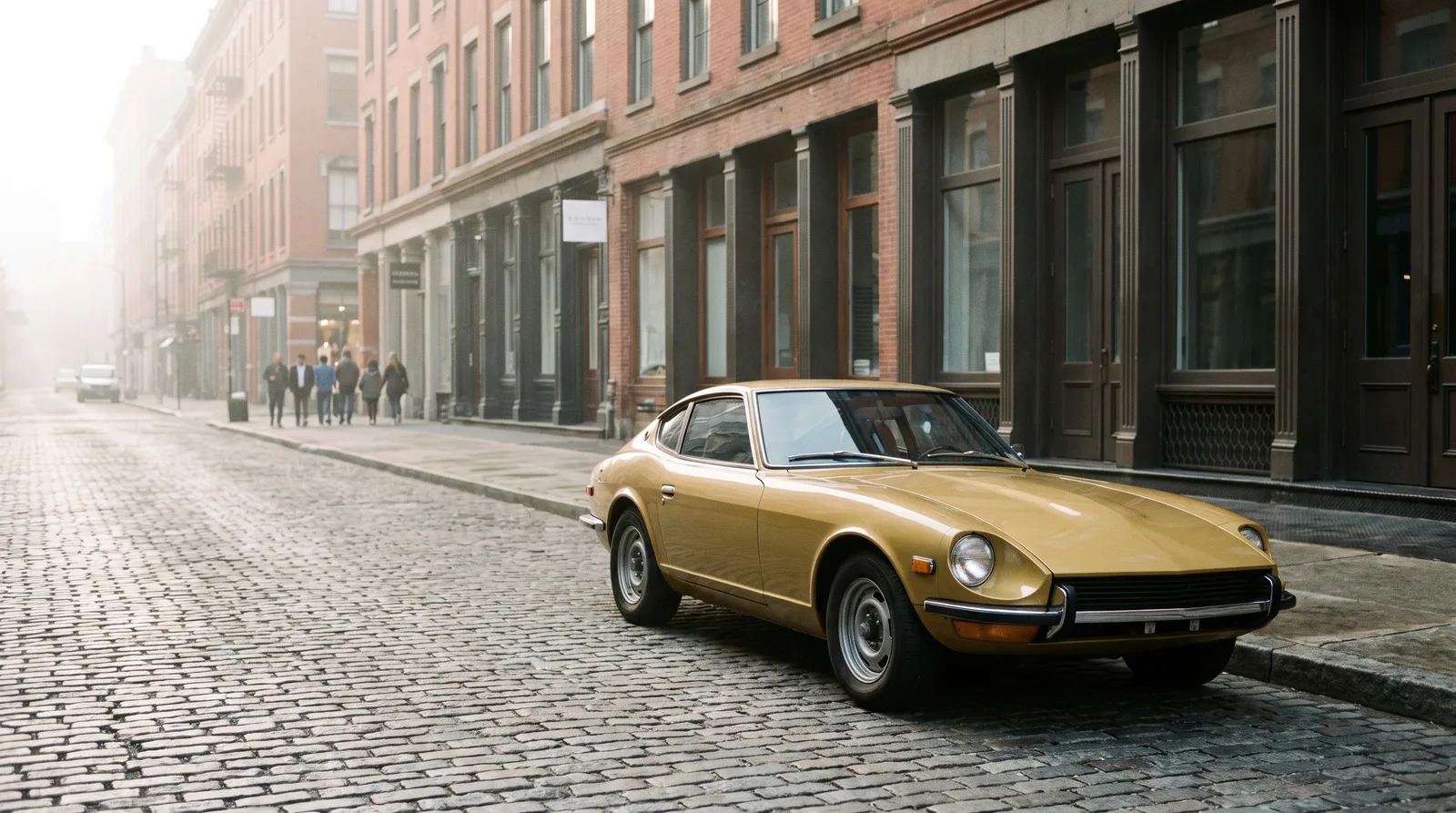
#selling tips
#sell a classic car
#classic car listing tips
#classic car photos
#car walkaround video
#cold start video

About the author
Dan Reeves
Performance engine builder from North Carolina's motorsports corridor, focused on swaps, forced induction and making real, repeatable power.
More in Market & Values
Comments
Be the first to comment on this article.