
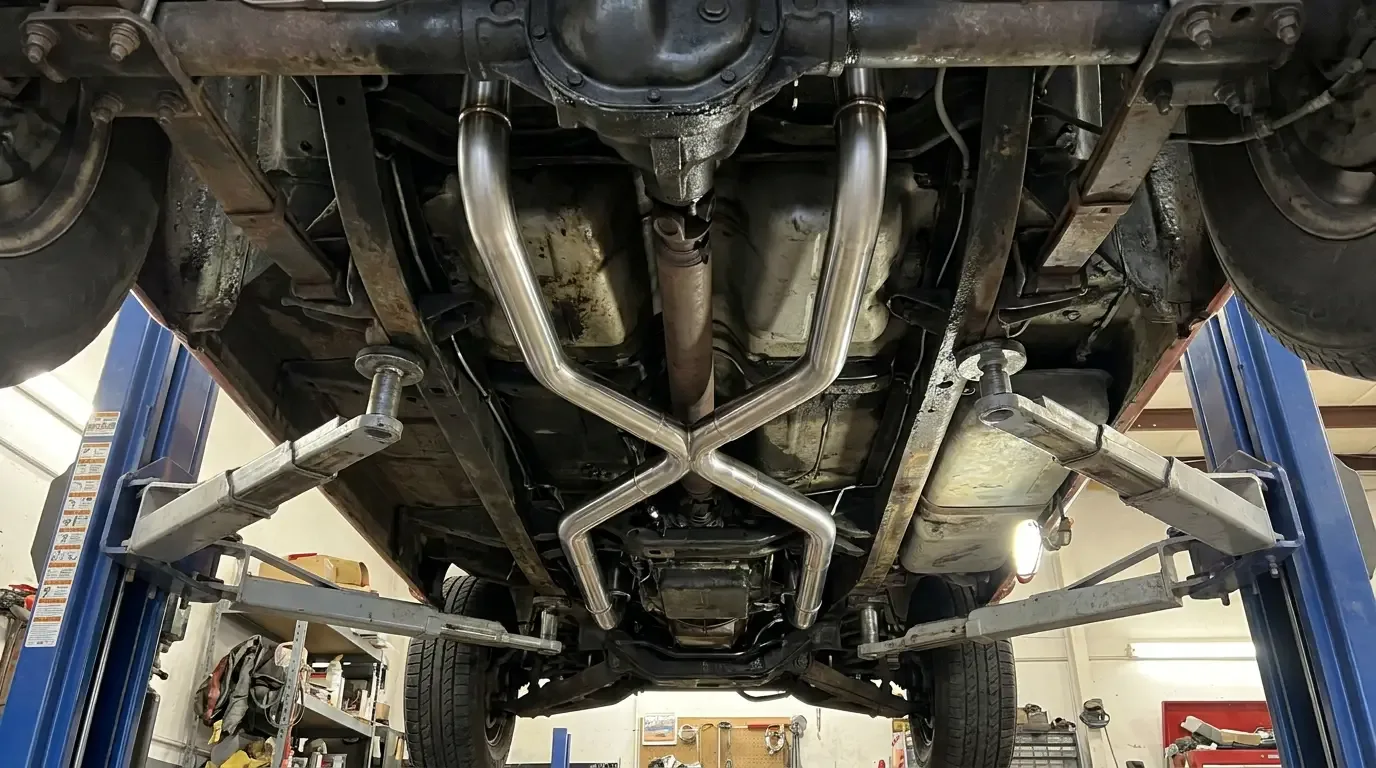
Every engine swap moves the engine, and moving the engine moves the transmission tailshaft, and moving the tailshaft changes the angle the driveshaft has to work at on both ends. Nobody skips the mounts and the wiring on a swap. Plenty of people skip this step, and it is the one that shows up two hundred miles later as a vibration nobody can find because they are looking at the wrong end of the truck.
Restoration & Tech
7 min read
Calculating Driveshaft Angle After an Engine Swap
How to measure and correct driveshaft operating angle on a C10 after an engine swap, why unequal angles cause vibration, and how shims fix it.
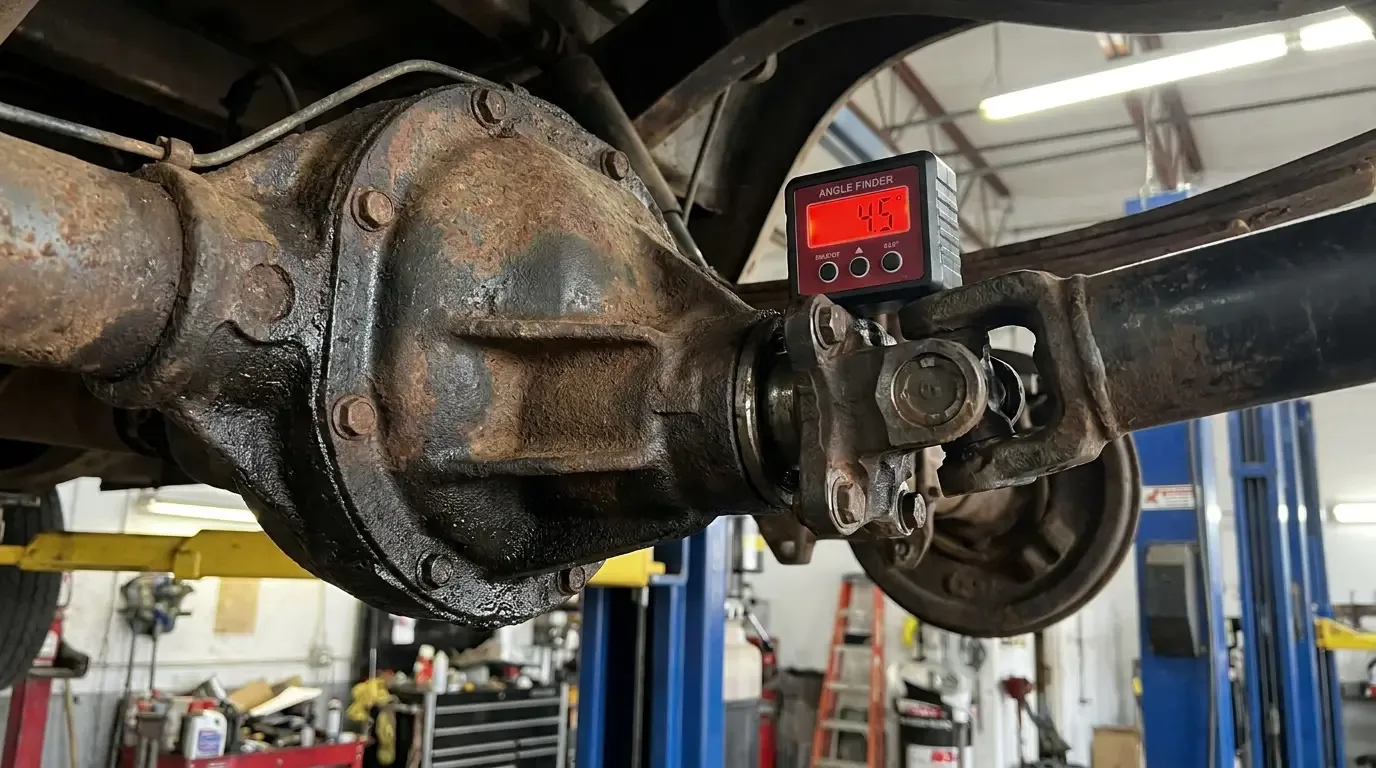
Why the angle changes the moment the engine moves
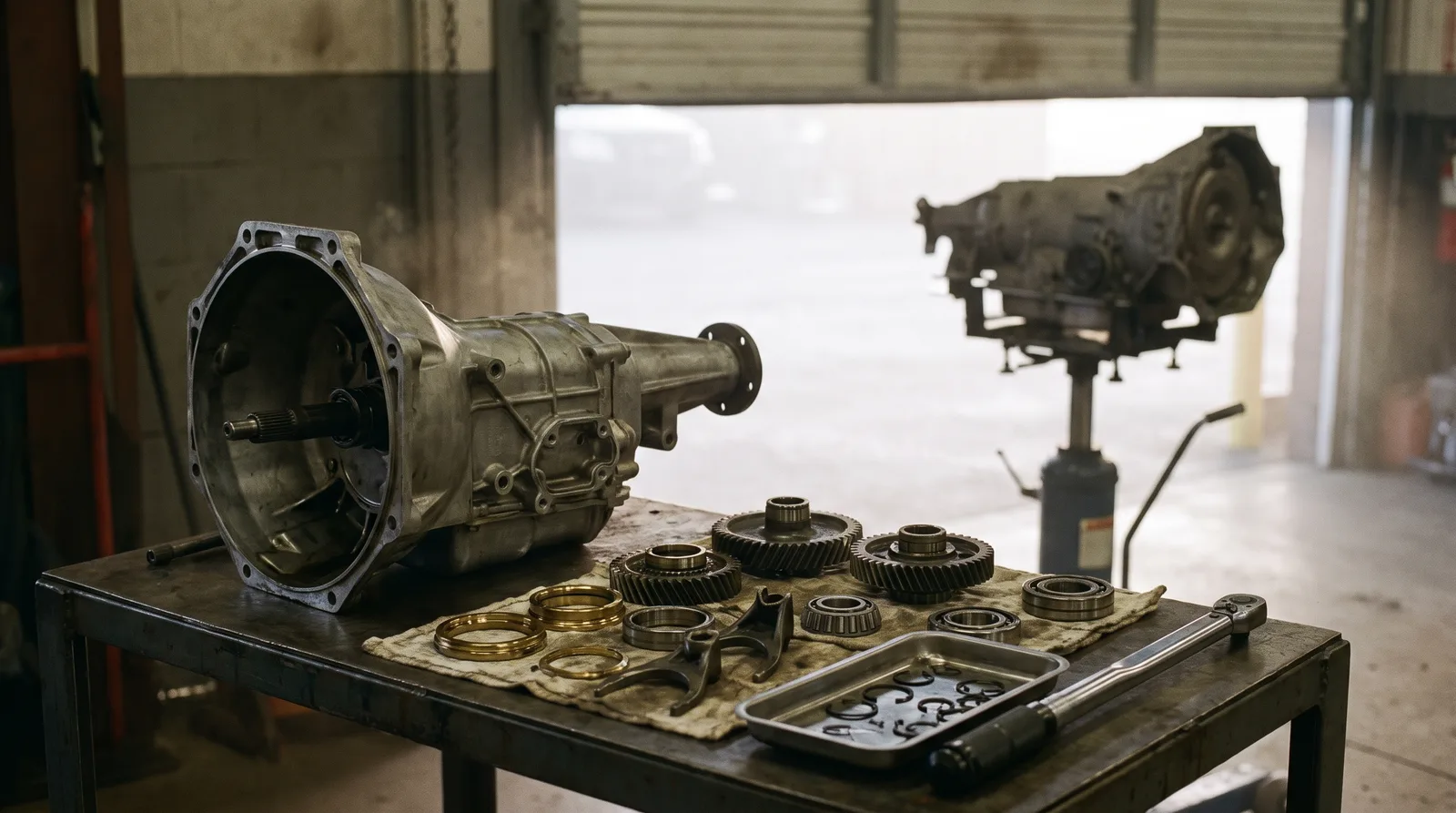
An LS or any other swapped engine almost never sits in exactly the same spot the factory engine did. Different mount design, different engine height, sometimes a different transmission with a different tailshaft length entirely. Every one of those changes the angle between the transmission output shaft and the driveshaft, and separately the angle between the driveshaft and the pinion at the rear axle. Those two angles are supposed to work together. After a swap, they usually do not, at least not until somebody checks.
The LS swap guide covers the mount and transmission decisions that get you to this point. This is the step that happens after the engine is torqued in and running, before the truck goes back on the road for good.
What "operating angle" actually means
A u-joint does not want to run in a straight line. It wants to run at a small angle, and it wants the angle at the front of the driveshaft and the angle at the rear to cancel each other out. That is the equal and opposite rule. If the transmission end is angled down two degrees and the pinion end is angled up two degrees, the u-joints are working correctly and the vibrations they would otherwise introduce cancel out. If those two angles do not match, or if either one is too steep on its own, the u-joint is fighting itself twice a rotation, every rotation, for as long as the truck runs that way.
Most u-joints tolerate an operating angle up to about 3 degrees before vibration and reduced joint life become a real issue, and that tolerance shrinks as driveshaft RPM climbs -- Spicer's own driveline angle guidelines put the vibration-free ceiling right at 3 degrees for exactly this reason. The angle itself is not the enemy. An angle that is not matched front to rear is.
| Condition | Typical symptom | What it means |
|---|---|---|
| Angles equal and opposite, under 3° | Smooth at all speeds | Correct setup, no action needed |
| Angles unequal, one steeper than the other | Vibration that changes with speed | U-joints fighting each other, needs a shim correction |
| Both angles too steep even if matched | Vibration at higher speed only | Overall driveline angle too aggressive, mount height needs adjusting |
| Angle near zero at one joint | Clicking or binding at low speed | U-joint not rotating enough to stay lubricated properly |
Measuring it correctly
Get a digital angle finder, not a guess and not an app on a phone balanced on a greasy surface. Measure the transmission output shaft angle first, with the truck sitting on its wheels at normal ride height, not up on a lift. Measure the driveshaft angle itself next, then the pinion angle at the rear axle. Write all three down before touching anything. Doing this on a truck sitting on jack stands with the suspension hanging gives you numbers that mean nothing once the truck is back on the ground under its own weight.
Do the math from the actual numbers, not from what looks right by eye. Two angles that look close standing next to the truck can be a full degree and a half apart on the gauge, and a degree and a half is enough to feel through the seat at highway speed.
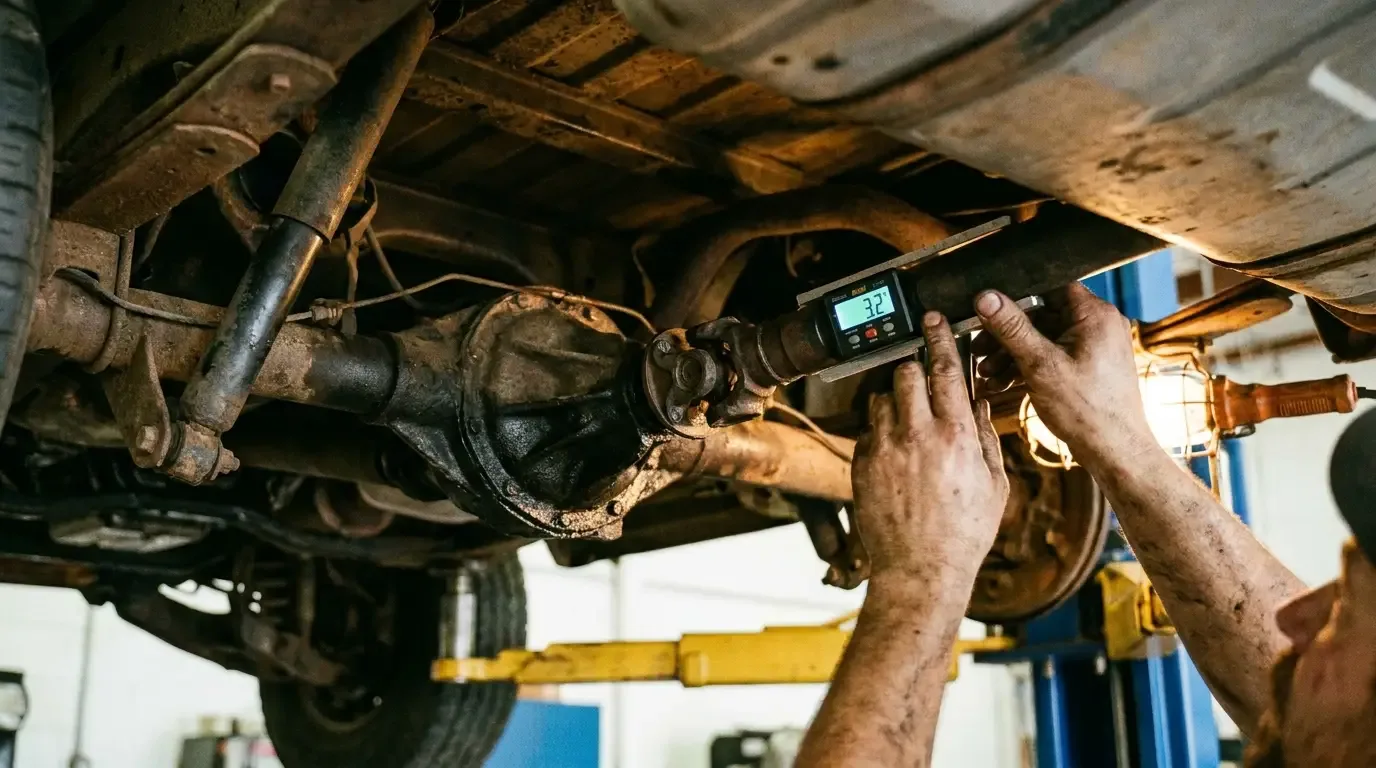
Fixing a bad angle
At the transmission end, shims between the mount and the crossmember raise or lower the tailshaft angle in small, controlled steps. At the rear end, tapered shims between the leaf spring and the axle pad rotate the pinion to correct its angle independently of ride height. Neither of these is a guess-and-check job done blind. Shim, remeasure, adjust again if needed. It usually takes more than one pass to land both ends matched.
Start with the smallest shim in the set, not the biggest. A quarter-degree correction that turns out to be too much is a cheap mistake to walk back. A full-degree correction that turns out to be too much means pulling the mount bolts a second time and starting over with a thinner shim, which costs more time than starting conservative would have. Torque the mount bolts to spec every time the shims change, not just on the final pass, because a loose mount under a running engine will find its own angle regardless of what the shims say underneath it.
If the numbers are close but not quite matched after reasonable shimming, a driveshaft shop can build a shaft with a slightly different yoke orientation to split the difference. That is a better answer than living with a half-degree mismatch for the life of the truck. It costs more than a shim kit, but it is a one-time cost against years of accelerated wear on parts that are a lot more annoying to replace than a driveshaft.
Recheck the angles again after the first month of driving, not just on install day. A fresh swap settles over the first few hundred miles, motor mounts compress slightly, the transmission crossmember beds in, and a truck that measured correctly the day the engine went in can drift a fraction of a degree once everything has actually loaded up under real driving. This is a five-minute check with the angle finder already in the toolbox, and it catches the slow drift before it turns into a vibration that shows up out of nowhere a year later. Grab the shaft and check for rotational play at each joint at the same time, since a joint that was fine at install can develop play in the first few thousand miles independent of whether the angle itself is still correct.
"I've had guys bring me a truck with a vibration they've chased for six months, new tires, new balance, new everything, and the driveshaft angle was never checked once after the swap went in. Fifteen minutes with an angle finder and a set of shims and the vibration is gone."
Ray Delgado
What happens if you skip this step
A driveline running a bad operating angle does not fail all at once. It wears u-joints faster than it should, it puts a vibration into the floor and seat that gets blamed on tires or the transmission, and over enough miles it can put load into the transmission tailshaft bushing and the pinion seal that neither one was designed to carry. None of that shows up the day the swap is finished. It shows up gradually, which is exactly why it gets ignored until something actually breaks.
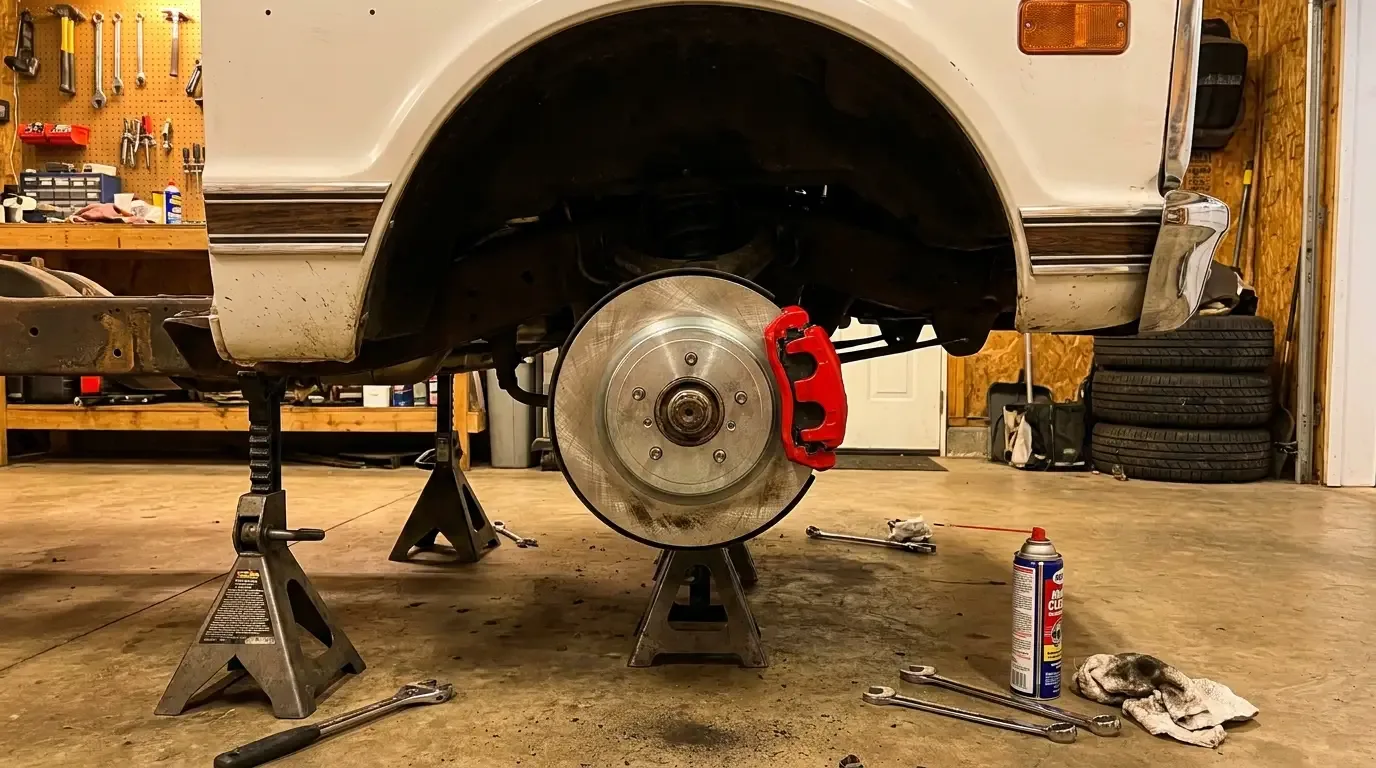
Once the driveline is sorted and running clean, the next item that tends to surface on a freshly swapped truck is the brake upgrade every swap eventually needs, because a truck that finally puts power down properly needs to stop the same way.
Sources and notes
- Spicer Parts on measuring and maximum universal joint operating angles
- Spicer's driveline operating angle calculator
- OnAllCylinders on setting up driveline angles correctly
- Chevy Hardcore on why driveshaft angles matter
- The Ranger Station on pinion and u-joint angle fundamentals
- Driveline Angles 101 primer on u-joint operating angle basics
Related Reading
Have a
Chevrolet C10
for Sale?
Reach thousands of serious classic car collectors across the US.
Sell It Here →
Are You a Classic Car Dealer?
List your full inventory and connect with targeted classic car buyers.
Join as a Dealer →
#Restoration
#engine swap
#chevrolet c10
#c10 driveshaft angle
#driveline vibration
#u-joint operating angle

About the author
Ray Delgado
Metal fabricator and chassis builder who has spent 25 years turning flat sheet and mild steel into hot rods, gassers and restomod underpinnings.
Related Listings - Chevrolet C10
More in Restoration & Tech
Comments
Be the first to comment on this article.