
Every C10 exhaust conversation ends up at the same fork. X-pipe or H-pipe. Both are crossover designs, both join the two exhaust banks into one shared path, and both get sold with a lot of noise about sound and almost nothing about what actually changes on a dyno. Here is what each one does, in numbers, not adjectives.
Restoration & Tech
6 min read
X-Pipe vs H-Pipe: C10 Exhaust Sound Compared
A numbers-first comparison of X-pipe and H-pipe exhaust crossovers on a C10, covering sound, dyno differences, and ground clearance on a lowered or swapped truck.
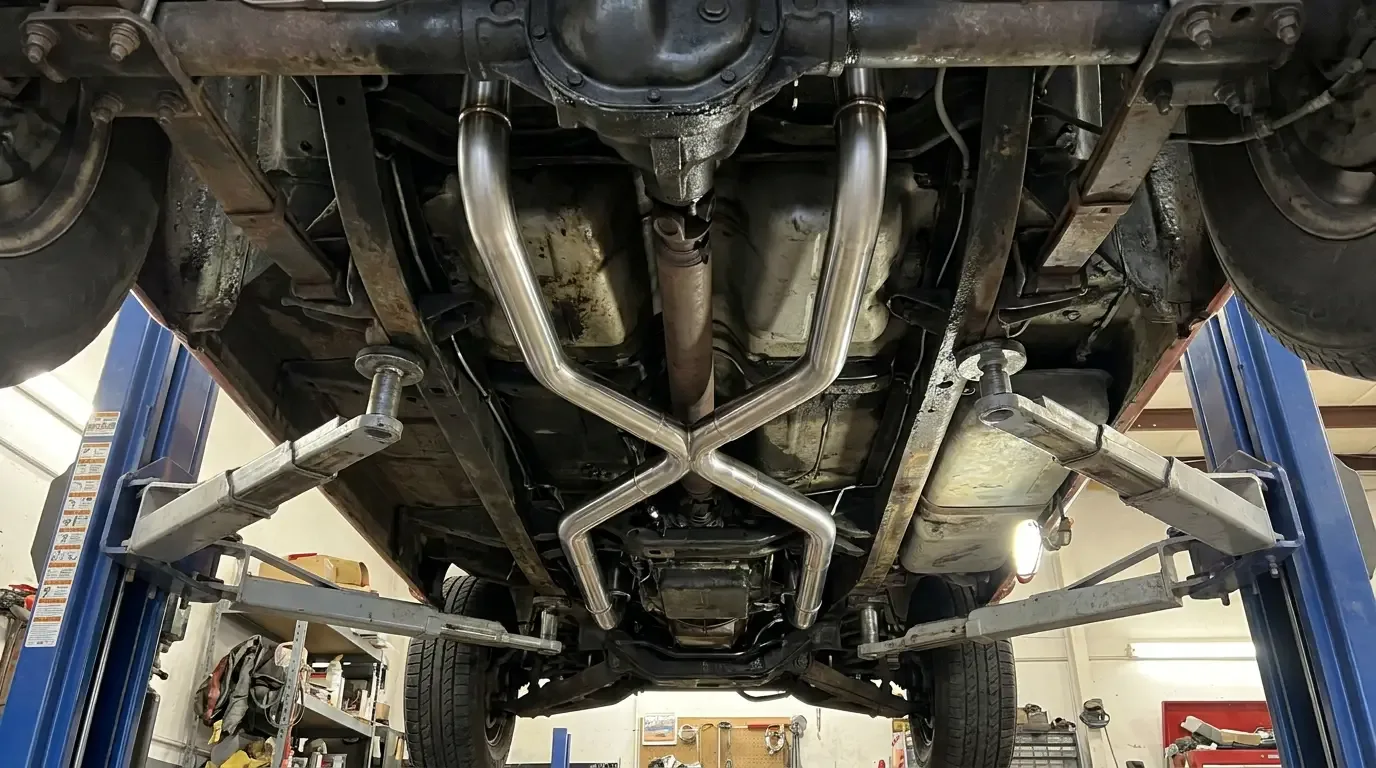
What a crossover pipe actually does
Without a crossover, each side of a V8 exhaust runs as its own separate system from header to tip. That works, but the pressure pulse coming out of one bank never talks to the other side. A crossover pipe connects the two, letting a low-pressure pulse on one side help pull exhaust out of the other side at the right moment in the cycle. That is the entire mechanical reason either an X or an H exists. Everything else, the tone, the drone, the small torque shift, comes downstream of that one design decision.
H-pipe: the sound and the numbers
An H-pipe is a single straight crossover tube connecting the two pipes at one point, shaped like the letter it is named for. It is the older, simpler design, and it is still the right call for a specific kind of build. Torque in the low and mid range comes up with an H-pipe versus no crossover at all, with dyno comparisons generally showing something like a 7 to 12 horsepower gain from adding a crossover in the first place, and the sound is deeper, closer to a traditional muscle truck rumble. That is the number that matters for most C10 owners: a deeper, lower-pitched exhaust note without the higher-frequency edge an X-pipe adds.
The tradeoff is at higher RPM, where a single-point crossover restricts flow slightly compared to the X design. On a truck that spends its life under 4500 RPM, that restriction is not a number anyone will ever feel.
X-pipe: the sound and the numbers
An X-pipe merges the two pipes at an angle instead of a single perpendicular tube, creating a smoother, more gradual crossover. That geometry flows better at higher RPM, and on an engine that is built to rev and make power up top, the X-pipe shows a real gain over an H-pipe, typically another 2 to 4 horsepower on top of what any crossover already gives you. The sound changes too. An X-pipe gives a higher-pitched, more aggressive tone, closer to what a lot of people associate with a modern performance car than a work truck.
If the reason this decision even came up is a fresh LS build, the LS swap guide is where the actual power numbers for that swap live. The exhaust choice downstream of it changes tone and a small amount of top-end flow. It does not change what the engine itself makes.
| Factor | H-pipe | X-pipe |
|---|---|---|
| Sound character | Deep, traditional rumble | Higher pitched, more aggressive |
| Low/mid RPM torque | Slight gain over no crossover | Similar gain, marginally less at idle |
| High RPM flow | Restricts sooner | Flows better at high RPM |
| Typical cost | Lower, simpler fabrication | Higher, larger merged section that's harder to fit around other components |
| Best fit | Street truck, low-end torque focus | Higher-revving build, performance focus |
Ground clearance on a truck that actually works
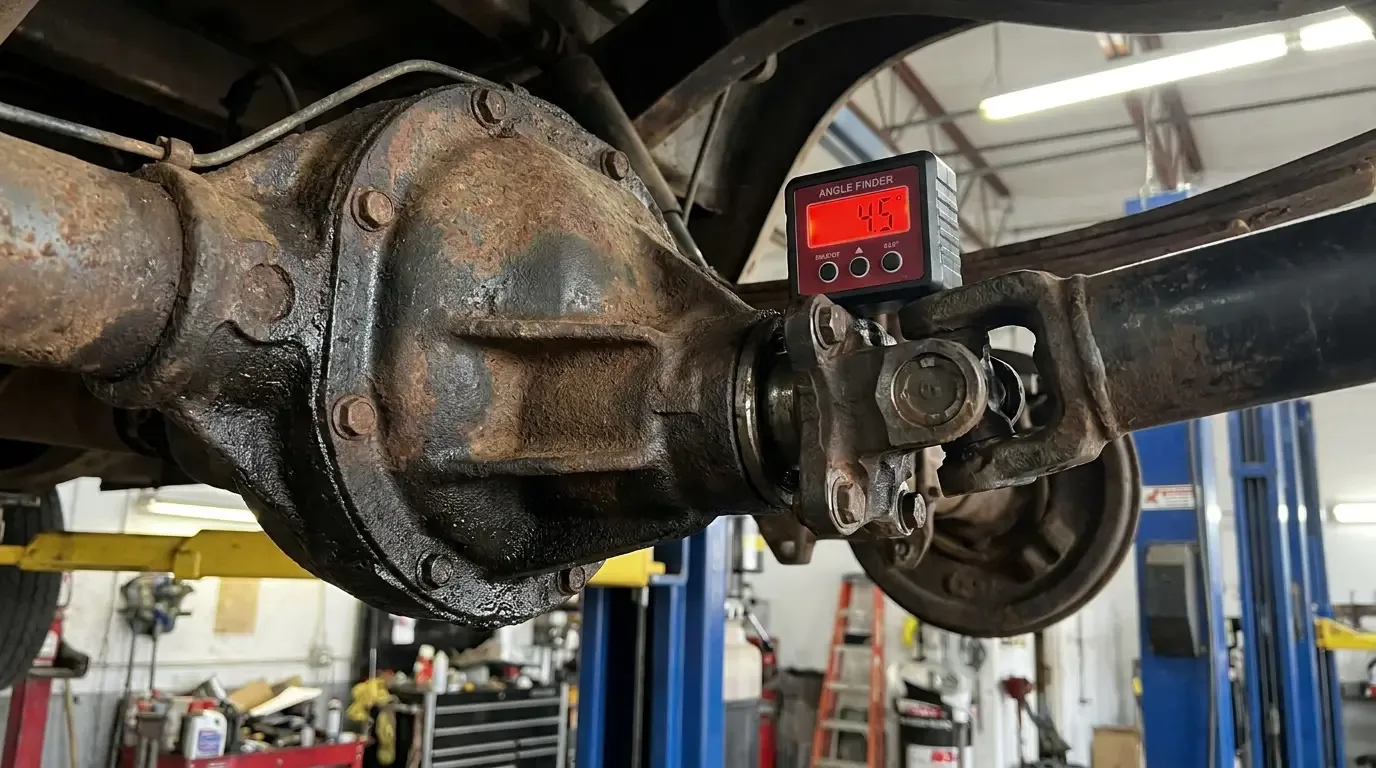
This is the part car guys skip and truck guys cannot. A C10 sits higher than a muscle car but it also has a driveshaft, a crossmember, and in a lot of builds now a lower ride height than the factory ever intended. An X-pipe's crossover point sits lower and closer to centerline in most kits, which can be the difference between clearing a driveshaft loop and hitting one on a lowered truck. Before any exhaust decision gets finalized on a truck that has had powertrain work done to it, it is worth getting the driveshaft angle right underneath it all first, because moving the driveshaft loop after the exhaust is already welded in is a wasted afternoon.
Where the crossover sits in the system changes the result too, and it gets ignored more than it should. Move the X or the H closer to the collector, right after the headers, and the crossover effect happens earlier, which sharpens the tone and moves more of the sound character into the mid-range. Push it further back, closer to the mufflers, and the effect softens, the tone mellows out, and the low-end torque gain gets smaller because the pulses have already lost energy traveling the extra distance down the pipe. A shop that bolts a crossover wherever the existing pipe happens to have room is leaving performance and sound on the table for free.
Pipe diameter matters just as much and it is the number people skip past fastest. A 3-inch system with a crossover section undersized to 2.25 inches chokes whatever gain the X or H is supposed to deliver, on paper and on the dyno. Match the crossover diameter to the rest of the system. Do not let the cheapest off-the-shelf piece that week decide the number for you.
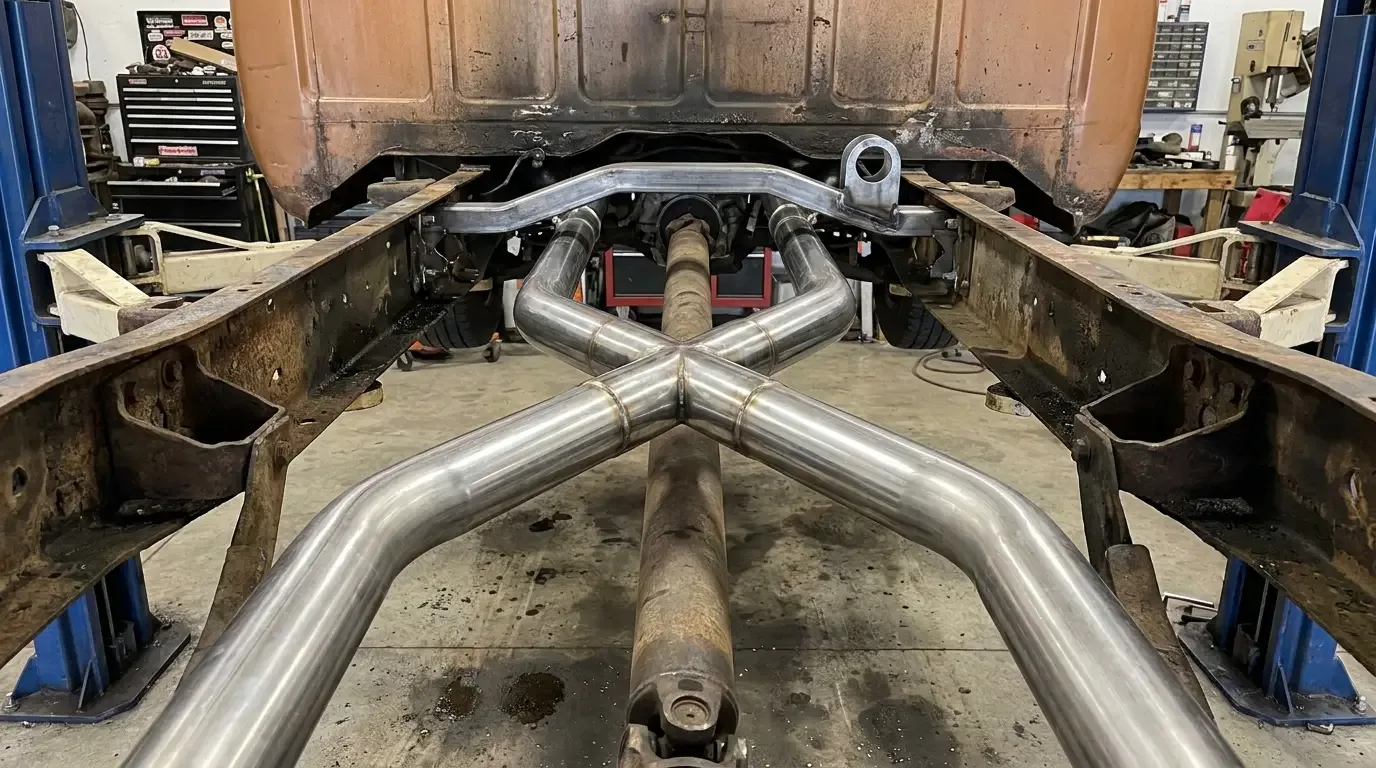
"Guys argue about X versus H like one of them is objectively better. It isn't. An H-pipe on a truck that never sees 4500 RPM is the right pipe. An X-pipe on the same truck is a pipe you paid extra for a number you're never going to use."
Dan Reeves
Which one to actually buy
If the truck is a daily driver or a weekend cruiser that spends its life under 4500 RPM, the H-pipe gives the deeper sound most people actually want and costs less to install. If the build has real cam and head work behind it and the engine sees real RPM on a regular basis, the X-pipe's high-end flow advantage is real and worth the extra cost. Neither one is a fix for a tired engine, and neither one turns a stock motor into something it is not. It is a crossover pipe. It changes tone and a small amount of flow. Buy the one that matches how the truck is actually driven, not the one that sounds better in a forum thread.
Sources and notes
- Jalopnik's breakdown of H-pipe vs X-pipe dyno gains and cost
- LS1Tech on straight pipe vs H-pipe vs X-pipe crossover design
- Speedway Motors guide to X-pipe, H-pipe, and Y-pipe systems
- LMR comparison of H-pipe and X-pipe fabrication and sound
- Holley on X-pipe vs H-pipe exhaust performance
- Mustang7G dyno test comparing X-pipe and H-pipe results
Related Reading

Have a
Chevrolet C10
for Sale?
Reach thousands of serious classic car collectors across the US.
Sell It Here →
Are You a Classic Car Dealer?
List your full inventory and connect with targeted classic car buyers.
Join as a Dealer →

About the author
Dan Reeves
Performance engine builder from North Carolina's motorsports corridor, focused on swaps, forced induction and making real, repeatable power.
Related Listings - Chevrolet C10



More in Restoration & Tech



Comments
Be the first to comment on this article.