
Front drum brakes on a classic C10 were fine for the truck they were designed for. That truck weighed less, made less power, and did not carry a driver expecting a modern pedal feel every time they came off a highway ramp. Once you change any part of that equation, drum brakes run out of margin fast, and the numbers explain why better than a general warning about "upgrading your brakes" ever will.
Restoration & Tech
6 min read
Converting a Classic C10 from Front Drum to Disc Brakes
Why front drum brakes run out of margin on a classic C10, the factory swap path versus aftermarket kits, and what a real disc brake conversion actually costs.
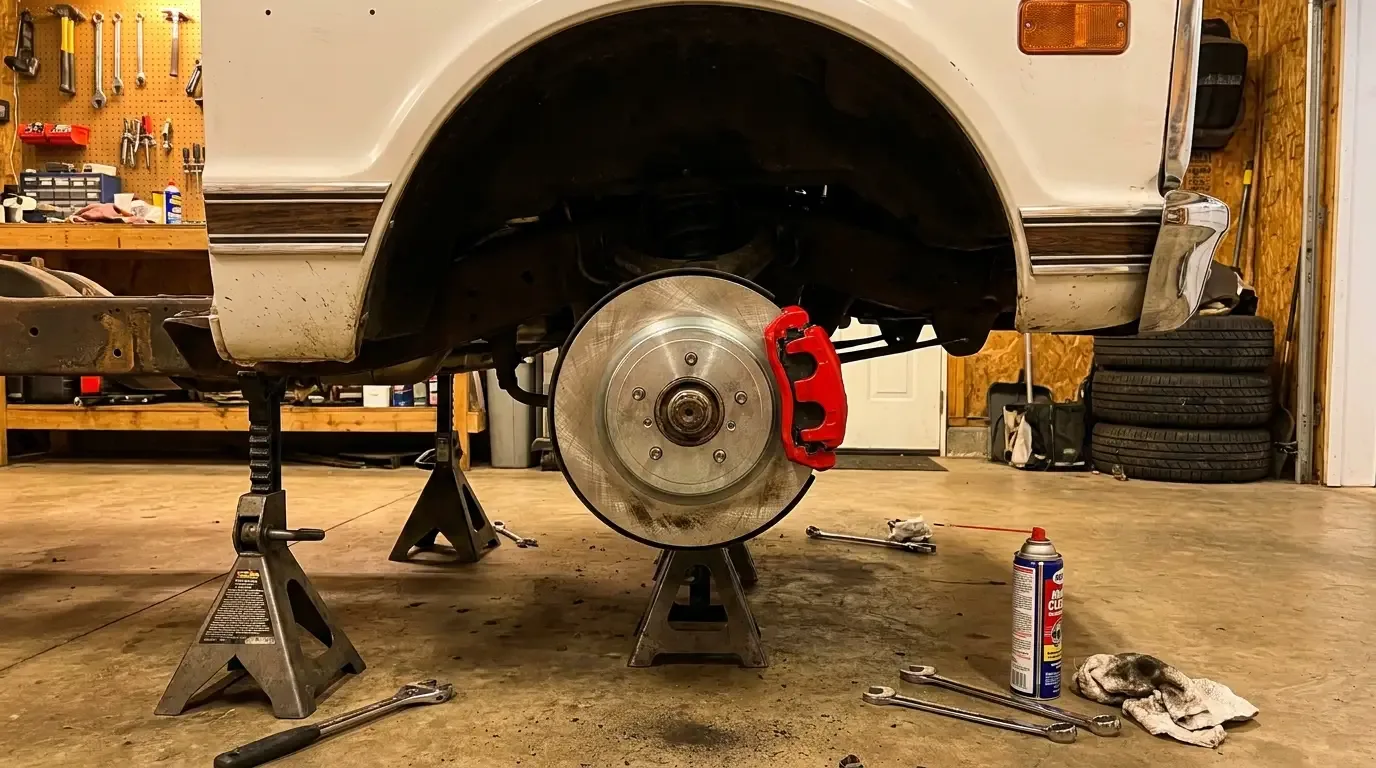
Why drum brakes run out of margin fast
A drum brake works by pushing shoes outward against the inside of a spinning drum, and that design has one enemy: heat. Drums trap heat instead of shedding it, and once the shoes and drum surface get hot enough, the friction coefficient drops and the pedal starts to feel long before it stops feeling anything at all. That is fade, and it shows up exactly when you do not want it, coming down a grade or braking hard from highway speed with a truck bed loaded. Discs do not solve physics, but an open rotor with a caliper clamping from both sides sheds heat in a way a drum never will, and that is the entire case for converting, independent of anything else you do to the truck.
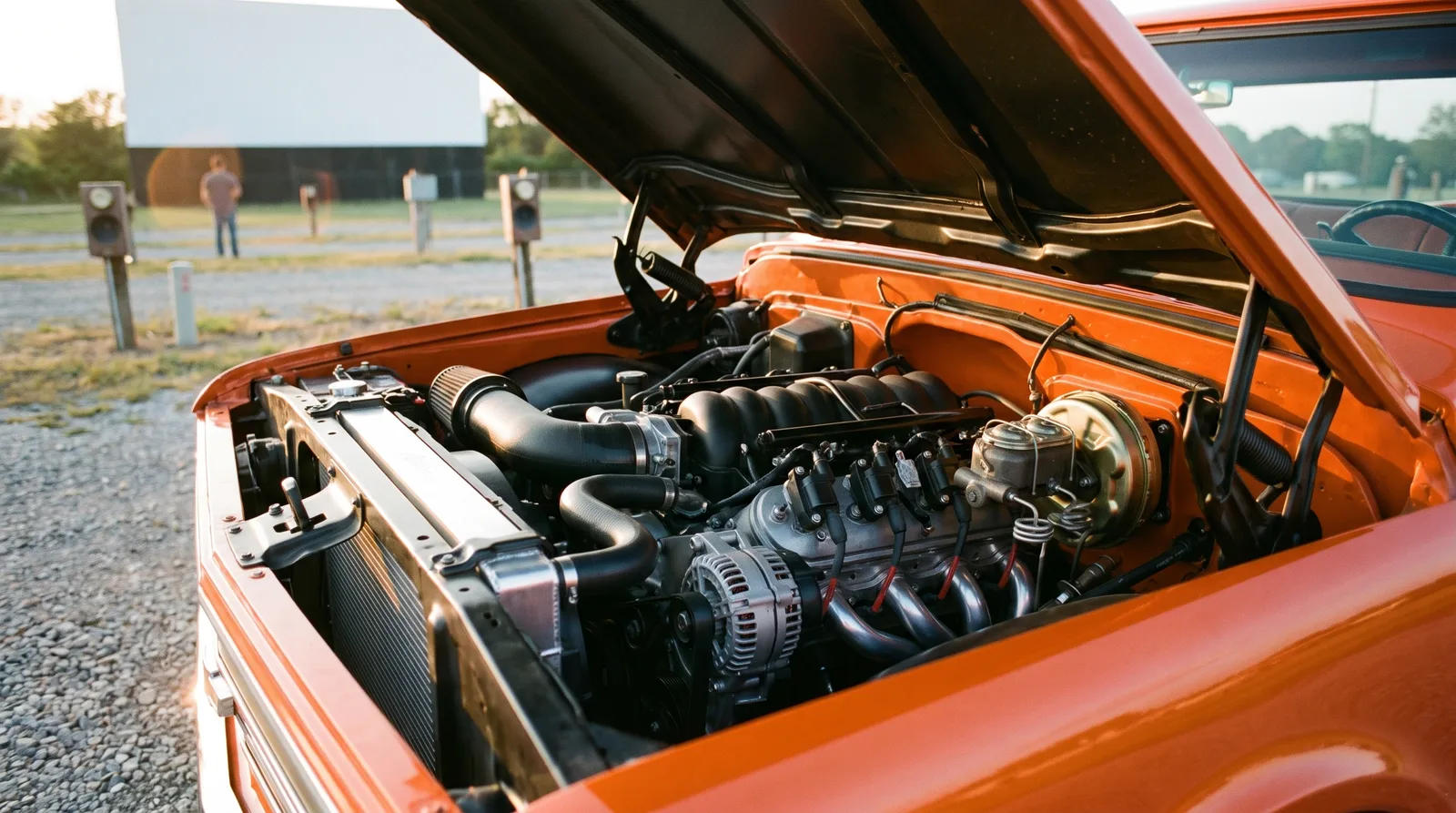
This matters more than most owners realize before they add power. Anyone working through the full LS swap guide should treat the brake conversion as part of the same project, not a separate errand for later. A truck that stops fine at 200 horsepower does not stop fine at 400.
If you have read the C10 story, you already know these trucks were built as work vehicles first. Braking hardware from that era reflects that priority, and it was never engineered around the power levels or driving expectations most owners bring to these trucks now.
The stock swap path most people skip
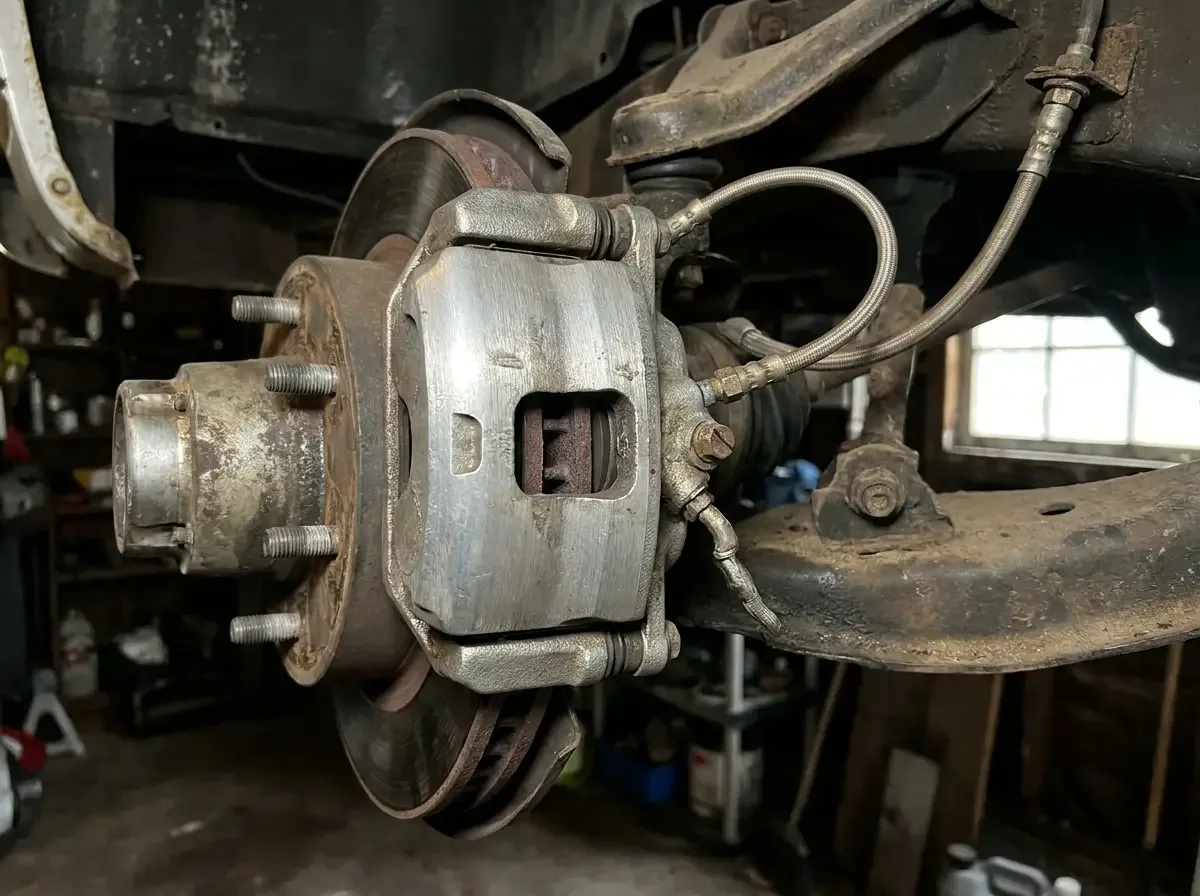
Here is the detail that saves people real money: GM put factory front disc brakes on some C10 trucks starting in the early 1970s, and in a lot of cases those factory disc spindles, calipers, and rotors bolt onto an earlier drum-brake truck with the same front suspension design with minimal fuss. This is the cheapest legitimate conversion path that exists, because you are sourcing parts that were engineered by GM to fit this exact chassis, not adapting something that was never meant to be there. The catch is finding a clean donor set, since thirty-plus-year-old spindles and calipers that have sat in a yard often need rebuilding or replacement regardless of the labor saved.
This path works best for someone comfortable sourcing used parts and doing some fitment verification themselves. It is not the fastest option, but dollar for dollar it is hard to beat if the truck's front suspension generation matches the donor parts.
Aftermarket kits and what actually changes
The other path is a purpose-built kit from a brake specialist, and this is where most people land if they want new parts with a warranty and a clear instruction sheet instead of a parts-yard treasure hunt. These kits typically include new spindles, larger rotors than the factory disc setup ever ran, twin-piston or four-piston calipers, and braided lines, all matched to the truck's specific front suspension.
| Path | Rotor size | Caliper type | Typical cost range | Wheel clearance note |
|---|---|---|---|---|
| Factory disc swap (used) | 12 in | Single-piston OEM | Low, parts-dependent | Fits factory 14-15 in wheels |
| Basic aftermarket kit | ~12 in | Twin-piston | Mid range | Usually clears 15 in wheels |
| Performance aftermarket kit | 13 in | Four-piston | Higher | Requires 17 in or larger wheels |
The rotor size number is where people get surprised. A big rotor and a big caliper look great in a parts catalog, but they do not clear a factory 15-inch wheel, and swapping wheels was not on the original budget. Measure the caliper's outer diameter against the inside of the wheel you plan to run before you order anything, not after the kit shows up.
Master cylinder, booster, and proportioning
A disc brake conversion is not just swapping what is at the wheel. Disc brakes need higher line pressure than drums to clamp effectively, which usually means a dual-reservoir master cylinder sized correctly for the new front setup, and in most cases a proportioning valve to balance front disc bite against rear drum bite so the truck does not lock the fronts under hard braking. Skipping this step is the single most common mistake in a home-garage disc conversion. The brakes will work, technically, but the balance will be wrong and the pedal will feel inconsistent.
A power booster is not strictly required on every disc conversion, but most owners who have been driving a manual drum-brake truck for years find the pedal effort with manual disc brakes higher than they expected, and add a booster once they feel it in traffic.
"People spend money on four-piston calipers and forget the master cylinder is still sized for drums. That's like bolting on more injectors and never touching the fuel pump. The number that matters here is line pressure, not caliper piston count."
Dan Reeves
What it costs and what to expect
A basic aftermarket kit with new spindles, rotors, twin-piston calipers, and a matched master cylinder runs roughly $600 to $2,000 for the kit itself, landing in the low to mid four figures once shop labor is added, less if you are doing the labor yourself and only paying for parts. The factory-parts route can come in well under that if you find a clean donor and are willing to rebuild calipers rather than replace them outright. Either way, budget the master cylinder and proportioning valve into the job, not as a separate expense discovered halfway through.
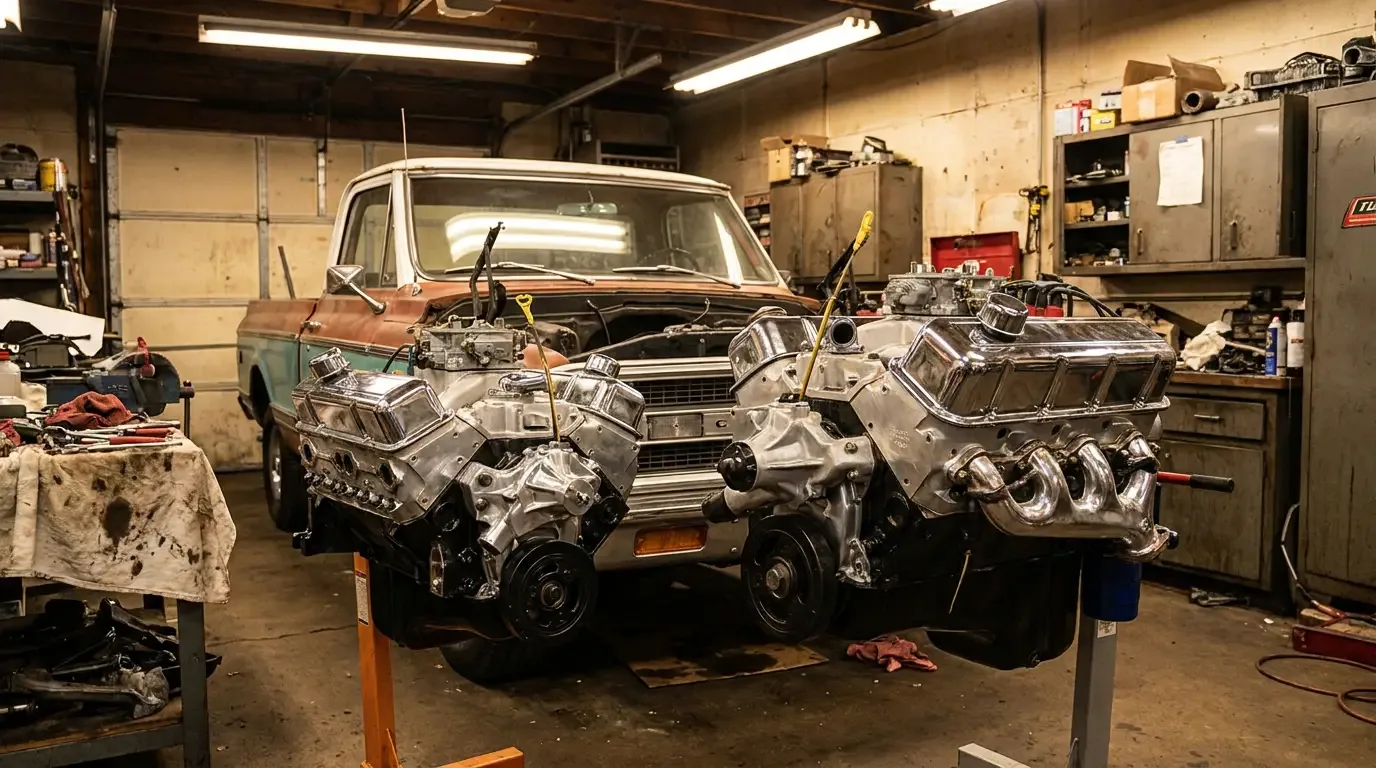
What you get for the money is a truck that stops the same way every time, hot or cold, loaded or empty. That matters more once the truck makes real power, and it matters even more once you have settled which engine you're stopping in the first place, since a big block C10 hauling weight needs every bit of that margin a drum brake never had.
Sources and notes
Related Reading
Have a
Chevrolet C10
for Sale?
Reach thousands of serious classic car collectors across the US.
Sell It Here →
Are You a Classic Car Dealer?
List your full inventory and connect with targeted classic car buyers.
Join as a Dealer →

About the author
Dan Reeves
Performance engine builder from North Carolina's motorsports corridor, focused on swaps, forced induction and making real, repeatable power.
Related Listings - Chevrolet C10
More in Restoration & Tech
Comments
Be the first to comment on this article.