
Channeling is one of those cuts that separates a real traditional hot rod from a car that just sits low on air. When people see a Deuce roadster hugging the ground with the door bottoms almost touching the tires, half of them assume the frame got lowered. It did not. The body got dropped down over the frame instead, and that move, done right, changes the whole character of the car. It is also one of the more permanent decisions you can make on a build, so it pays to understand exactly what you are signing up for before the sawzall comes out.
Restoration & Tech
8 min read
Channeling a Hot Rod Body
Channeling drops the body down over the frame rails for a genuinely low stance. Here's how it differs from chopping and what it costs you inside the car.
What channeling actually is
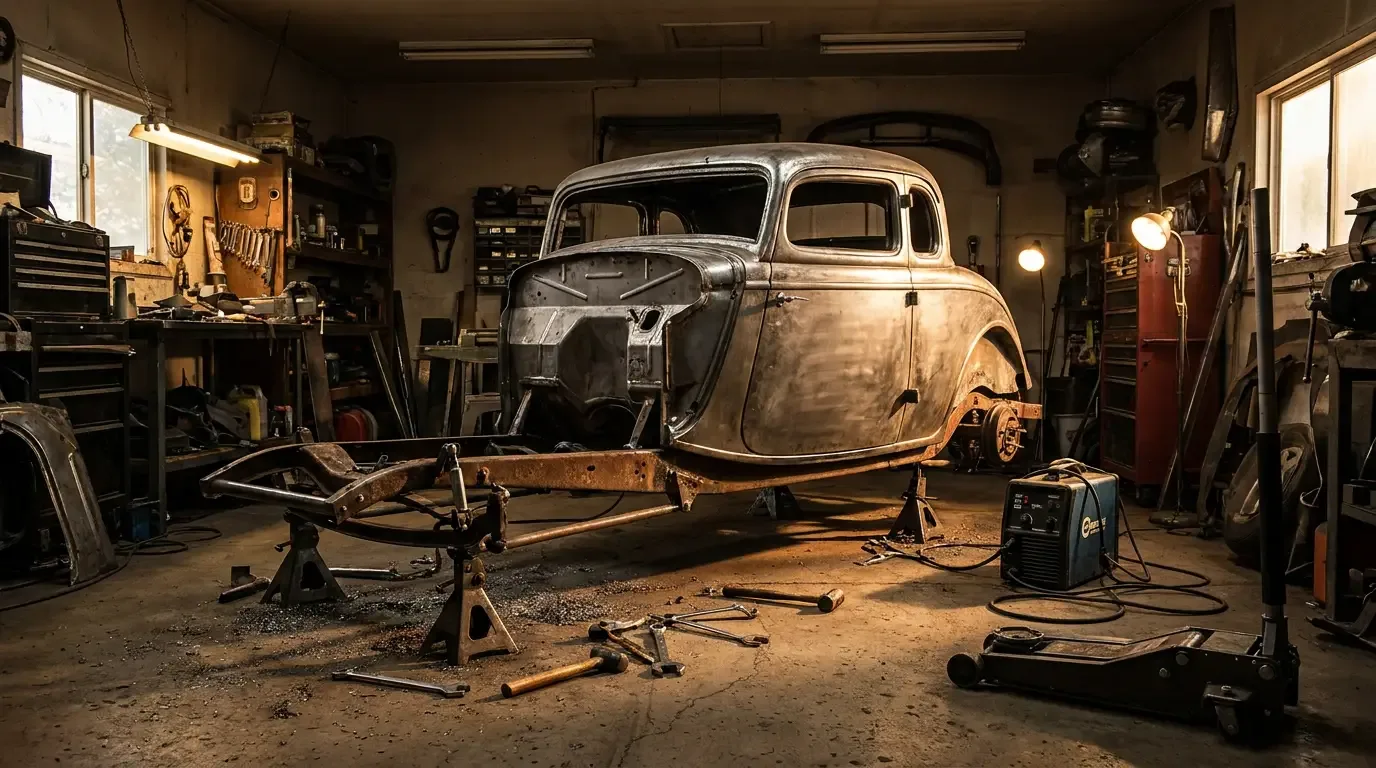
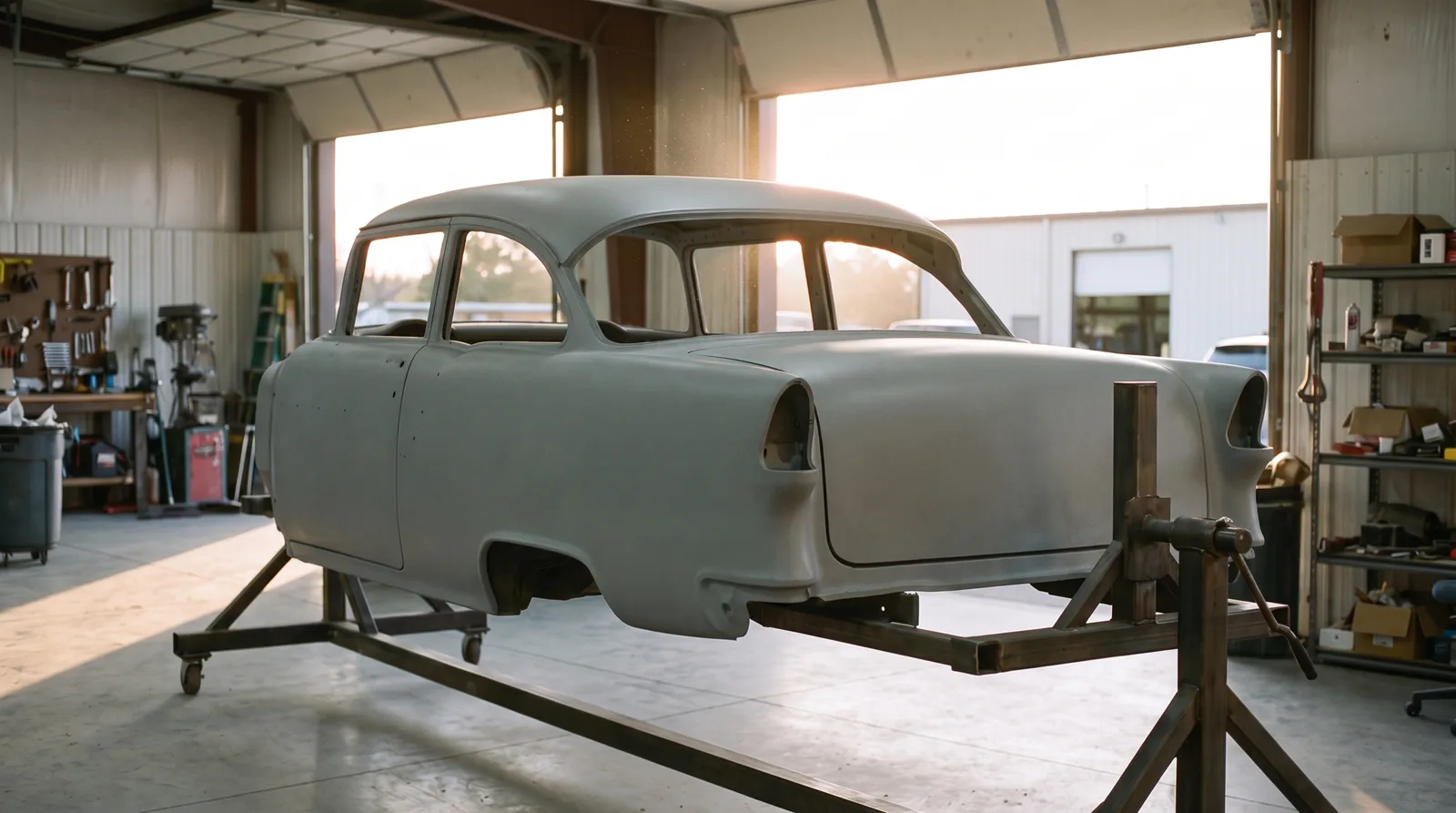
Channeling means notching the floor of the body and re-mounting the body lower on the frame rails, so the rails end up running up inside the body instead of underneath it. On a stock Model A or a '32 Ford, the body sits on top of the frame with the floor forming the bottom of the passenger compartment. When you channel it, you cut the floor loose, raise it inside the body, and drop the whole body shell down until the rocker area straddles the frame. The car gets lower without touching the suspension, the ride height, or the frame geometry at all.
That last point is what makes channeling different from every other way of getting a car down in the weeds. Lowering blocks, dropped axles, and Z-ing the frame all move the body closer to the ground by changing the chassis. Channeling leaves the chassis right where it is and moves the body. The suspension travel stays stock, the driveline angles stay stock, and the wheels sit in the same place. You are just sinking the shell over the rails.
People new to this stuff mix it up with chopping. They are not the same operation and they do not do the same thing. Chopping lowers the roofline by cutting sections out of the pillars, so the greenhouse gets shorter and meaner. Channeling lowers the body relative to the frame, so the whole car gets closer to the pavement. A lot of the meanest traditional rods got both, a chop and a channel, because the two cuts stack. Chop the top three inches and channel the body four, and suddenly a tall, upright Model A looks like it was poured onto the road.
Why the old guys did it
Channeling came out of the dry lakes and the early drag scene, not the show field. Getting the body down over the frame dropped the center of gravity and cleaned up the profile, and on a car built to go fast in a straight line, a lower, slipperier shape mattered. It also happened to look incredible, low and purposeful, and that look became the whole point once these cars moved off the lakebed and onto the street.
There is a cost side too, and it was a real motivator back then. Channeling a body is cheaper on materials than Z-ing a frame or building a dropped front end from scratch. A kid with a coupe, a hacksaw, and a welder could get his car slammed over a weekend without buying a single new suspension part. That accessibility is a big reason channeled cars are baked into the traditional look. It was the poor man's way down, and it stuck. If you want to understand where this fits in the larger build, our guide on how to build a hot rod lays out where body mods land in the sequence.
What it does to the floor, the pedals, and the driveline
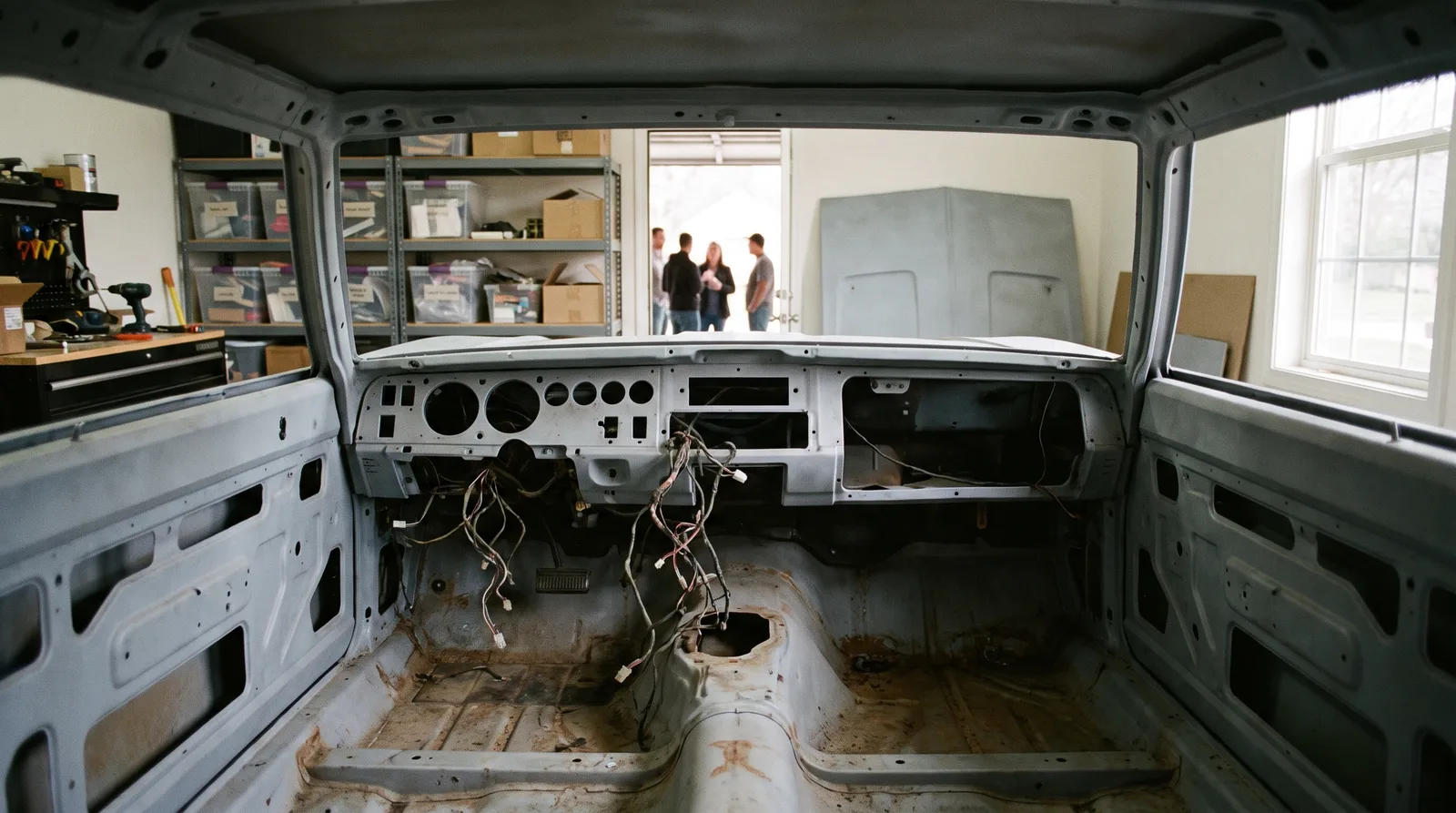
Here is where the romance meets the reality. When you drop the body down over the frame, everything that used to live between the floor and the rails now has to fit somewhere else, because the rails are now inside the car. That has consequences, and if you do not plan for them the car becomes miserable to drive or impossible to finish.
- The floor goes up and the seat goes down. You lose interior height, plain and simple. A body channeled four inches loses roughly that much headroom and footwell depth. Tall drivers end up sitting on the floor with their knees high, and in a deeply channeled car you are basically sitting on the pavement with a body wrapped around you.
- The frame rails intrude into the cabin. Once the rails run up inside the body, they eat into where your feet and the seat want to be. Builders often have to build tunnels or humps over the rails, and narrow the seating to clear them.
- The pedals and steering have to be relocated. The stock pedal geometry no longer works when the floor moves. Master cylinders, pedal assemblies, and steering columns usually get re-mounted or swapped for aftermarket pieces to fit the new floor height.
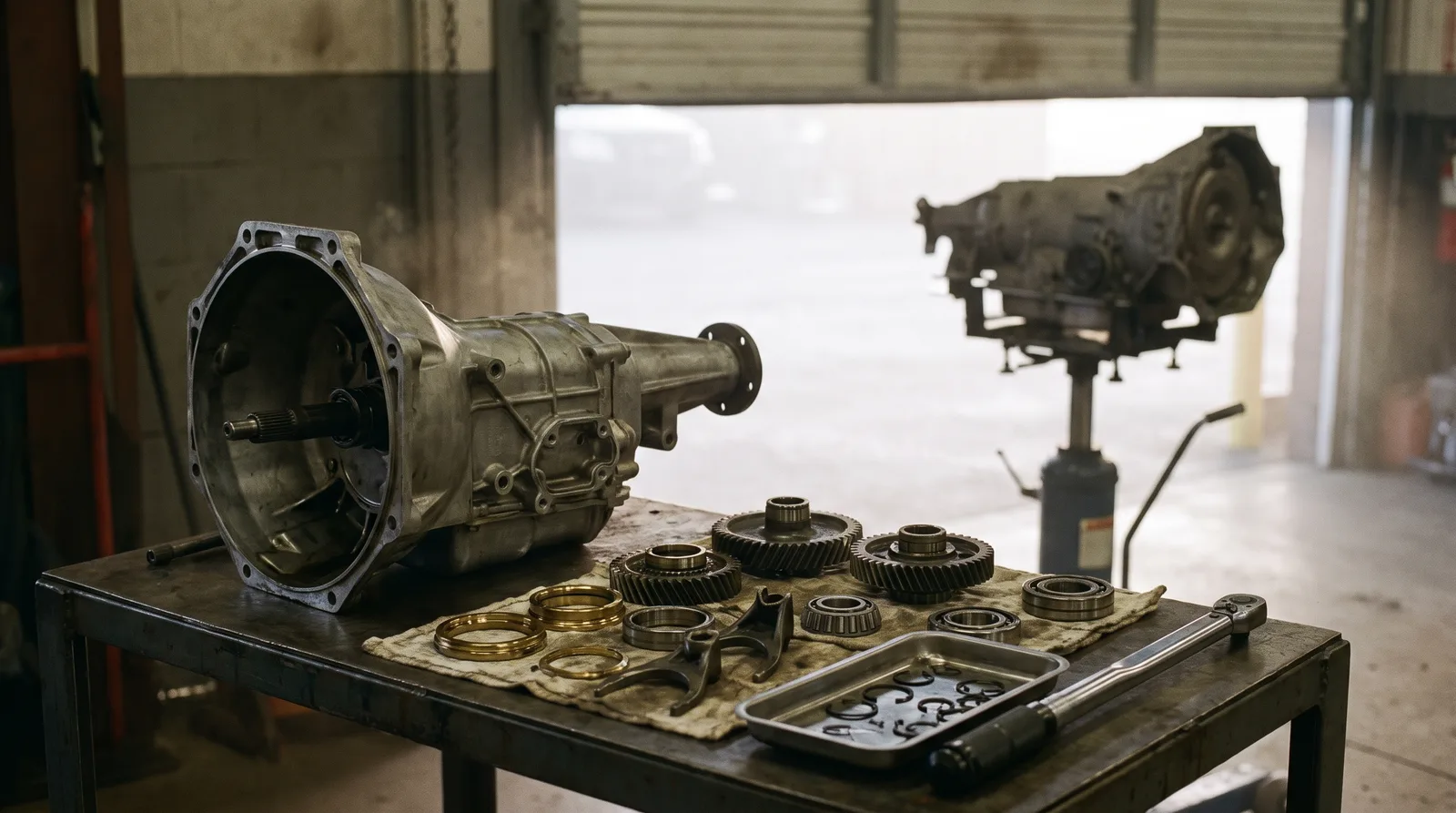
- The driveline and exhaust need clearance. The transmission tunnel and driveshaft are now closer to the raised floor, so the tunnel almost always has to be enlarged, and the exhaust routing gets tighter under the reworked floor.
None of this is a reason not to channel. It is a reason to channel with your eyes open. The guys who complain that their channeled coupe is undrivable usually skipped the planning and just wanted the stance. The ones who did it right thought about where the driver, the pedals, and the driveshaft were going to live before they cut the floor loose.
"A channel is a commitment. You are not lowering the car, you are rebuilding the inside of it so a body can sit where a frame used to be. If you are not ready to move the pedals and give up your headroom, don't start cutting. Do it halfway and you get a car that looks mean in photos and beats you to death on the road."
Ray Delgado
Full channel, partial channel, and getting it right
You do not have to bury the body all the way. A full channel drops the shell the entire depth of the frame rail, which is the maximum, most dramatic look and the most brutal on the interior. A partial channel drops it part way, giving you a lot of the low stance while keeping some of the floor and headroom livable. On a street car that has to be driven any distance, a partial channel is often the smarter call. The show-only cars and the hardcore traditional builds go full.
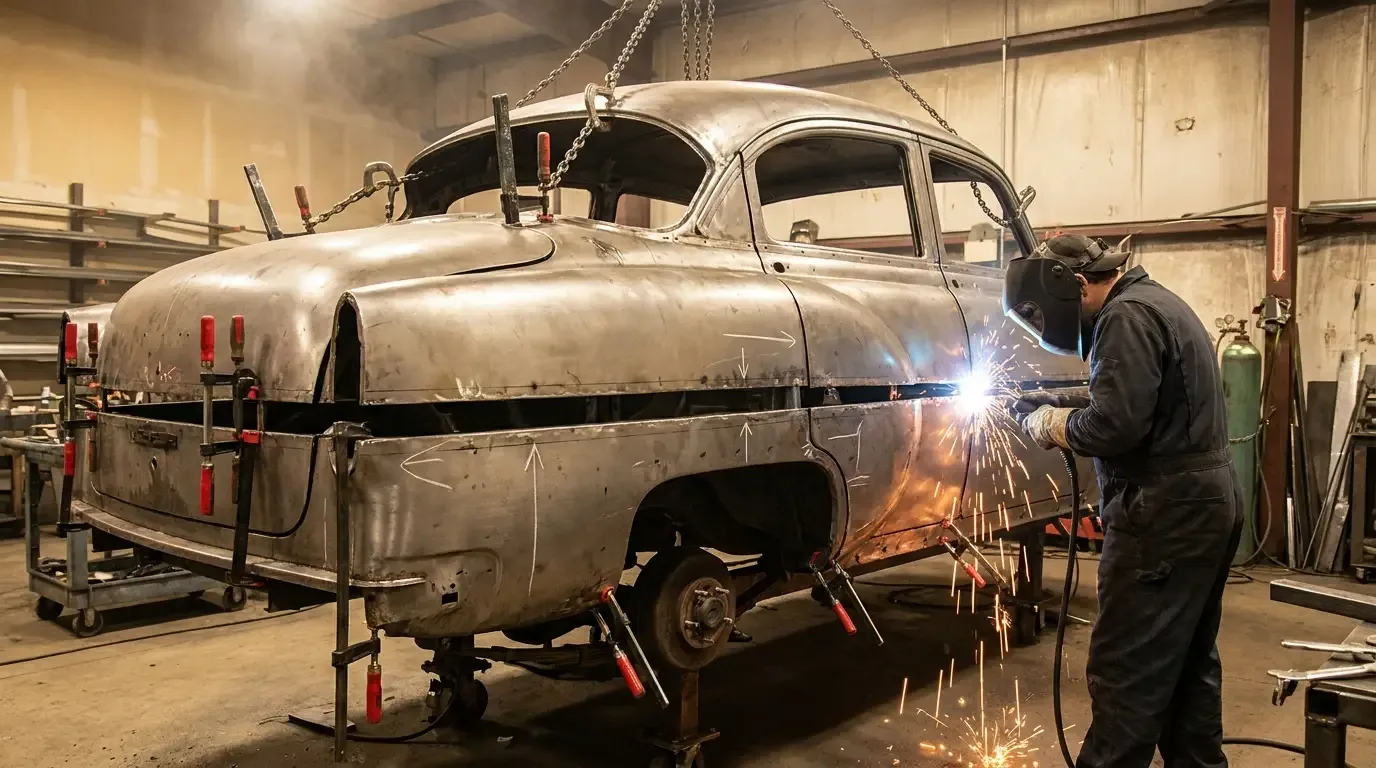
How much you can channel depends on the body and the frame. The depth of the frame rail sets the ceiling, and body style matters too. A tall Model A sedan has room to lose. A low roadster does not have as much to give before the driver is sitting on the ground. This is exactly the kind of decision that gets made alongside other metal cuts. Channeling is a cousin to Sectioning a Car Body, where a horizontal slice comes out of the body's midsection to shorten its height, and builders sometimes weigh one against the other, or combine them, to get a specific proportion.
Is it worth it
For the right car, absolutely. A properly channeled body gives you a stance you simply cannot fake with suspension tricks, a car that sits low because the body is genuinely wrapped down over the frame, not perched on top of it and dropped with hardware. That is the honest, period-correct look, and knowledgeable people can spot the difference across a parking lot.
The catch is that it is irreversible metalwork on a car that then has to work around it for the rest of its life. Interior room, pedal position, and driveline packaging all get harder. If you are chasing a hardcore traditional roadster or coupe and you accept the trade, channeling is one of the defining moves in the whole craft. If you want a low car you can drive across the state in comfort, there are easier roads down. Know which car you are building, then commit.
Sources and notes
- Period hot-rod press and traditional-build features on body-drop techniques.
- Kustom and hot-rod builder interviews and shop references on channeling procedure and interior packaging.
- Marque body and frame references for Ford Model A and 1932 Ford dimensions.
- Show and registry records documenting chopped and channeled traditional rods.
Related Reading
Have a
Classic Car
for Sale?
Reach thousands of serious classic car collectors across the US.
Sell It Here →
Are You a Classic Car Dealer?
List your full inventory and connect with targeted classic car buyers.
Join as a Dealer →
#channeling
#hot rod stance
#traditional hot rod
#hot rod bodywork
#channeled hot rod
#custom fabrication

About the author
Ray Delgado
Metal fabricator and chassis builder who has spent 25 years turning flat sheet and mild steel into hot rods, gassers and restomod underpinnings.
More in Restoration & Tech
Comments
Be the first to comment on this article.