
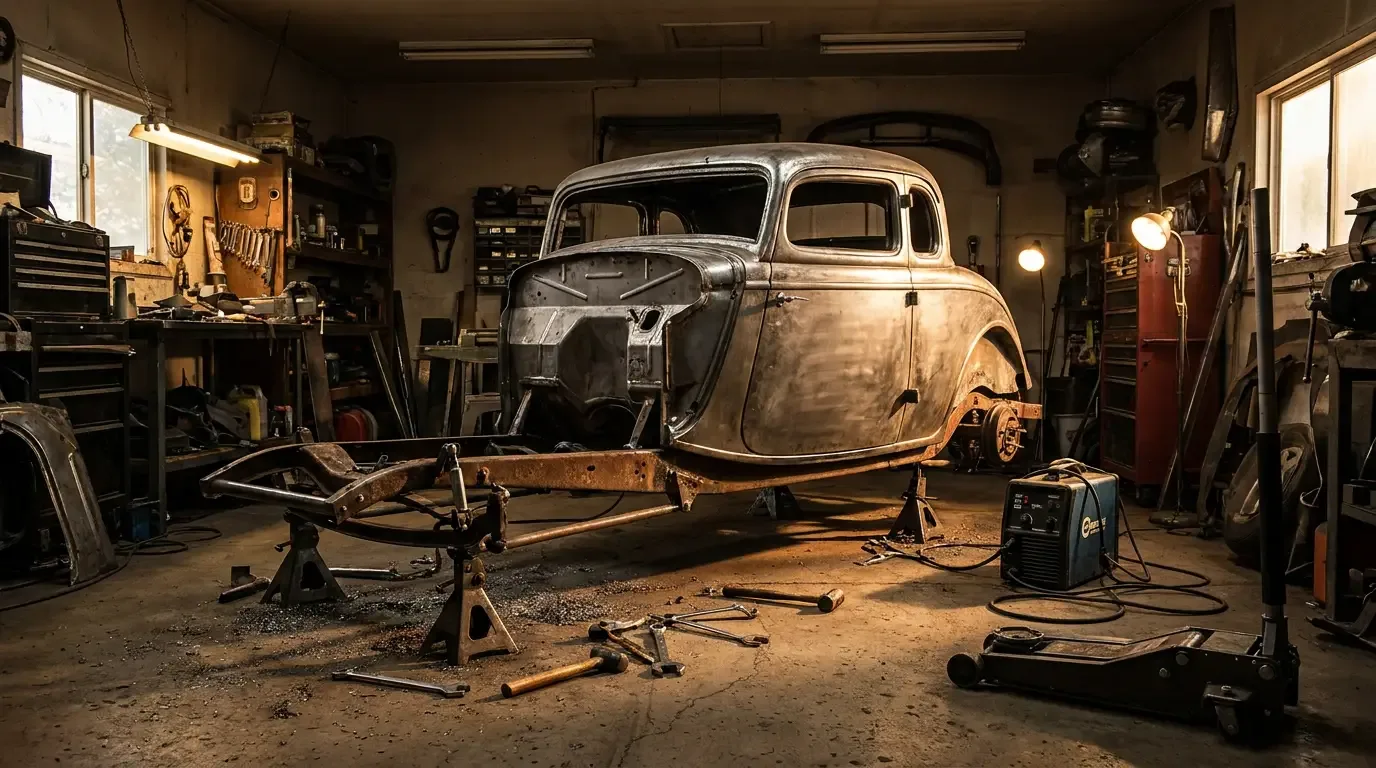
Ask ten builders how to build a hot rod and you will get ten answers, but the good ones all rhyme. A hot rod is a set of decisions made in a certain order, each one committing you to the next. Chop the top before you set the stance and you will fight the proportions for the rest of the build. Drop the engine in before the frame is right and you will pull it back out. This is the anatomy of a build, the techniques that turn a tired old body and a bare frame into something with a stance and an attitude. It is model agnostic on purpose. Whether you are cutting up a 1932 Ford or a 1950 Merc, the moves are the same and the mistakes are the same. If you want the wider context of where these cars came from, read the hot rod story first, then come back here for the metal work.
How a Hot Rod Is Built: The Techniques
The anatomy of a build: the chop, channel, section, Z-frame, suicide front end, lead work, and the order that turns a bare frame into a hot rod.
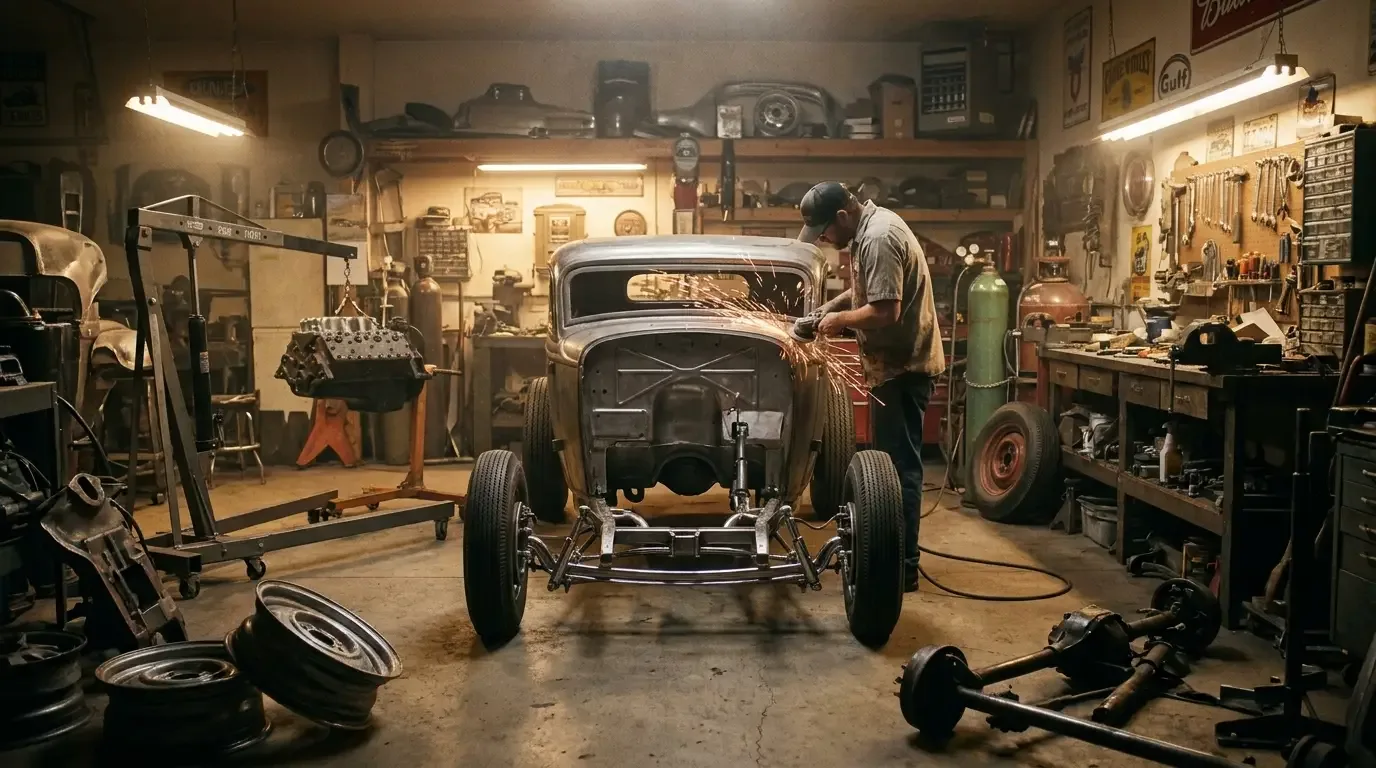
The chop: cutting the top down
The chop is the signature move, the one everybody sees and almost nobody does right. You cut horizontal slices out of the A, B, and C pillars and lower the roof onto the body. Sounds simple. It is not. The windshield posts lean back, the roof is narrower at the top than the bottom, and the rear window pillars run at a different angle than the fronts. Cut an inch out of each pillar straight across and none of the pieces line up when you set the roof back down. The metal has to be leaned forward, stretched, or filled to close the gaps.
How much you take depends on the car and the look. A mild chop on a Deuce coupe might be two and a half to three inches. Guys chasing the radical kustom look have taken four, five, even more out of a Mercury, at which point you can barely see out and that is the point. The chop changes everything above the beltline, so you plan it against the whole car. A big chop on a car with a stock ride height looks wrong, top-heavy and mean in a bad way. The chop and the stance are one decision made in two operations.
Channeling: dropping the body over the frame
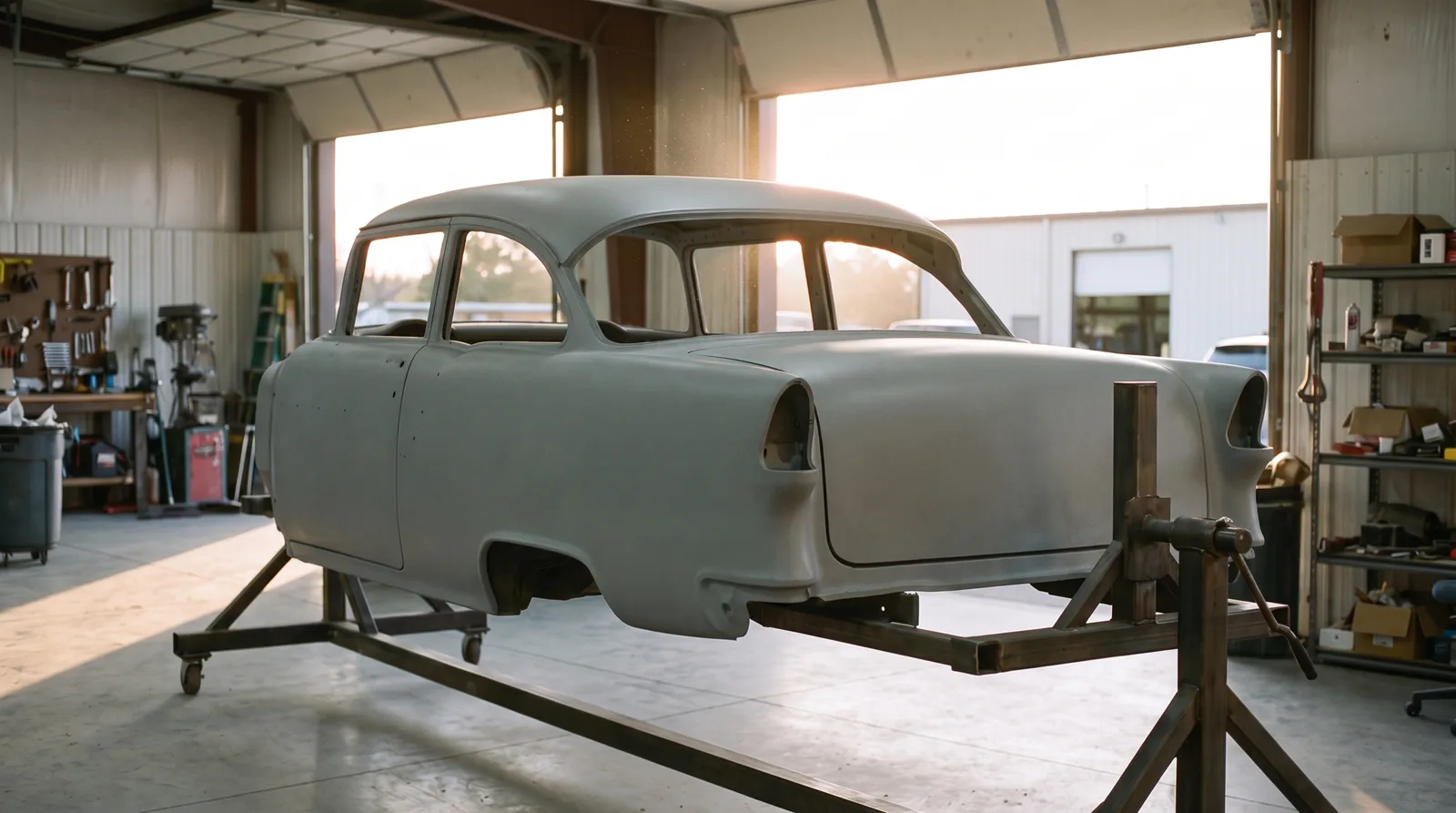
Channeling gets confused with chopping all the time, and they are not the same thing. Chopping lowers the roof. Channeling lowers the body over the frame. You cut the floor loose from the body, raise the floor up inside the car, and drop the whole body down so the frame rails poke up into where the floor used to be. The car sits lower without touching the suspension. On a highboy the body sits on top of the rails and you see frame. Channel it and the body swallows the rails, the fenders come down toward the road, and the thing looks like it is hunkered down ready to pounce.
The cost is interior room. Channel a car four inches and you just moved the floor up four inches into your seating space. Your knees come up, the steering wheel is in your chest, and a tall driver is miserable. Traditional channeled roadsters solve this by sitting you low and laying you back, but there is no free lunch. This is why a lot of builders channel and chop together in careful proportion, because a heavy channel with no chop leaves the greenhouse looking tall and awkward over a low body.
- Highboy: body on top of the rails, fenders often gone, frame proud and visible. The hot rod look.
- Channeled: body dropped over the rails, low and closed in, more kustom than street rod.
- Both: a channel plus a chop, balanced so the roof and body come down together.
Sectioning: taking height out of the middle
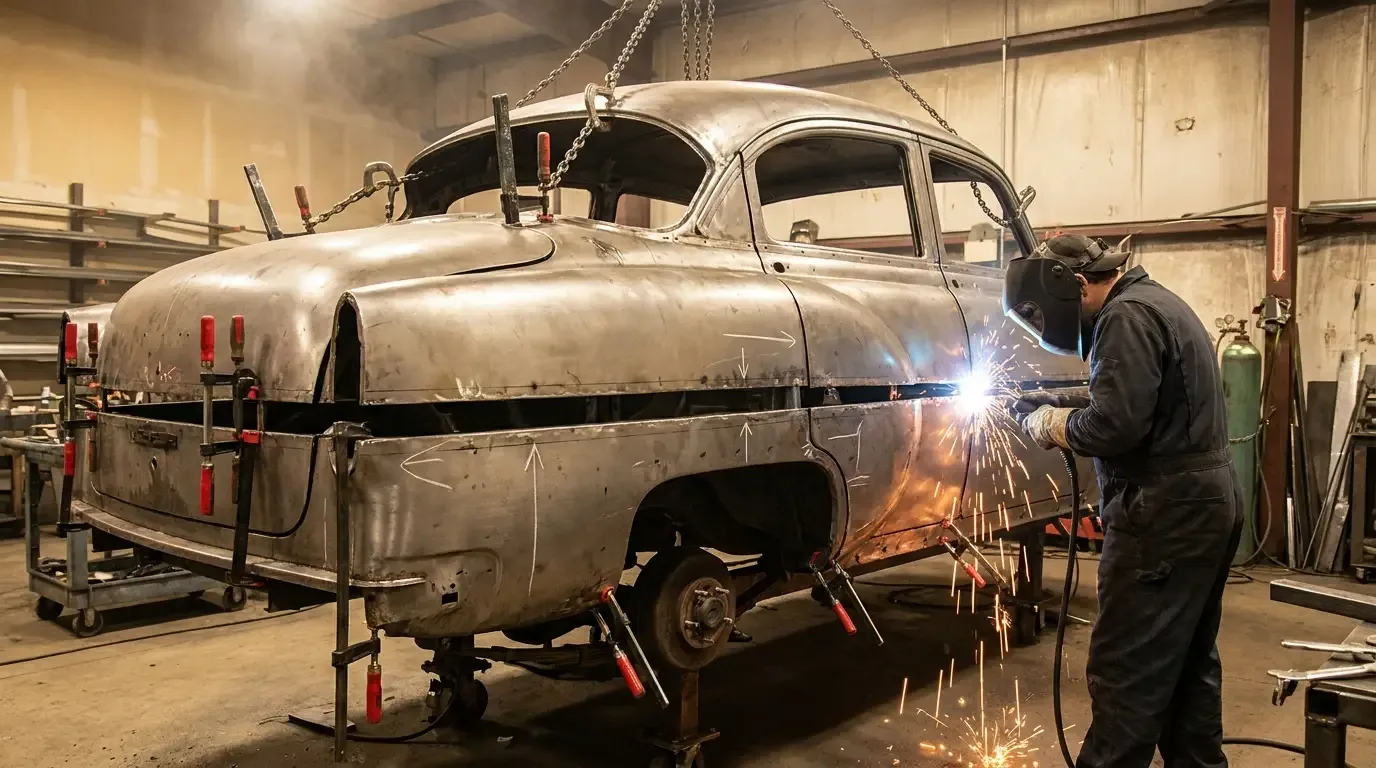
Sectioning is the big one, the technique most guys will never attempt. You cut a horizontal band out of the middle of the body all the way around, the belt line region, and weld the top back down onto the bottom. It makes the car shorter in height without touching the roof or the floor. Where a chop shrinks the greenhouse and a channel drops the body, sectioning shrinks the body itself.
It is brutal work because the body is not a straight-sided box. Remove a three-inch band and the top half no longer matches the bottom half. Body sides taper, door gaps shift, wheel openings move, and every reveal and character line has to be realigned by hand. This is where you find out if a builder can actually shape metal. Sectioning is rare, expensive in hours, and when it is done right most people cannot even tell it was done. They just know the car looks impossibly low and right.
"People throw the word chop around like it means anything. Chop, channel, section, they are three different cuts that do three different jobs. If a guy tells you he chopped his car four inches and it still has the stock floor and the stock body height, he chopped it, fine. He did not section it and he did not channel it. Know which cut you are looking at and you will know what you are looking at."
Jim Vasquez
Z-ing the frame and the suicide front end
Now the chassis. Stance is the whole ballgame and you get it from the frame, not from cutting springs. Z-ing the frame means cutting the rails and stepping them, usually at the front and the rear, so the body sits lower over the axle. The cut looks like the letter Z, hence the name. Z the frame in the back and the rear of the car drops over the axle for that raked, tail-down attitude. It is a permanent change to the chassis geometry, done with a torch and a welder, and it is the right way to get a car low instead of hacking the suspension into oblivion.
The suicide front end is the other classic chassis move. Instead of the front axle sitting under the frame in the stock location, the spring perch is moved forward and hung off the very front of the frame, ahead of the crossmember. It pulls the axle out front, stretches the look, and lets you tuck the frame down. The name comes from the reputation, right or wrong, of what happens if the mounting lets go. Done properly with the right materials it is safe and it has been on traditional rods for seventy years. Done by somebody guessing, it is exactly what the name says.
| Technique | What it changes | Difficulty |
|---|---|---|
| The chop | Roof height and windshield rake | Hard |
| Channeling | Body height over the frame | Moderate |
| Sectioning | Overall body height | Very hard |
| Z-ing the frame | Ride height and rake at the axle | Moderate |
| Suicide front end | Front axle position and reach | Moderate |
Chassis, suspension, and getting the stance right
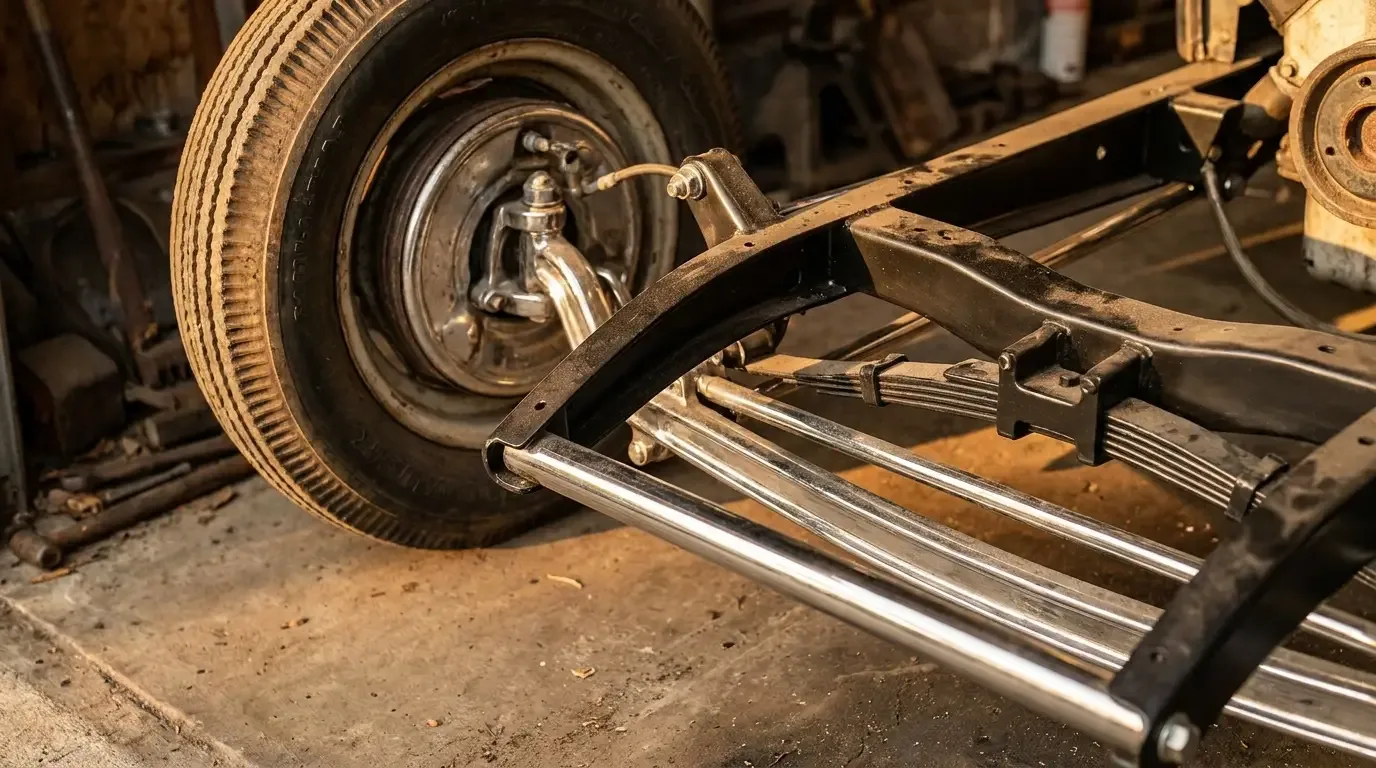
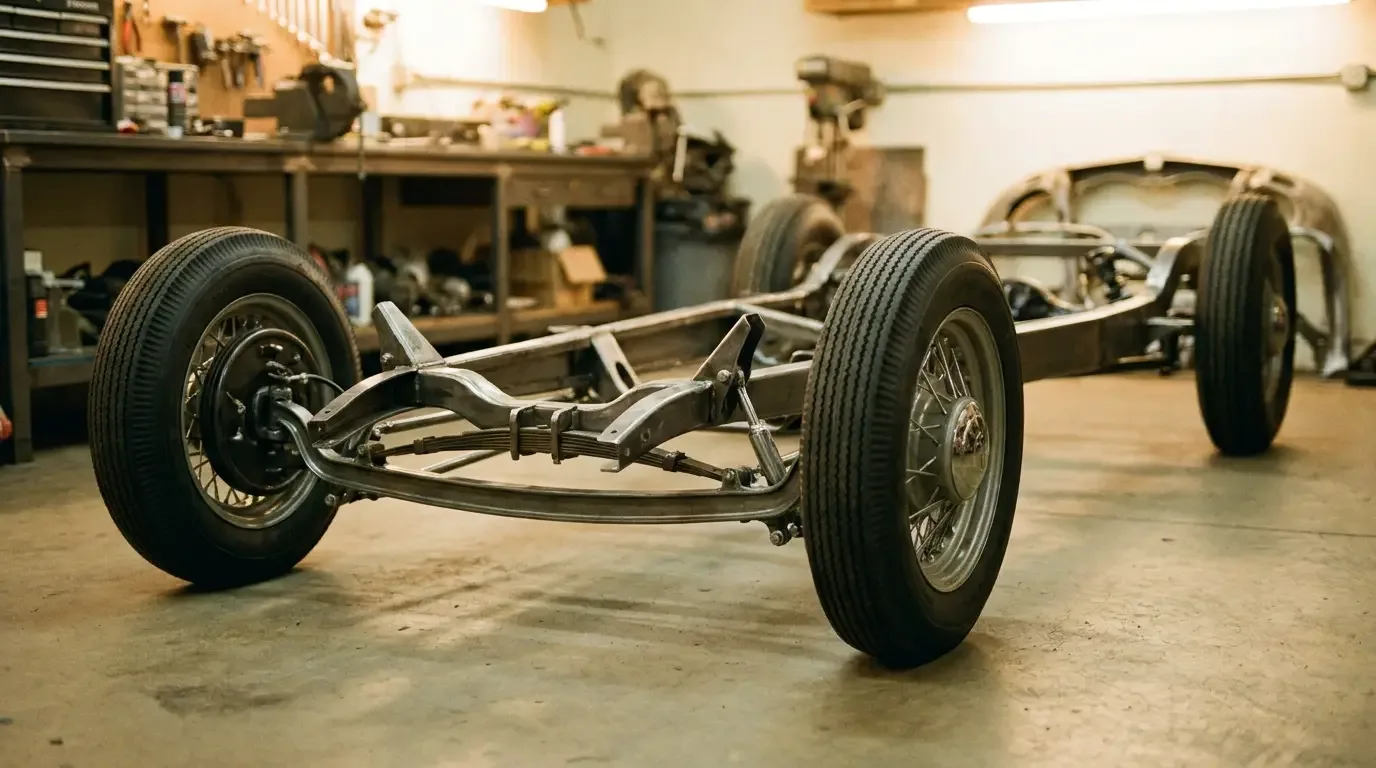
Underneath the sheet metal choices is the running gear, and the traditional hot rod answers here are old for a reason. Up front the drop axle is king. A dropped I-beam or tube axle, forged or dropped a few inches, lowers the nose and keeps the classic solid-axle look with the wheels poked out at the corners. Match it with a transverse leaf spring, the buggy spring across the frame, and hairpins or a four-bar to locate the axle. That is the front end that has been under rods since before the war and it still looks right because it is honest.
The back end is usually a live axle located by ladder bars, a four-link, or on traditional cars the same transverse spring setup. This is where Z-ing the frame pays off, letting the rear sit low without the axle punching through the floor. Brakes and steering are where the traditional look meets the need to actually stop and turn, and plenty of builders run early Ford-style drums for the look with a hidden disc conversion or a modern master cylinder for the function. The stance is set by all of it working together: the drop axle, the spring, the Z, the wheel and tire choice, and the rake between front and rear. Get the rake right, a little nose-down or a little tail-down depending on the era you are chasing, and the car reads correct from fifty feet away.
Lead work, bodywork, and the order of the build
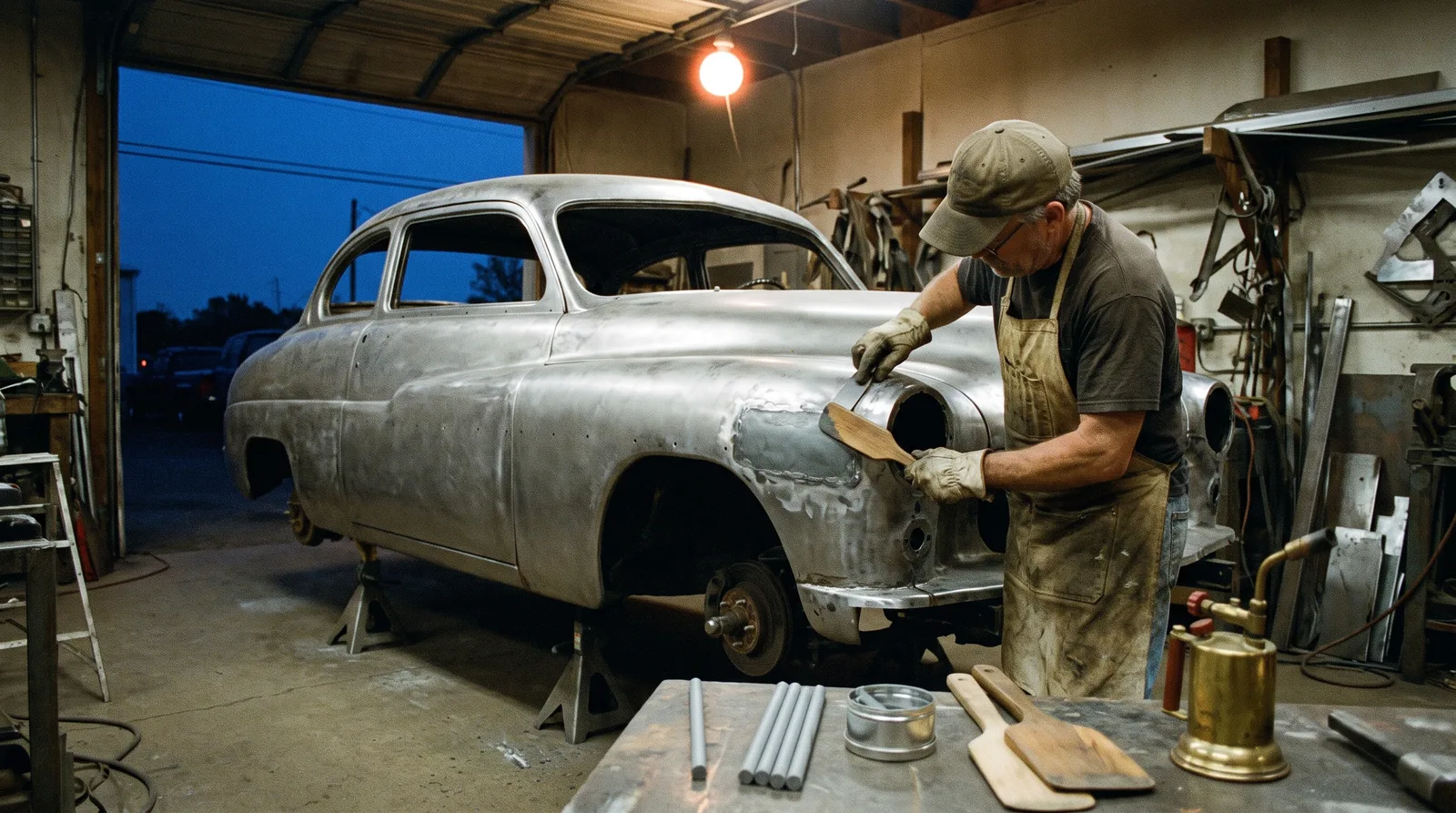
All that cutting leaves seams, and the old way to fill them is lead. Lead work, body solder, is tinning the metal and floating molten lead into the low spots and joints, then filing and sanding it smooth. It is why the old cars are called leadsleds. Modern plastic filler is faster and most builds use it, but lead is more durable, does not shrink or crack the same way, and there is a reason the traditional guys still do it on a filler-critical seam like a chopped pillar or a leaded roof. It is a skill, it involves heat and a torch and toxic fumes handled carefully, and doing it well separates the shops.
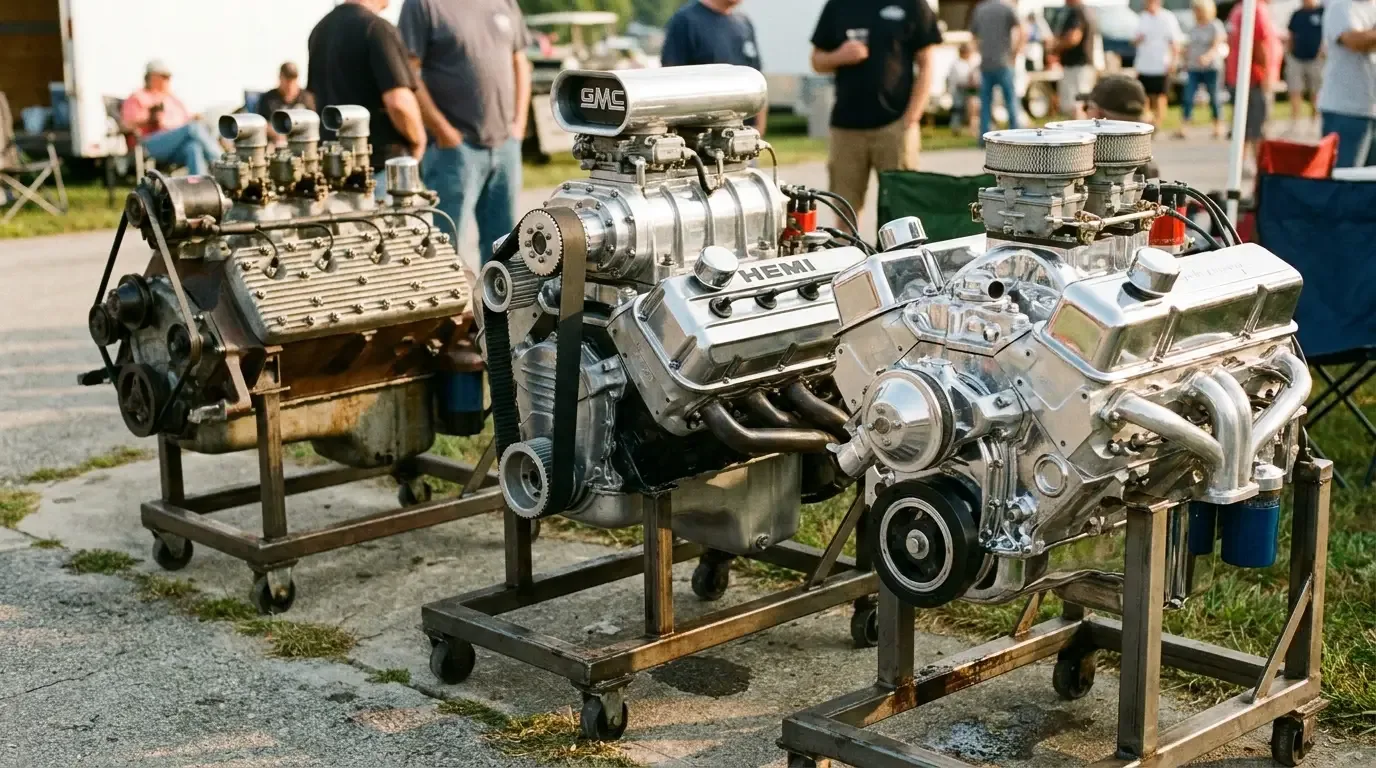
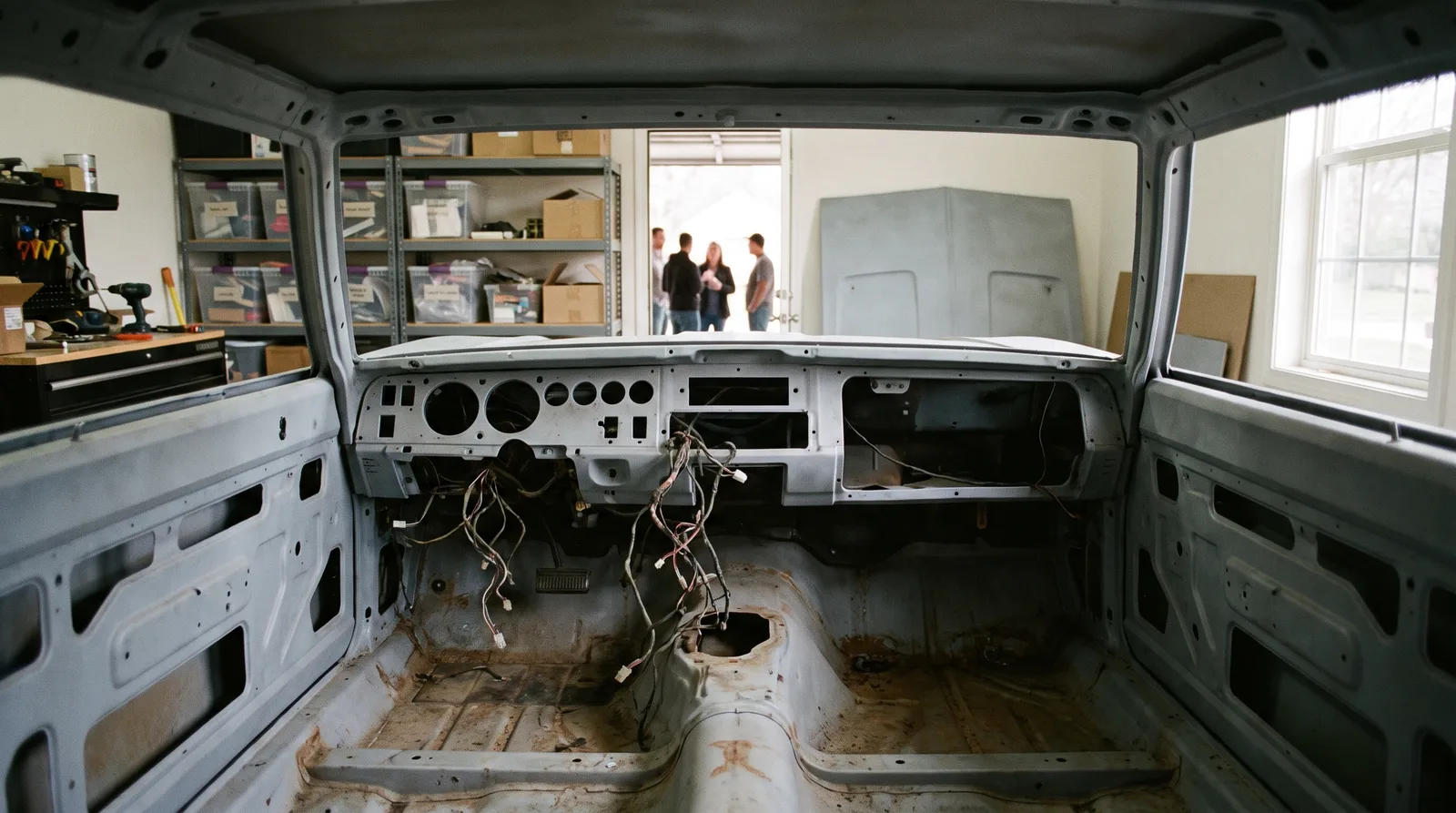
Then comes the order, which is really the whole point. A build runs roughly: strip and assess the body and frame, get the chassis and stance sorted, do the major metal cuts (chop, channel, section as chosen) while the car is in bare metal and easy to weld, hang the drivetrain and plumb it, do the bodywork and lead and blocking, then paint, then wiring and interior and final assembly. Fight that order and you pay for it. Paint before you are sure the drivetrain fits and you will scratch fresh paint pulling the engine. Chop after the interior is done and you have wasted the interior. The engine itself is its own deep subject, and the choice between an old flathead v8 and a small block changes the plumbing, the mounts, and the whole character of the car, so you settle that early too.
You do not have to build one from a bare frame to appreciate what went into it. If you would rather buy a finished car and learn to read the work in it, there are plenty of vintage hot rods for sale, and knowing these techniques is exactly how you tell a real build from a bondo special dressed up to look the part.
Sources and notes
- Period hot-rod and kustom press for chopping, channeling, and sectioning technique and terminology.
- Kustom kulture build histories and shop records for traditional lead work and chassis practice.
- Traditional chassis references for drop axles, transverse springs, Z-ing the frame, and suicide front ends.
- Builder interviews on the order of operations in a ground-up build.
- Chop figures for the Hirohata Merc confirmed against Barris Kustoms build histories and period accounts.
Related Reading


Southern California hot rod and custom car builder with roots in the traditional kustom kulture scene.
More in Restoration & Tech
Comments
Be the first to comment on this article.