
Ask ten guys what makes a hot rod look mean and most will point at the roof. Chopping the top is the single move that changes the whole attitude of a car, and it is the modification I get asked to walk through more than any other. It is also the one that separates a builder who understands metal from one who is guessing. The process itself is simple to describe: cut the roof off, take a horizontal slice out of every pillar, and set the roof back down lower. Execution is where it gets hard. Done right, the car looks like it was born that way. Done wrong, it looks like a crushed can. This is one of the core skills covered in how to build a hot rod, and it earns its own explanation here.
Restoration & Tech
7 min read
Chopping a Top: What It Means and Why
What a chopped top is, why it transforms a hot rod's look, how much to chop, and why coupes chop cleaner than sedans.
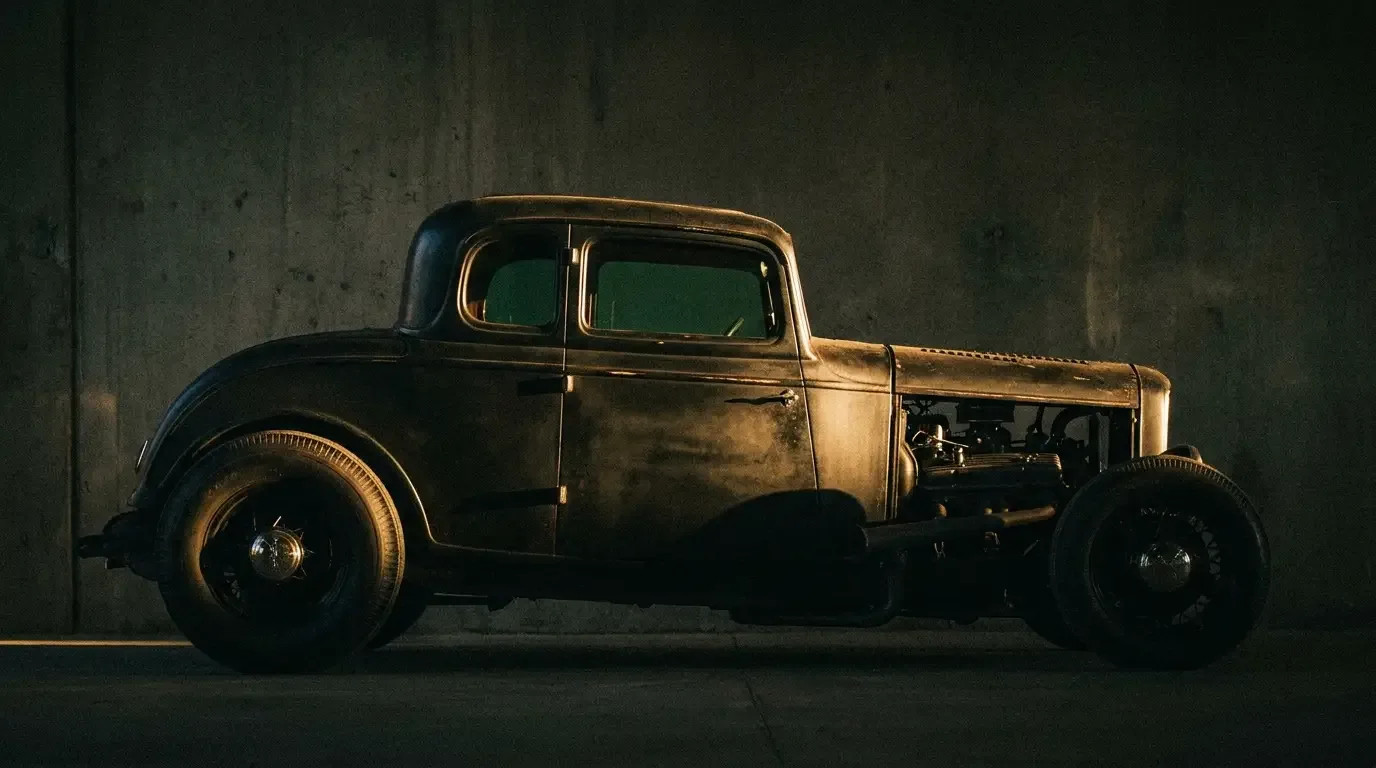
What chopping a top actually means
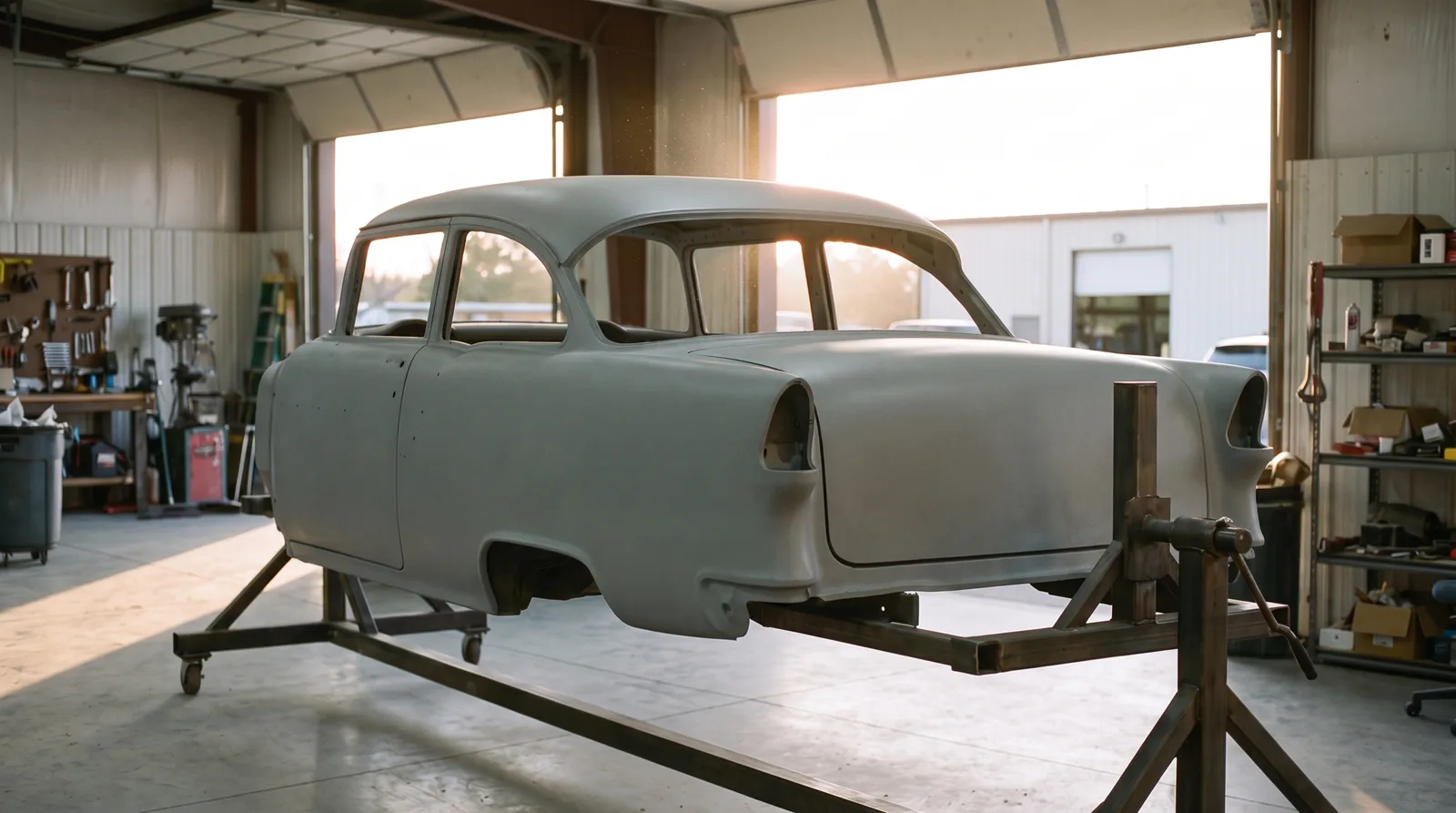
The chop is a section cut through the greenhouse, meaning the roof and the pillars that hold it up. You remove a band of metal from the A-pillars at the front, the B-pillars in the middle if the car has them, and the rear quarters or C-pillars. Then you drop the roof down onto the shortened pillars and weld everything back together. The number you hear people throw around, like a three-inch chop or a five-inch chop, refers to how much height you took out of the pillars. A three-inch chop means the roofline sits three inches lower than the factory put it.
It sounds simple on paper. Cut, drop, weld. In practice the pillars are not vertical, the roof is not flat, and nothing lines up when you set it back down. That is the whole game. The metal does not want to go where you need it, and closing those gaps is where the craft lives.
Why a chop transforms the look
Lowering the roof does three things at once. It shrinks the glass, so the windows read as slits instead of big open panes. It brings the roofline closer to the beltline, which makes the body look long and the car look fast even parked. And it changes the proportion of metal to glass, so the car reads as heavy and planted instead of tall and upright. A stock closed car from the thirties or forties sits tall because it was built for men in hats. Take three or four inches out of the roof and the whole thing gets a hunkered-down, ready-to-run stance.
The chop works best when it plays against the rest of the build. A car sitting low on the ground with a chopped roof looks intentional. A tall car with a chopped roof just looks odd. That is why chopping usually travels with lowering the suspension, and often with channeling the body over the frame. If you want the body sitting even lower, read our guide on channeling a hot rod body, which drops the shell down around the frame rails instead of the roof down onto the pillars.
"A chop is not about how much you cut. It is about whether the eye believes it. I have seen a two-inch chop that looked meaner than somebody else's five, because the guy got the angles right and nobody could tell where the old roof ended."
Ray Delgado
How much to chop
There is no single right number. The right chop depends on the car, the glass, and what you are trying to say. On a tall closed coupe from the early thirties you can pull a lot out, sometimes four or five inches, because there is height to spare. On a car that already sits low you take less, maybe two or three, or you end up with a roof you cannot see out of. I have watched guys chop so hard they could not fit behind the wheel with a hat on, which for a traditional rod defeats the point.
These figures are starting points, not gospel, and every body is different. Mock it up with tape on the glass before you cut anything.
| Typical chop | Common on | What you gain | What gets harder |
|---|---|---|---|
| 2 inches | Cars already sitting low | Subtle meaner stance, easy glass | Less dramatic payoff |
| 3 inches | Coupes, most popular chop | Strong look, manageable glass | Pillar angle mismatch appears |
| 4 to 5 inches | Tall closed coupes | Aggressive, dramatic roofline | Roof too narrow, major glass rework |
The deeper the chop, the bigger the problem at the back of the roof. When you drop the roof straight down, the rear pillars lean forward and the roof no longer reaches the back of the car. You either have to stretch the roof, lean the pillars, or fill the gap with a filler panel. Every extra inch multiplies that headache.
The tricky pillars and glass
Here is where most home chops go wrong. The pillars on an old car are not straight up and down, and they are not the same width top to bottom. When you take a slice out and drop the roof, the top half of each pillar no longer matches the bottom half. The A-pillars especially lean back, so cutting three inches out of the roof does not just lower it, it also shoves the top of the windshield backward. Builders deal with this by leaning the pillars, adding metal, or slanting the windshield to meet the new roofline. None of it is bolt-on.
Then there is the glass. Factory glass will not fit a chopped opening, full stop. Once you change the height and shape of every window frame, every piece of glass has to be recut to the new opening. Flat glass in the door windows and windshield can be cut to size by a glass shop. Curved rear glass is the nightmare, because you cannot just trim a curved piece, and reproduction chopped glass is expensive or does not exist for your car. Plenty of chops stall out for a year because the builder cut the roof before figuring out the glass.
Coupe versus sedan chops
A coupe is the friendlier chop and the reason most traditional rods are coupes. A two-door coupe has short A-pillars, no B-pillars in the door opening, and one set of rear pillars to worry about. The roof is small, the cuts are few, and the door glass is short and easy to recut. That is why the deuce coupe and the Model A coupe became the classic hot rod shapes. They chop clean.
A sedan is a different animal. Four doors, tall B-pillars in the middle, more door glass, and a longer roof that fights you more when you drop it. Every extra pillar is another place where the top half will not meet the bottom half. Two-door sedans are a middle ground, and plenty of good chops live there, but a four-door with a deep chop is a serious job that a lot of shops will quote high just to avoid. None of this is a reason to skip the chop. It is a reason to know what you are getting into before the sawzall comes out, and to understand why the chop sits at the center of the hot rod story.
Sources and notes
- Period hot-rod and kustom press coverage of chopping technique and famous chopped cars.
- Kustom kulture histories and builder profiles from the postwar California scene.
- Show and museum records documenting landmark chopped customs.
- Builder interviews and shop experience on metalwork, pillar geometry, and glass fitment.
Related Reading
Have a
Classic Car
for Sale?
Reach thousands of serious classic car collectors across the US.
Sell It Here →
Are You a Classic Car Dealer?
List your full inventory and connect with targeted classic car buyers.
Join as a Dealer →

About the author
Ray Delgado
Metal fabricator and chassis builder who has spent 25 years turning flat sheet and mild steel into hot rods, gassers and restomod underpinnings.
More in Restoration & Tech
Comments
Be the first to comment on this article.