
A C10 that runs fine on the highway but climbs into the red the moment traffic slows down is telling you something specific, and it's not the same diagnosis as a truck that overheats everywhere, all the time. Stop-and-go overheating has its own set of usual suspects, mostly centered on the fact that a truck moving slowly loses the airflow across the radiator that it depends on at speed, and any weakness in the cooling system that's masked by highway airflow shows up hard the moment you're crawling through a light-heavy stretch of road.
Restoration & Tech
7 min read
Diagnosing Overheating in Stop-and-Go Traffic
Why a C10 that runs cool on the highway can still overheat crawling through traffic, and how to diagnose the fan, water pump, and timing issues that actually cause it.
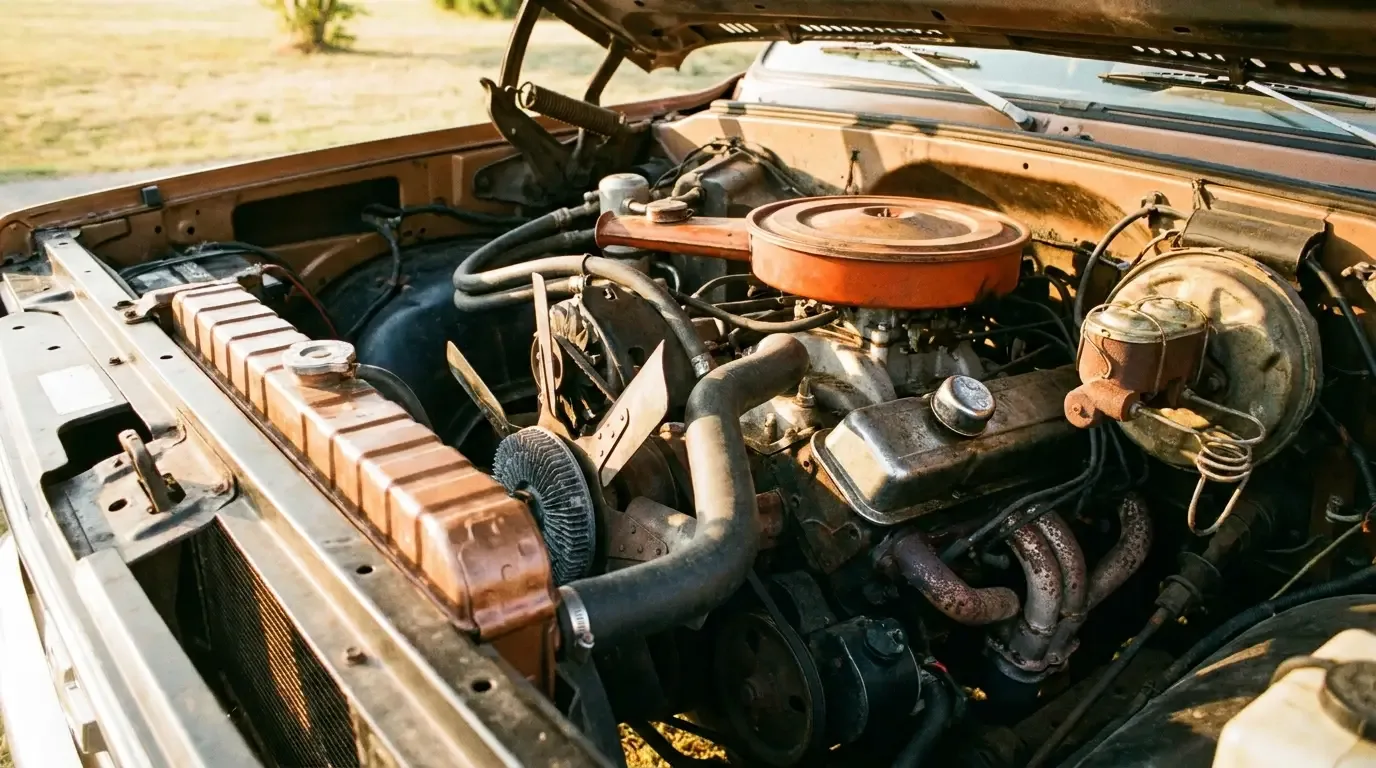
I've had plenty of these come through with an owner convinced the whole cooling system needs replacing, when the actual problem was one component not doing its job at low speed specifically. Working through this the right way means thinking about what changes between highway driving and stop-and-go, not just throwing a new radiator at a truck that might only need a fan clutch or a timing check.
Why stop-and-go traffic exposes weak links that highway driving hides
At highway speed, a moving truck pulls plenty of air through the radiator core just from forward motion, and a marginal fan, a slightly slow water pump, or timing that's a little off can all get away with it because the airflow is doing most of the cooling work anyway. Slow the truck down to stop-and-go speeds and that forward airflow disappears, leaving the fan and water pump to do the entire job alone. Any weakness in either one shows up immediately, right when you're least able to pull over easily.
This is exactly why a truck overheating specifically in traffic, but running cool on the open road, almost always points at fan performance, water pump efficiency, or ignition timing rather than a bulk cooling system problem like a bad radiator core or a collapsed hose. Those bigger problems usually show symptoms at all speeds, not just when you're crawling.
Checking the fan and clutch first
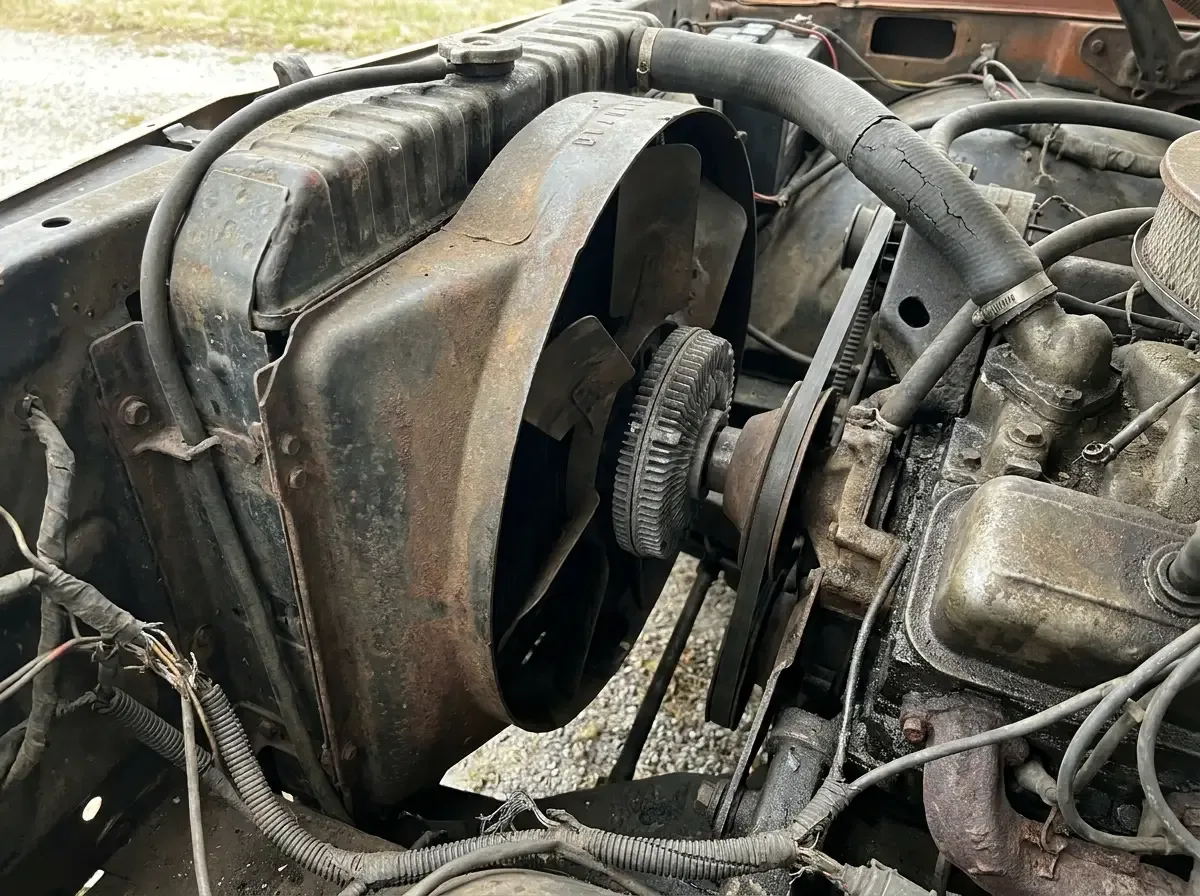
A mechanical fan clutch that's lost its viscous drag will spin freely without actually pulling air through the radiator, and this failure mode is sneaky because the fan still spins, just without enough resistance to move real air at idle and low RPM. With the engine cold, spin the fan by hand. It should resist turning somewhat even cold, and that resistance should increase noticeably once the engine's warmed up. A fan that spins freely with almost no resistance at operating temperature is a clutch that's failed, and it's a cheap, common cause of exactly this stop-and-go overheating pattern.
Trucks running an electric fan conversion have a different failure mode to check, usually a fan that isn't wired to come on early enough, or a temperature switch set too high for the thermostat installed, since a common setup pairs a 180-degree thermostat with a fan switch closing somewhere around 195 to 205 degrees. A switch set well above that range leaves the truck to climb well past where the fan should have kicked in before it finally engages. Confirm the fan actually turns on at idle once the truck's fully warmed up, and if it doesn't, or comes on embarrassingly late, that's your answer before you look anywhere else.
| Symptom | Likely cause | Quick check |
|---|---|---|
| Overheats in traffic, fine on highway | Weak fan clutch or late electric fan engagement | Spin fan by hand hot vs cold, watch fan cycle at idle |
| Overheats at all speeds equally | Low coolant, bad radiator core, or collapsed hose | Pressure test the system for leaks and hose collapse under vacuum |
| Temp creeps up slowly over a long idle | Weak water pump impeller or worn belt slipping | Check belt tension and listen for pump bearing noise |
| Sudden spike after a hard stop-start cycle | Timing too advanced, causing extra heat under load | Check initial timing against your specific engine's factory spec with a timing light, since it varies by engine and model year |
Timing, water pump condition, and the parts people skip
Ignition timing that's advanced too far generates extra combustion heat that a marginal cooling system can handle at highway speed but not at idle, where there's less airflow to carry that extra heat away. If a timing check hasn't happened in years, or if someone's advanced it chasing more power without checking the actual effect on running temperature, that's worth ruling out before spending money on cooling system parts that were never the problem.
A water pump nearing the end of its life doesn't always announce itself with a leak. The impeller can erode from the inside, reducing flow well before the shaft seal starts weeping coolant externally. This kind of internal wear is hard to spot without pulling the pump, but a truck that runs fine at speed and struggles specifically at idle, with a pump that's old enough to be original or close to it, deserves a look at this possibility before you assume the radiator itself needs replacing.
Confirming the fix before you call it done
After addressing whatever the diagnosis points to, don't just take the truck on a highway loop and call it fixed, since highway airflow can mask a problem that was never actually solved. Test it specifically in the same stop-and-go conditions that caused the overheating originally, ideally the same route or similar traffic pattern, and watch the gauge closely through the whole drive. A truck that stays steady through slow traffic after the repair has actually been fixed. One that still creeps up, just a little less than before, still has something unresolved.
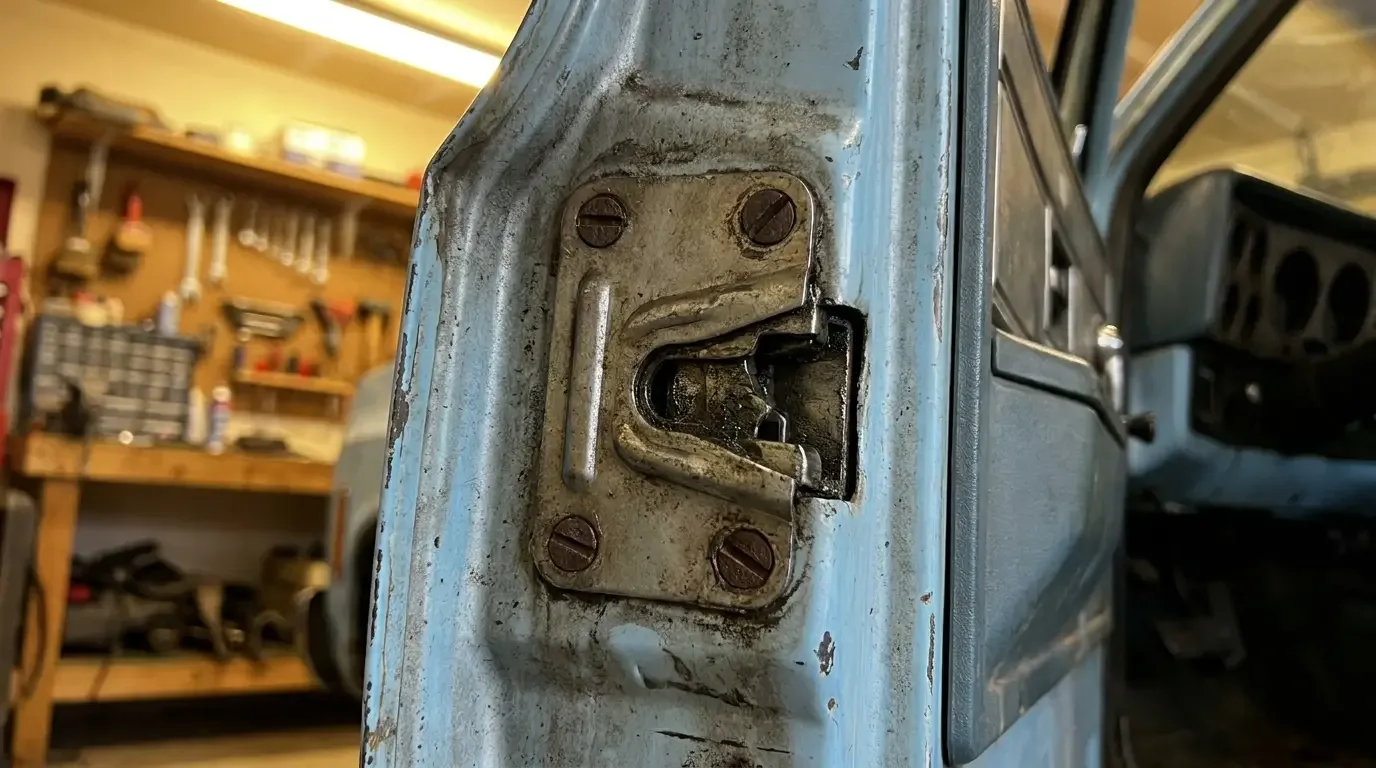
While you're focused on cooling issues, it's worth checking on a loose door latch, a much simpler fix while you're in there, since trucks that get driven regularly in stop-and-go traffic tend to accumulate a handful of these small annoyances that are easy to knock out in the same afternoon as a bigger repair.
"Everybody wants to blame the radiator first because it's the biggest, most obvious part in the system. Half the time the actual problem is a fan clutch that quit doing its job years ago and nobody noticed because the truck mostly gets driven on the highway. Test the fan before you buy a radiator you didn't need."
Robert Halloran
Keeping it from coming back
Stop-and-go overheating that gets properly diagnosed and fixed once shouldn't be a recurring problem, provided the rest of the cooling system stays on a normal service schedule going forward. That's really the same principle running through the maintenance guide, treating the cooling system as something that needs regular attention rather than something you only think about after it's already left you stuck in traffic with steam coming off the hood.
A truck that handles slow traffic without climbing into the red is a truck you can actually rely on for daily use, not just weekend highway cruising, and that reliability is worth the afternoon it takes to chase this diagnosis down properly.
Sources and notes
- AA1Car -- diagnosing a cooling fan clutch by hand
- EngineerFix -- step-by-step fan clutch diagnostic
- It Still Runs -- Chevy small-block ignition timing specs
- Trifive Forum -- choosing a thermostatic fan switch setpoint
- Champion Cooling -- cooling switches and senders explained
- Vintage Air -- electric fan set-point temperature switch
Related Reading
Have a
Chevrolet C10
for Sale?
Reach thousands of serious classic car collectors across the US.
Sell It Here →
Are You a Classic Car Dealer?
List your full inventory and connect with targeted classic car buyers.
Join as a Dealer →

About the author
Robert Halloran
Texas-based classic truck enthusiast with decades of experience buying, restoring, and writing about American pickups from the 1940s through the 1980s.
Related Listings - Chevrolet C10
More in Restoration & Tech
Comments
Be the first to comment on this article.