
A column shifter that's gone sloppy is easy to ignore for a long time, because the truck still drives fine and still shifts, just with more play at the lever than there used to be. Then one day you're not entirely sure whether you're in park or reverse without looking down to check, or the truck lurches into gear with more slack than feels right, and you realize you've been putting off a fix that's actually pretty simple once you get into it.
Restoration & Tech
6 min read
Fixing Sloppy Column Shifter Linkage on a C10
How to diagnose and repair a sloppy column shift linkage on a C10, from worn bushings and rod ends to properly adjusting the gear indicator.
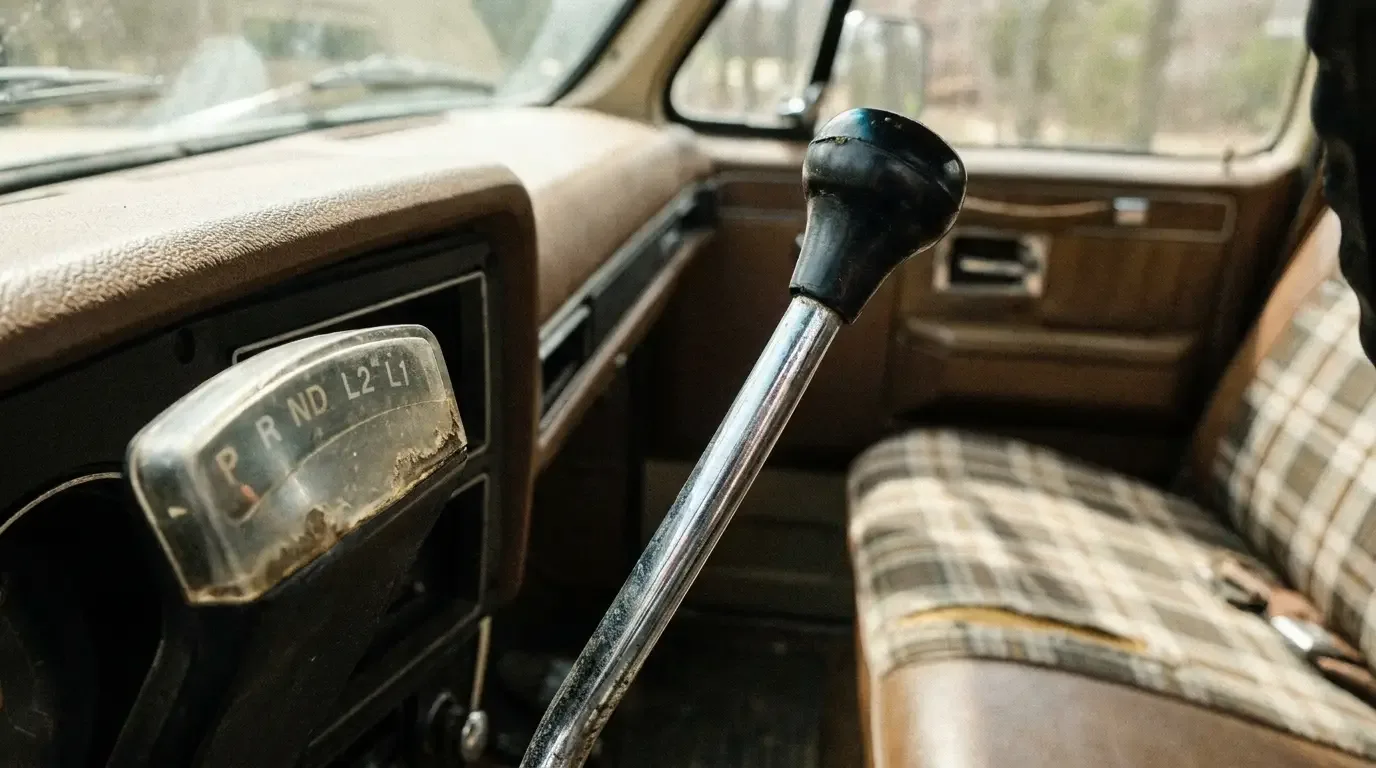
Column shift linkage on these trucks runs from the lever at the steering column, down through a series of rods and levers, to the transmission itself. Every joint in that chain is a place where wear can accumulate, and on a truck with enough years and miles on it, it's rarely just one bad joint. It's usually several worn just enough that together they add up to a shifter that feels loose and imprecise even though no single part has failed outright.
How the linkage wears over time
The rod ends and pivot points in the shift linkage use simple bushings or grommets at each connection, and those wear the same way any repeatedly cycled joint wears, gradually and then all at once once enough material is gone. A shifter that gets used dozens of times a day for years, which describes most work trucks, accumulates wear faster than one that mostly sat in park.
Corrosion plays a role too, especially at the lower linkage points near the transmission where road grime and moisture collect. A rod that's rusted at a pivot point develops play differently than one that's simply worn from clean use, and often needs replacement rather than just a fresh bushing, since rust pitting changes the metal's actual dimensions at the wear point.
Diagnosing where the play actually is
With the truck parked safely and the parking brake set, have someone move the shift lever through its range while you watch each linkage point from underneath. Play at the lever inside the cab can originate from wear at the column itself, at any of the rod connections along the way, or right at the transmission shift lever. Tracking down the actual source before ordering parts saves you from replacing components that were never the problem.
Check each rod end and bushing individually by grabbing it and trying to move it side to side while the linkage is otherwise stationary. A little give is normal in some designs. Noticeable play, a bushing that's visibly cracked or missing material, or a rod end that wobbles independent of the rest of the linkage tells you exactly where to start.
Repairing the linkage
Replacement bushings and rod end kits are inexpensive and cover most of what actually goes wrong with this system on these trucks. Work through the linkage one connection point at a time, comparing the old part to the new one before installing it so you understand exactly what wore out and how. This matters more than it sounds like it should, since a worn bushing that's compressed and cracked looks obviously different once you're holding a fresh one next to it, and that comparison teaches you what to look for next time.
Reassemble each connection with the new bushing or rod end, making sure everything moves freely without binding before moving to the next point. A linkage that's tight and doesn't bind through its full range is what you're after, not one that's so snug it fights you at certain points in the shift pattern.
Once the mechanical connections are sorted, the shift linkage usually needs adjustment to make sure the indicator inside the cab actually matches the gear the transmission is really in. This is not a step to skip. A linkage that's mechanically tight but improperly adjusted can still let the truck start in the wrong position, which brings back the exact safety concern that a loose linkage created in the first place, just from a different cause.
Confirming the fix under real driving conditions
A linkage that feels tight in the driveway can still surprise you once the truck's actually moving, so drive it through every gear position a few times before calling the job done. Pay attention to how the lever feels compared to before, and confirm the truck starts only in park or neutral like it's supposed to, not just that the indicator looks right sitting still in the shop.
It's worth rechecking the adjustment again after a few weeks of regular driving, since new bushings and rod ends can seat in slightly under normal use, changing the feel just enough to be worth a small tweak. After that initial settling period, this repair typically holds for years without needing any further attention.
"A loose column shifter is one of those things people live with because the truck still runs and still shifts, technically. But when you can't tell park from reverse without double checking, that's not a minor annoyance anymore, that's a truck telling you it needs twenty dollars in bushings and an hour of your time. I'd rather fix it on a Saturday than explain to somebody why their truck rolled when they thought it was in park."
Robert Halloran
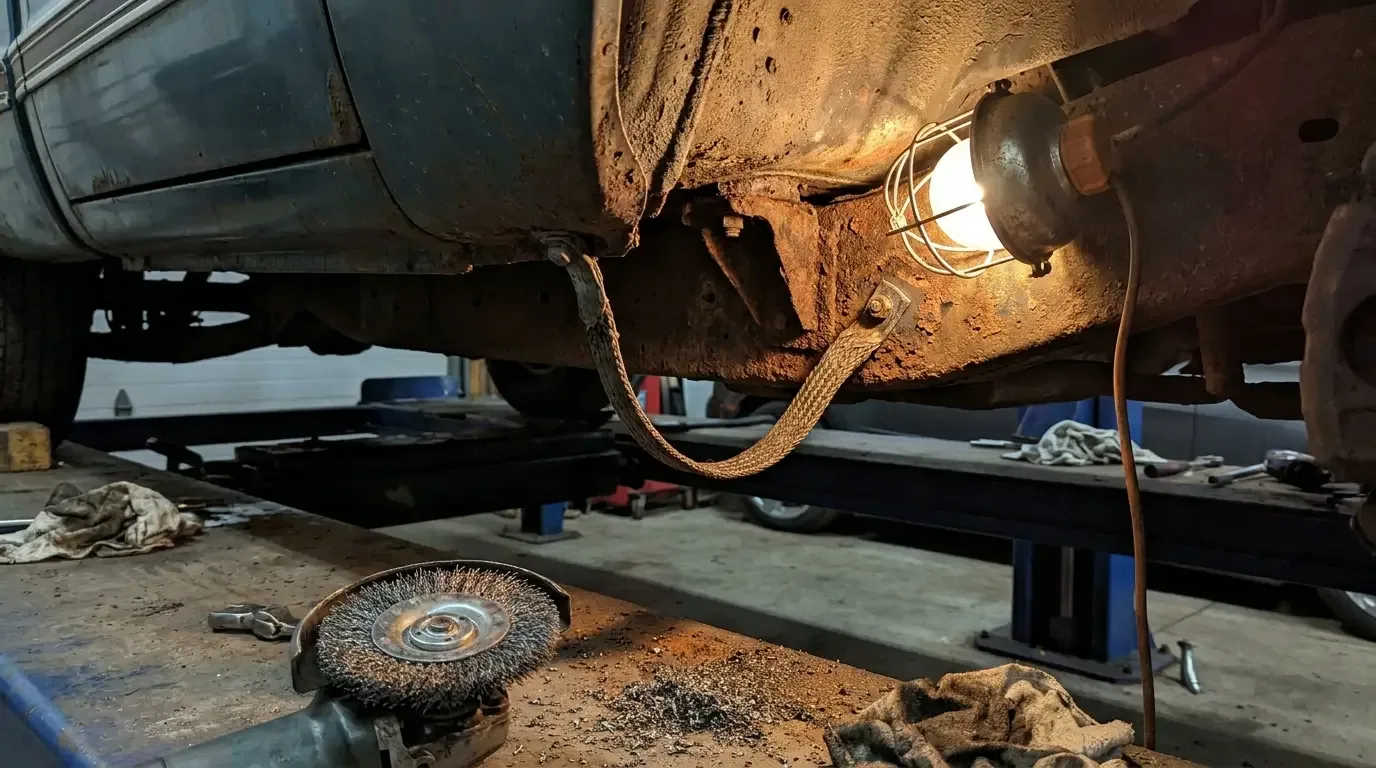
Shift linkage work is the kind of job that's easy to lump in with other small mechanical fixes rather than treating as a standalone project, and it pairs well with a broader look at everything else that wears with age and use. The the maintenance guide lays out where this fits into keeping a C10 reliable as a regular driver rather than a truck you only trust on short trips. While you're under the truck checking linkage points, it's also worth chasing down grounding issues that mimic a dozen other problems, since electrical gremlins and mechanical looseness both tend to surface around the same age on these trucks and get blamed on each other more often than either deserves.
Sources and notes
- GM Square Body forum: column shift linkage bushings discussion
- GM Square Body forum: how to adjust shift linkage to fully reach park
- GM Truck Club forum: neutral safety switch discussion
- Signal Wires: wiring the neutral safety switch in a GM steering column
- LMC Truck: 1973-86 transmission shift linkage kit
Related Reading
Have a
Chevrolet C10
for Sale?
Reach thousands of serious classic car collectors across the US.
Sell It Here →
Are You a Classic Car Dealer?
List your full inventory and connect with targeted classic car buyers.
Join as a Dealer →
#Restoration
#chevrolet c10
#daily driver maintenance
#column shifter linkage repair
#shift linkage bushings
#transmission linkage

About the author
Robert Halloran
Texas-based classic truck enthusiast with decades of experience buying, restoring, and writing about American pickups from the 1940s through the 1980s.
Related Listings - Chevrolet C10
More in Restoration & Tech
Comments (1)
D
Dale Pruitt
3 months ago
Helpful breakdown. The bit about what to actually prioritize at inspection is the part most buyers learn the hard way if they don't read something like this first.