
A C10 with a bad ground doesn't announce itself with a dead battery. It shows up as flickering headlights at idle, a fuel gauge that reads different depending on whether the wipers are running, or a horn that works some days and not others. Guys chase these problems for weeks, throwing new bulbs and new switches at symptoms that have nothing to do with bulbs or switches. Nine times out of ten the real problem is thirty cents worth of rusted sheet metal where a ground strap used to bite clean metal and doesn't anymore.
Restoration & Tech
8 min read
Troubleshooting Electrical Grounding Issues on a C10 Chassis
Flickering lights and phantom electrical gremlins on a C10 almost always trace back to a corroded ground, not a bad part. Here's where the factory grounds live and how to test them properly.
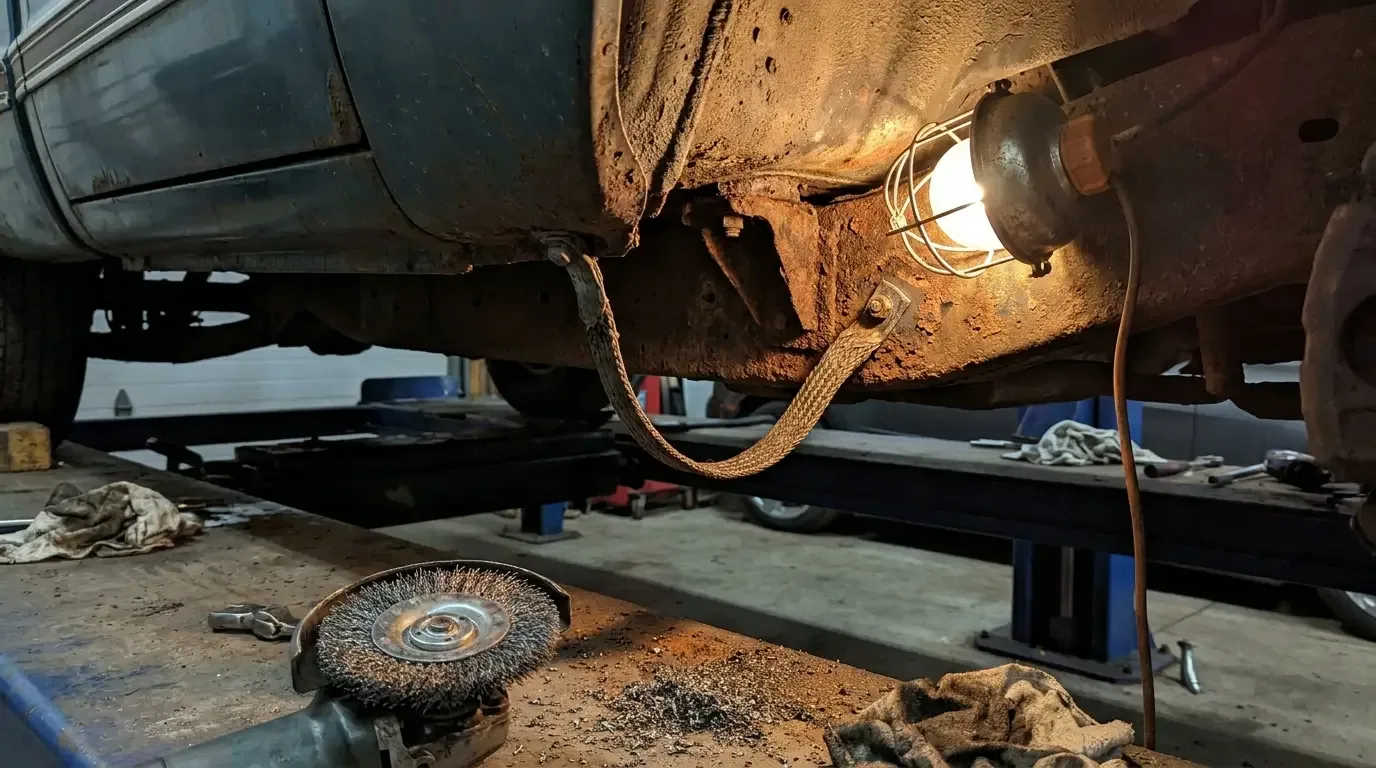
I've had trucks come through the shop with three different owners' worth of wiring repairs stacked on top of each other, and every one of them skipped the ground side of the circuit because it's boring and it's usually buried under something. Nobody wants to pull a fender to look at a ground strap. But that's where the truck is actually failing.
Why C10s develop ground problems in the first place
These trucks ground through the body and frame instead of running a dedicated wire back to the battery for every circuit, which was standard practice for the era and saved a mile of copper on the assembly line. It works fine as long as the metal path stays clean and the connections stay tight. Texas heat and dry conditions are actually kinder to this system than a truck that spent its life in road salt, but even a dry-climate C10 loses ground integrity from three things: paint creeping into a connection point during a repaint, rust forming under a ground strap that nobody's touched since the Ford administration, and corrosion building up on battery terminals and cable ends that slowly chokes the whole circuit.
The tricky part is that a marginal ground doesn't fail all at once. It gets a little worse every year, and by the time you notice the symptom, the connection has been degrading for a decade. That's why so many of these trucks get "new" wiring harnesses installed and still have the same flickering gauge cluster. The harness was never the problem.
Where the factory grounds actually live
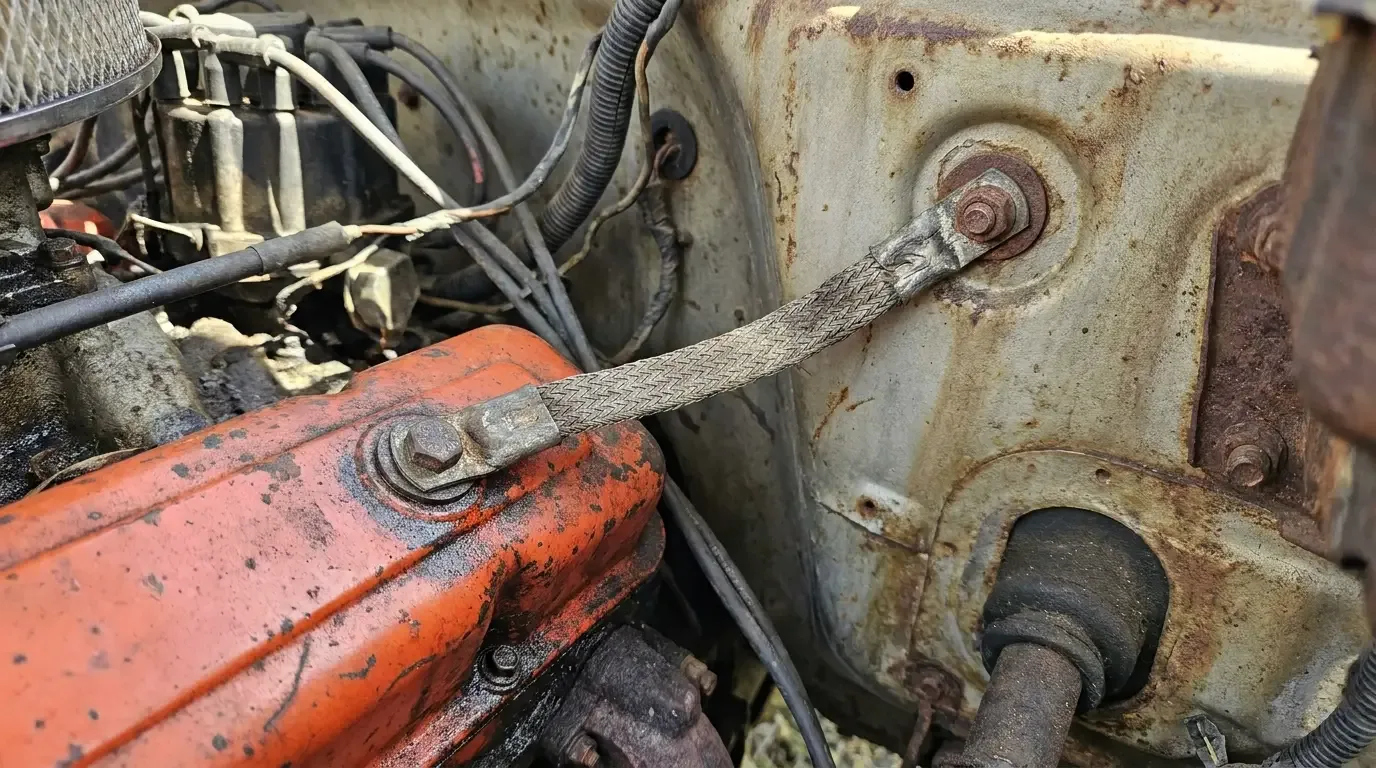
Chevy ran ground straps and ground wires to a handful of predictable spots, and knowing them saves you from pulling half the interior apart hunting for a fault. The engine grounds to the frame or body through a braided strap, usually running from the block or the head to the firewall or a frame rail. The body grounds to the frame at several points along the frame rails, typically near the cab mounts, and those connections are exactly where road grime and rust like to collect. The dash harness grounds behind the instrument cluster, often to a bolt on the steel dash structure itself, and that one corrodes quietly because it's never exposed to weather but it's also never cleaned.
There's also a ground point near the tail light housing on each side, which explains why so many C10s have one working tail light and one that's dim or intermittent, tricking owners into thinking it's a bulb problem. Exact ground point locations shifted slightly across model years, so treat these as the common spots to check first, not a universal wiring diagram.
Testing a ground without guessing
Skip the test light for ground diagnosis. A test light tells you voltage is present, not that the ground path can actually carry the current a circuit needs. What you want is a voltage drop test, and it's simpler than it sounds. Run the circuit that's acting up, whether that's headlights on or the blower motor running, and put a multimeter on DC volts between the ground point in question and a known-good spot directly on the battery negative terminal. With the circuit loaded and working, you should read close to zero volts, a few tenths at most. If you're reading half a volt or more, that connection is choking the circuit even though it looks fine to the eye and even though a test light would show it as "grounded."
This is the test that catches the problems visual inspection misses. A ground strap can look solid, hold its bolt tight, and still have enough surface corrosion between the metal faces to starve a circuit. I've pulled straps that passed a visual check completely and still dropped over a volt under load.
The repair, done right the first time
Once you've found the bad connection, the fix is straightforward but it's easy to do halfway. Disconnect the battery first, every time, no exceptions. Remove the ground point down to bare metal on both sides, the strap or wire terminal and the chassis or body surface it bolts to. A wire wheel on a drill does this faster than sandpaper and gets into the pits that hold corrosion. Any paint, any rust, any old dielectric grease gone hard, all of it comes off until you've got clean metal touching clean metal.
Reassemble with a star washer or serrated washer against the metal surface, not just a flat washer, because that washer is what bites through any future light surface oxidation and keeps the connection alive. Torque the bolt to spec, not gorilla-tight, because overtightening on thin sheet metal strips the threads or deforms the mounting point, and now you've traded one ground problem for another. A thin coat of dielectric grease on the finished connection keeps moisture out without insulating the actual contact surface, since it only fills the gaps around the metal-to-metal contact rather than sitting between the surfaces that need to touch.
If the original ground strap is corroded through in the braid itself, replace it rather than cleaning it. A strap that's lost conductor strands to corrosion will keep degrading no matter how clean you get the ends. This is also a good time to check every other accessible ground while you're under there, because if one has gone bad from age, the others aren't far behind. Anyone working through a full maintenance guide on an older truck should treat grounds as a standing item, not a one-time fix, since they're the kind of thing that quietly goes bad again over the following years.
"A C10 owner will replace an alternator three times before he'll pull a fender liner to look at a ground strap, and two of those alternators were probably fine. The truck's telling you where the problem is. You just have to be willing to look at the boring spot instead of the expensive one."
Robert Halloran
What good grounds buy you down the line
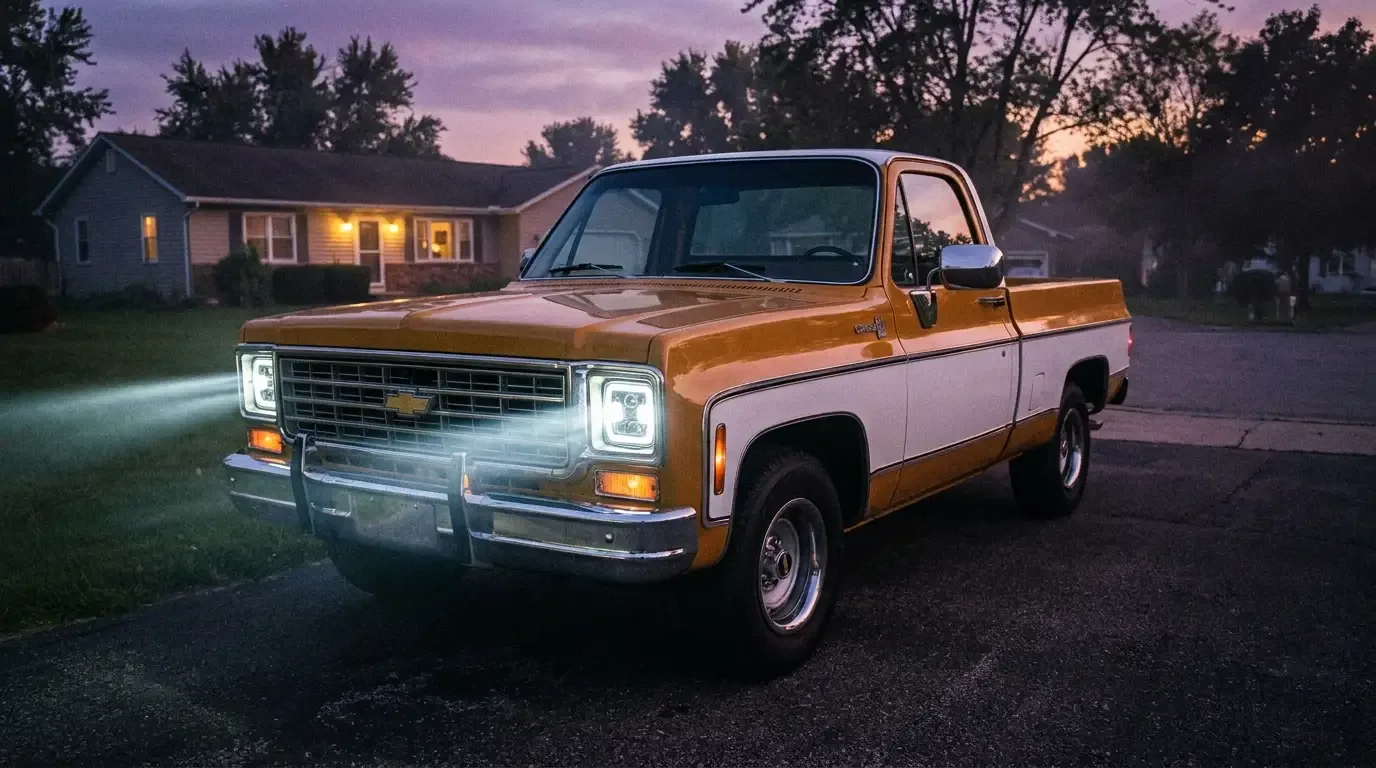
Once the ground side of the circuit is solid, everything else on the truck's electrical system gets easier to diagnose and easier to improve. A voltage drop of half a volt across a lighting circuit doesn't sound like much, but it's the difference between a headlight running at full brightness and one running dim enough that you'd swear the bulb was going bad. This matters even more if you're planning an LED lighting upgrade once the grounds are solid, because LEDs are far less forgiving of a marginal ground than the old incandescent bulbs were. An incandescent bulb just runs a little dim on a bad ground. Some LED setups will flicker, strobe, or refuse to work correctly at all if the ground path can't hold steady, and owners end up blaming the new bulbs for a problem the old wiring had all along.
Fix the grounds first, confirm every point with an actual voltage drop test under load, and the rest of the electrical system on these trucks stops being a mystery. It's not glamorous work. It's also the single best hour you can spend on a C10 that's got electrical gremlins nobody else has been able to pin down.
Sources and notes
- Chassis groundWikipedia overview of how vehicles use the frame and body as a shared return path instead of dedicated ground wires.
- Grounding Electrical SystemsHot Rod Hotline technical guide on proper ground wire sizing and confirming a good chassis ground with an ohmmeter.
- Ground strap locationGMT400 forum thread mapping factory ground strap points (head-to-firewall, frame-to-body, taillight harness) on a GM truck chassis.
- Voltage Drop TestingAA1Car reference on acceptable voltage drop thresholds (roughly 0.1V ideal, under 0.4V for most connections) and how to run the test under load.
- Ground Your MVMilitary Trader guide confirming bare-metal prep and star/toothed washers as the standard repair method for a corroded vehicle ground.
Related Reading

Have a
Chevrolet C10
for Sale?
Reach thousands of serious classic car collectors across the US.
Sell It Here →
Are You a Classic Car Dealer?
List your full inventory and connect with targeted classic car buyers.
Join as a Dealer →

About the author
Robert Halloran
Texas-based classic truck enthusiast with decades of experience buying, restoring, and writing about American pickups from the 1940s through the 1980s.
Related Listings - Chevrolet C10

More in Restoration & Tech
Comments
Be the first to comment on this article.