
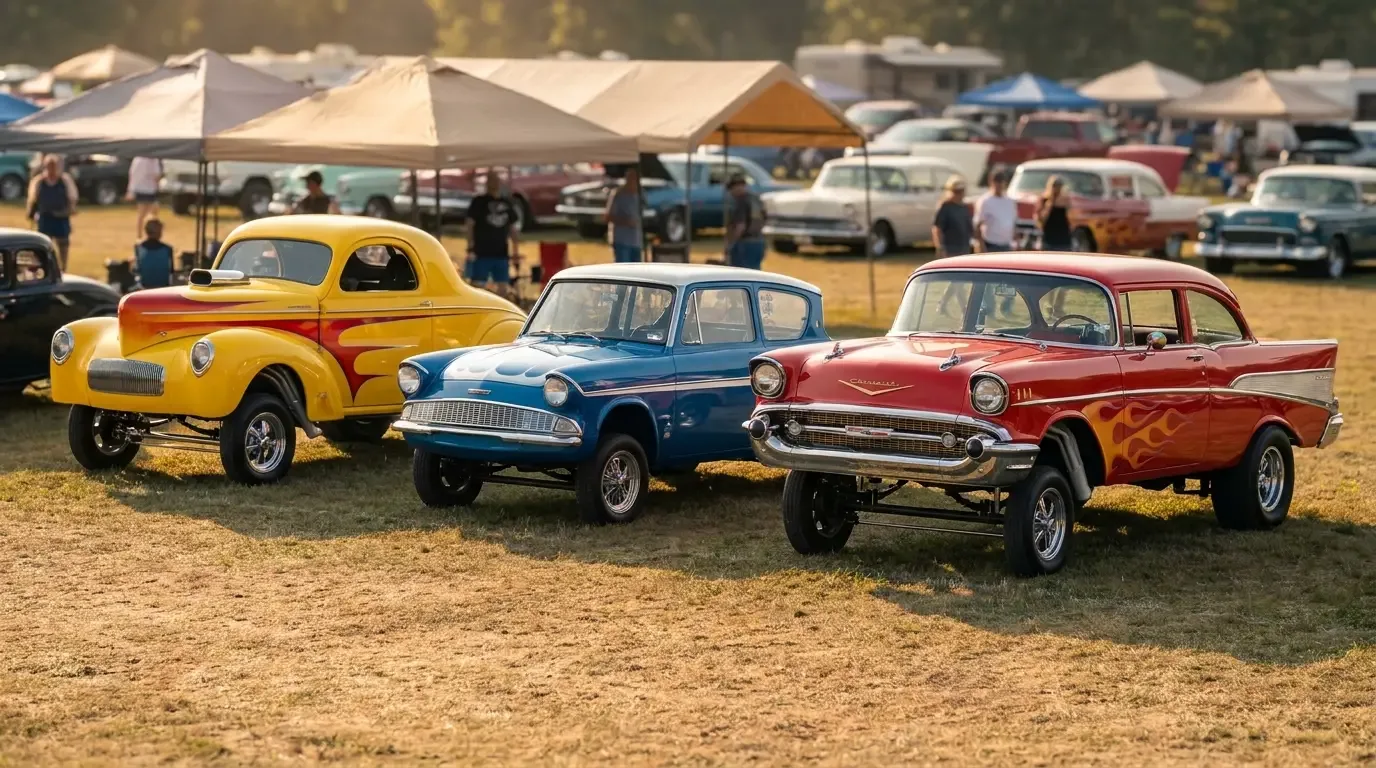
You can spot a real gasser from across the swap meet before you see the straight axle or the injector stacks. It is the wheel and tire package that gives it away. Skinny ribbed tires up front, a set of tall fat slicks out back, and usually a wheel choice that says the owner cared more about the strip than the show field. Get the rolling stock wrong and the whole car reads as a poser, no matter how nice the paint is. Get it right and even a rough driver looks like it just rolled out of a 1963 pit.
Restoration & Tech
6 min read
Gasser Wheels and Tires: Skinnies and Slicks
Skinny front runners, fat rear slicks, and the classic mag or steelie combos that give a real gasser its period look, plus how to make it all fit.
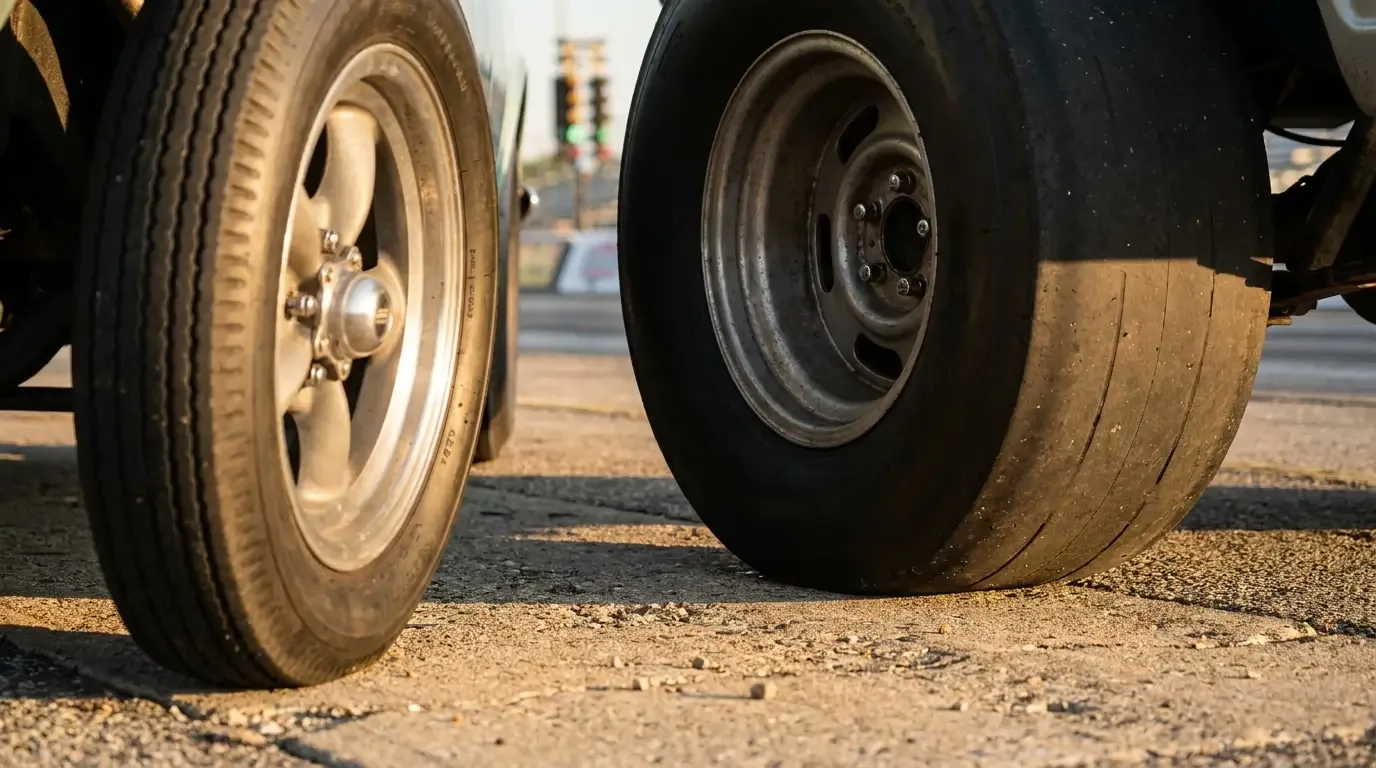
The look was not styling. It came straight out of what worked at the drags and what the rulebook allowed. That is the thread to hold onto as you sort out a set. Every choice here has a reason behind it, and once you understand the reasons the parts almost pick themselves.
Why the front runs skinny
The narrow front tire is the single most recognizable gasser cue, and it is pure function. Racers pulled weight off the nose any way they could, and a skinny front tire is lighter, has less rolling resistance, and less rotating mass to spin up off the line. On a car making a hard weight transfer to the rear on launch, the front end is barely loaded anyway, so you do not need much tire to steer it.
Period front runners were tall and narrow, often 15 inch, in sizes people still call by the old numbers like 5.60-15. The tall skinny profile also helped raise the nose, which fed right into that classic rake. If you are still working out the overall stance and driveline plan, the front tire is one of the first decisions in how to build a gasser, because it sets the ride height at the front axle before you touch anything else.
Slicks, cheater slicks, and what to actually run on the street
The rear is where the traction story lives. On a real drag car the answer was a slick, a smooth tire with no tread, all contact patch. The problem is a true slick has no water channels and is not street legal, so the period trick was the cheater slick. A cheater is a slick with just enough shallow grooves molded in to technically pass as a treaded tire, which let racers drive to the strip and run the same rubber.
For a street-driven gasser today, cheater slicks and DOT-legal drag radials give you the fat squared-off look without the danger of running a bald tire in the rain. Do not chase the widest tire you can stuff under the car. Period gassers ran tall rear tires more than ultra-wide ones, because the tall sidewall wrinkled and hooked on the launch and the height helped fill the fender.
"People get obsessed with width and forget height. A tall 8 or 9 inch slick on a 15 inch wheel fills a fender and looks period correct. A short fat modern tire on a 15 sits there like a doughnut and kills the whole stance. Buy the tire for the sidewall, not just the tread."
Ray Delgado
Mags, steelies, and the classic combos
Wheel choice is where you set the era. The two honest gasser directions are painted steel wheels with baby moon or dog dish caps, and early aluminum mag wheels. Steelies read raw and low-buck, the way a lot of real gassers actually left the shop. Mags read a step up, the money look of the mid sixties.
The mag names that matter are the American Racing Torq Thrust and the five-spot slotted mags. A five spoke Torq Thrust up front with a slotted or solid mag hiding behind a slick out back is about as period as it gets. Chrome reverse steel wheels are another correct choice, especially on a tri-five body. What you want to avoid is anything that screams later decades: billet wheels, modern multi-spoke, or big diameter rims. This is a 14 and 15 inch world.
Body style steers the wheel choice more than people expect, since a Willys wears a tall skinny front differently than an Anglia or a tri-five. If you are matching wheels to a specific shell, it is worth reading up on Popular Gasser Bodies: Willys, Anglia and Tri-Fives before you buy, because the fender openings and track width decide what actually fits.
| Position | Typical size | Period wheel | Tire type |
|---|---|---|---|
| Front | 15 in, narrow | Torq Thrust mag or steelie | Tall skinny front runner (e.g. 5.60-15) |
| Front (alt) | 14-15 in | Chrome reverse steel | Ribbed pizza-cutter |
| Rear | 15 in, wide | Slotted mag or steelie | Cheater slick or drag radial |
| Rear (strip) | 15 in | Steel or mag | Full slick (off-road use) |
Fitment, offset, and the details that trip people up
Getting the parts is the easy half. Making them fit and clear on a car with a straight axle and a period suspension is where builds stall. The front skinny has to clear the axle and brakes and still let the car steer lock to lock. The rear slick has to sit under the fender at ride height and under compression without rubbing, which usually means sorting backspacing and offset before the tires ever go on.
If you would rather buy a car with the rolling stock already sorted instead of chasing vintage mags one corner at a time, it is worth browsing classic gassers for sale to see how finished cars are set up. Studying a handful of done builds teaches you more about correct fitment than any spec chart, because you see the tire height, the wheel family, and the fender fill all working together.
Sources and notes
- Period drag racing press and NHRA class-rule references from the gas coupe and sedan era.
- Vintage wheel and tire maker catalogs and reproduction listings for sizing and style names.
- Builder interviews and club/registry notes on period-correct fitment and stance.
- Auction and show records used to cross-check common wheel and tire combinations.
Related Reading
Have a
Classic Car
for Sale?
Reach thousands of serious classic car collectors across the US.
Sell It Here →
Are You a Classic Car Dealer?
List your full inventory and connect with targeted classic car buyers.
Join as a Dealer →

About the author
Ray Delgado
Metal fabricator and chassis builder who has spent 25 years turning flat sheet and mild steel into hot rods, gassers and restomod underpinnings.
More in Restoration & Tech
Comments
Be the first to comment on this article.