
A gasser is not a look you bolt on. It is a set of decisions you make with a jack under the frame and a tape measure in your hand, and every one of those decisions comes back to the drag strip rules that started this whole thing in the first place. Get the recipe wrong and you have a tall old coupe that drives like a wheelbarrow. Get it right and you have a car that hooks, launches, and looks mean sitting still. If you want the history behind the class, read the story of the gasser first, because the build makes a lot more sense once you know why the rules pushed cars into this shape.
Restoration & Tech
9 min read
How a Gasser Is Built
A gasser is a stack of race decisions, not a bolt-on look. Here is the build in the order that actually works: axle, setback, weight, then power.
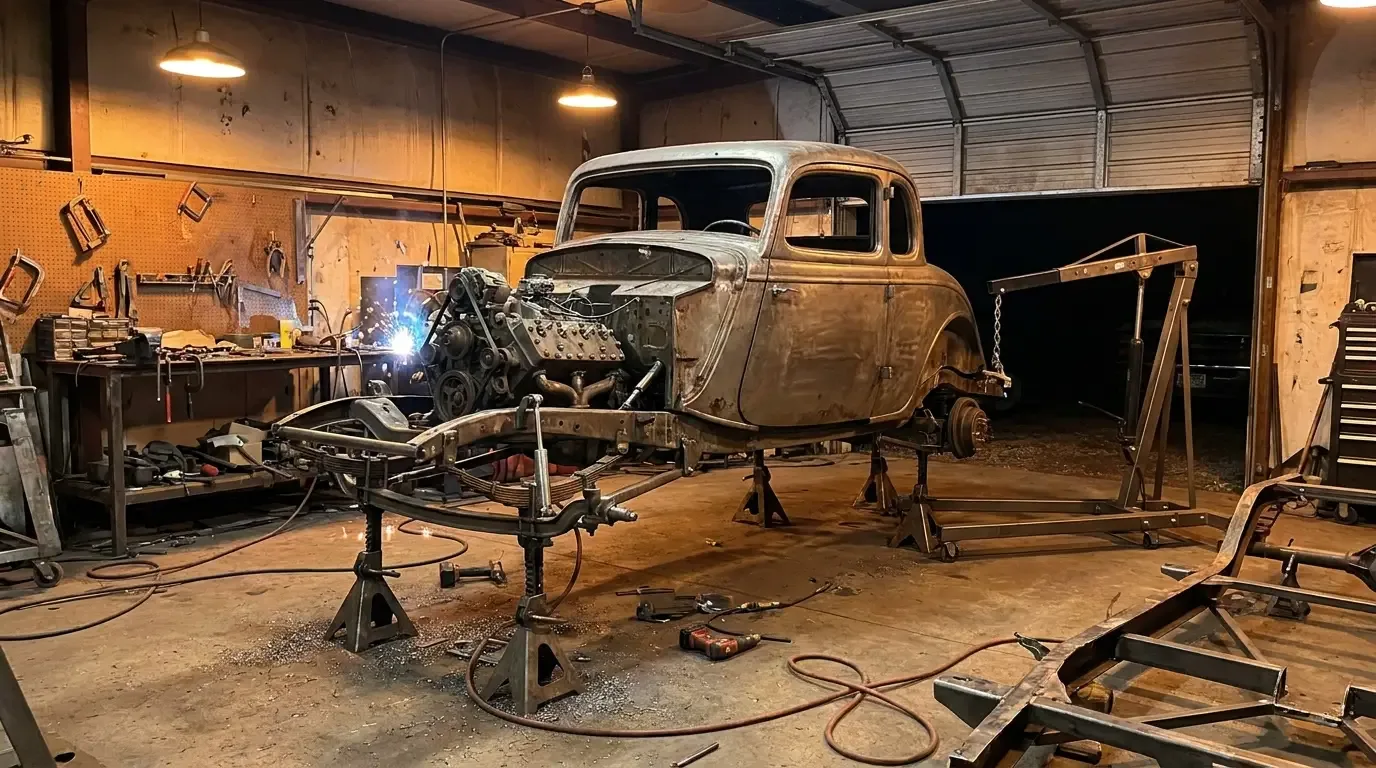
I have built and rebuilt enough of these to tell you the order matters. You do not start with the blower. You start with the front end, then the engine location, then the weight, and only then the fun stuff. Skip that order and you spend twice the money chasing a car that never sat right. Here is the mechanical recipe, in the order I actually do it.
Pull the independent front suspension and hang a straight axle
This is the move that defines the whole car. Out comes the stock independent front suspension or the original beam setup, and in goes a solid straight axle. A tube axle or a forged I-beam gets mounted on leaf springs or a four-link, kicked up under the frame so the nose sits high. That nose-high rake is not styling for its own sake. Under a hard launch, weight transfers rearward onto the drive wheels, and a car that already sits nose-up puts more bite on the tires the instant you drop the clutch.
The axle also gets you a wider track and a simpler, lighter, tougher front end that shrugs off the shock of a violent launch. Independent suspension parts do not love being slammed off the line. A straight axle just takes it. If you want the deeper mechanical story on this one piece, we cover it in what is a gasser, but the short version is this: no straight axle, no gasser. Everything else is negotiable.
Common donor axles came from trucks and early Fords. A Ford tube axle or an Anglia-width beam under a small British body, a wider truck axle under a Chevy. You match axle width to body width so the tires end up in the fenders, or deliberately proud of them, depending on how aggressive you want the stance.
Set the engine back for weight bias
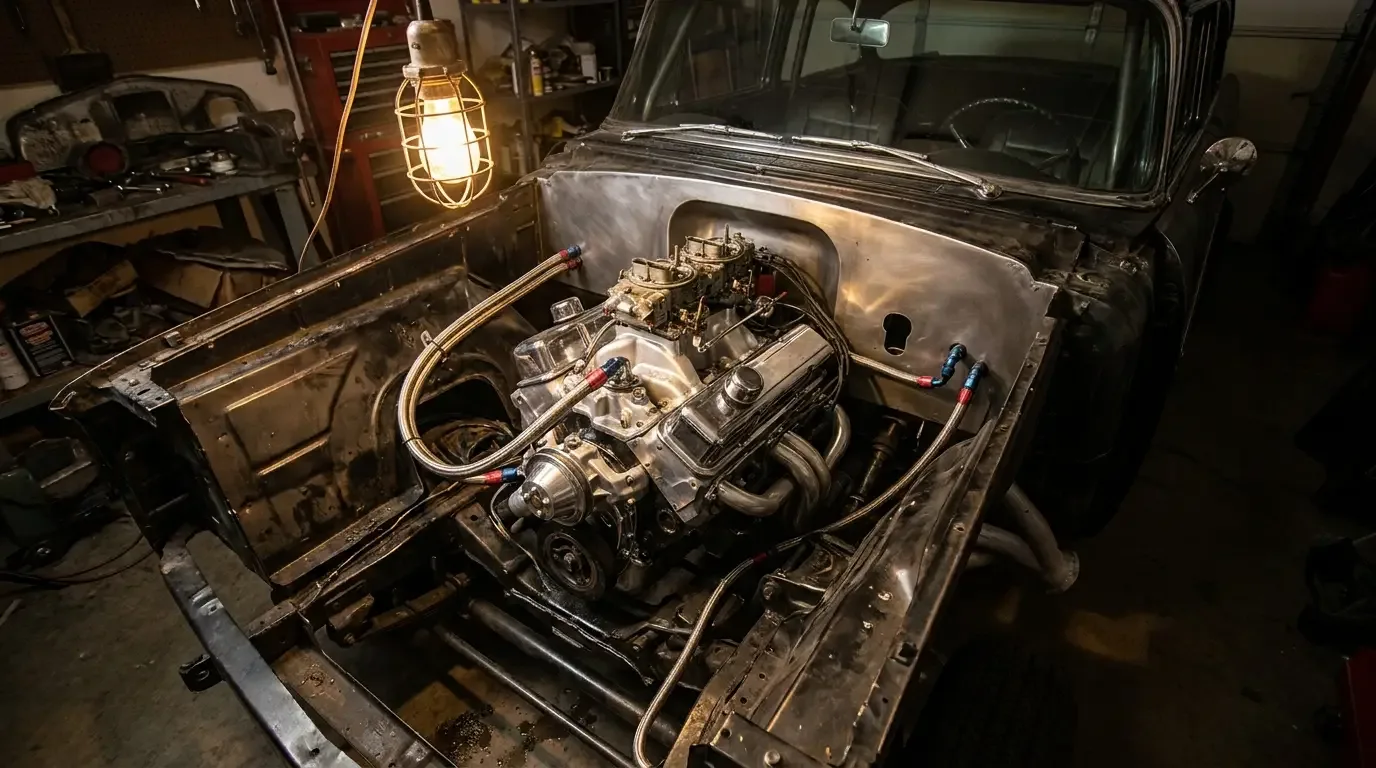
Once the front end is sorted, the engine moves. Builders pushed the motor rearward in the chassis, sometimes several inches, occasionally close to a foot on the wild ones. The reason is simple. Move mass toward the rear and you shift more of the car's static weight over the drive wheels. More weight on the rear tires at launch means more traction, and traction is the whole game on a short track.
Setback is not free. Move the engine back and the driveshaft gets shorter, the shifter ends up in a different spot, and the header routing changes. You are also moving weight off the steering axle, which changes how the car feels turning into the pits. On a period car with a modest rearward setback of the block relative to stock, you are chasing a rearward weight bias, often somewhere in the neighborhood of 55 percent or more on the rear axle depending on the build. Every serious builder set this up differently, and hard period numbers are scarce, so treat those figures as a rough target, not a spec.
The setback and the weight bias are tied together tight enough that we gave them their own breakdown. If you want the numbers and the trade-offs in detail, that is a separate conversation. Here, the point is the sequence: axle first, then engine location, because you cannot pick a setback until you know where the front end and the firewall are going to live.
Strip weight everywhere it does not hurt you
The gas classes rewarded light cars, so builders threw weight overboard anywhere the rules allowed. Steel bumpers came off or got swapped for aluminum. Glass gave way to Plexiglas in the side and rear windows. Fiberglass front ends, hoods, and doors replaced heavy steel panels. Interiors got gutted down to a seat, a shifter, and the gauges you actually needed. Even the battery moved to the trunk, which doubled as a way to add rear weight bias for free.
- Aluminum or removed bumpers instead of heavy chrome steel
- Plexiglas side and rear glass to cut weight up high
- Fiberglass hood, front fenders, and sometimes full front-clip tilt fronts
- Stripped interior: single lightweight seat, no headliner, no sound deadening
- Battery relocated to the trunk for rear bias and safety
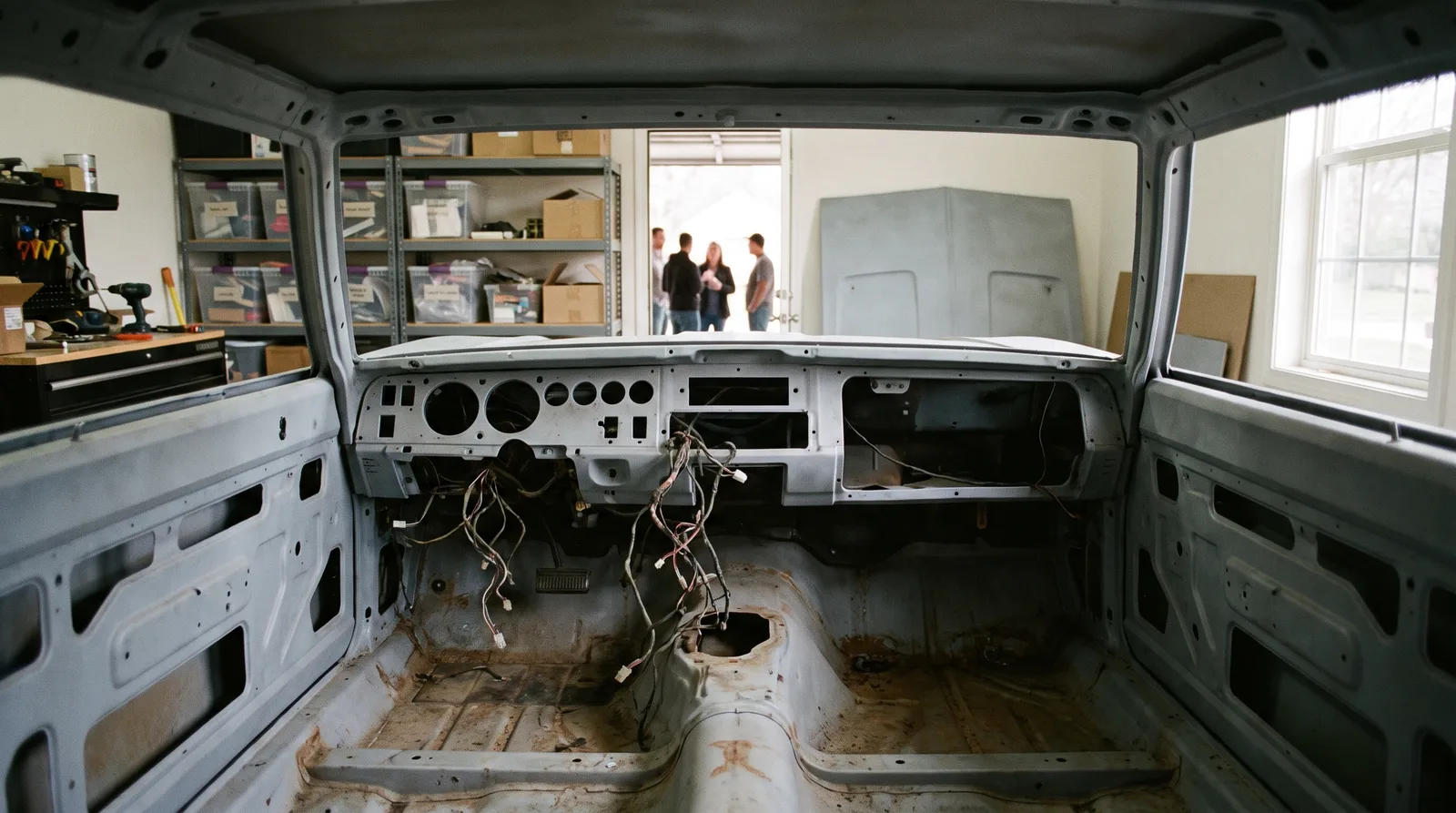
The trick is knowing what not to remove. You still need the structure that keeps the body from twisting under launch, and on a car making real power you want a roll bar. Stripping weight is easy. Stripping the wrong weight and turning a stiff car into a wet noodle is the mistake I see most on unfinished project cars.
Build a hopped-up engine, then blow or inject it
The engine is where the money and the noise go. Early gassers ran hot-rodded flatheads and then small-block and big-block V8s, worked over with a big cam, ported heads, high compression, and a stack of carburetors on a tall intake. Multiple two-barrels or a pair of four-barrels on a log or tunnel-ram manifold was the classic warm setup. That alone will make a light car quick.
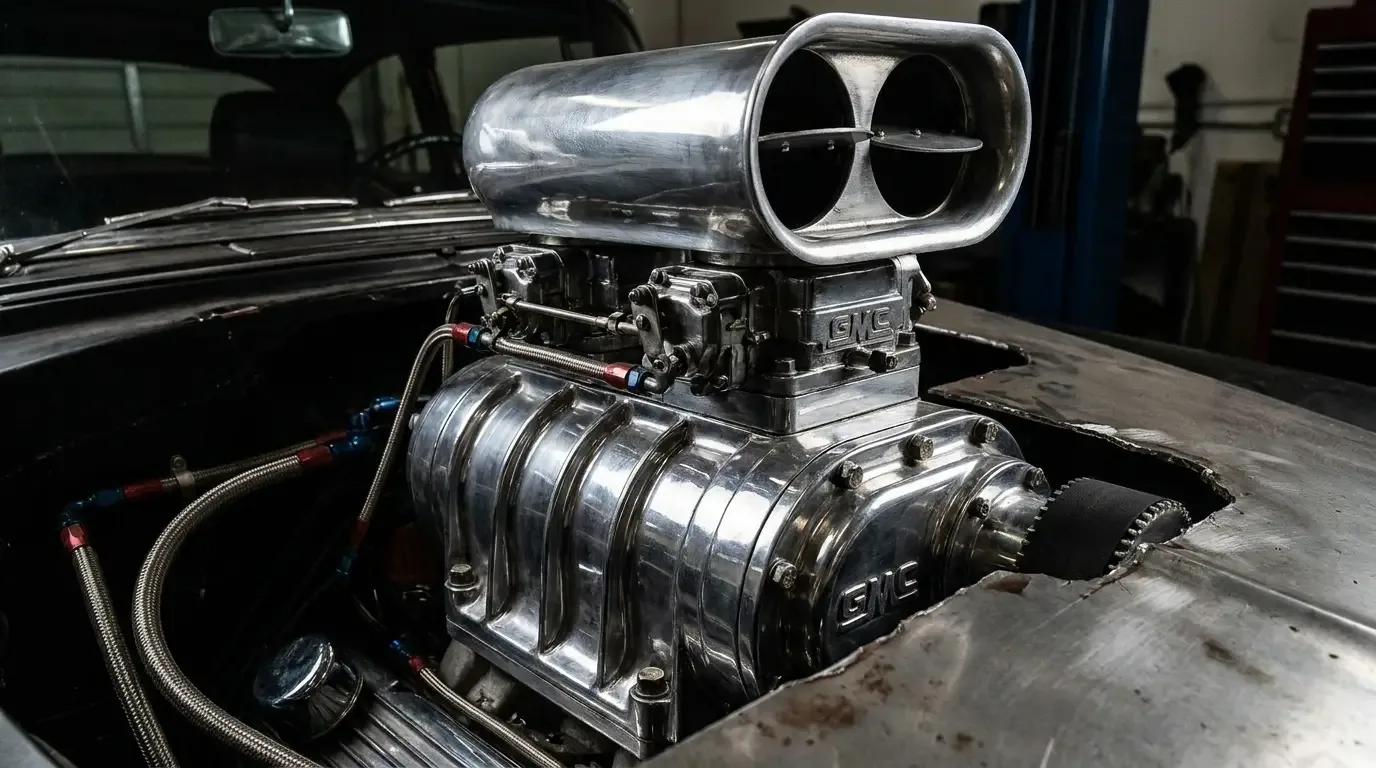
The next step up is forced induction or a change in how you feed fuel. A GMC-style Roots supercharger, the 6-71 being the icon of the breed, sits up on top of the engine and pushes air in under boost. The 6-71 name comes from the Detroit Diesel two-stroke it was designed for, six cylinders of 71 cubic inches each, and hot rodders adopted the blower wholesale. Bolt one on a stout short-block and you are into serious power territory. The other period path is mechanical fuel injection, a Hilborn-style constant-flow system with those distinctive velocity stacks poking through the hood. Injection was as much about clean, tuned fuel delivery for racing as it was about the look, though the look is undeniable.
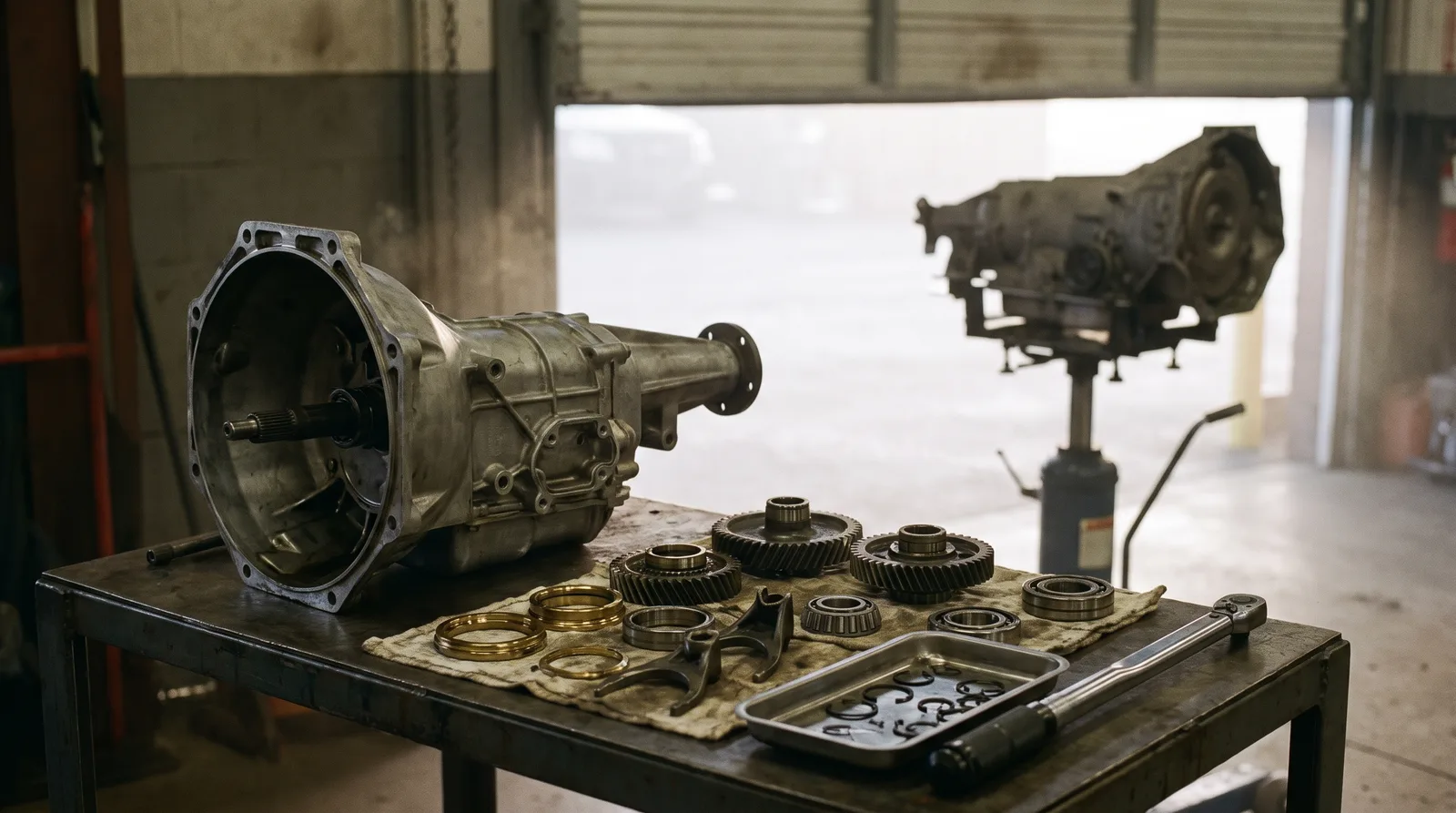
Whether you blow it or inject it, the short-block underneath has to be built for the load. Forged pistons, good rods, studded mains, and a careful tune. Boost finds every weak fastener and every lazy machining job you let slide. A blower on a tired stock bottom end is a grenade with a slow fuse.
| Build element | Typical period spec | Why it matters |
|---|---|---|
| Front suspension | Straight tube or I-beam axle, leaf or four-link | Nose-high rake, launch bite, durability |
| Engine setback | Block moved rearward, build-dependent | Shifts weight bias onto drive wheels |
| Rear weight bias | Around 55 percent or more on rear axle | Traction off the line |
| Induction | Multi-carb, 6-71 blower, or Hilborn-style injection | Power and the period look |
| Rear wheels/tires | Steel or early mag wheels, drag slicks or cheater slicks | Grip and correct stance |
| Front wheels/tires | Narrow steel wheels, skinny front tires | Weight savings, less rolling resistance |
Bolt on period wheels and get the stance right
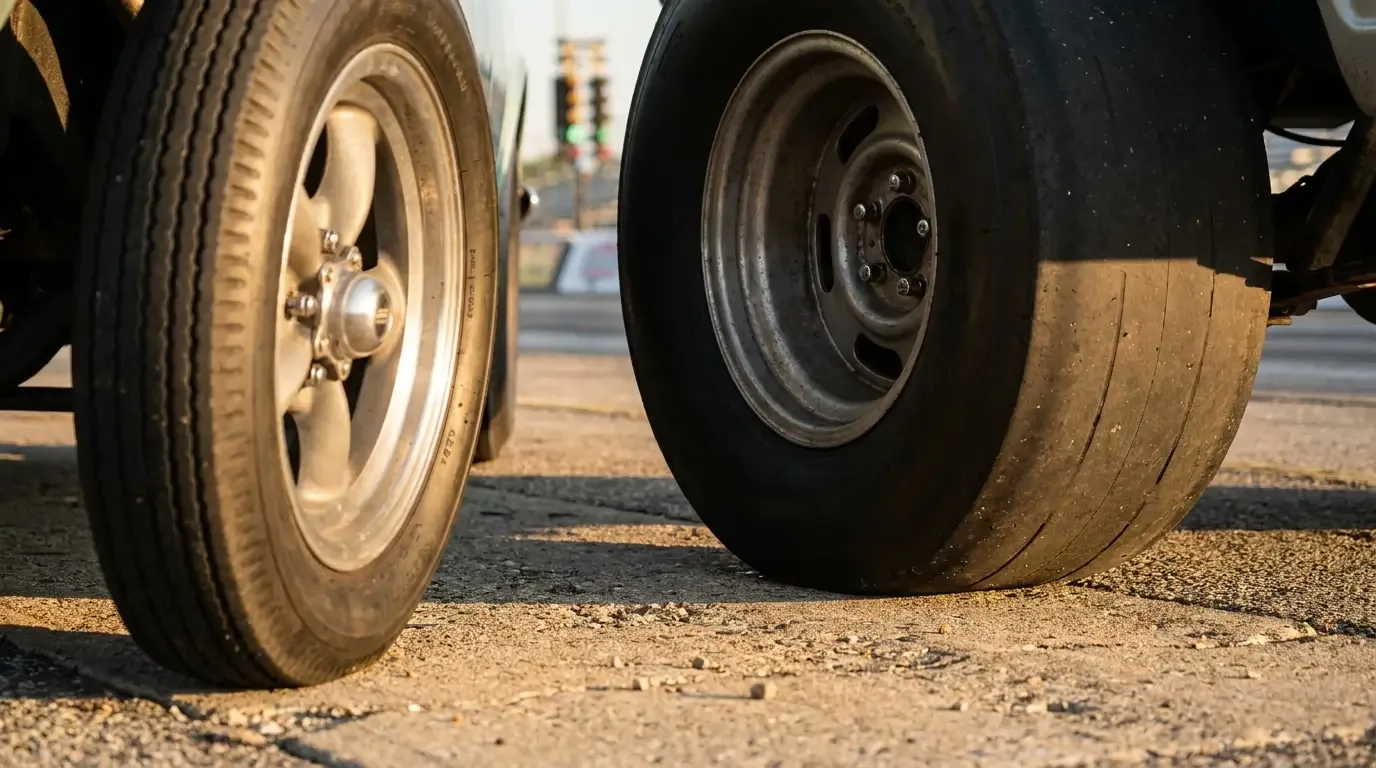
Wheels finish the look and they are not just cosmetic. The classic gasser runs skinny tires and narrow wheels up front, often plain steelies with small hubcaps or bare-bones five-spokes, to shave rotating weight where you do not need grip. The rear runs the opposite: wide steel wheels or early magnesium and aluminum mags wrapped in drag slicks or street-legal cheater slicks for bite.
The tall front tire and short-ish rear, combined with that kicked-up axle, gives you the forward rake that reads instantly as gasser. Get the front too low or the rear too tall and the whole thing looks wrong even if the mechanicals are perfect. Period-correct wheels matter here. A modern billet wheel on an otherwise honest build breaks the spell faster than anything.
"People think a gasser is a stance. It is not. It is a stack of race decisions that happen to look like a stance. Do the axle, do the setback, get the weight over the rear, and the look shows up on its own. Chase the look first and you build a fake."
Mike Sullivan
Put it together in the right order
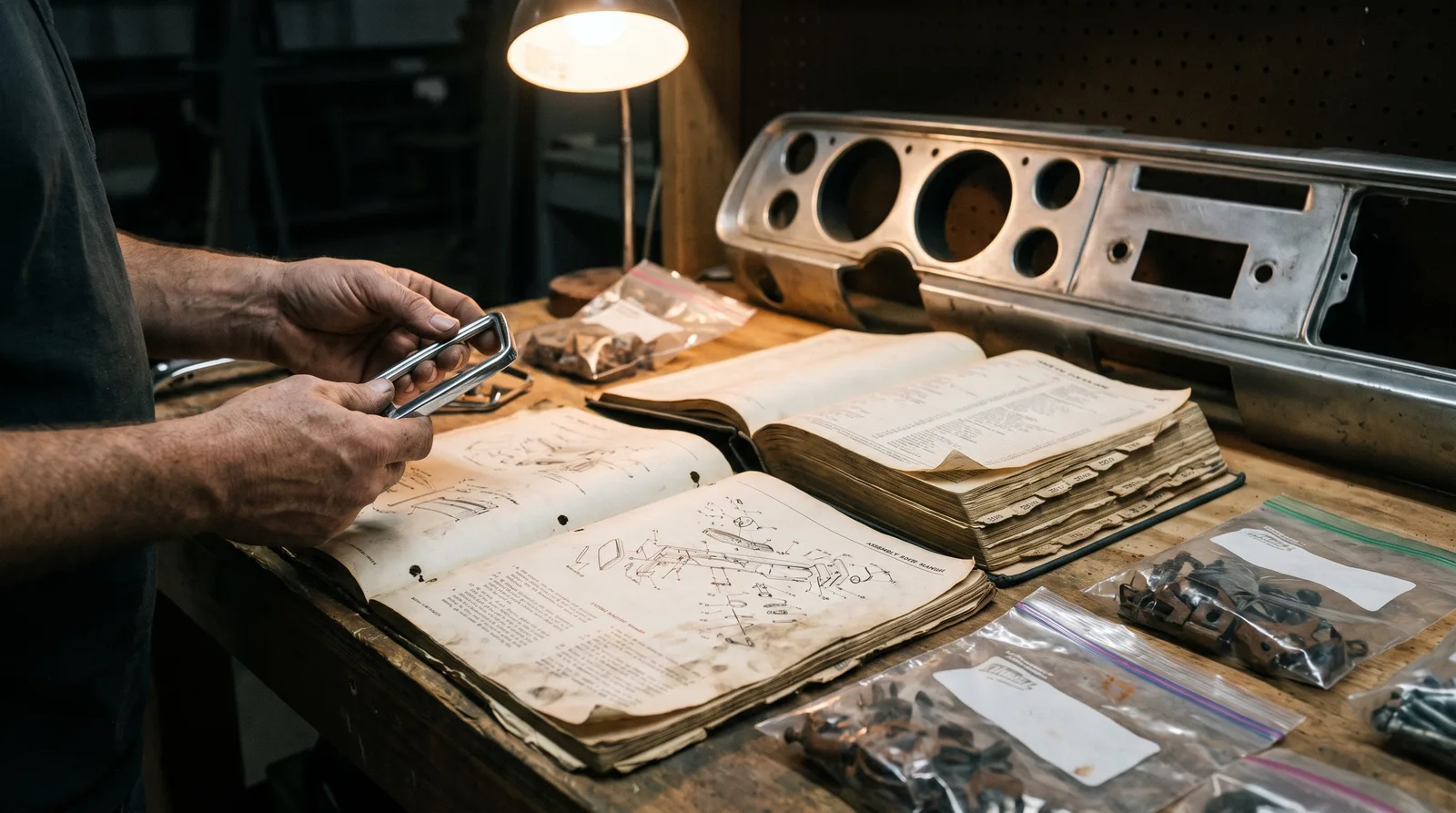
If there is one thing to take from all this, it is sequence. The front axle sets the geometry. The engine setback sets the weight bias. Weight reduction cleans up what is left. Induction and wheels are the payoff, not the plan. Build it in that order and each step supports the next. Build it backward, buy the blower first, and you end up re-cutting a firewall you already welded.
A lot of these cars sit half-finished exactly because someone started at the fun end. If you are shopping, that is worth knowing. There are plenty of project gassers for sale where a previous owner got the engine and wheels sorted but never did the hard chassis math, and those are the ones that eat your budget. A started-right roller with a proper straight axle and a clean setback is worth more than a running car with a mail-order stance.
Sources and notes
- Period drag-racing press and NHRA gas-class rule summaries
- Supercharger and mechanical fuel-injection manufacturer references
- Builder and restorer interviews on straight-axle chassis practice
- Marque and engine reference guides for period V8 and induction specs
- Auction and club records for surviving period gasser builds
Related Reading
Article
The Gasser Story
Article
What Is a Gasser? The Straight-Axle Drag Car Explained
Article
Gasser Drag Racing History
Article
Gasser Engine Setback and Weight Bias
Article
Blown and Injected Gasser Engines
Article
Gasser Wheels and Tires: Skinnies and Slicks

Article
Popular Gasser Bodies: Willys, Anglia and Tri-Fives
External
/gassers-for-sale
Have a
Classic Car
for Sale?
Reach thousands of serious classic car collectors across the US.
Sell It Here →
Are You a Classic Car Dealer?
List your full inventory and connect with targeted classic car buyers.
Join as a Dealer →

About the author
Mike Sullivan
Detroit-area muscle car enthusiast and restoration specialist with three decades of hands-on experience working on American iron.
More in Restoration & Tech
Comments
Be the first to comment on this article.