
Walk any nostalgia drag meet and you can name the gasser bodies before you read a single fender. There are maybe four shapes that matter, and they all got picked for the same cold reasons: they were small, they were light, and they had a wheelbase short enough to plant weight on the rear tires when the front end came up. Everything else, the paint, the scallops, the wild names on the doors, came after. The body choice was engineering first and attitude second.
Restoration & Tech
7 min read
Popular Gasser Bodies: Willys, Anglia and Tri-Fives
The four gasser bodies that matter, why builders chose light short-wheelbase shells, and how to source a Willys, Anglia, tri-five or Austin today.

I build these cars for a living, and the question I get most is which shell to start with. The honest answer is that the classic four earned their spots in the gas classes for a reason, and if you want the look to read as real, you stay inside that family. If you want to understand how the shell ties into the rest of the build, read how to build a gasser alongside this, because the body dictates a lot of what comes next.
The Willys, the one everybody pictures
Say "gasser" to anyone over fifty and they see a Willys. The 1937 to 1942 coupes and sedans, and the 1940 to 1941 cars in particular, became the shape of the whole style. There is a good reason for that. The Willys was tiny and it was light, so a builder could stuff a huge overhead-valve V8 into a car that weighed a fraction of what a full-size Detroit sedan did. Better power-to-weight, better sixty-foot times, more trophies. The rules rewarded exactly what the Willys already was.
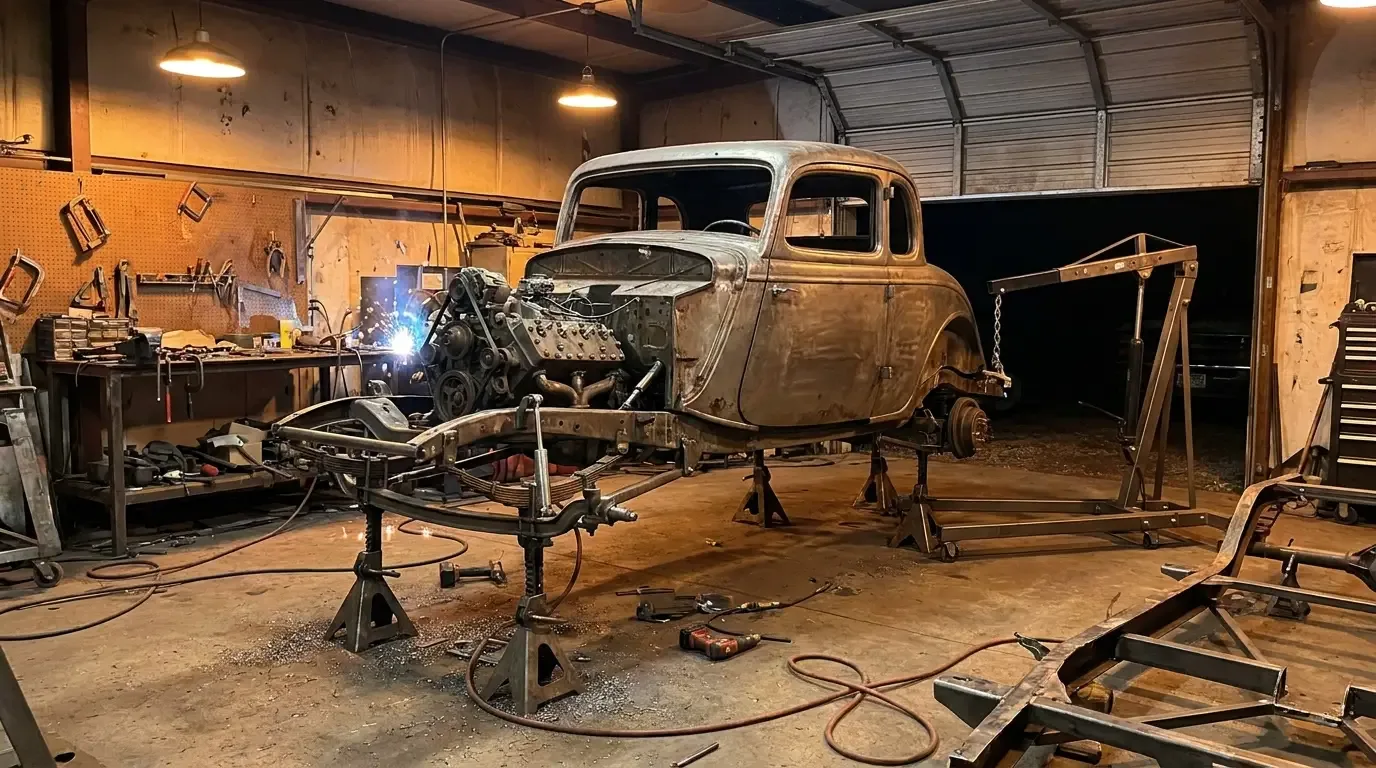
The catch is that Willys steel got rare and expensive decades ago. Genuine 1940 to 1941 coupe bodies were never made in huge numbers to begin with, and the ones that survived the drag wars got beaten hard. That scarcity is why the fiberglass reproduction industry grew up around this car. Today a large share of the Willys gassers you see rolling into a show are glass bodies on a fabricated chassis, and there is no shame in that. It is often the only sane way to get the shape without spending a house deposit on rusty steel.
The Anglia, small even by gasser standards
If the Willys is small, the English Ford Anglia is comic. The 105E Anglia, the one with the reverse-slant rear window, is a genuinely tiny car, and that made it a favorite in the lighter gas classes where every pound counted against you. Drop a hopped-up small-block into an Anglia and the power-to-weight math gets silly in the best way. The stubby wheelbase also throws weight rearward hard on the launch, which is exactly what a straight-axle car wants.
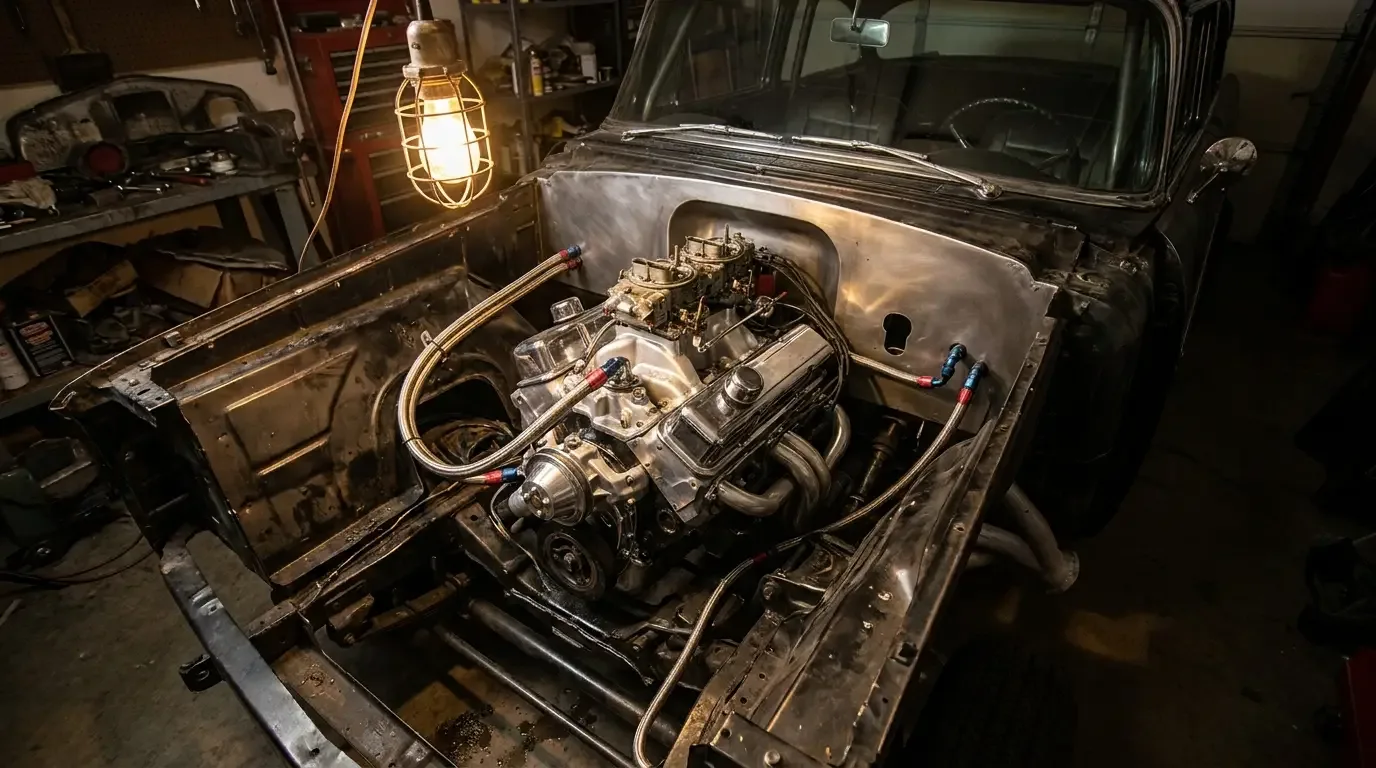
The trade-off is space. There is almost none. Fitting an American V8, a real transmission, and a proper rear end under an Anglia takes serious fabrication, and headers become a puzzle. Builders love the car because it looks like nothing else on the strip, but nobody calls an Anglia an easy build. You choose it for the attitude and the class advantage, not for the elbow room.
The tri-five Chevy, the people's gasser
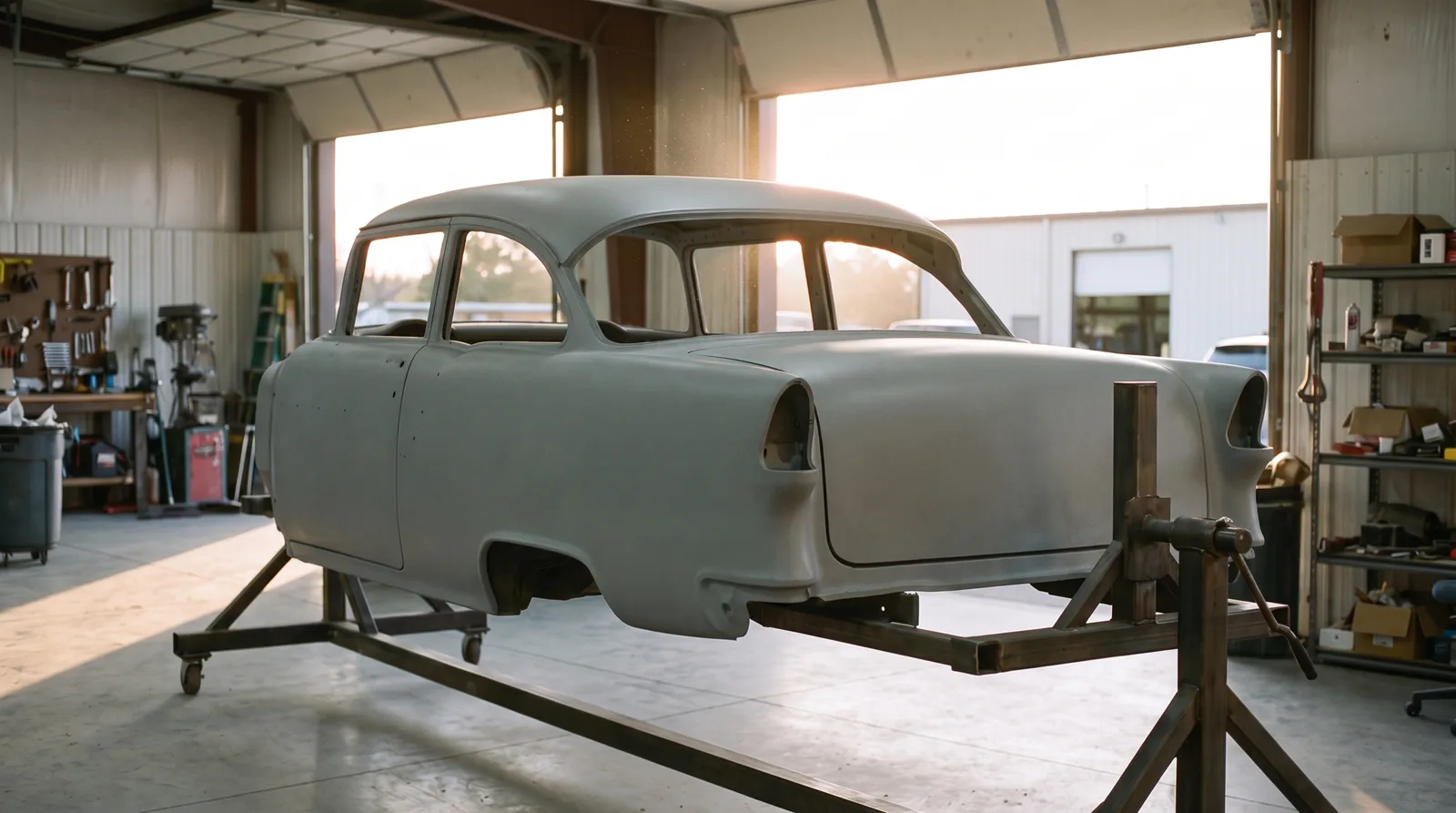
The 1955, 1956, and 1957 Chevrolet, the cars everyone calls the tri-fives, are the accessible end of the gasser world. They are bigger and heavier than a Willys or an Anglia, so they usually ran in classes that allowed more weight, but that extra size is exactly why so many people build them. Parts are everywhere. Steel bodies still exist in usable numbers. A first-time builder can find a 1955 or 1957 shell, a straight axle kit, and a small-block without chasing unicorns.
There is also the small-block Chevy connection. The 265 and 283 that arrived in these cars became the default hot-rod engine of the era, so a tri-five gasser is a period-correct match of body and motor without any hunting. When people ask me for a first straight-axle project that will not bankrupt them or fight them at every turn, I point them at a tri-five nine times out of ten.
"Everybody wants the Willys until they see the invoice. I tell them the same thing every time: build a tri-five first, learn the stance and the setback on a body you can actually find parts for, then chase the Willys once you know what you are doing."
Jim Vasquez
The Austin and why light short cars won
The last of the classic four is the Austin, usually the Austin American Bantam and the little English Austin sedans and pickups. Like the Anglia, the Austin is prized for being featherweight and short. The Bantam pickup in particular became an icon of the altered and gas ranks because it was so small that even a modest engine made it fly. These cars are the clearest proof of the whole gasser logic: the rules did not reward the biggest engine, they rewarded the best ratio of power to weight, and a tiny British body handed you a head start.
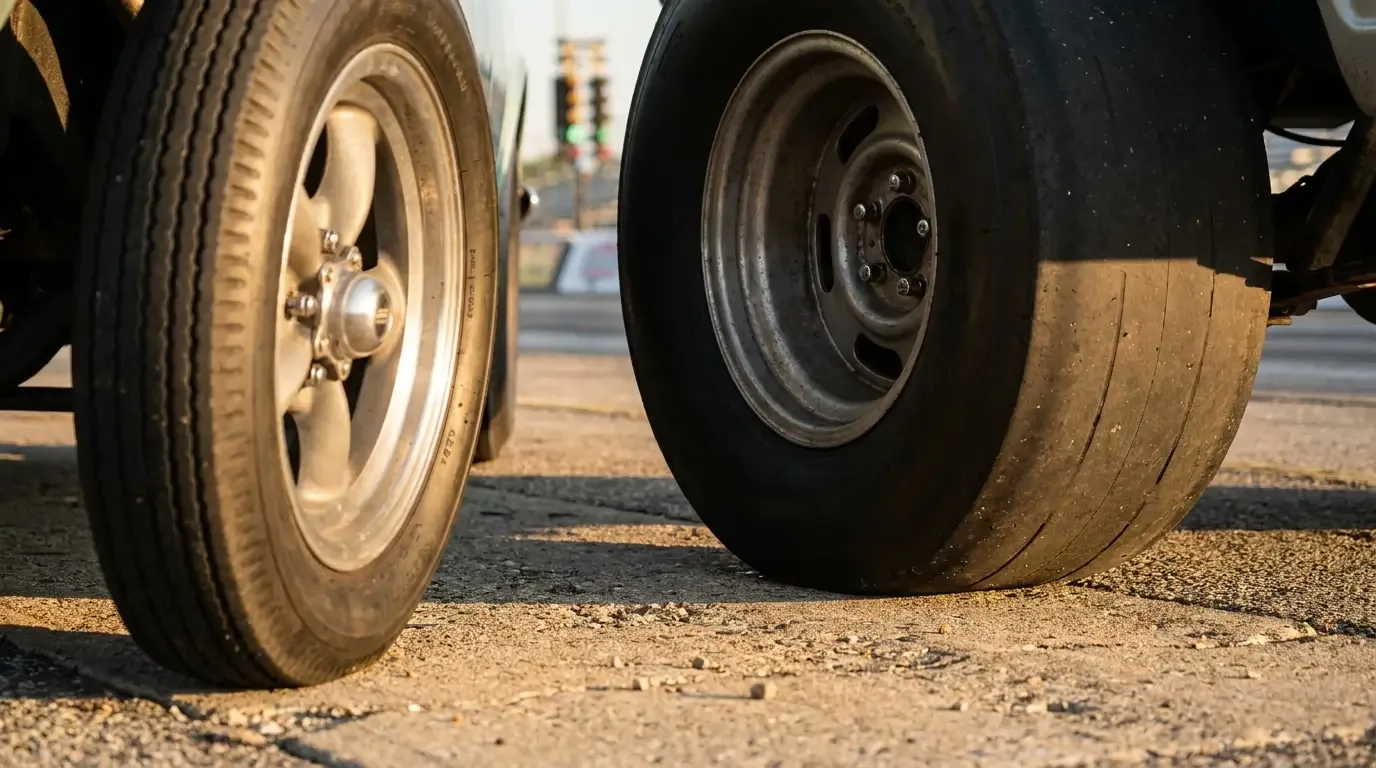
That is the thread running through every body on this list. A light shell means less mass to accelerate. A short wheelbase means the mass sits closer to the rear, so when the clutch drops, weight transfers onto the drive tires instead of spinning them. The nose-high straight-axle stance exaggerates that transfer even more, which is why these particular shapes and that particular stance always show up together. The look and the physics are the same decision.
| Body | Era used | Why it was chosen | Availability today |
|---|---|---|---|
| Willys coupe/sedan | 1937 to 1942 (esp. 1940 to 1941) | Tiny, light, iconic shape | Steel very scarce; fiberglass common |
| Ford Anglia 105E | Late 1950s to 1960s | Extremely light, short wheelbase | Scarce; often reproduction bodies |
| Tri-five Chevy | 1955 to 1957 | Cheap, plentiful, small-block match | Best steel availability of the group |
| Austin (Bantam/English) | 1930s to 1960s | Featherweight, class advantage | Rare; specialist market |
Choosing a body today
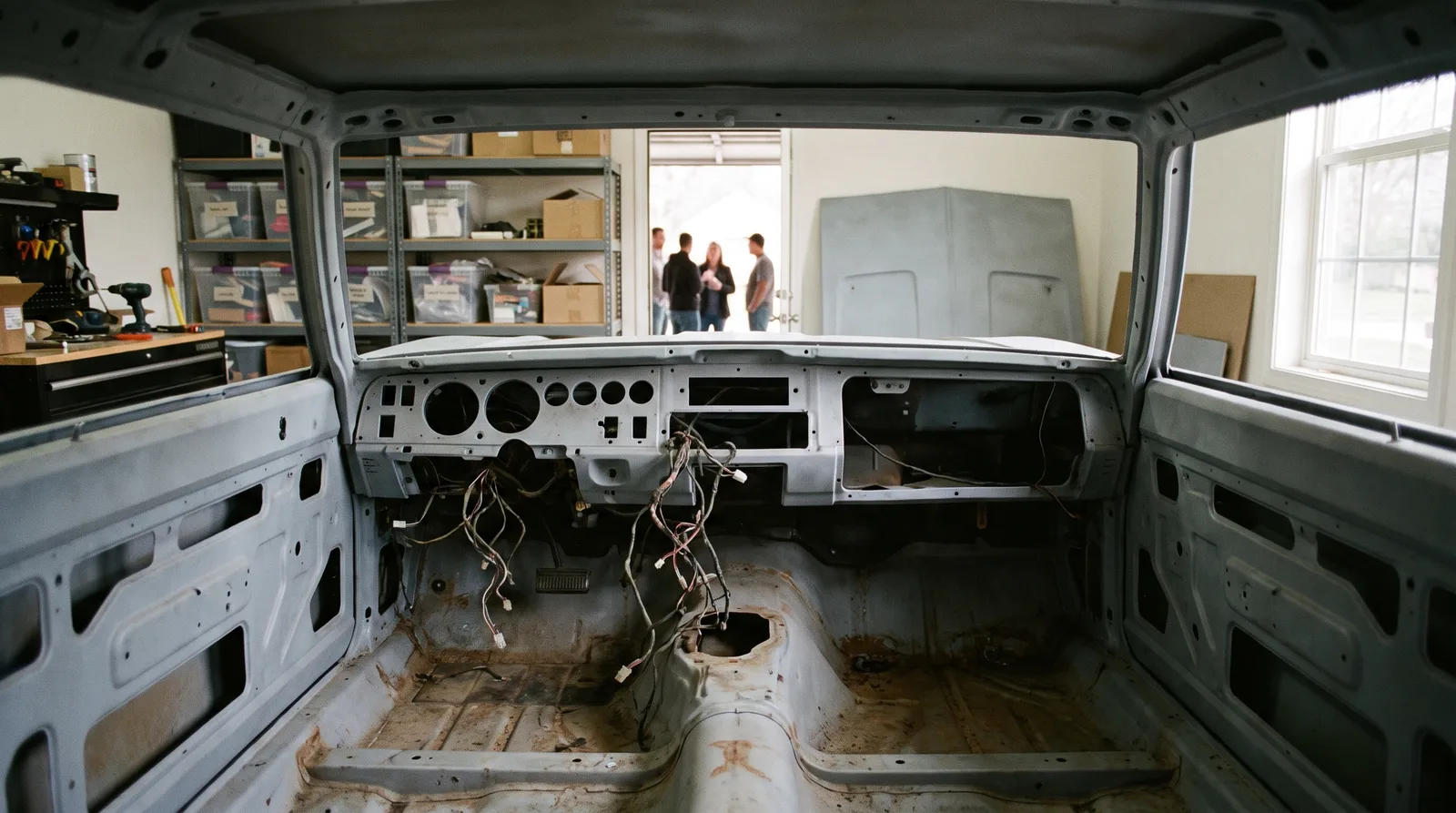
Availability now looks nothing like it did in 1963. The steel is thin on the ground for three of the four, so how you source a shell matters as much as which shape you love. A few things I tell every customer before they buy.
Once the shell is chosen, the next big decision is where the engine sits inside it, and that is a whole subject on its own. The body and the motor position work together, so read Gasser Engine Setback and Weight Bias before you cut a single mount. And if you want the wider background on how these cars came to look and race the way they do, the gasser story lays out where the whole style came from.
Sources and notes
- Period drag-racing press and NHRA/AHRA gas-class rulebooks of the 1950s and 1960s.
- Marque references for Willys-Overland, Ford of Britain (Anglia), Austin, and the tri-five Chevrolet.
- Reproduction-body and aftermarket-chassis supplier catalogs used by current builders.
- Builder and shop interviews on body sourcing and steel-versus-fiberglass decisions.
Related Reading
Have a
Classic Car
for Sale?
Reach thousands of serious classic car collectors across the US.
Sell It Here →
Are You a Classic Car Dealer?
List your full inventory and connect with targeted classic car buyers.
Join as a Dealer →

About the author
Jim Vasquez
Southern California hot rod and custom car builder with roots in the traditional kustom kulture scene.
More in Restoration & Tech
Comments
Be the first to comment on this article.