
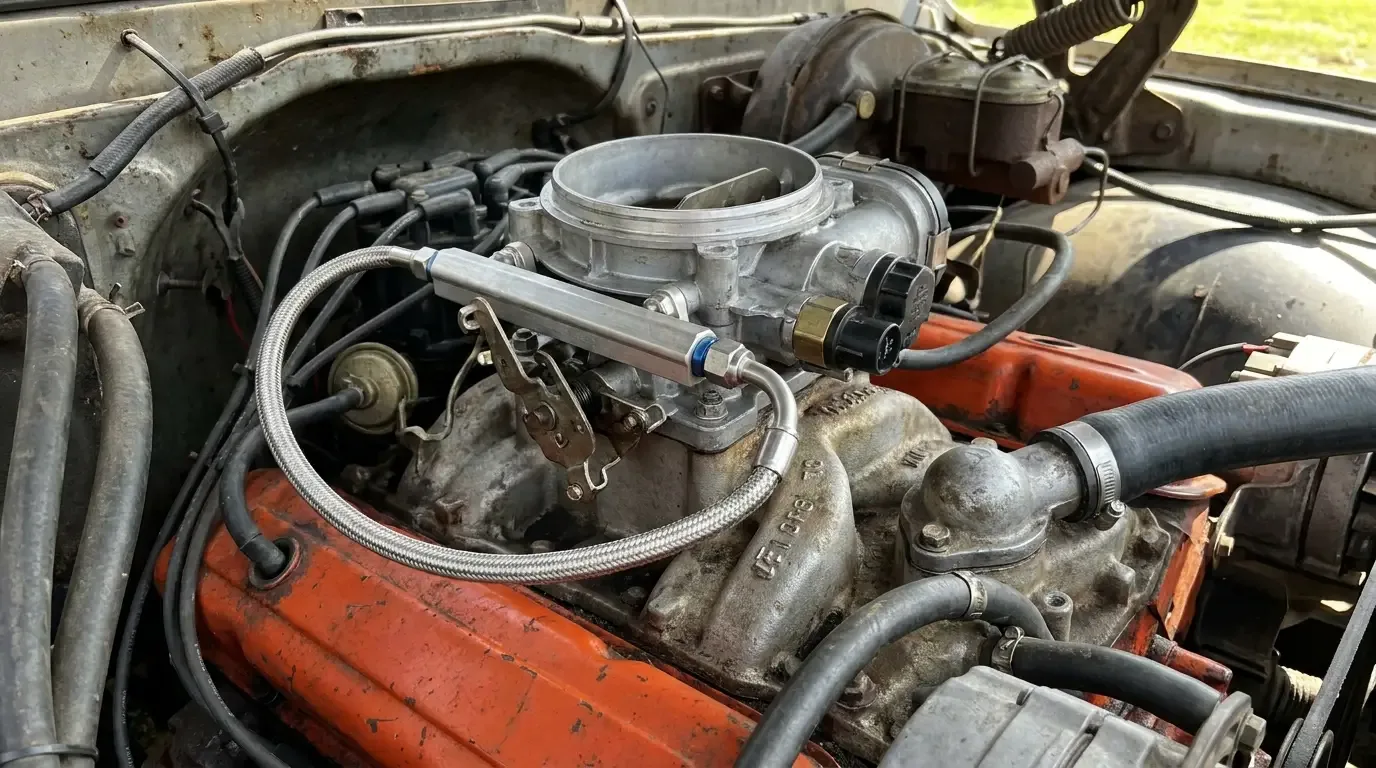
A carburetor is not a bad way to feed an engine. It is just an old way, and it asks a lot of a driver who wants a truck to start the same way every morning regardless of altitude, temperature, or how long it sat since the last drive. EFI fixes a specific, measurable set of problems, and it is worth being precise about what those problems actually are before spending the money to solve them.
Restoration & Tech
6 min read
How to Convert a Classic C10 to Modern EFI
What EFI actually fixes on a carbureted C10, throttle body versus multi-port systems, and the fuel system upgrade most conversions underestimate.
What EFI actually fixes
A carburetor meters fuel based on airflow through a fixed set of jets and circuits that were tuned for one set of conditions. Change the altitude, the temperature, or the fuel itself, and the mixture drifts away from correct without anyone touching a thing. EFI solves this with a computer reading real-time inputs, oxygen content in the exhaust, intake air temperature, coolant temperature, and adjusting the fuel delivered dozens of times a second to keep the mixture correct. That translates into a cold start that does not need choke fiddling, a truck that does not bog or hesitate on a hot day, and fuel economy that improves because the engine is not running rich to cover for a carburetor's inability to adapt.
The gains are real but modest rather than dramatic. A well-tuned EFI conversion on a small block or big block C10 typically nets somewhere around 1-3 mpg over an equivalent carbureted setup, mostly from cleaner idle and part-throttle control, along with eliminating the vapor lock and hot-start issues that plague carbureted trucks in summer heat.
Throttle body EFI versus multi-port EFI
| System type | How it works | Install complexity | Best for |
|---|---|---|---|
| Throttle body EFI (TBI-style aftermarket) | Injectors mounted at a single throttle body, similar footprint to a carburetor | Lower, often bolts to existing intake | Budget builds, keeping the stock intake and look |
| Multi-port EFI | Individual injector per cylinder, mounted near each intake runner | Higher, usually needs a specific intake manifold | Higher power builds, best possible driveability |
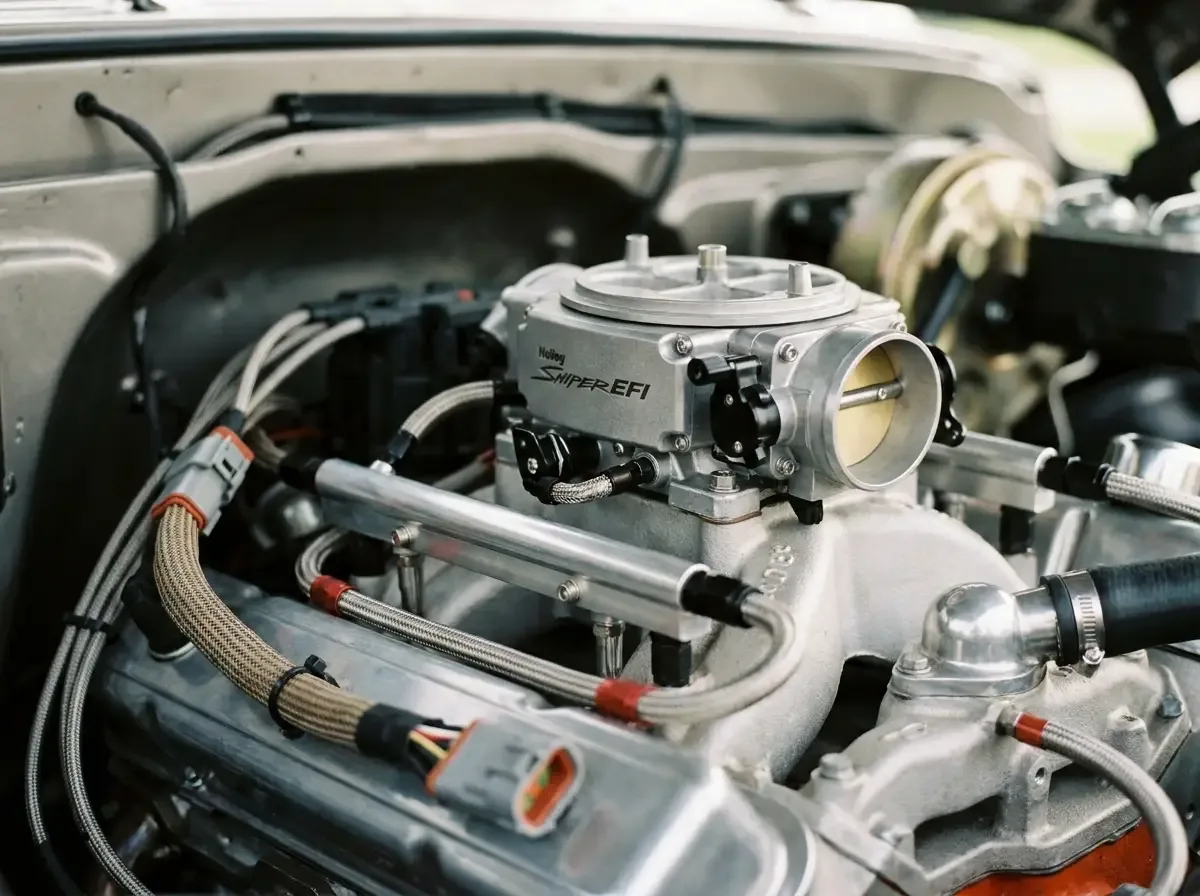
Throttle body EFI systems built for this exact swap bolt onto a standard carbureted intake manifold in most cases, which is the entire appeal. The engine keeps its factory-style intake, the throttle body sits where the carburetor used to sit, and the wiring harness that comes with these kits is built specifically to be self-contained. Multi-port EFI delivers better cylinder-to-cylinder fuel distribution and generally better throttle response, but it asks for a compatible intake manifold and a more involved install. For a truck that just needs to stop being temperamental, throttle body EFI is the right starting point. For a truck already built for real power, multi-port is worth the extra complexity.
The fuel system is the part everyone underestimates
This is where an EFI conversion budget goes sideways for people who assumed it was a bolt-on and nothing else. A carbureted C10 runs a low-pressure mechanical fuel pump, and EFI needs considerably higher pressure delivered consistently, which means the factory in-tank setup or add-on mechanical pump almost never works as-is. Most conversions need a new in-tank or inline high-pressure electric pump, a return line back to the tank if the system is not returnless, and in some cases a completely new fuel tank if the old one cannot support an in-tank pump setup or has decades of rust and sediment that will destroy injectors on first start.
Skipping the fuel system upgrade and just adding injectors to the existing low-pressure setup is the single most common way an EFI conversion fails to deliver what it promised. The injectors need the pressure the system was designed around, not whatever the old mechanical pump happens to produce.
"People buy the EFI kit and forget the fuel pump behind it. That's like putting a bigger throttle body on an engine that's still breathing through a cocktail straw. The injectors don't care how good the kit's marketing is. They care about pressure, consistent pressure, every second the key is on."
Dan Reeves
Wiring, tuning, and the learning curve
Modern self-contained EFI kits come with a harness built for the swap and a handheld tuner or phone app that walks through initial setup, but there is a real learning curve past that first startup. Idle quality, part-throttle response, and wide-open-throttle fuel curves all benefit from someone who understands what the numbers on a tuning screen actually mean, rather than accepting whatever the base map delivers. A base tune will run the truck. A dialed-in tune is the difference between a truck that starts and idles like a modern vehicle and one that just technically has fuel injection now.
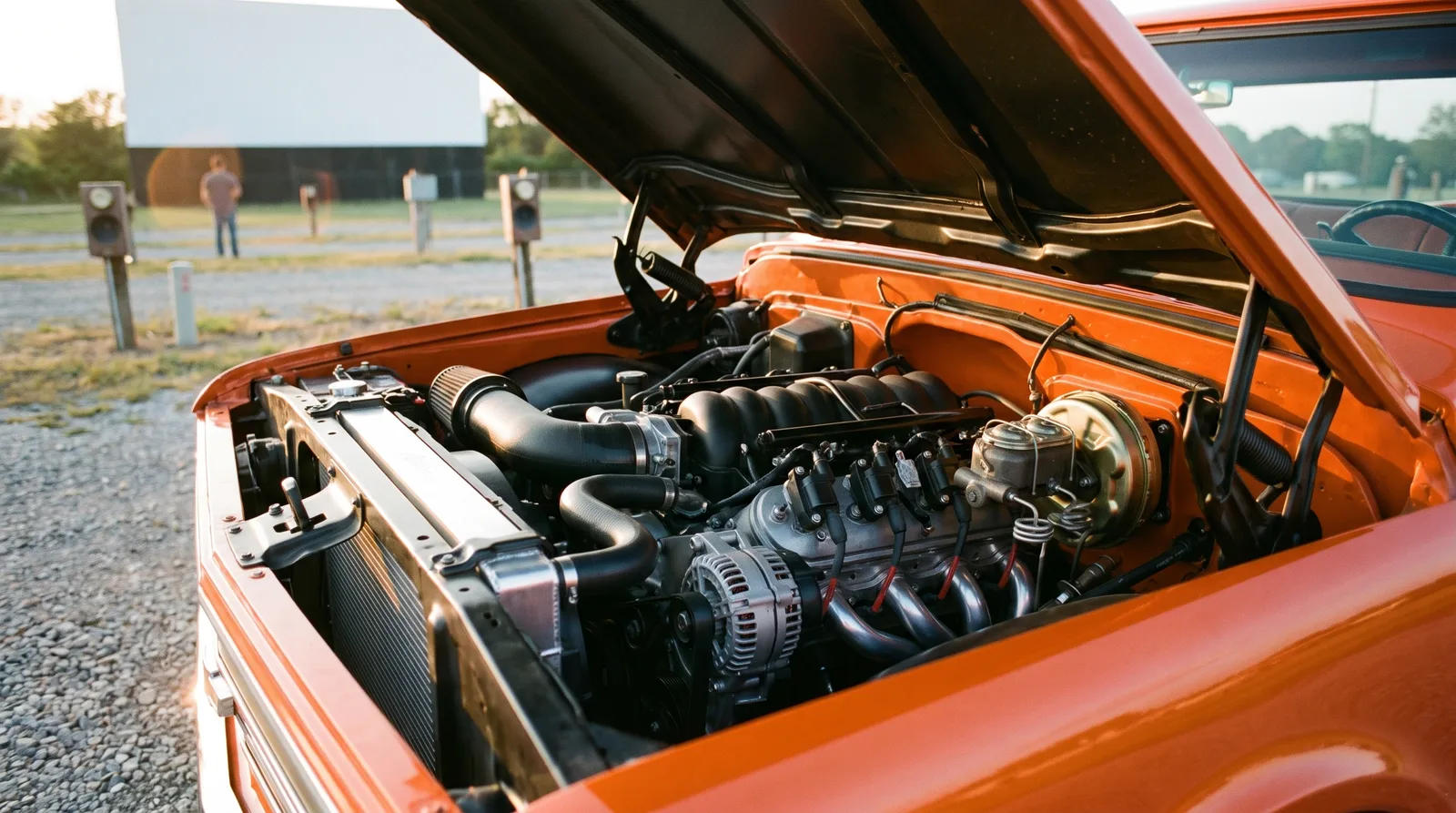
Anyone doing this conversion alongside the engine and performance guide should note that an LS swap comes with its own factory-style EFI already built in, which sidesteps this entire conversation. This guide is specifically for keeping a small block or big block and adding EFI to it, not for an LS swap where the fuel injection question is already answered by the donor engine's computer.
What it costs and what it is worth
A complete throttle body EFI conversion, including the kit itself (commonly $1,000-$2,000 for a self-contained system), a new high-pressure fuel pump, lines, and a return setup if needed, typically lands in the low to mid four figures depending on how much of the fuel system needs replacing. Multi-port systems cost more once a compatible intake and additional wiring are factored in. Against that cost, weigh a truck that starts instantly regardless of temperature, does not vapor lock in summer traffic, and returns better fuel economy on every tank. For a truck that gets driven regularly rather than trailered to shows, that tradeoff earns its keep faster than most other upgrades on the list.
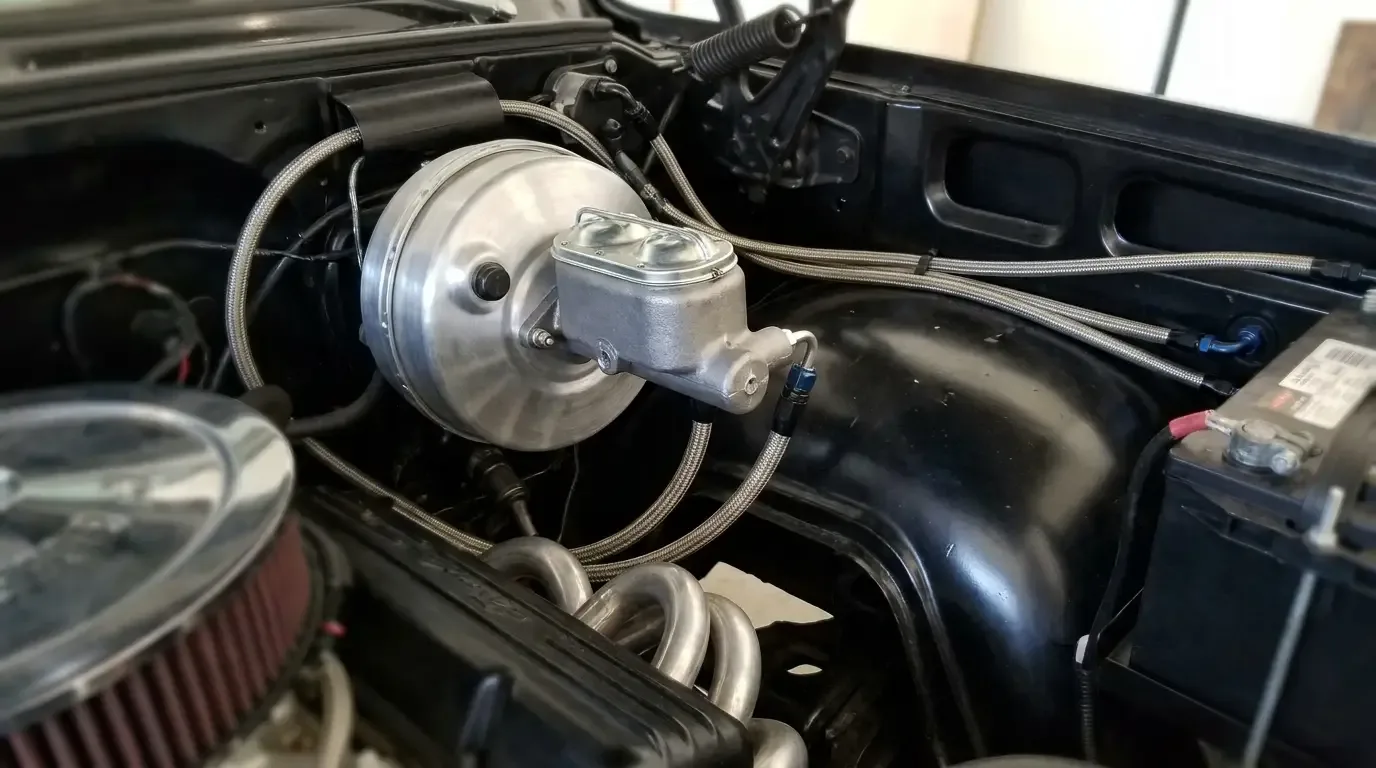
Before starting the fuel work, get the brakes sorted first. Anyone tackling this conversion should also plan for the brake system most EFI swaps also need, since a lot of EFI intake and accessory changes affect the vacuum source a stock booster relies on.
Sources and notes
Related Reading
Have a
Chevrolet C10
for Sale?
Reach thousands of serious classic car collectors across the US.
Sell It Here →
Are You a Classic Car Dealer?
List your full inventory and connect with targeted classic car buyers.
Join as a Dealer →

About the author
Dan Reeves
Performance engine builder from North Carolina's motorsports corridor, focused on swaps, forced induction and making real, repeatable power.
Related Listings - Chevrolet C10
More in Restoration & Tech
Comments
Be the first to comment on this article.