
Here's the number that gets people into hydroboost in the first place: a stock vacuum booster wants somewhere around 15-18 inches of manifold vacuum to do its job right, and a C10 running a mild aftermarket cam, especially one that just got an LS dropped in through the LS swap guide, often can't hold that number at idle. The pedal gets long and soft, and on a three-ton truck that's not a minor annoyance. It's a stopping-distance problem.
Restoration & Tech
7 min read
Installing Hydroboost Brakes on a Chevrolet C10
Why a low-vacuum cam kills a stock brake booster, and how to install a hydroboost system that gets its assist from the power steering pump instead.
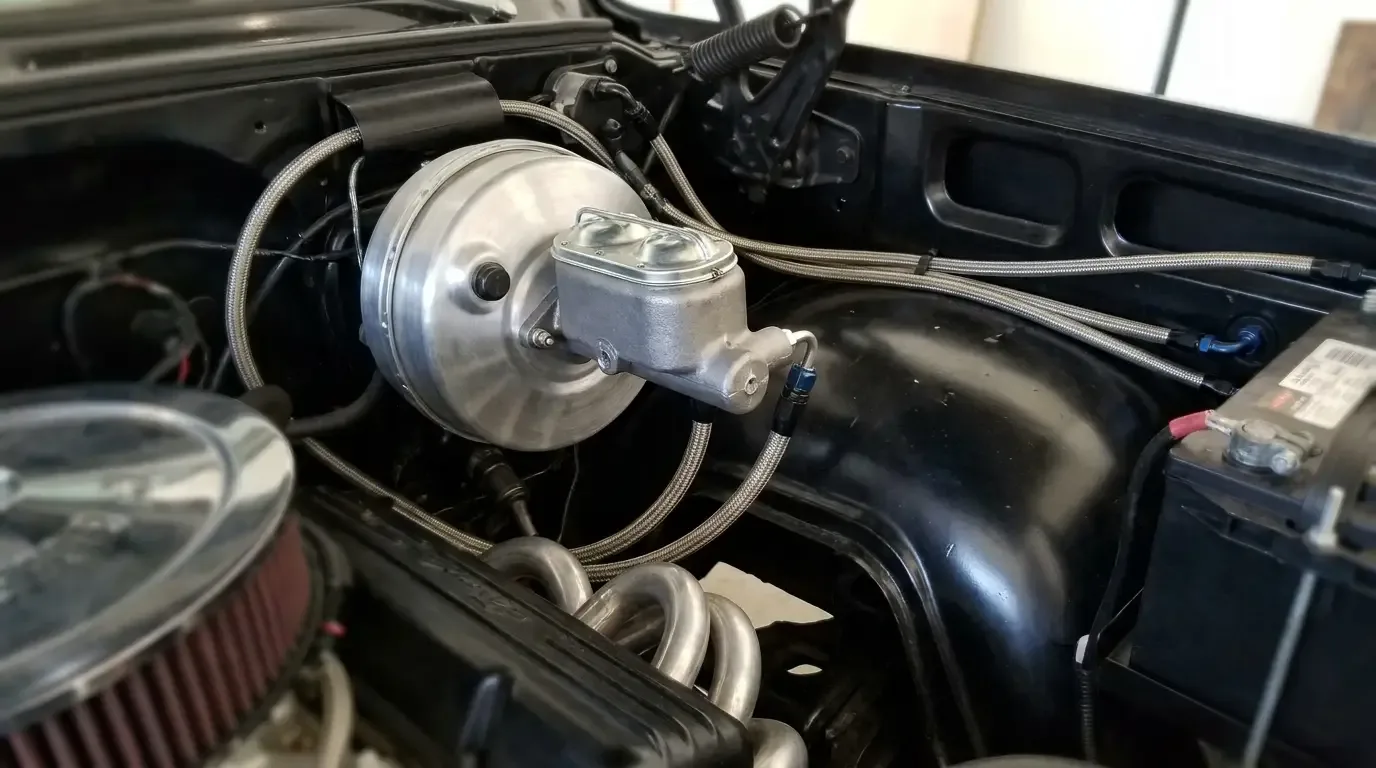
Hydroboost fixes this by pulling from the power steering pump instead of the intake. Hydraulic pressure doesn't care what your cam is doing. It's there at idle, it's there at 6000 rpm, and it's the same setup Chevy and GMC put on 3/4-ton and 1-ton trucks from the factory for exactly this reason, big trucks with engines that couldn't always produce reliable vacuum under load. Putting one on a half-ton isn't a hack. It's borrowing the heavier-duty solution.
Why vacuum quits on you first
A stock small-block with a mild cam and full accessories will usually hold enough vacuum to keep a factory booster happy. Change the cam profile, add a bigger cam for the LS swap, or run a manifold that doesn't build vacuum the way the factory piece did, and that number drops. I've seen combos on the dyno that idle fine on the gauge but fall apart under load, exactly when you're on the brake pedal coming off the throttle. That's the worst possible moment for a booster to lose assist.
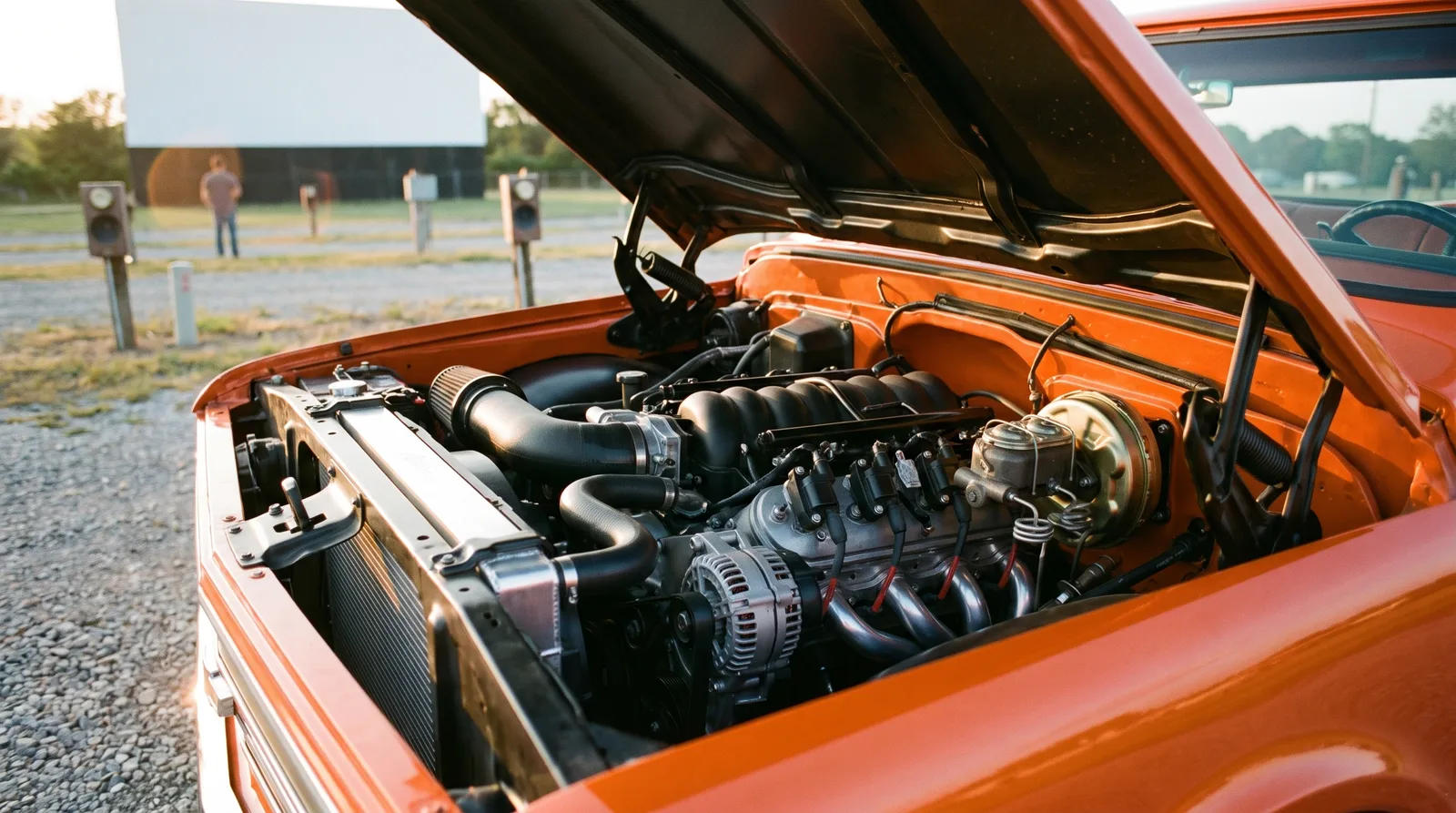
The other issue is packaging. A vacuum booster and an LS intake manifold want to occupy the same real estate on the firewall side, and on a lot of these swaps something has to move. Hydroboost is physically smaller in the direction that matters and clears where a big vacuum can won't.
Parts that actually matter
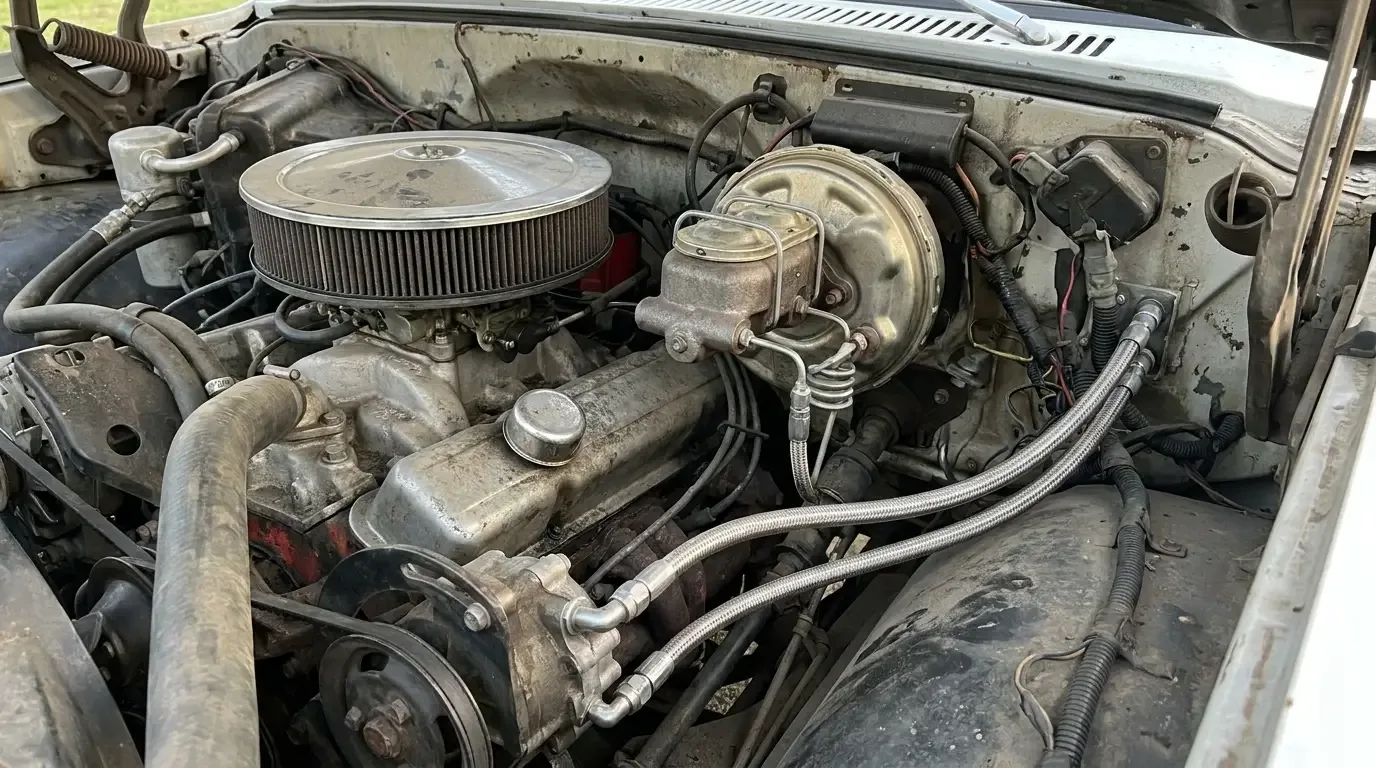
The hydroboost unit itself, a compatible power steering pump with enough flow, the correct high-pressure and return lines, and a master cylinder with a bore that matches your brake setup. Don't assume the master cylinder that came with a junkyard hydroboost unit is right for your combination. Bore size changes pedal feel and effort independent of the booster, and mixing a wrong-bore master with the right booster gets you a pedal that's still not right, and then people blame the booster.
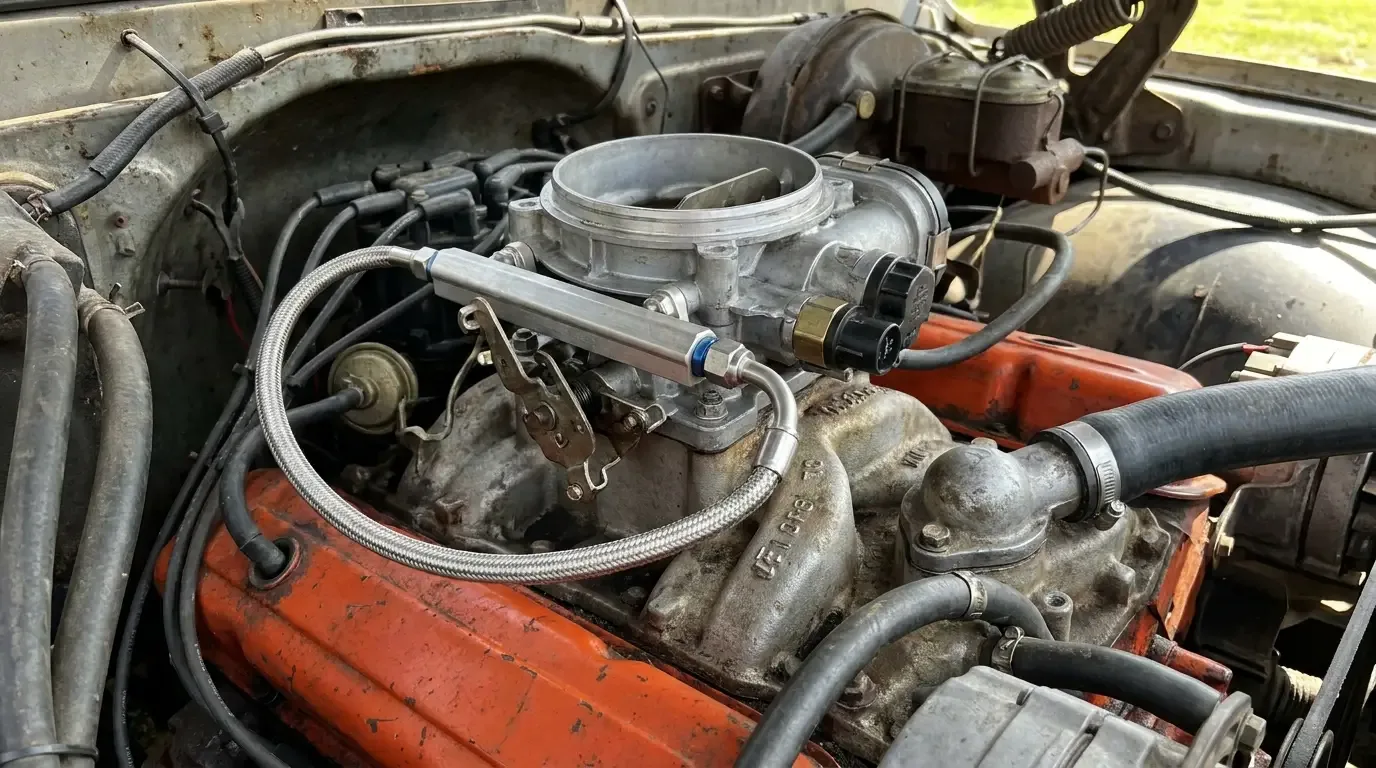
Pump flow is the number people skip and shouldn't. A pump that's marginal for power steering alone gets asked to do double duty here, steering and braking off the same hydraulic source. If you're running a stock-style pump that was already working hard on a manual steering box conversion or a fast-ratio box, check that it's rated for hydroboost duty before you assume it'll be fine.
Mounting and plumbing it in
Hydroboost mounts in place of the vacuum booster, same four studs through the firewall in most applications, so the swap itself isn't the hard part. The hard part is routing new high-pressure and return lines from the pump to the booster without kinking anything or running a line across an exhaust manifold that's going to cook it. Take the time to route these the way you'd route a power steering line on a car you actually want to keep, because a chafed or kinked hydroboost line doesn't just leak power steering fluid, it kills your brake assist too.
Bleed the power steering system first, fully, before you worry about brake bleeding. Air in the hydraulic circuit shows up as a pedal that feels inconsistent, sometimes firm and sometimes soft, and people chase that as a brake problem when it's actually a steering-side air pocket. Turn the wheel lock to lock a few times with the engine running to work air out before you touch the brake pedal.
Pushrod length and pedal feel
This is where most home installs go wrong. Pushrod length between the booster and the master cylinder has to be set correctly, and too long a rod holds the master cylinder pistons slightly open at rest, which cooks your brakes through drag you can't see and eventually a pedal that won't fully release. Too short and you lose pedal travel and get a mushy, low pedal that never quite firms up. Most hydroboost kits include a gauge tool for this exact measurement. Use it. Don't eyeball it.
A properly set up hydroboost pedal should feel firmer than a vacuum booster at the top of the stroke and require less travel to get full assist. If your pedal feels the same as the vacuum setup it replaced, or softer, something's wrong, either pushrod length, a pump that's not flowing enough, or air still in the system.
What good and bad actually look like
Good: firm pedal at the top of the stroke, consistent effort every time you hit the brakes, no growl or whine from the pump under braking. Bad: a pedal that sinks slowly under steady pressure at a stop, that's usually a leaking hydraulic circuit somewhere internal to the booster, not a bleeding problem. A whining pump under hard braking usually means low fluid or a line that's partially restricted.
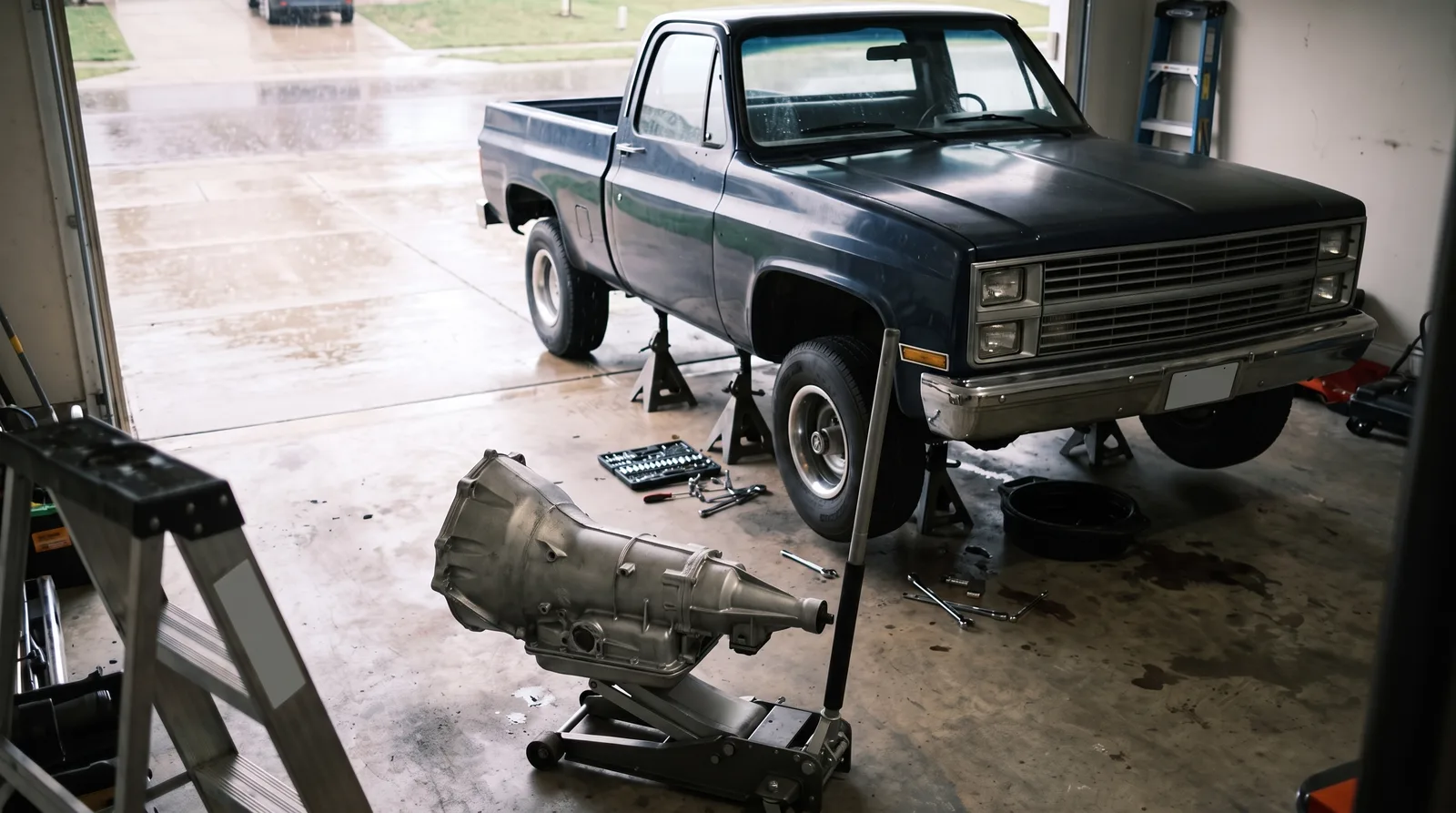
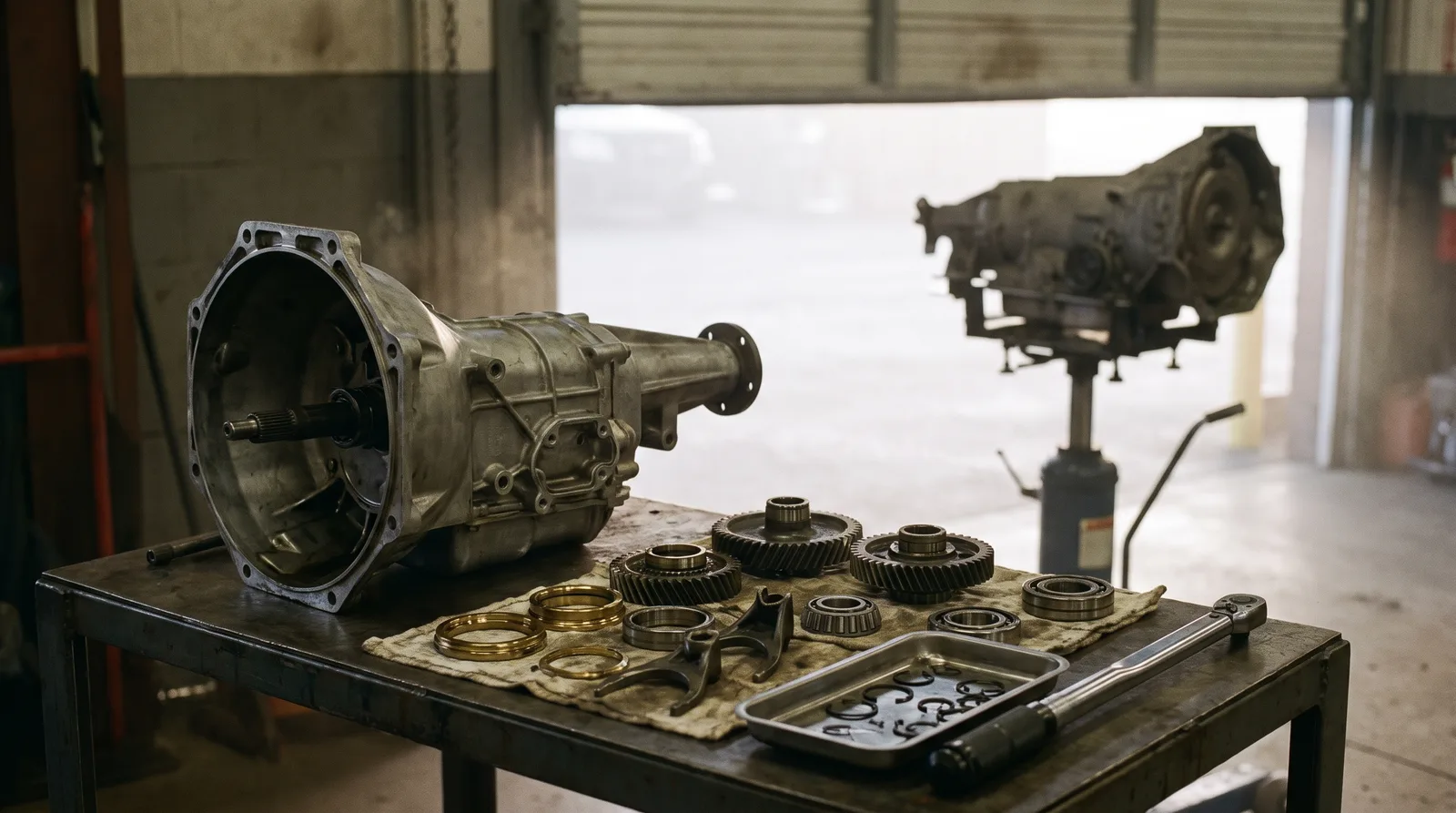
If you've already gone through the transmission behind that new engine, you already know the swap habit of checking one system's install against the one before it. Brakes are the same discipline. Don't call it done until the pedal does what the gauge tool and the bleed procedure said it should do, not what feels close enough at the end of a long Saturday.
"A soft pedal on a truck that just got a bigger cam isn't mysterious. It's math. No vacuum, no assist, simple as that. Hydroboost doesn't care what your idle vacuum reads, and that's the whole reason to run one."
Dan Reeves
Cost and where people cut corners
A bare reman hydroboost unit typically runs $200-350, while a complete kit with a matched master cylinder, brackets, and pushrod hardware from an established brand more commonly lands in the $800-1,200 range depending on application. The corner people cut is the power steering pump, reusing a tired original pump instead of verifying its flow rating, and that's the single biggest source of "I installed hydroboost and it's still soft" complaints I hear. The booster gets blamed. The pump is usually the actual problem.
Budget real shop time if you're paying someone else to do this, not because the mechanical swap is difficult, but because correct line routing and pushrod setup take patience most people rush past on a Friday afternoon job.
Sources and notes
- Hydro-Boost Power Assist Systems: Diagnosis and Repair: Brake & Front End
- Minimum vacuum needed for a vacuum booster at idle: GM Square Body Forum
- How Does A Hydroboost Brake System Work?: Concept ONE Pulley Systems
- CPP Universal Hydroboost Hydraulic Power Brake Booster (pricing reference): Speedway Motors
- GM Hydroboost Brake Kit with Wilwood Master Cylinder (pricing reference): Wide Open Design
- 1955-72 Power Brake Vacuum and Pressure Diagnosis Tech Guide: Eckler's
Related Reading
Have a
Chevrolet C10
for Sale?
Reach thousands of serious classic car collectors across the US.
Sell It Here →
Are You a Classic Car Dealer?
List your full inventory and connect with targeted classic car buyers.
Join as a Dealer →

About the author
Dan Reeves
Performance engine builder from North Carolina's motorsports corridor, focused on swaps, forced induction and making real, repeatable power.
Related Listings - Chevrolet C10
More in Restoration & Tech
Comments
Be the first to comment on this article.