
A clone is a car built to look like a more valuable version of itself. A base coupe wearing the badges, stripes, and drivetrain of a top-trim car. Building one is a legitimate hobby. Selling one as the genuine article is fraud, and the price gap is large enough that it happens often. The good news is that the factory left a paper and metal trail on these cars, and if you know where to read it, most fakes fall apart under a careful look.
Restoration & Tech
6 min read
How to Spot a Cloned or Faked Muscle Car
Use the VIN, cowl or fender tag, and drivetrain casting dates to tell a real muscle car from a clone, and catch the documentation red flags.

The work is documentation work. You compare what the car claims to be against what the factory records say it left the line as, using the VIN, the trim or cowl tag, and the codes stamped into the drivetrain. When those three sources agree, you have a real car. When they argue, you have a conversation to finish before any money moves. This is the kind of verification that runs through our coverage of muscle car ownership.
Start with the VIN and what it decodes to
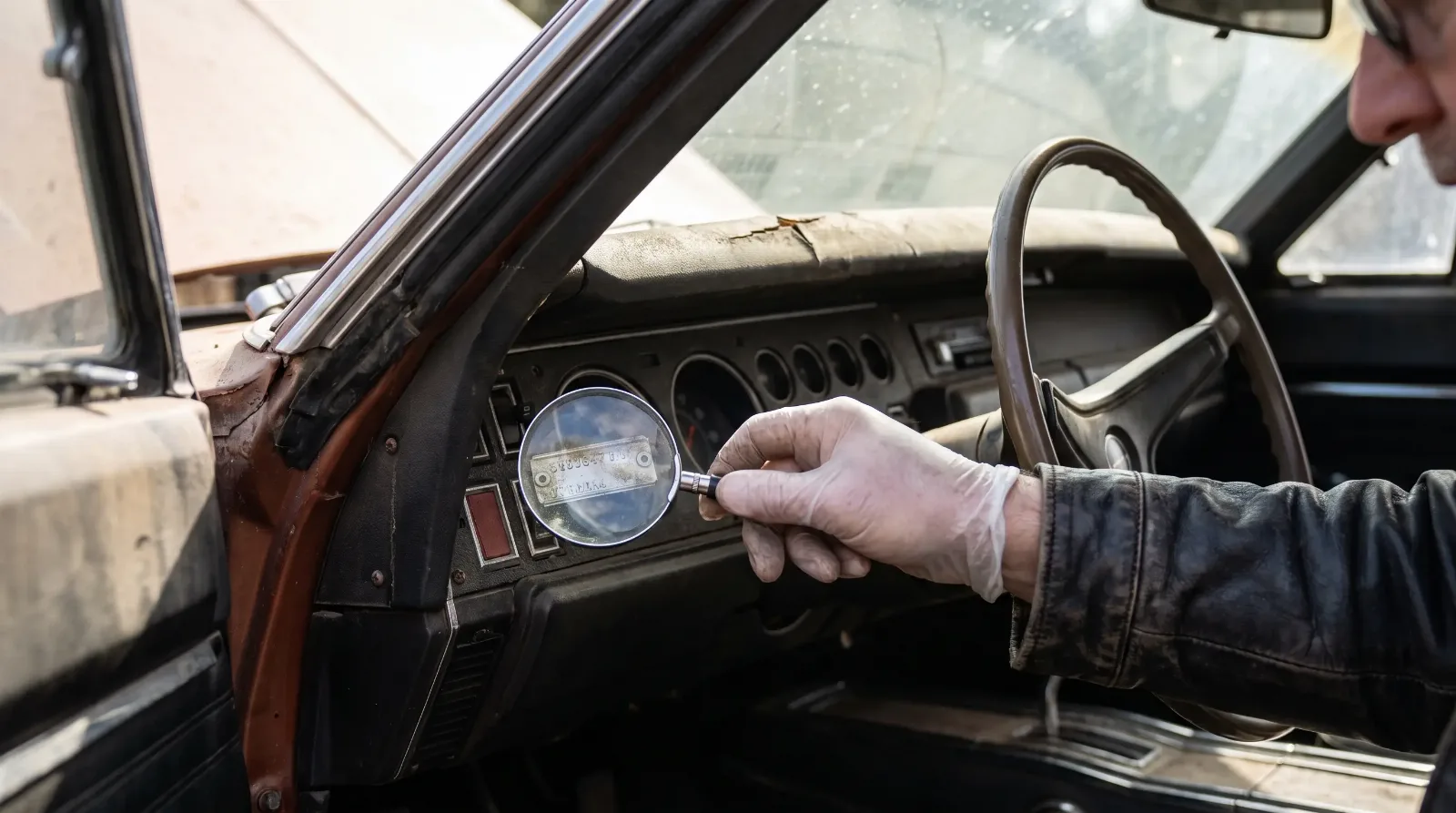
The VIN is the first source, and on most American muscle from the 1960s and early 1970s it encodes more than an identity number. Depending on the make and year, characters in the VIN indicate the model, the body style, the plant, and in some cases the engine family the car was built with. A car claiming to be a big-block special whose VIN decodes to a base six-cylinder or small-block body is not that car, whatever is bolted in now.
Check that the VIN plate itself looks factory-correct for the year: the font, the rivets or spot welds holding it, and its location. Reproduction plates and restamped tags exist. On many cars the VIN or a derivative was also stamped onto the engine and other components, and those partial stampings should match the plate. A plate that looks disturbed, re-riveted, or freshly painted around the edges is worth a hard second look.
Read the cowl, trim, or fender tag against the claim
The second source is the body tag. On GM cars this is the cowl tag on the firewall; on Chrysler cars it is the fender tag; on Ford cars it is the data plate. These tags encode the paint code, trim, body style, build date, and on some cars the options the factory installed. A tag that shows a base interior and a plain paint code on a car advertised as a loaded special package tells you the badges came later.
Two cautions. First, some brands did not encode the engine on the body tag at all, so the absence of an engine code is not proof of anything by itself. Second, reproduction tags are available and convincing. Look at how the tag is attached, whether the stampings are crisp and consistent, and whether the build date is plausible against the VIN sequence. A tag stamped in a different font or hung with the wrong fasteners is a bigger warning than any decode.
| Verification source | Where to find it | What it confirms |
|---|---|---|
| VIN plate | Dash, door jamb, or firewall by make/year | Model, body style, plant, sometimes engine family |
| Cowl / fender / data tag | Firewall or fender by make | Paint, trim, body, build date, some options |
| Engine casting and stamp | Block deck, pad, and casting numbers | Engine family, casting date, sometimes VIN derivative |
| Build documentation | Build sheet, window sticker, invoice | Factory-installed options as ordered |
Match the drivetrain codes to the car
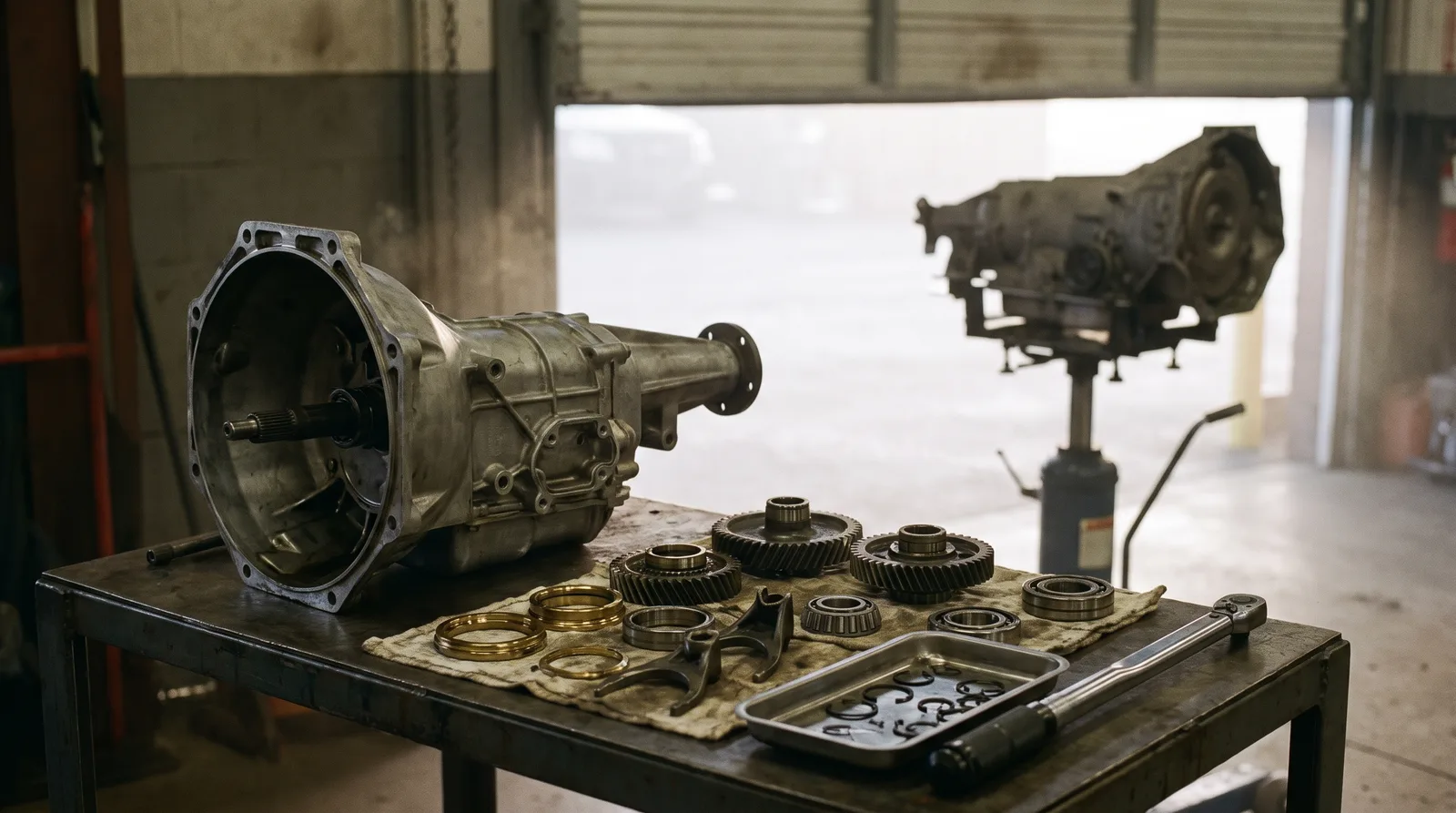
The third source is the drivetrain itself. Engine blocks carry casting numbers and casting dates, and often a stamped pad that identifies the engine's application and, on some makes, a partial VIN. A correctly original engine was typically cast a few weeks before the car's build date, so a block cast after the car was assembled cannot be the one it left with. That is a simple date check that catches a lot of swapped engines.
Do the same with the transmission and rear axle where codes exist. A car sold as a factory four-speed big-block should have a transmission and rear end whose codes and dates fit that build, not a mix of parts from three donor cars. None of this makes a clone a bad car to drive. It only means the price should reflect what it actually is, which is why a real inspection matters, and you can read the full story on how to run one.
Watch the documentation red flags
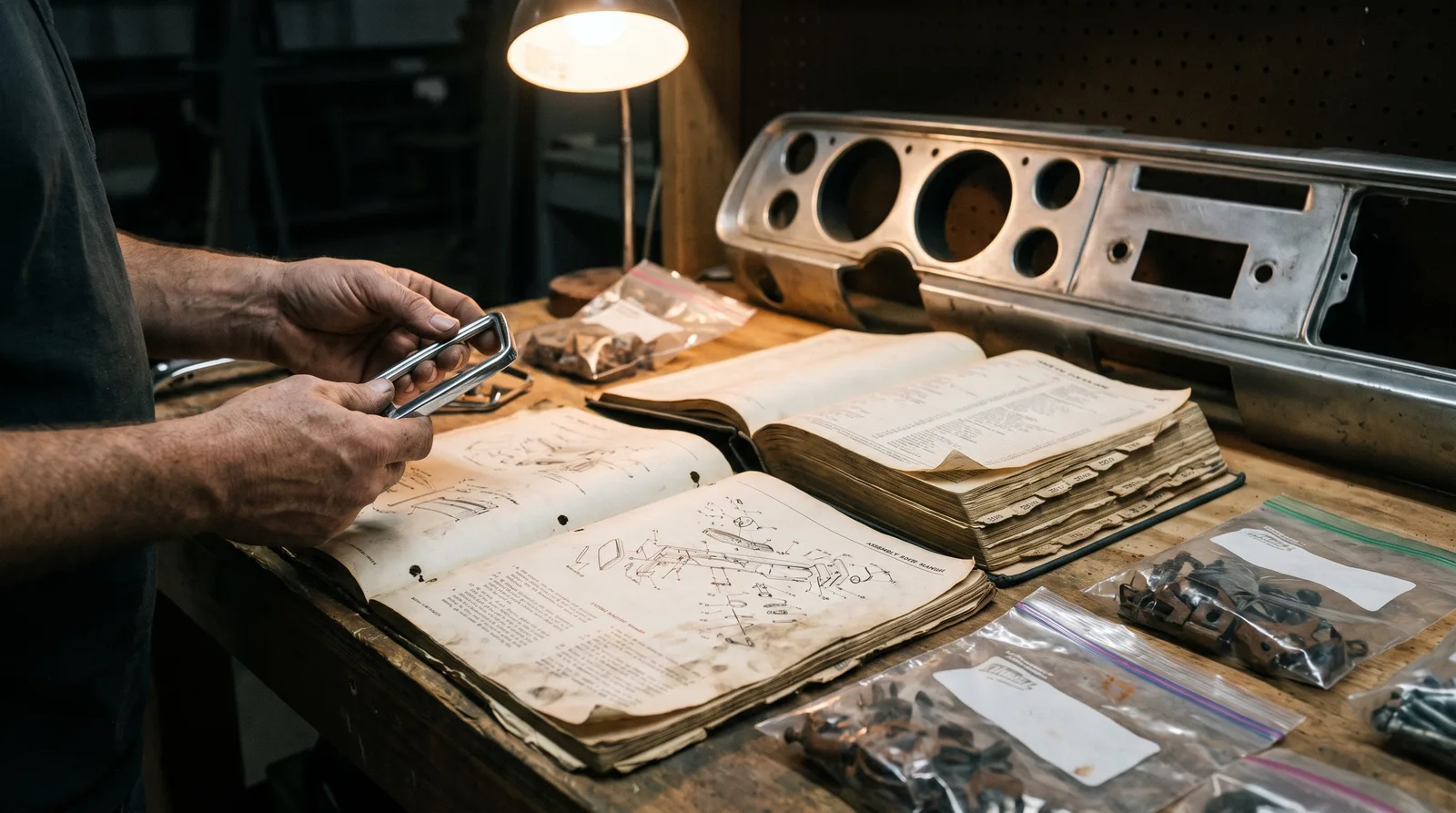
Paperwork is where clones either get exposed or get dressed up. A genuine documented car usually comes with a coherent story: a build sheet or window sticker that matches the tags, receipts that name the right parts, and a title history that follows the VIN cleanly. When the documents are thin, vague, or refer to a car that does not match the metal in front of you, slow down.
Be skeptical of a few specific things. Photocopied documents with no chain of custody. A build sheet that conveniently supports the expensive claims but does not match the tag stampings. A seller who explains away every discrepancy with a story about a restoration that replaced the tags. Restorations do replace panels, but they do not usually change what the VIN decodes to. When the story is doing more work than the paperwork, treat the car as a clone and price it that way.
"The factory records are the check. Not the badges, not the stripes, not the seller's story about the uncle who ordered it new. Read the VIN, read the tag, read the casting dates, and let them agree before you believe anything. When they do not agree, the car is telling you what it really is."
Tom Ramirez
When in doubt, bring in the registry
For the high-value cars, where the gap between a real example and a clone runs into the tens of thousands, pay someone who authenticates that specific model for a living. Marque registries and recognized authentication services have seen enough restamped pads and reproduction tags to know exactly where to look, and their opinion carries weight at resale. A few hundred dollars for an expert eye is cheap next to overpaying by fifty thousand for badges.
Cloning is not going away, because the value spread makes it worth someone's effort. But the factory built these cars to be traceable, and the trail is still there for a patient buyer. Match the three sources, question the paperwork, and walk away from any car whose story you cannot verify in metal. The genuine ones can prove what they are.
Related Reading
Have a
Classic Car
for Sale?
Reach thousands of serious classic car collectors across the US.
Sell It Here →
Are You a Classic Car Dealer?
List your full inventory and connect with targeted classic car buyers.
Join as a Dealer →

About the author
Tom Ramirez
Corvette researcher and historian based in Bowling Green, Kentucky. Two decades documenting Corvette production history from original factory records.
More in Restoration & Tech
Comments
Be the first to comment on this article.