
A pre-purchase inspection is the cheapest insurance you will ever buy on a muscle car. A few hundred dollars spent before the sale can save you five figures after it. Most buyers skip it because they are in a hurry or in love, and both are expensive states of mind when you are looking at a fifty-year-old car that somebody wants to sell you today. Slow down and run the inspection the same way every time.
Restoration & Tech
6 min read
Pre-Purchase Inspection for a Muscle Car
How to run a proper pre-purchase inspection on a muscle car: lift check, compression test, cold start, test drive, and buying sight-unseen.
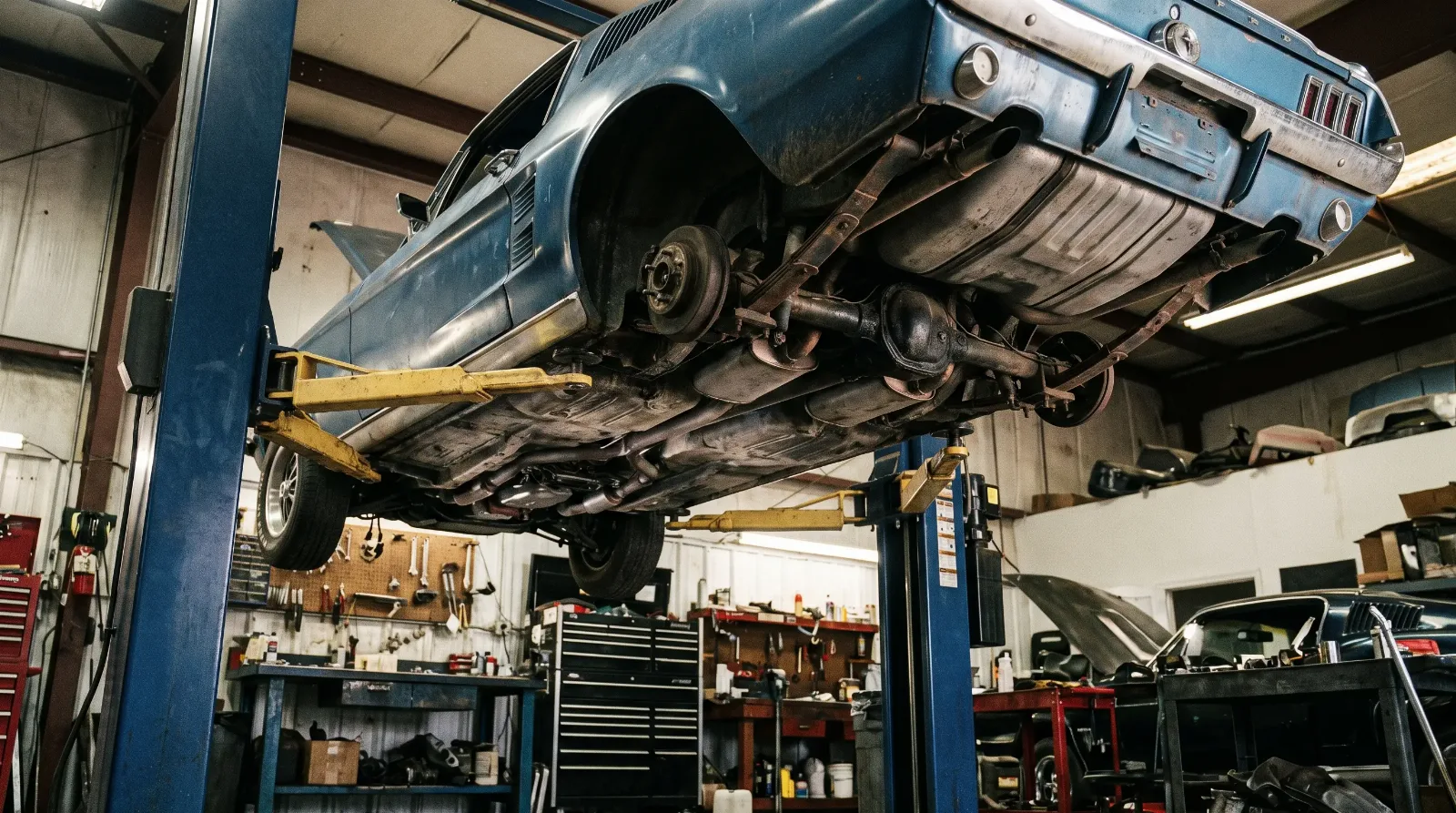
This is not the casual once-over you do when you first see a car. A real pre-purchase inspection is a structured process: a lift, a checklist, a cold start, a compression test, and an honest report you can negotiate with. Whether you run it yourself or pay a specialist depends on your experience and where the car is, but the steps do not change. For the wider picture of what you are getting into, start with the muscle car restoration breakdown.
Decide who does the inspection
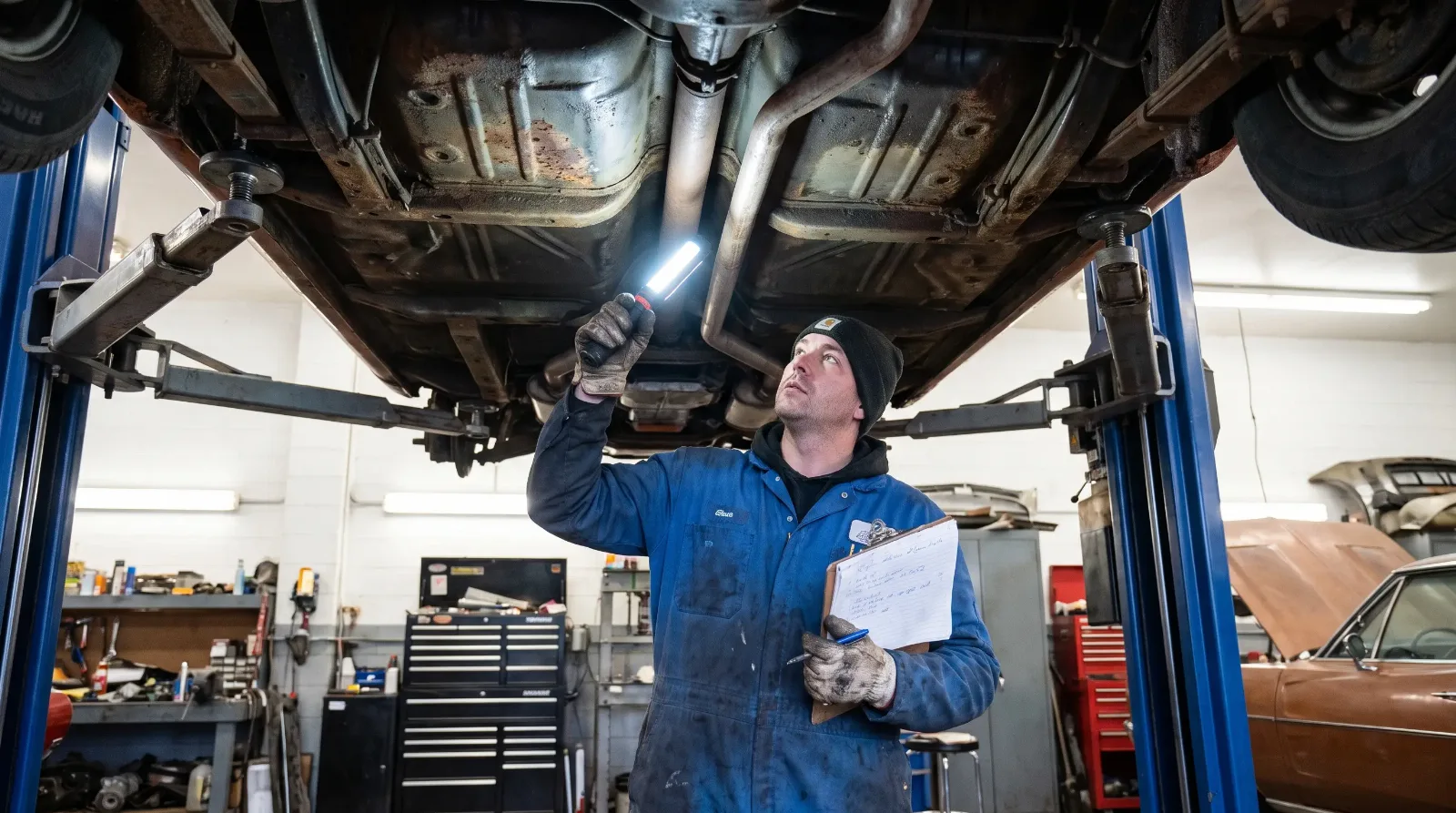
If the car is local and you know your way around old iron, you can do a lot of this yourself. If it is three states away, or you are newer to these cars, hire someone. A specialist who inspects muscle cars for a living charges a fee that usually lands somewhere in the low hundreds, and they bring a lift, the tools, and an eye that has seen the tricks before. Money well spent on a car you cannot stand next to.
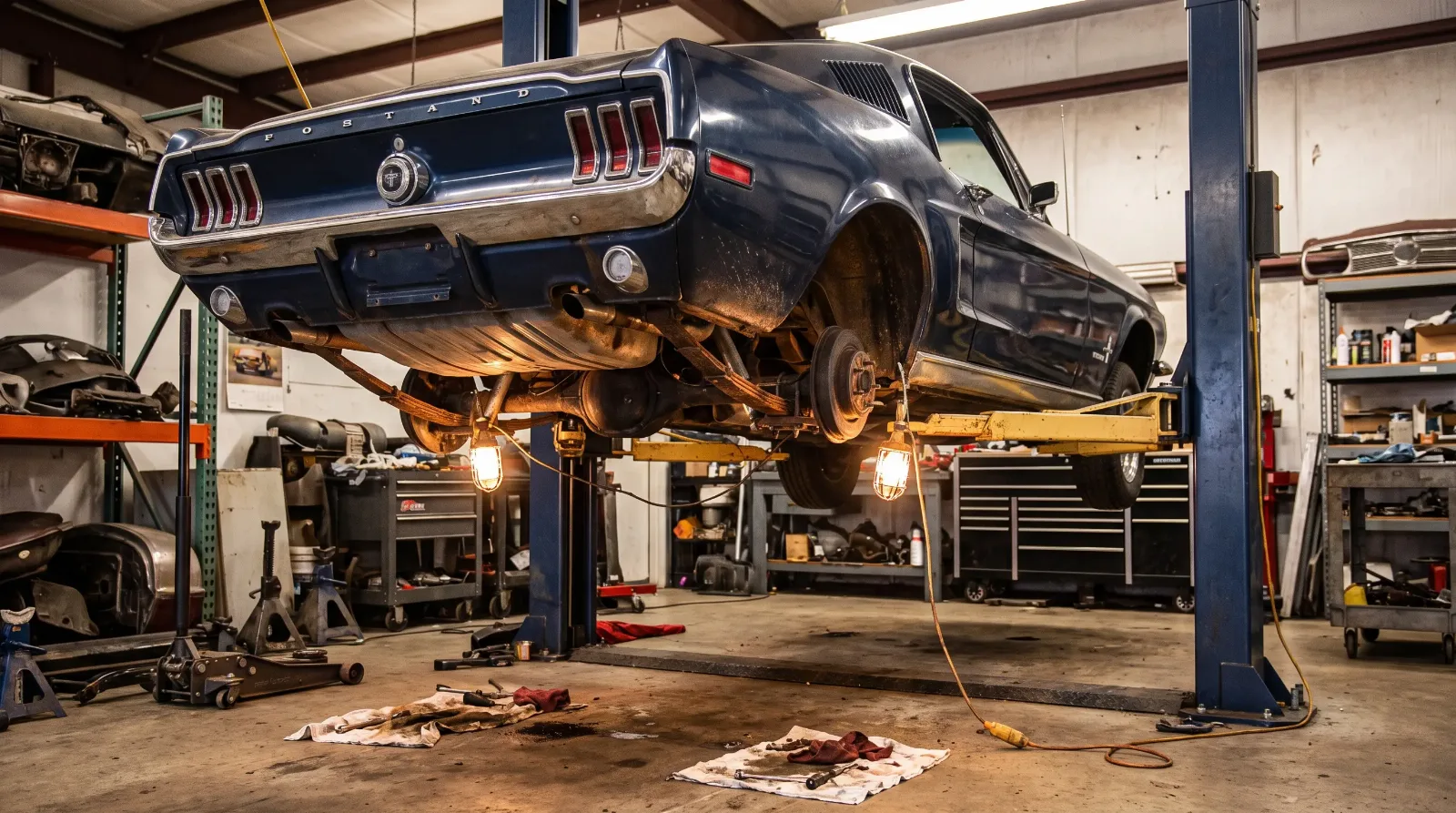
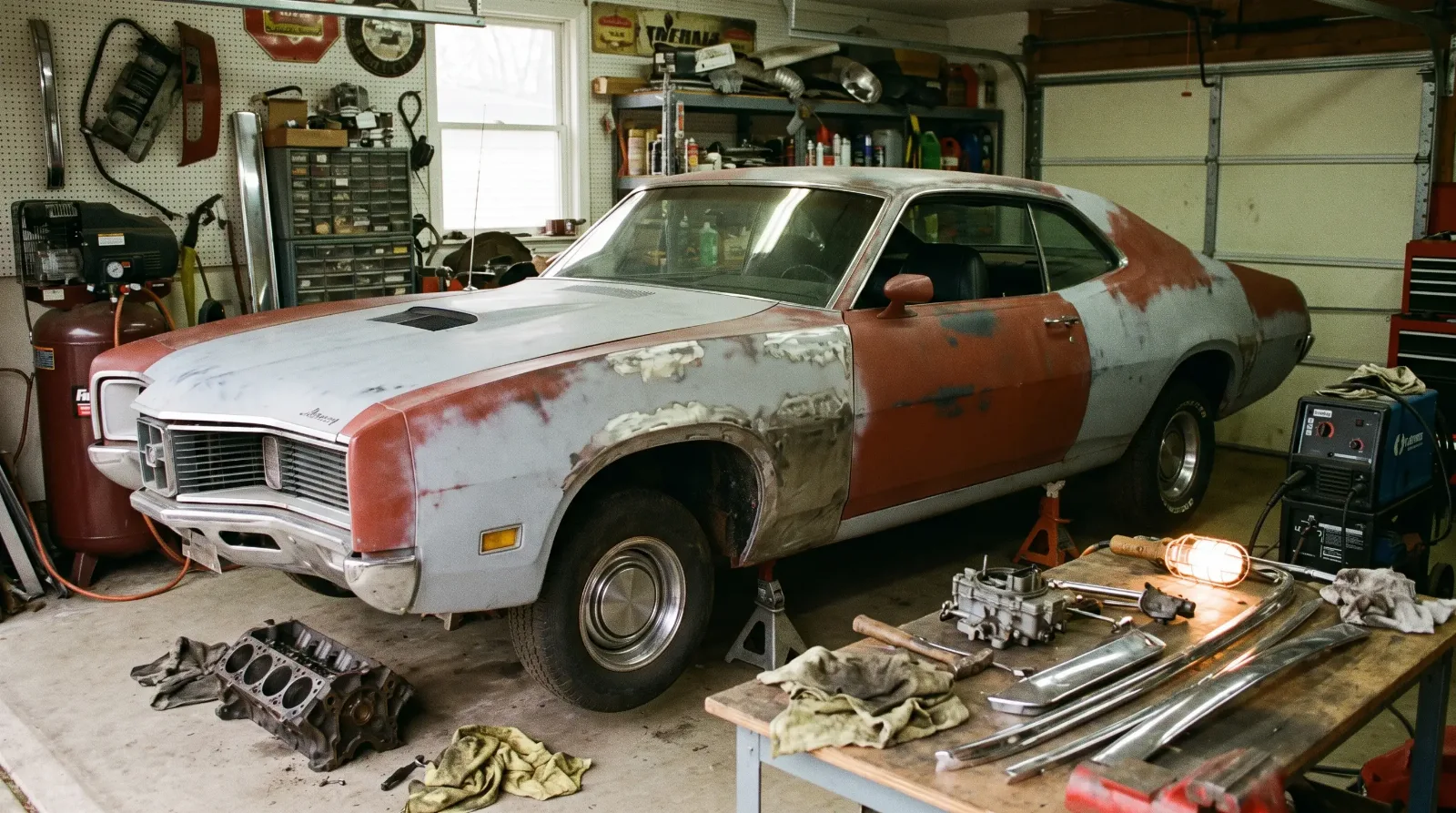
Whoever does it, the inspection needs a lift or a good jack and stands. You cannot judge a car with your feet on the ground. The problems that matter most on these cars live underneath, and a seller who will not let the car go up on a lift is telling you something without saying it. If they refuse, that is your answer.
Work the structure first
Up on the lift, the frame and floor come first because they decide whether the car is worth the rest of the inspection. Probe the frame rails, the floor pans, the trunk pan, and the torque boxes. Surface rust is normal on a fifty-year-old car. Flaking, scaling, or soft metal you can push a tool through is structural, and structural rust is the most expensive thing you can find.
🔧 Inspection Priorities
- Frame and unibody integrity. Cracks, prior collision repair, or rot in the rails means metal fabrication. This is the deal-killer, so check it before anything else.
- Floor and trunk pans. Replacement plus labor runs roughly $1,500 to $4,000. Fresh undercoating hiding the pans is a warning, not a feature.
- Compression across all cylinders. A spread of more than about 10 to 15 percent between the highest and lowest cylinder points to a tired or damaged engine.
- Brakes and fuel lines. Old rubber and rusted hard lines are a safety fix you pay for either way. Budget for it.
- Panel gaps and alignment. Uneven gaps and mismatched paint edges reveal past collision work the seller did not mention.
Test the engine, do not just listen to it
Insist on a cold start. A seller who has the engine warm before you arrive may be covering a rough cold start, low oil pressure, or a lifter that only quiets down once the oil is up. Watch the first thirty seconds. Blue smoke means oil burning past rings or valve guides. Blue-white that clears could be condensation, but keep watching.
Then run a compression test, and a leak-down test if you have the gear. Compression numbers that are close across all cylinders tell you the engine is healthy. A low cylinder tells you where the problem is, and a leak-down test tells you whether it is rings, valves, or a head gasket. This is the single most useful mechanical check you can run before buying, and it takes fifteen minutes. Skipping it to save time is how people buy engines that need a rebuild they did not budget for.
Drive it, then price the report
If the car is roadworthy, the inspection includes a real drive. Get it to speed, brake firmly once from a safe speed, take a corner under light load, and feel the driveline. Muscle cars announce their problems under load. A shudder, a pull, a whine that changes with speed, or a transmission that hunts for gears all cost money to trace and fix. Note every one of them.
When the inspection is done, you have a list, and the list is your negotiating tool. Add up the real cost of the fixes you found and take that off the asking price, or walk away if the total buries the car. A good inspection does not just protect you from a bad car. It also gives you the leverage to buy a good one at a fair number. What you do next, whether you tackle the work yourself or hand it to a shop, is a decision worth its own read, so read the full story.
"I have never regretted an inspection I paid for, and I have regretted every car I bought without one. The fee feels like a lot right up until the moment it saves you from a rusted frame you would have found the hard way, in your own garage, after the check cleared."
Mike Sullivan
Buying sight-unseen
Plenty of muscle cars now sell online to buyers who never stand next to them, and that raises the stakes on the inspection. If you cannot get there, pay a local specialist to go for you. Ask for photos of the underside on a lift, of the cold start on video, of the compression numbers written down, and of every panel gap and paint edge. A seller with nothing to hide will provide all of it. A seller who stalls or sends only glamour shots from fifteen feet is filtering what you see.
The whole point of a pre-purchase inspection is to replace hope with evidence. These cars are simple, and they tell the truth when you put them on a lift and make them run cold. Do the work before you buy, every time, and you will end up with a car instead of a lesson.
Related Reading
Have a
Classic Car
for Sale?
Reach thousands of serious classic car collectors across the US.
Sell It Here →
Are You a Classic Car Dealer?
List your full inventory and connect with targeted classic car buyers.
Join as a Dealer →
#rust inspection
#pre-purchase inspection
#muscle car buying
#compression test
#car inspection checklist

About the author
Mike Sullivan
Detroit-area muscle car enthusiast and restoration specialist with three decades of hands-on experience working on American iron.
More in Restoration & Tech
Comments (1)
A
AuctionWatcher
11 hours ago
Selling my 1970 Chevelle in 2021, the buyer sent an inspector who ran the same compression and leak-down sequence described here. One cylinder read low. Leak-down put it at an exhaust valve. We settled on a number that covered a valve job and closed within a week. Without that test, I expect the car goes to auction and posts a no-sale.