
Most muscle cars that come up for sale look better in the ad than they do in the driveway. Somebody did the easy work, shot a coat of paint, dressed the engine bay with chrome, and left the expensive problems for whoever writes the check. I have seen it a hundred times. The trick to buying one of these cars is knowing where the money hides, and it almost never hides where the seller points you.
Restoration & Tech
6 min read
What to Check Before Buying a Muscle Car
A hands-on inspection walk-through for muscle car buyers: rust, drivetrain numbers, documentation, and the test drive that reveals hidden costs.
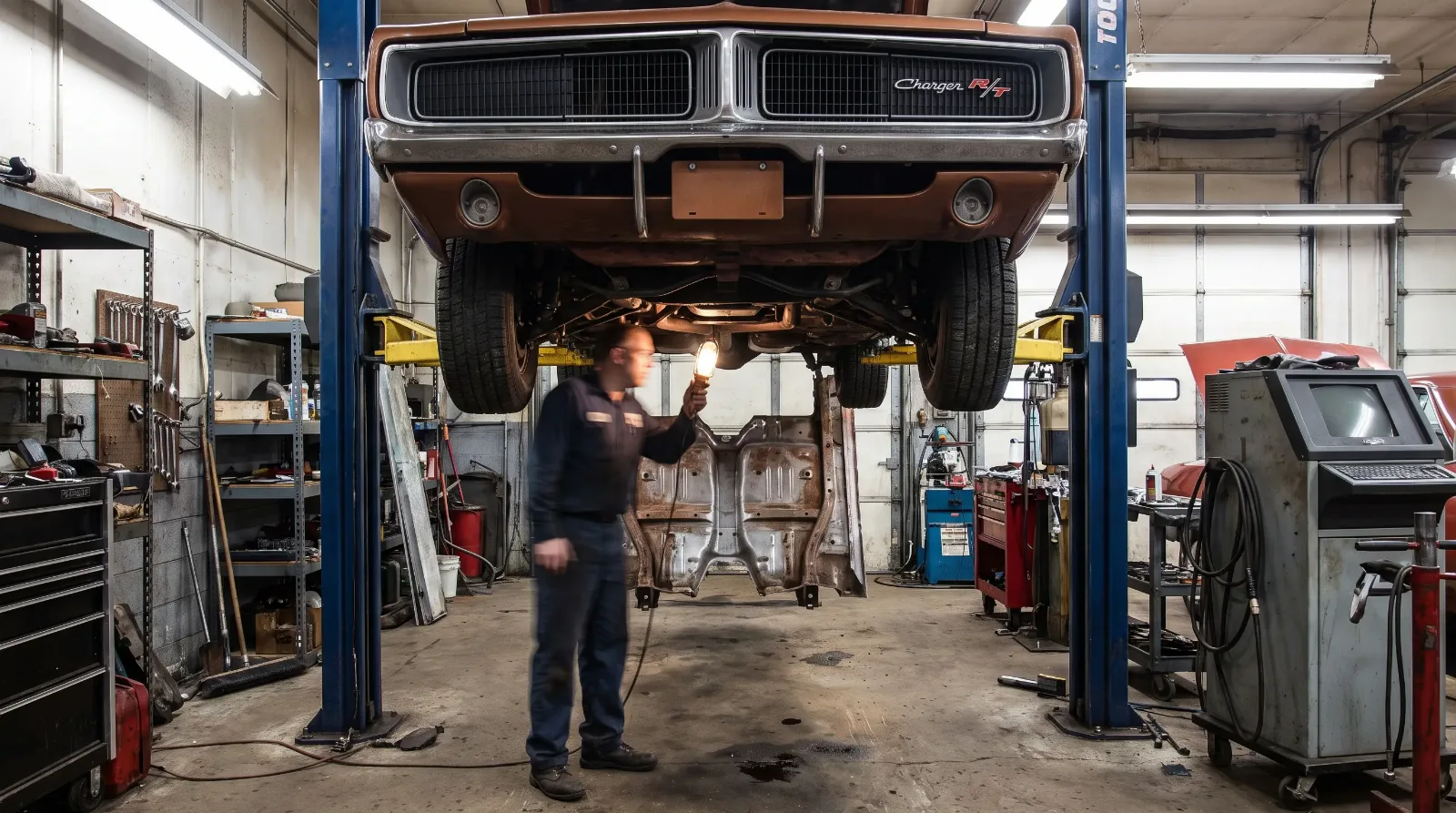
Before you fall in love with a color or an engine callout, walk the car with a plan. You are looking for rust, for a straight body, for an honest drivetrain, and for paperwork that matches the metal. Get those four things right and you have bought a car. Get them wrong and you have bought a project with a nice paint job. If you want the deeper background first, take a closer look at muscle car restoration before you shop.
Start under the car, not under the hood
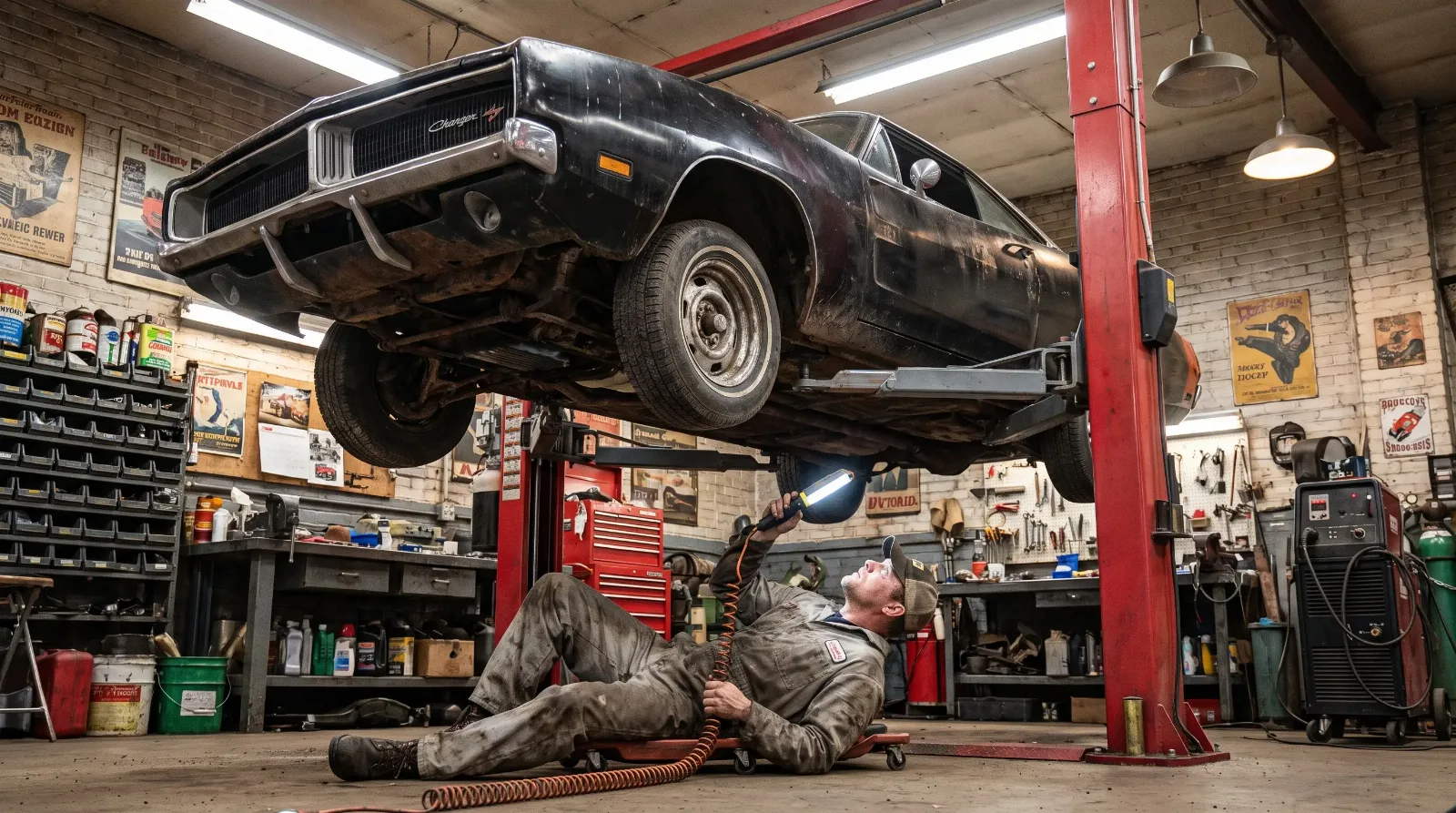
Sellers open the hood first because that is the part they cleaned. Ignore them and get under the car with a real light, not a phone flashlight held at arm's length. Muscle cars from the late 1960s and early 1970s rust from the bottom, and the floors, frame rails, torque boxes, and trunk pan tell the truth the paint is hiding.
Bring a magnet and a small screwdriver. The magnet finds body filler where steel should be. The screwdriver, used gently in the wheel wells and lower quarters, finds soft metal that a shine cannot hide. Fresh undercoating sprayed over everything is a red flag, not a selling point. Nobody coats a solid floor to preserve it right before a sale. They coat it to bury what is underneath.
🔧 Inspection Priorities
- Floor pans and trunk pan. Full replacement plus labor runs roughly $1,500 to $4,000 depending on how far the rot goes. This is the number that sinks a deal.
- Frame rails and torque boxes. Structural rust here means metal fabrication, not a bolt-in panel. Walk away unless the price already reflects it.
- Quarter panels and lower fenders. Reproduction panels exist for popular models, but quality bodywork and paint on two quarters can run $3,000 to $6,000.
- Drivetrain numbers. A non-matching engine or a swapped rear end changes the value more than any cosmetic issue. Verify before you pay.
- Cowl and windshield channel. Rust here leaks water into the car and is miserable to fix. Look for stains under the dash.
Read the drivetrain honestly
The engine callout in the ad and the engine in the car are two different claims until you verify them. On most American muscle from this era the block, heads, and transmission carry casting numbers and date codes that should line up with the car's build. A car advertised as a numbers-matching big-block is worth real money. The same car with a replacement block from a junkyard is worth a lot less, and plenty of sellers hope you will not know the difference.
Start it cold if you can. A seller who already warmed the engine before you arrived may be hiding a hard cold start, low oil pressure, or a lifter that ticks until the oil comes up. Listen for the bottom end, watch the exhaust for blue smoke, and feel how the transmission takes gears. A rebuilt carburetor sitting on a tired engine is a common trick. The top looks fresh and the bottom has not seen fresh oil in two years.
Make the paperwork match the metal
Documentation separates a good buy from an expensive lesson. Build sheets, window stickers, factory invoices, and a title history that matches the VIN turn a nice car into a documented one, and documented cars sell for more and resell easier. When the paperwork is thin, you are buying the seller's word, and the seller's word is worth exactly nothing after the money changes hands. The same paperwork matters when you are the seller, and our guide to title transfer and paperwork for classic car sales explains what to have ready.
The bigger risk is a clone or a tribute car sold as the real thing. A base-model car dressed up to look like a top trim is legal to build and dishonest to sell as original. Verify the VIN, the cowl tag, and the drivetrain codes against what the car claims to be. This matters enough that it deserves its own walk-through, so read the full story before you agree on a number.
Drive it and price it straight
If the car runs, drive it. Not around the block. Get it up to speed, brake hard once, take a corner, and listen. Muscle cars are simple machines, and most of their problems announce themselves under load. A shudder through the driveline, a pull under braking, or a wandering front end all cost money to chase down.
Price the car for what it is after your inspection, not what the ad wants. A solid, honest driver-quality muscle car generally trades in a wide band depending on model, options, and documentation, and the desirable big-block and special-package cars sit well above the base V8 versions. Whatever the number, subtract the rust and drivetrain fixes you found and negotiate from there. For the wider context on why these cars command what they do, there is good background in the muscle car story.
"The paint looks right at fifteen feet on every car for sale. It is the stuff you have to crawl under to see that tells you whether you are buying a car or somebody else's headache. Bring a light and a magnet, and use both before you talk price."
Mike Sullivan
Buying one of these cars is not complicated, but it rewards patience. The good ones are out there, and so are the ones built to fool a buyer in a hurry. Walk every car the same way, trust the metal over the seller, and be willing to leave a deal on the table. There is always another car.
Related Reading
Have a
Classic Car
for Sale?
Reach thousands of serious classic car collectors across the US.
Sell It Here →
Are You a Classic Car Dealer?
List your full inventory and connect with targeted classic car buyers.
Join as a Dealer →

About the author
Mike Sullivan
Detroit-area muscle car enthusiast and restoration specialist with three decades of hands-on experience working on American iron.
More in Restoration & Tech
Comments
Be the first to comment on this article.