
The question I get asked most on these swaps isn't which transmission is better. It's which one is enough. A 4L60E is factory-rated for around 350-360 lb-ft before you're pushing your luck, and a 4L80E holds a good deal more than that, built around a bigger case and a stouter output shaft to live behind trucks and diesels that made real torque from the factory. Guess wrong and you'll find out on the dyno, or worse, at the drag strip, not in a parking lot.
Restoration & Tech
6 min read
Swapping a 4L60E or 4L80E Transmission into a C10
How to pick between a 4L60E and 4L80E behind an LS-swapped C10, and what it actually takes to control, mount, and cool one correctly.
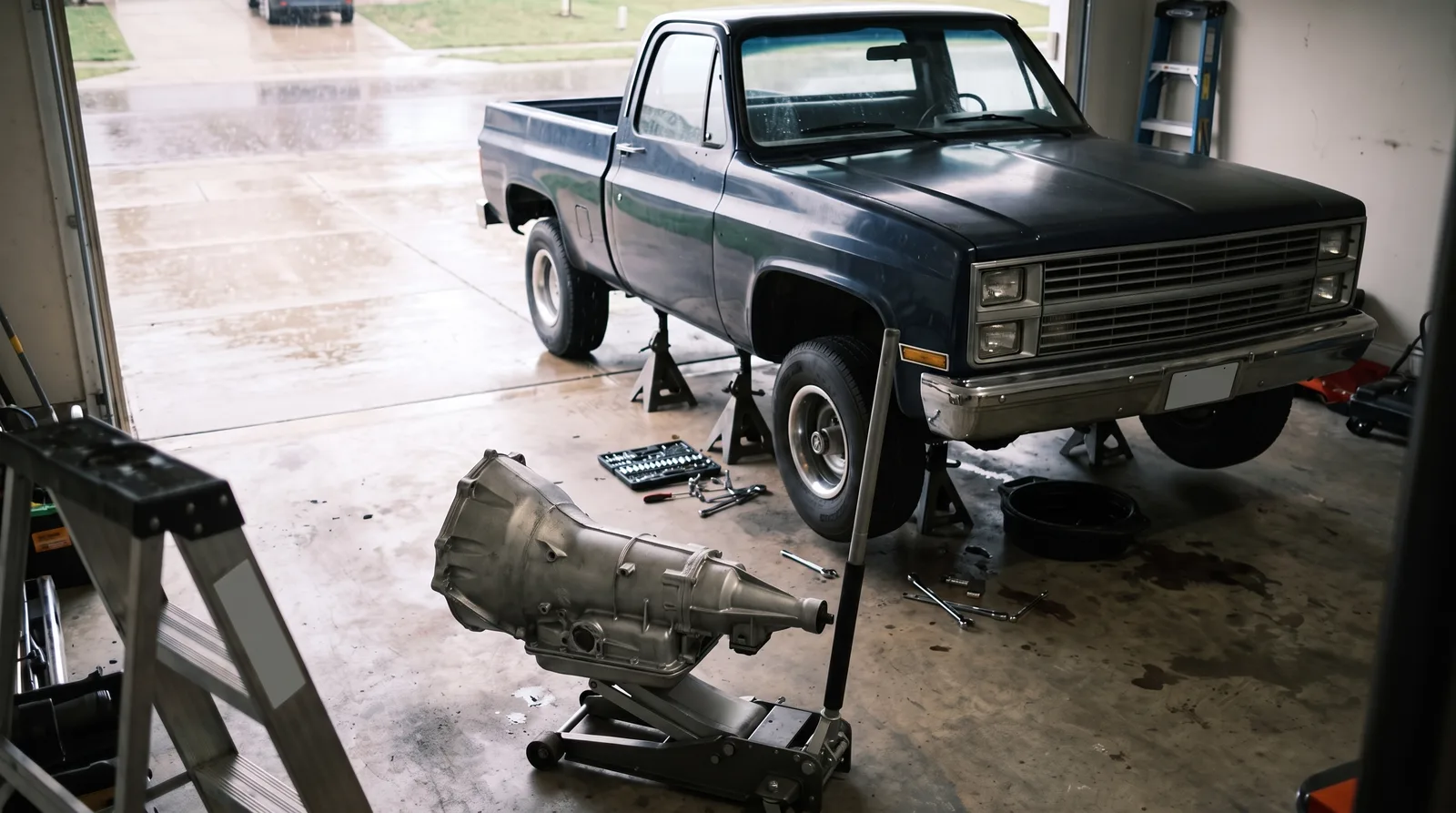
Both of these bolt in behind an LS with the right adapter and crossmember work, which is why this job almost always comes up right after somebody's gone through the LS swap guide. New engine, old three-speed or two-speed automatic behind it, and now the transmission is the weak link in a truck that carries Chevrolet's half-ton legacy but was never built to put down modern power reliably.
4L60E vs 4L80E: which one your combination needs
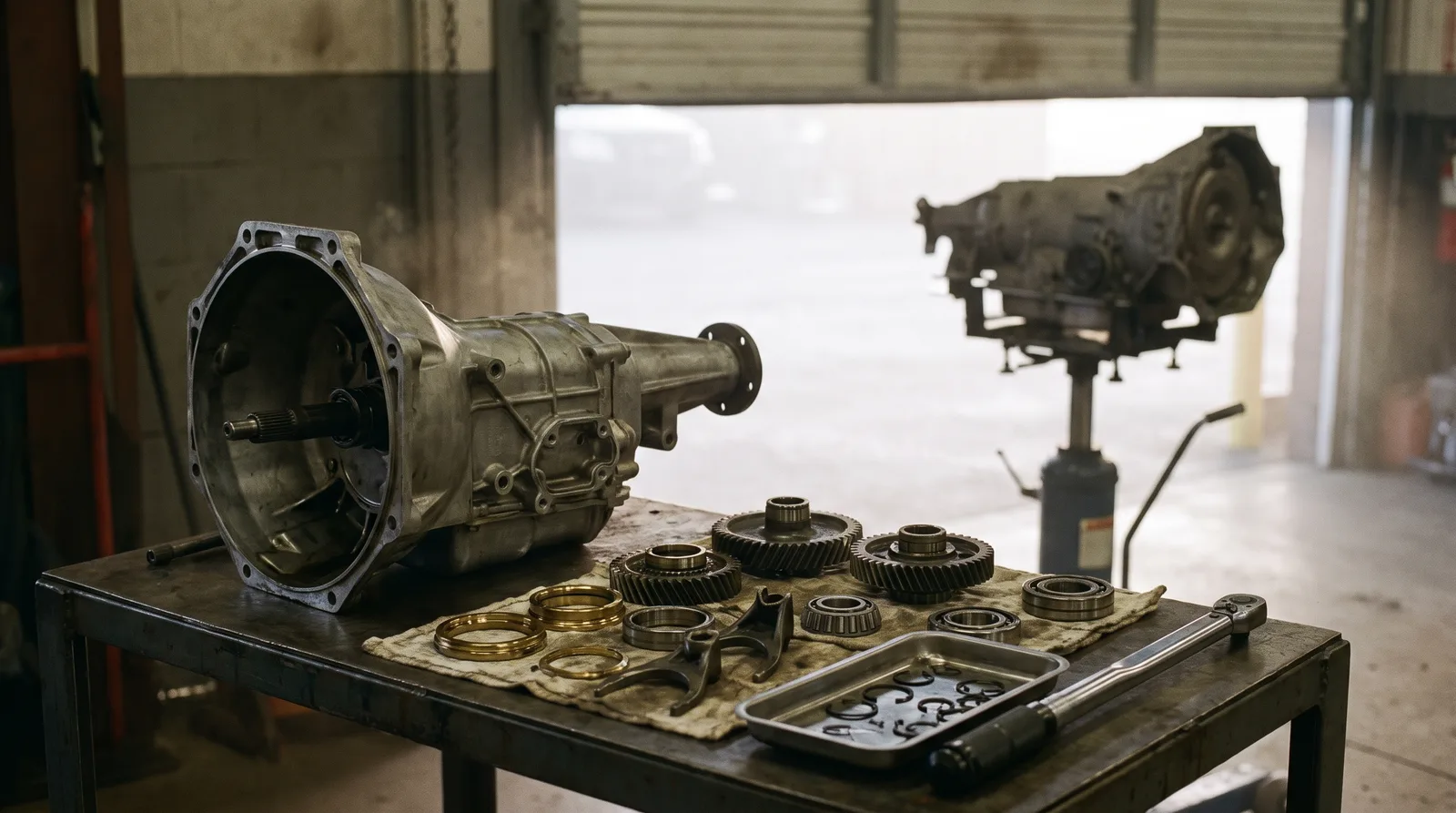
The 4L60E is lighter, fits in more places without cutting the trans tunnel, and is plenty for a mild LS with stock-ish power. The 4L80E is physically bigger, heavier, and built on a completely different case, and it's the right call once you're planning boost, a stroker, or towing that isn't just occasional. I've had guys put a 4L60E behind a healthy cammed LS and get away with it for a while, and then the 3-4 clutch pack lets go right when they finally get it dialed in on the dyno. That's not bad luck. That's the part doing exactly what its torque rating said it would do.
Don't upsize for the sake of it either. A 4L80E behind a mild truck engine is more weight, a bigger tunnel cut, and a heavier fluid load for no real benefit if you're never going to make the torque that justifies it.
| Spec | 4L60E | 4L80E |
|---|---|---|
| Approx. torque capacity | ~350-360 lb-ft (factory-rated) | ~440 lb-ft factory input rating (built units are pushed well past this) |
| Weight (dry, approx.) | ~150 lbs | ~65-85 lbs heavier |
| Gear count | 4-speed | 4-speed (wider ratio spread) |
| Best for | Mild to moderate LS builds | Boosted, stroker, or towing-focused builds |
Controlling it: standalone or factory harness
Both of these are electronically controlled, and that means a controller, either a standalone transmission controller, a piggyback unit, or letting the LS's own ECU handle it if you're running a compatible engine controller that supports internal trans control. A standalone controller costs more up front but gives you real tuning control over shift points, shift firmness, and torque converter lockup timing. Trying to run one of these transmissions on a stripped-down harness with no real tuning behind it is how you end up with a transmission that shifts hard enough to chirp the tires at part throttle, or worse, one that never locks the converter and runs hot on the highway.
I'd rather see a guy spend the money on a decent standalone controller than skip it to save a few hundred dollars and then wonder why the shifts feel wrong. The transmission isn't the problem in that case. The tune is.
Physical fitment: crossmember, mount, and driveshaft
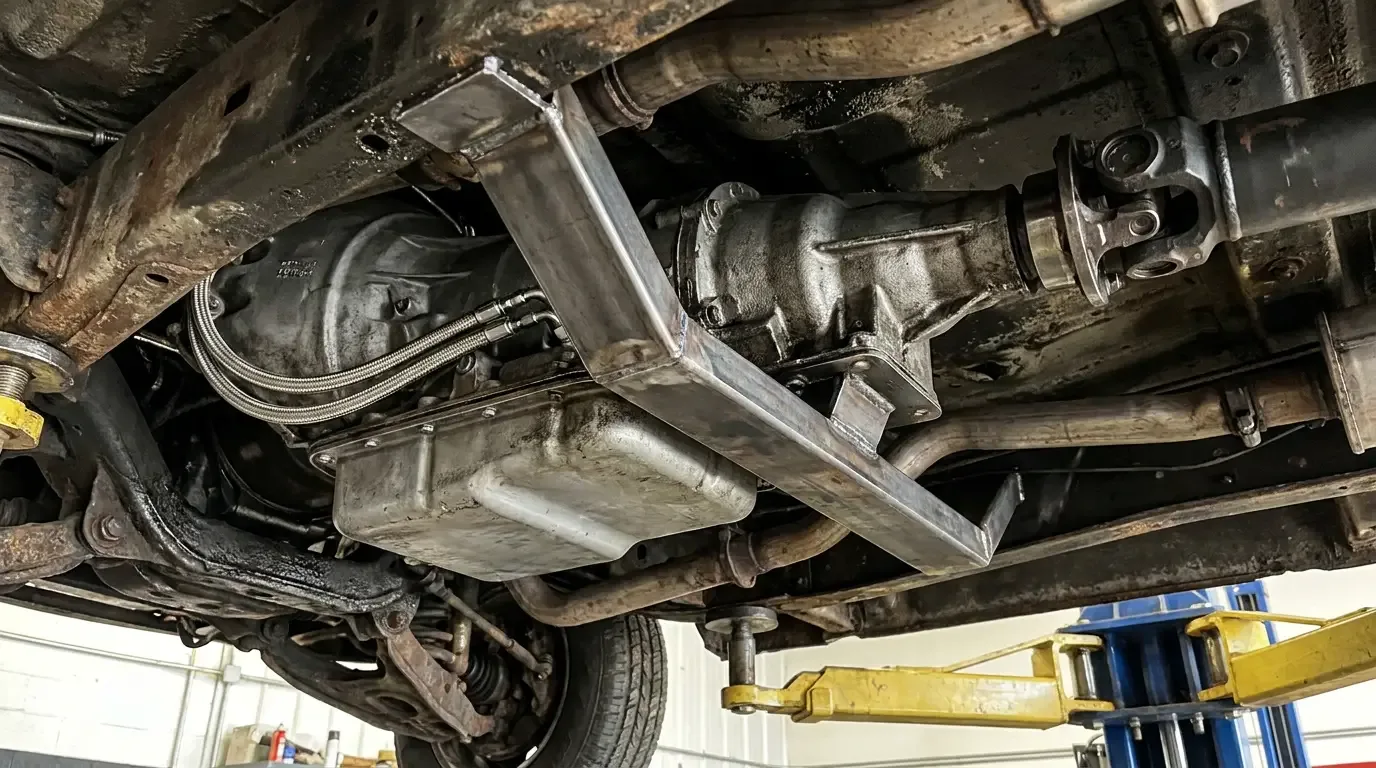
Neither of these drops into a stock C10 crossmember location without work. Expect to relocate or fabricate a crossmember, and expect the transmission mount position to move compared to whatever three-speed or two-speed automatic came out. The 4L80E in particular is longer than most factory automatics that ever came in these trucks, and that length eats into driveshaft length before you've accounted for anything else.
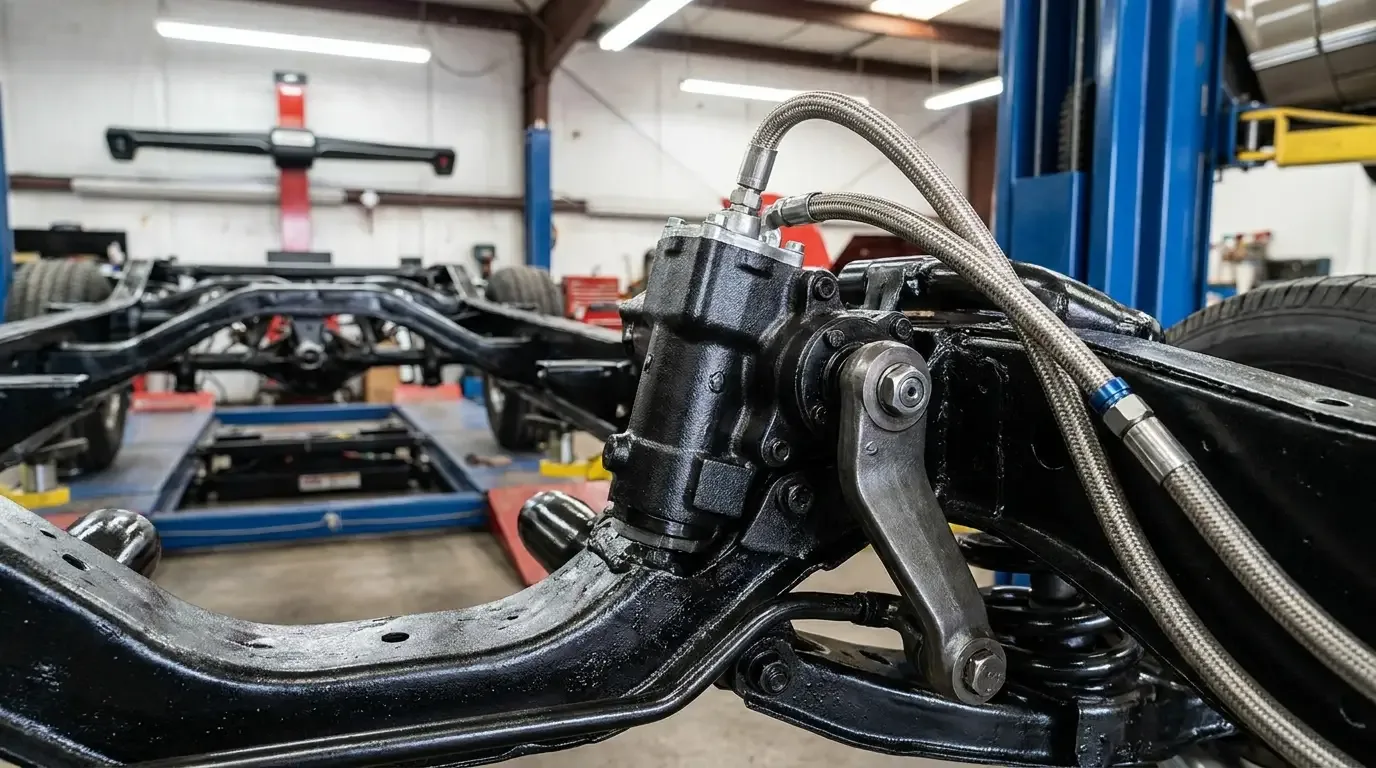
Get an accurate driveshaft measurement after the engine, transmission, and crossmember are all mounted in their final position, not before. A shaft ordered off guesswork measurements is a shaft you're paying to have shortened or rebuilt a second time. This is also usually the point where guys realize the steering box on their truck was already tired going into the swap, and once the driveline's sorted, the steering box that needs attention next tends to become the obvious next item on the list.
Cooling and lockup wiring
Run a dedicated transmission cooler. Don't rely on a combo cooler that was sized for whatever anemic automatic came stock in these trucks. Both the 4L60E and 4L80E move more fluid and generate more heat under load than what that factory cooler was ever asked to handle, and a transmission that runs hot is a transmission that's dying slowly no matter how good the parts inside it are.
Wire the torque converter lockup circuit correctly and confirm it's actually locking on the highway, not just assume it is because the truck shifts fine around town. An unlocked converter at cruise runs hotter, makes less efficient power, and burns more fuel, three problems that all show up as "the transmission runs warm" complaints that actually trace back to a lockup circuit nobody verified.
"Guys spend all their attention on the engine build and then bolt up whatever transmission was cheapest on Marketplace. The dyno doesn't care how much power you made if the transmission behind it can't hold that number for more than a season."
Dan Reeves
Break-in and getting the shifts right
After the swap, drive it easy for the first few hundred miles and pay attention to shift quality, converter lockup, and fluid temperature before you start pushing on it. A freshly built or freshly installed transmission that shifts wrong on day one usually needs a tune adjustment, not a teardown. Log line pressure and shift timing if your controller supports it, and adjust from actual data rather than guessing based on how the shifts feel from the seat.
Cost on a quality rebuilt 4L60E typically runs $1,500-2,500, and a rebuilt 4L80E more like $2,000-3,500, before you add a standalone controller, cooler, and crossmember work. A complete swap package, transmission, converter, driveshaft work, and controller included, often lands in the $3,000-5,000 range depending on whether you're buying a built transmission or building one yourself. Don't cheap out on the controller to save money on a build where the engine already cost real money. That's backwards math.
Sources and notes
- Stock 4L60E capacity specifications discussion: LS1Tech
- The Novak Guide to the GM 4L80E Automatic Transmission
- Weights of LS 6.0L, 4L60E, 4L80E: CorvetteForum
- 4L80E weighs 65# more than a 4L60E: LTXTECH Forums
- History of the 4L60E and How It Stacks Up Against the 4L80E: Gearstar
- GMT400 Transmission Guide: 4L60E vs 4L80E: Build, Price, Option
Related Reading
Have a
Chevrolet C10
for Sale?
Reach thousands of serious classic car collectors across the US.
Sell It Here →
Are You a Classic Car Dealer?
List your full inventory and connect with targeted classic car buyers.
Join as a Dealer →

About the author
Dan Reeves
Performance engine builder from North Carolina's motorsports corridor, focused on swaps, forced induction and making real, repeatable power.
Related Listings - Chevrolet C10
More in Restoration & Tech
Comments
Be the first to comment on this article.