
A stock manual-steering C10 takes roughly three to four turns lock to lock and about the effort of an arm workout to park. That's fine at forty on a straight road. It's not fine backing a trailer into a tight spot, and it's the number one reason guys who drive these trucks daily end up converting. The swap isn't complicated. It's a bracket, a pump, a box, and a line kit, and most of the parts bolt to holes that are already there.
Restoration & Tech
7 min read
Installing Power Steering on a Manual-Steering C10
How to convert a manual-steering C10 to power assist, including the right box and pump pairing, the install sequence, and why air in the system causes most post-swap complaints.
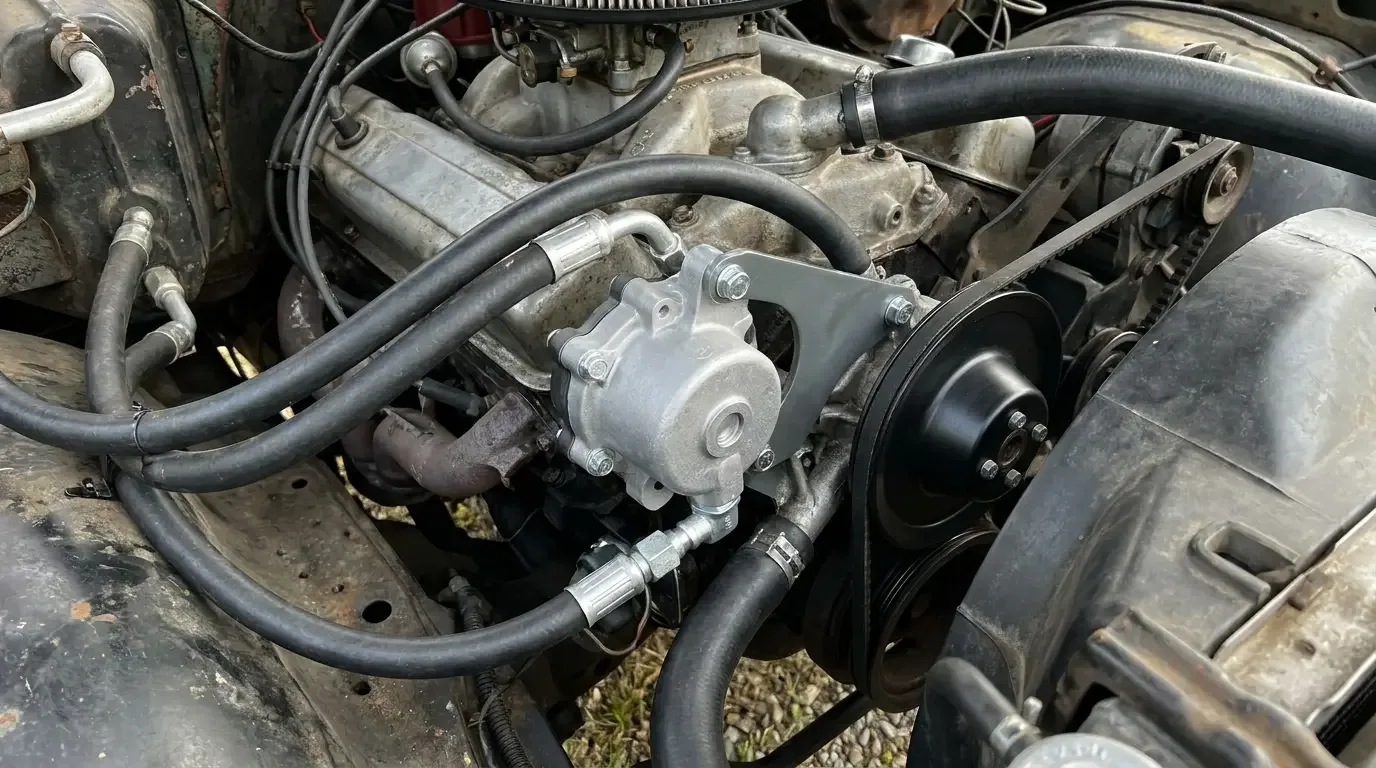
What trips people up isn't the mechanical part. It's picking the wrong box for the engine they've got, or running a pump that can't keep up once the truck's been LS-swapped and the accessory drive changed. Get the parts list right first. The install itself is a Saturday.
What you're actually changing
Manual and power-assist trucks used different steering boxes, not the same box with a pump bolted on. The power box has an internal valve that redirects hydraulic pressure to help turn the wheel. Swap in a power box, add a pump, a pressure line, a return line, and a pulley on the crank, and you've got assist. Most C10s from this era share a common bolt pattern between manual and power boxes, which is why the swap is popular. The frame doesn't need modification. The steering column doesn't either, in most cases.
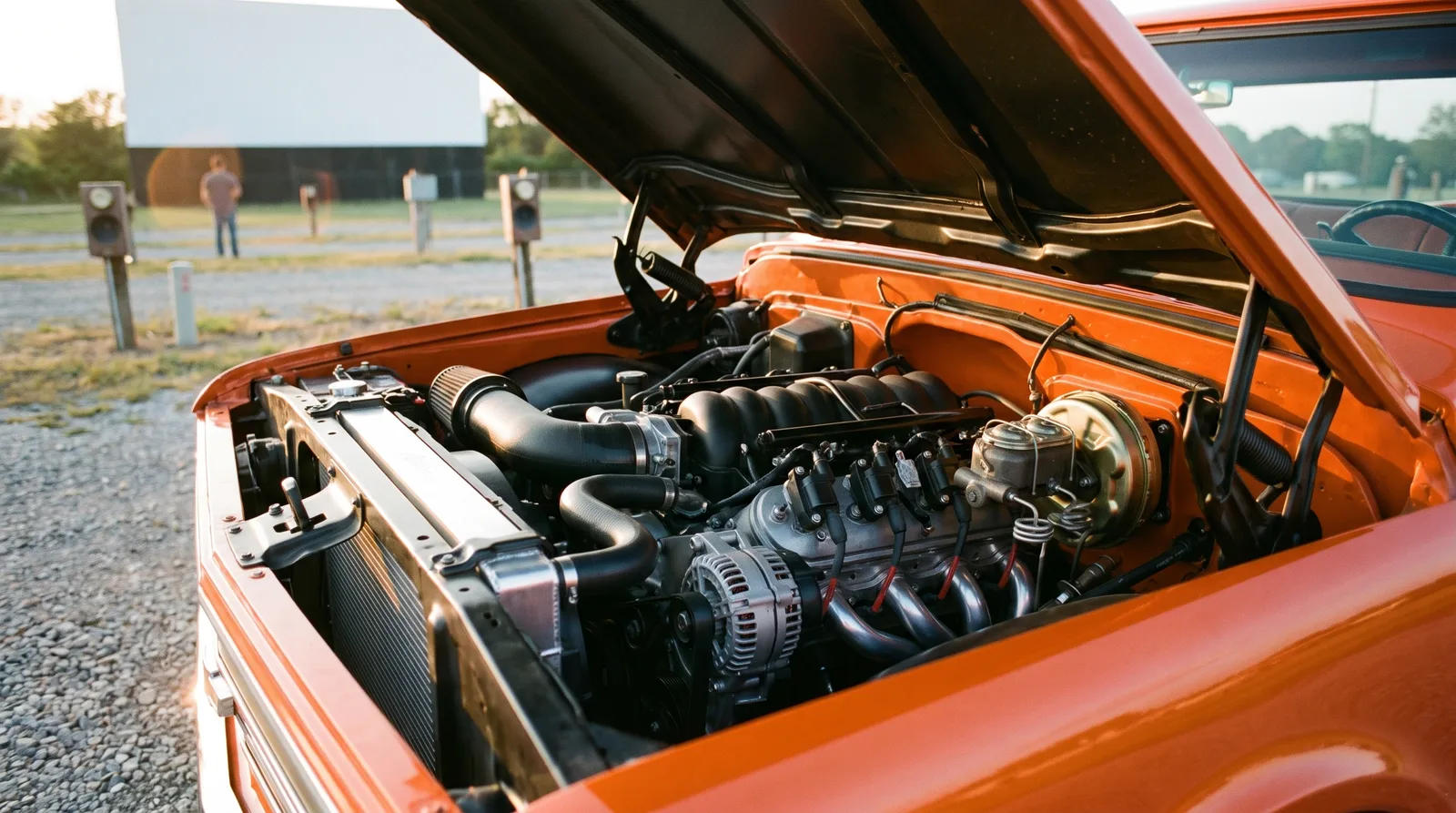
Where it gets specific is the pump bracket. Small block and big block trucks used different bracket castings, and the bracket has to clear the exhaust manifold and match whatever accessory drive is currently on the front of the engine. If the truck's been through LS swap guide territory, the factory bracket almost never lines up and you're sourcing an LS-specific power steering bracket instead. Don't assume the factory part fits until you've test-fit it.
Parts you need before you start
The full list is a power steering box, a pump matched to that box's flow requirement, a mounting bracket for the specific engine, a pulley, a pressure hose, a return hose, and a pitman arm if the steering linkage geometry changed at all. Buy the box and pump as a matched pair when you can. A pump that flows too much for the box makes the steering twitchy and over-assisted. One that flows too little leaves you with heavy steering at idle that only lightens up once the engine's revved.
Fluid matters more than people think. Use the type the box manufacturer specifies, not whatever's on the shelf. Wrong fluid viscosity changes how the valve responds and can make a correctly installed box feel wrong for reasons that have nothing to do with the install.
| Component | Manual setup | Power setup |
|---|---|---|
| Steering box | No internal valve | Hydraulic assist valve |
| Pump | Not present | Belt-driven, matched flow rate |
| Lines | None | Pressure and return hose |
| Turns lock to lock | Roughly 3-4 | Roughly 3-4, less effort |
Installing the box and pump
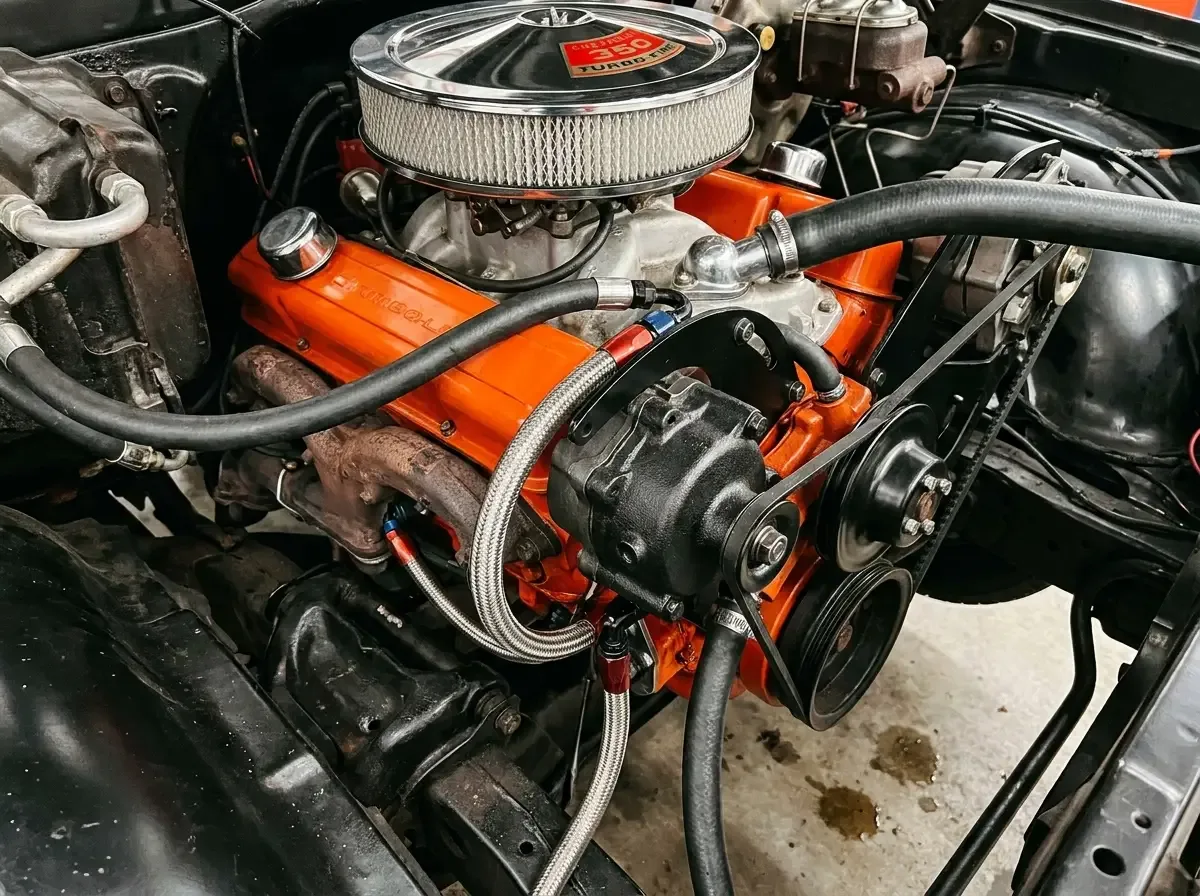
Pull the pitman arm with a proper puller, not a hammer. The steering box mounts through the same three or four holes as the manual box on most of these trucks, so the removal and install sequence is straight-forward: disconnect the column shaft, unbolt the box, swap it, reconnect. Torque the box bolts to spec, not to feel. Under-torqued steering box bolts are a real failure point and not one you want to find out about at speed.
Mount the pump bracket next, then the pump, then the pulley, and set belt tension before you route any hoses. Route the pressure hose from the pump to the box's high-pressure port and the return hose from the box back to the pump reservoir. Don't kink the pressure hose or route it against anything that generates heat. Fill the reservoir with the specified fluid, and don't start the engine yet.
Bleeding, testing, and what to expect
Air in the system is the single biggest source of complaints after this swap. A pump that whines, steering that feels inconsistent, or assist that comes and goes is air, not a defective part, in the overwhelming majority of cases. Cycle the wheel lock to lock with the engine off first, then again at idle, checking and topping off fluid between cycles until the level holds steady and the pump goes quiet.
Once it's bled correctly, the difference at parking-lot speeds is dramatic. Highway feel changes less than people expect, since a properly set up power box shouldn't feel numb or overboosted at speed, it should just take less arm. If the truck feels vague on center or overly light at speed, the box or pump is mismatched to the application, not a normal characteristic of the conversion. Confirm the specific flow rate specs against your exact box and pump combination before assuming a mismatch is the wiring or the fluid.
🔧 Inspection Priorities
- Belt alignment and tension. A misaligned pump pulley wears the belt fast and can throw it under load, leaving you with zero assist at the worst moment.
- Hose routing near the exhaust. A pressure hose too close to the manifold cooks the fluid and the hose itself over time, leading to a failure that shows up as a sudden loss of assist.
- Pitman arm torque. Under-torqued or improperly seated pitman arms are a steering failure point, not a comfort item.
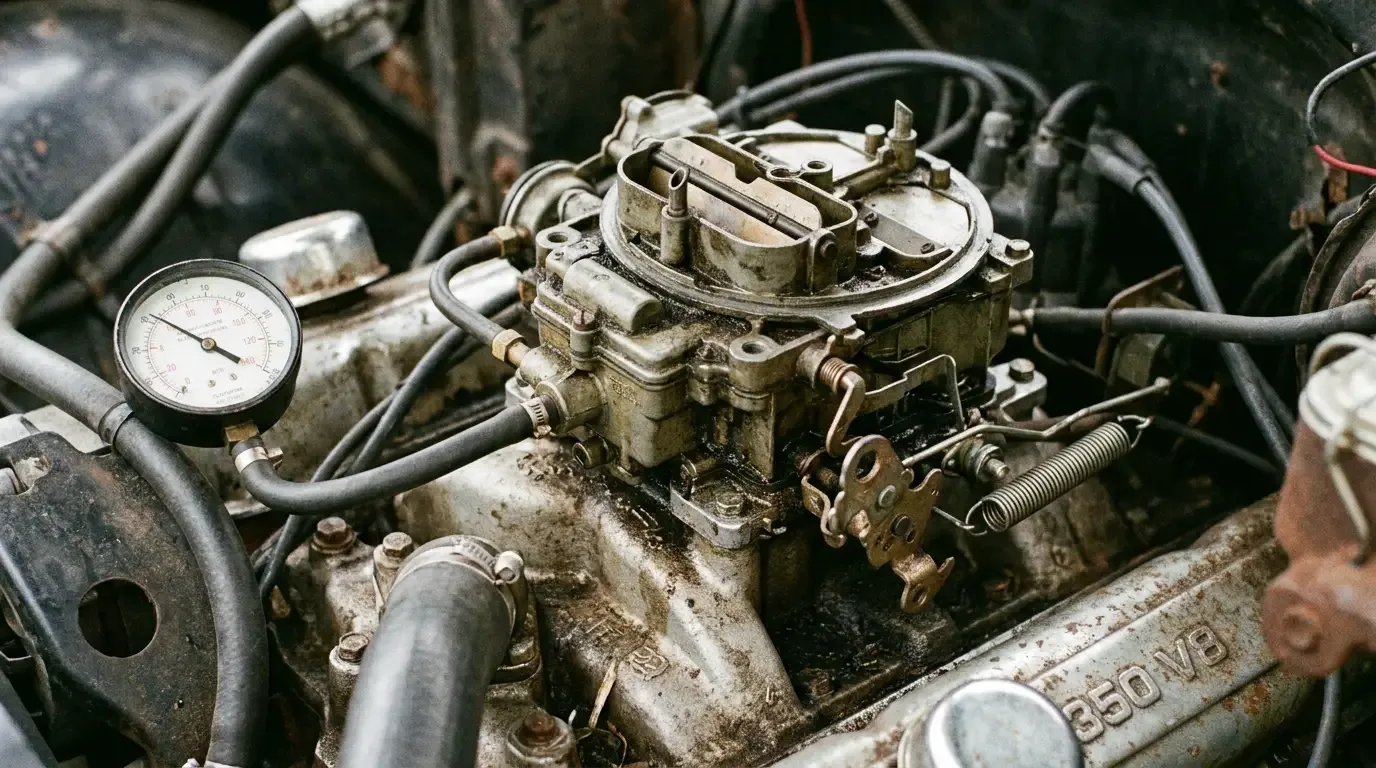
If the goal is a truck that's easy to drive but still feels like the era it's from, the power steering swap gets you there without touching anything structural. Guys staying with the original carburetor setup instead of adding an electronic system should also look at tuning the carburetor if you're staying old-school, since a truck that's easy to steer but runs rough at idle hasn't actually solved its drivability problem, just moved it.
"Guys skip the bleed step because it feels like it's already working after ten minutes. Then they call me three weeks later asking why the pump sounds like a dying cat. It's air. It's always air."
Dan Reeves
This isn't a horsepower job, it's a livability job. But it's one of the highest-value swaps you can do on a truck you actually intend to drive, and it doesn't touch anything that a later engine swap or suspension change will undo.
Sources and notes
- C10 power steering box lock-to-lock discussion, 67-72 Chevy Trucks forum
- Fast-ratio steering box comparison, C10 Trucks forum
- Borgeson quick-ratio steering box install on a C10
- How to install a power steering box in a Chevy C10
- Steering box adjustment specs, GM Square Body forum
- 73-87 Chevy truck steering box ratios, Hot Rodders forum
Related Reading
Have a
Chevrolet C10
for Sale?
Reach thousands of serious classic car collectors across the US.
Sell It Here →
Are You a Classic Car Dealer?
List your full inventory and connect with targeted classic car buyers.
Join as a Dealer →

About the author
Dan Reeves
Performance engine builder from North Carolina's motorsports corridor, focused on swaps, forced induction and making real, repeatable power.
Related Listings - Chevrolet C10
More in Restoration & Tech
Comments (1)
C
Carol Hendricks
1 month ago
Bought one last spring partly from reading this. Inspection found exactly the issues mentioned. Negotiated accordingly. Happy with the outcome.