
Every summer, somewhere on a hot highway shoulder, a carbureted C10 sits with the hood up and an owner who did everything right and still got stranded. Vapor lock has a reputation as a mystery problem, but it's actually one of the more predictable failures on these trucks once you understand what's really happening in the fuel system, and it's also one of the more preventable ones if you're willing to make a few changes instead of just hoping it doesn't happen again.
Restoration & Tech
7 min read
Preventing Vapor Lock on a Carbureted C10 in Summer
A carbureted C10 350 that stalls after a hot highway run and won't restart is usually suffering vapor lock, not a fuel shortage. Here's why it happens and the fixes that actually work.
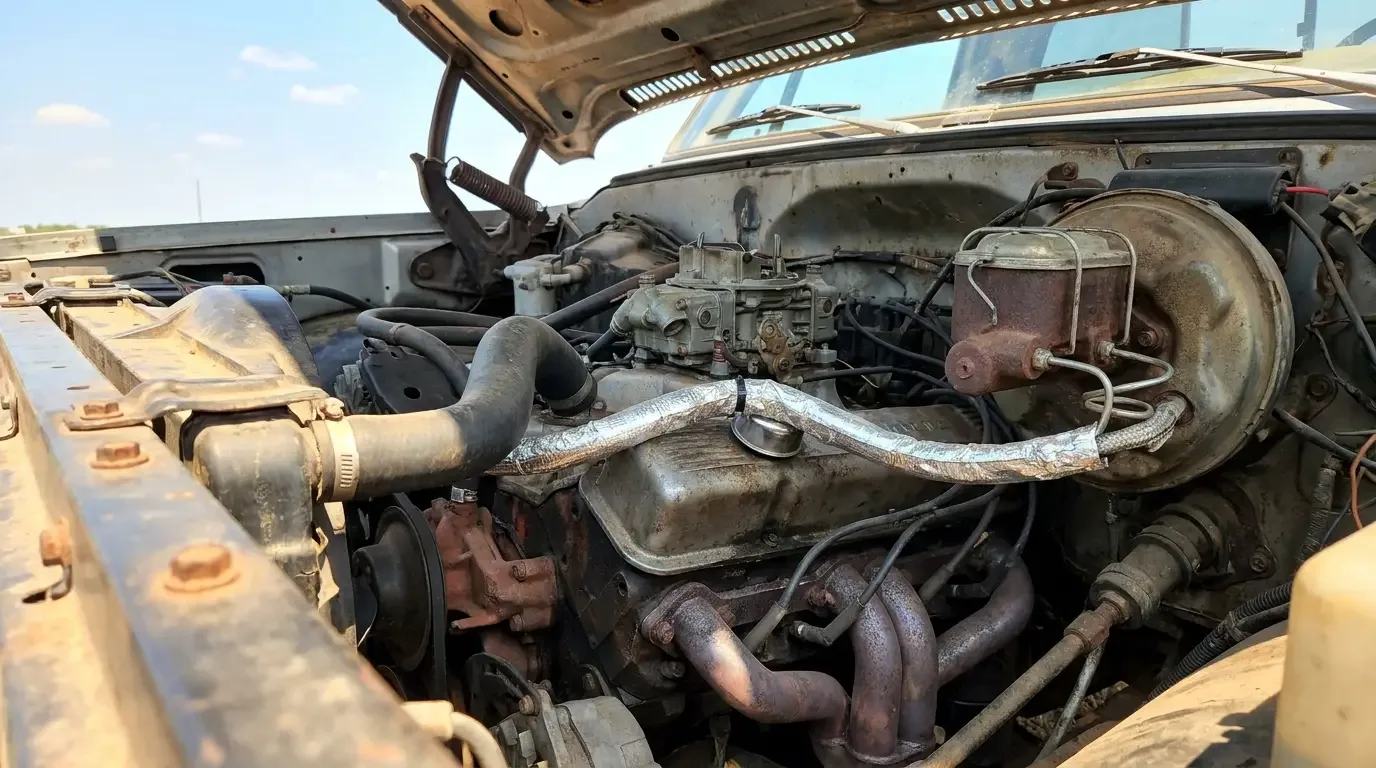
What vapor lock actually is
Vapor lock isn't the engine running out of gas. It's gasoline turning to vapor inside the fuel line or the carburetor bowl before it gets where it needs to go, and a fuel pump built to move liquid can't move a bubble of vapor the same way. The engine stumbles, stalls, and won't restart, or restarts and immediately dies again, and it does this specifically after the truck's been running and then sits, heat-soaked, in traffic or at a stop. That timing is the tell. A truck that dies on a cold start has a different problem. A truck that runs fine for thirty minutes, sits at a light, and then won't restart or runs rough for the next few minutes is telling you it's a heat problem, not a fuel delivery problem in the broader sense.
Gasoline's boiling point isn't fixed. It drops as you go up in altitude and it varies by the fuel blend itself, and modern gasoline with ethanol content tends to vaporize more readily under heat than the fuel these trucks were originally tuned around. That's part of why a lot of C10 owners find vapor lock got worse over the years even though nothing on the truck changed, because what changed was what's coming out of the pump at the gas station.
Why the 350 in a C10 is prone to it
The small block sits close to the exhaust manifolds, the fuel pump on these trucks is mechanically driven off the engine and mounted right on the block where it soaks up engine heat directly, and the fuel line often routes near the exhaust or through the engine bay in a path that was designed in an era when gasoline handled heat better than it does today. Add a stop after highway driving, when underhood temperatures are at their peak and there's no airflow moving through the engine bay to carry heat away, and you've got the exact conditions vapor lock needs.
None of this makes the 350 a bad engine. It's a heat-soak problem that shows up on plenty of carbureted V8s from this era, and it's made worse specifically by modern fuel blends, engine bay temperatures that run hotter than stock thanks to accessories and emissions equipment added over the years, and fuel lines that have aged and lost whatever heat-shielding they had when new.
| Fix | What it addresses | Relative cost |
|---|---|---|
| Insulated/routed fuel line | Heat transfer into the fuel itself | Low |
| Phenolic carb spacer | Heat soak into the carburetor bowl | Low to moderate |
| Electric pusher fuel pump | Keeps fuel moving under heat-soak conditions | Moderate |
| Fresh, correct-spec fuel | Lower propensity to vaporize under heat | Ongoing |
The fixes that actually work
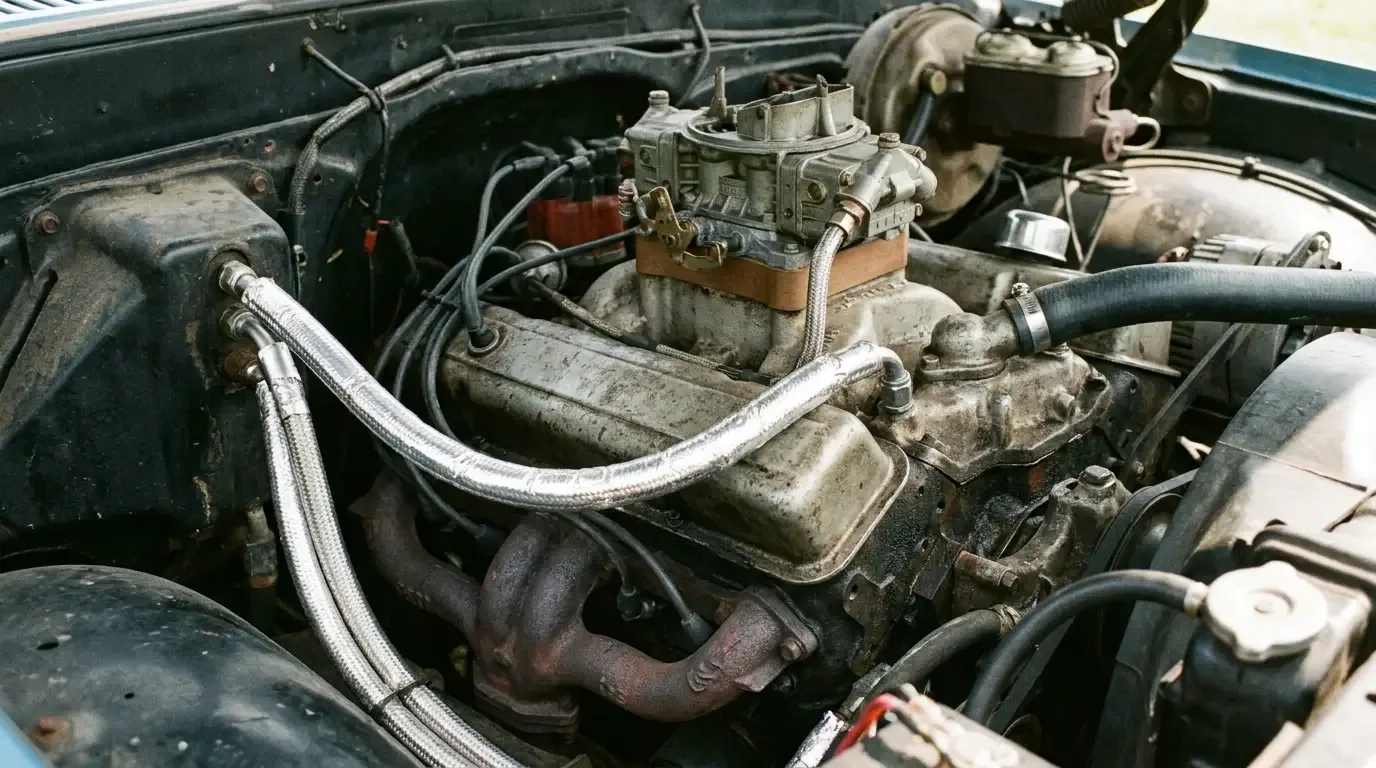
Start with the fuel line routing. Any section running close to the exhaust manifold or the block should be rerouted if it's practical, or wrapped with a proper heat-reflective sleeve if rerouting isn't. This is the single highest-value fix because it addresses the actual mechanism of the failure, keeping the fuel itself cooler rather than trying to deal with vapor after it's already formed. A phenolic spacer between the carburetor and the intake manifold helps for the same reason, insulating the carb bowl from manifold heat that would otherwise soak up into the fuel sitting there at idle and immediately after shutdown.
An electric fuel pump mounted near the tank, run as a pusher to supplement or replace the mechanical pump, solves vapor lock by a different route entirely. It keeps fuel moving and under pressure through the line even during a heat-soak period, which makes it much harder for a vapor bubble to form and stay put in the first place. Wiring it to run with the ignition, possibly with an oil pressure safety switch, is the clean way to do this rather than leaving it running independent of the engine's actual state.
Fuel quality matters more than people expect. Running a higher-quality fuel with a lower propensity to vaporize, and keeping the tank reasonably full rather than running it low, both help, since a mostly empty tank on a hot day heats up faster and gives fuel vapor more room to form and collect. Specific fuel additive products marketed against vapor lock vary in actual effectiveness, and some fuel "cleaners" are alcohol-heavy enough to make the underlying problem worse rather than better. I'd rather fix the physical heat and routing problem than rely on an additive to mask it.
What doesn't help
Wrapping the whole fuel line in aluminum foil, a trick that gets repeated at swap meets, does close to nothing, since foil reflects radiant heat but does very little against the conductive heat coming straight off a hot fuel line or a hot engine block it's touching. A proper insulated sleeve, not household foil, is the version of this fix that actually works. Running the engine at a high idle at a stop to keep fuel moving treats a symptom for as long as you're willing to sit there with your foot on the pedal and does nothing for the next stop five minutes later.
Aftermarket carburetor spacers marketed purely as "power adders" without any real heat-insulating design won't help either, so read what you're actually buying rather than assuming any spacer solves the problem.
Living with a carbureted truck in summer heat
None of this is complicated once you've done it, and most of it is a Saturday afternoon's worth of work rather than a major project. It pairs well with the rest of a truck's routine upkeep, the same way anyone working through maintenance guide items should be looking at fuel line condition and routing as a standing check, not a one-time fix. A truck that's had its vapor lock issues sorted tends to also be one where an owner's paid attention to the smaller stuff, the same category of problem as a bouncing speedometer, another small daily-driver annoyance that gets ignored until it's irritating enough to finally deal with.
"Every Texas summer somebody calls me convinced their truck's dying because it stalls at a stop sign after a highway run. It's not dying. It's hot, and gasoline doesn't like being hot any more than you do sitting in a truck cab with no air conditioning at three in the afternoon. Fix the heat problem and the truck stops acting like it's got one foot in the grave."
Robert Halloran
Sources and notes
- Vapor lockWikipedia overview of the mechanism, including how low-pressure mechanical pumps and altitude/heat lower the effective boiling point of fuel in the line.
- Ask Away with Jeff Smith: Understanding Vapor Lock--and How You Can Fix It!OnAllCylinders technical Q&A confirming electric pumps, phenolic spacers, and proper heat-sleeve insulation as real fixes.
- Vapor Lock in Classic Chevys: Symptoms, Causes & Fixesconfirms ethanol-blended fuel's lower boiling point as a driver of vapor lock in classic Chevy trucks and lists random fuel additives under "what does not work."
- Notes from the field: Ethanol, Vapor Lock and other Gas Woesexplains ethanol raises Reid Vapor Pressure by about 1 psi, and warns some fuel "cleaner" additives are alcohol-heavy enough to worsen vapor lock rather than prevent it.
- Vapor Lock and How to Avoid ItPrestige Motorsports on modern fuel's lower boiling point versus vintage blends, and electric in-tank pump/return systems as a permanent fix.
Related Reading
Have a
Chevrolet C10
for Sale?
Reach thousands of serious classic car collectors across the US.
Sell It Here →
Are You a Classic Car Dealer?
List your full inventory and connect with targeted classic car buyers.
Join as a Dealer →

About the author
Robert Halloran
Texas-based classic truck enthusiast with decades of experience buying, restoring, and writing about American pickups from the 1940s through the 1980s.
Related Listings - Chevrolet C10
More in Restoration & Tech
Comments
Be the first to comment on this article.