
Front wheel bearings are the maintenance item that nobody thinks about until the truck starts telling them about it, usually with a low howl that gets louder with speed and changes pitch when you turn. By then the bearing's been dry or loose for a while, and on a two-wheel-drive C10 that's a serviceable job, not a trip to the dealer, if you're willing to get the hub apart, clean it properly, and set the preload the way it's supposed to be set instead of guessing.
Restoration & Tech
7 min read
Repacking Front Wheel Bearings on a 2WD C10
A howling front wheel on a 2WD C10 usually means the bearings are overdue for a repack. Here's the full process, from pulling the hub to setting preload correctly.
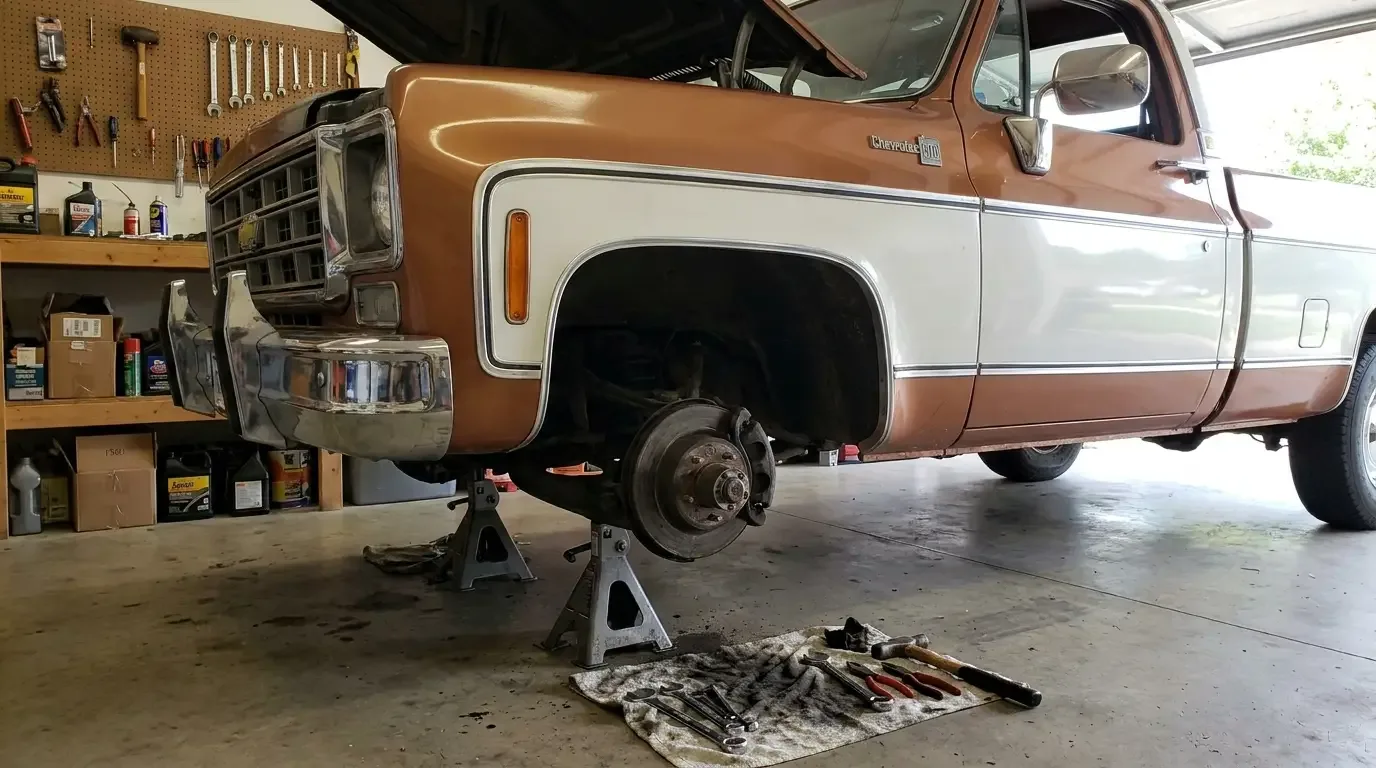
Why this job still matters on a 2WD C10
These trucks use tapered roller bearings up front, packed in grease, running in a hub that also carries the brake rotor or drum. It's a simple, durable setup, and it was designed to be serviced, not replaced as a sealed unit. That's the good news. The bad news is a lot of these trucks have gone a decade or more between services because the job requires actually pulling the hub apart, and it's easy to put off when nothing sounds wrong yet.
Grease breaks down over time and over heat cycles, and it can also get contaminated with water if a truck's been driven through a creek crossing or sat with a bad seal letting moisture in. Once the grease loses its ability to protect the bearing surfaces, the rollers and races start to wear, and that wear is the source of the howl. Left long enough, a dry or worn bearing can seize or come apart entirely, which on a front wheel is a genuinely dangerous failure, not just an inconvenient one. Regular repacking, even on a truck that isn't showing symptoms yet, is cheap insurance against a bad day.
Tools and parts before you start
You don't need anything exotic for this job. A jack and jack stands rated for the truck's weight, a way to safely support the truck while a wheel is off, basic hand tools, a torque wrench, and a dial indicator if you want to check bearing preload the precise way instead of the feel method. Buy new bearings and races if the old ones show any pitting, discoloration, or flat spots, a new inner and outer seal every time regardless of how the old one looks, and quality wheel bearing grease rated for the temperatures a brake hub actually sees, which run hotter than most people assume.
Don't reuse a seal to save a few dollars. Seals are cheap and they're the one part in this job that has zero margin for being "probably fine." A seal that's taken a set from years of sitting in one position, or that's got any hardening around the lip, will let water and road grit in eventually, and that undoes everything else you did right in the rest of the job.
Step by step: pulling the hub, packing, reinstalling
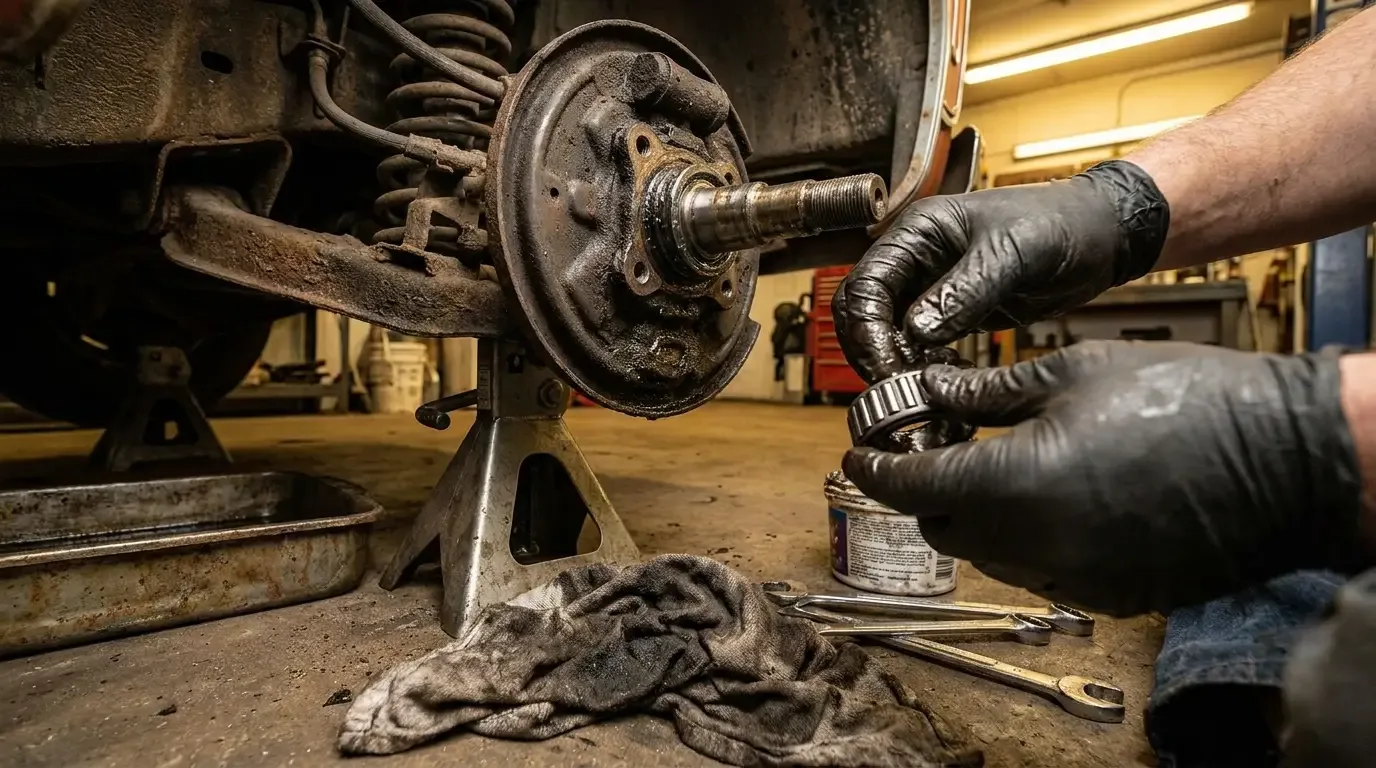
Get the truck safely supported and the wheel off, then remove the brake caliper or drum assembly enough to access the hub without disconnecting the hydraulic lines, so you're not bleeding brakes on top of everything else. Pull the dust cap, straighten and remove the cotter pin, and take off the spindle nut, keeping track of the order everything comes off in. The outer bearing usually slides right out once the nut's off. The hub itself pulls straight off the spindle, and that's when the old seal on the inner bearing gets destroyed getting the hub free, which is fine since you're replacing it anyway.
Clean every trace of old grease off the bearings, races, and inside the hub using solvent and a brush, and get it out of the crevices, not just off the visible surfaces. Old grease left behind will contaminate the new grease and defeat some of the point of doing this job at all. Inspect both races in the hub for any pitting or discoloration, and drive out and replace any race that isn't perfect, since races and bearings wear as matched sets and mixing an old race with a new bearing is asking for premature failure.
Pack the bearings by hand or with a bearing packer, forcing grease all the way through the rollers so it comes out the top on every side, not just a smear on the outside. Coat the races lightly too. Reassemble in reverse order, seat the new inner seal squarely so it doesn't cock in the bore, and get the hub back on the spindle.
Setting preload right (the part people get wrong)
This is where most home mechanics either overtighten or undertighten, and either mistake shortens bearing life. The general method is to tighten the spindle nut while spinning the hub, seating the bearings, then back the nut off and retighten to a light drag, finger-tight or close to it, not the torqued-down feel of a lug nut. Too tight and the bearing runs hot and wears fast under constant preload. Too loose and the hub wobbles under load, which accelerates wear from the other direction and can eventually let the wheel work loose entirely.
Once you're at the right preload, install a new cotter pin through the spindle and nut, bending it over fully so it can't work free, and replace the dust cap. Spin the hub by hand before you put the wheel back on and confirm it turns freely with a slight bit of drag and no roughness or grinding. Any grinding at this point means something's not seated right and it's worth pulling it back apart rather than hoping it works itself in.
How often, and what it protects against
A reasonable interval for repacking is tied more to time and moisture exposure than raw mileage on a truck that isn't driven daily, since old grease degrades sitting still too, not just under load. Any truck that's crossed water, sat outside through wet winters, or hasn't had documented service in years is a good candidate to have this checked regardless of how it sounds right now. Doing this alongside a full pass through the the maintenance guide for a truck new to you is the smart order of operations, since you're already under the truck and already have the wheels off.
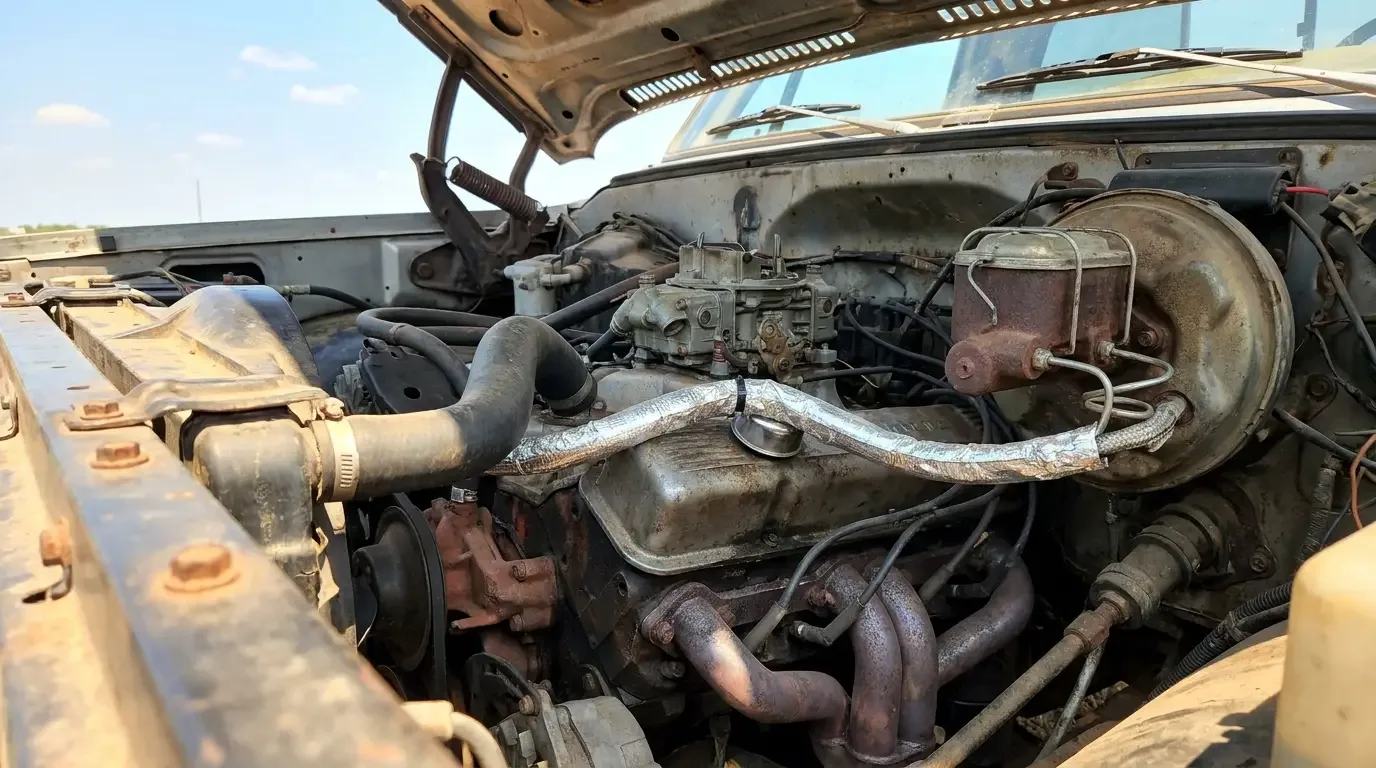
It's also worth remembering this is one of several small mechanical items that get ignored on a truck that otherwise runs fine, in the same category as vapor lock, a classic summer driveability gremlin that a lot of C10 owners just live with instead of addressing. Both problems share the same lesson: these trucks reward an owner who's willing to do the unglamorous maintenance before it becomes an unglamorous roadside repair.
"A wheel bearing job scares people because it sounds like surgery, but it's really just cleaning, packing, and setting a nut to the right feel. I've had guys put off this job for years out of fear of it, and then they do it once and realize it's an afternoon, not a nightmare. The nightmare is what happens if you keep putting it off."
Robert Halloran
Sources and notes
- Setting techniques for tapered roller bearingsMachine Design's overview of the manual method: tighten while rotating to a slight bind, then back off to free rotation.
- Wheel Bearing & Seal ReplacementAA1Car reference confirming seals must be replaced every time, races/bearings should be inspected for pitting, and the correct end-play target (roughly .001-.007 in.) after backing off the spindle nut.
- A Guide to Wheel Bearing GreaseGMB's explanation of why high-temperature-rated grease matters for a hub that sits next to the brakes.
- Wheel bearing maintenance; repack or replace?GMT400 forum thread confirming 2WD GM trucks use serviceable, repackable tapered roller bearings (unlike sealed 4WD hub assemblies), plus failure signs like pitting and grease incompatibility.
Related Reading
Have a
Chevrolet C10
for Sale?
Reach thousands of serious classic car collectors across the US.
Sell It Here →
Are You a Classic Car Dealer?
List your full inventory and connect with targeted classic car buyers.
Join as a Dealer →

About the author
Robert Halloran
Texas-based classic truck enthusiast with decades of experience buying, restoring, and writing about American pickups from the 1940s through the 1980s.
Related Listings - Chevrolet C10
More in Restoration & Tech
Comments (1)
E
Eddie Carlisle
2 months ago
Numbers-matching obsession is real. I get it. But a driver-quality example at a reasonable price has its own appeal that gets overlooked.