
A carbureted small-block wants somewhere around 4-7 psi of fuel pressure. A modern LS running electronic fuel injection wants roughly 58 psi on a return-style system, with returnless setups running a similar baseline pressure but letting the ECU vary delivered pressure through a PWM-controlled pump. That's not a small difference, it's an order of magnitude, and it's the real reason a factory C10 fuel tank and sending unit almost never survive contact with the engine swap guide without a fight. The tank itself might be fine. The pickup, the pump, and the pressure it's built to support are not.
Restoration & Tech
6 min read
Relocating and Plumbing a Fuel Cell in a C10
Why a factory C10 fuel tank cannot support EFI pressure, and how to size, mount, and plumb a fuel cell that actually feeds a swapped engine under load.
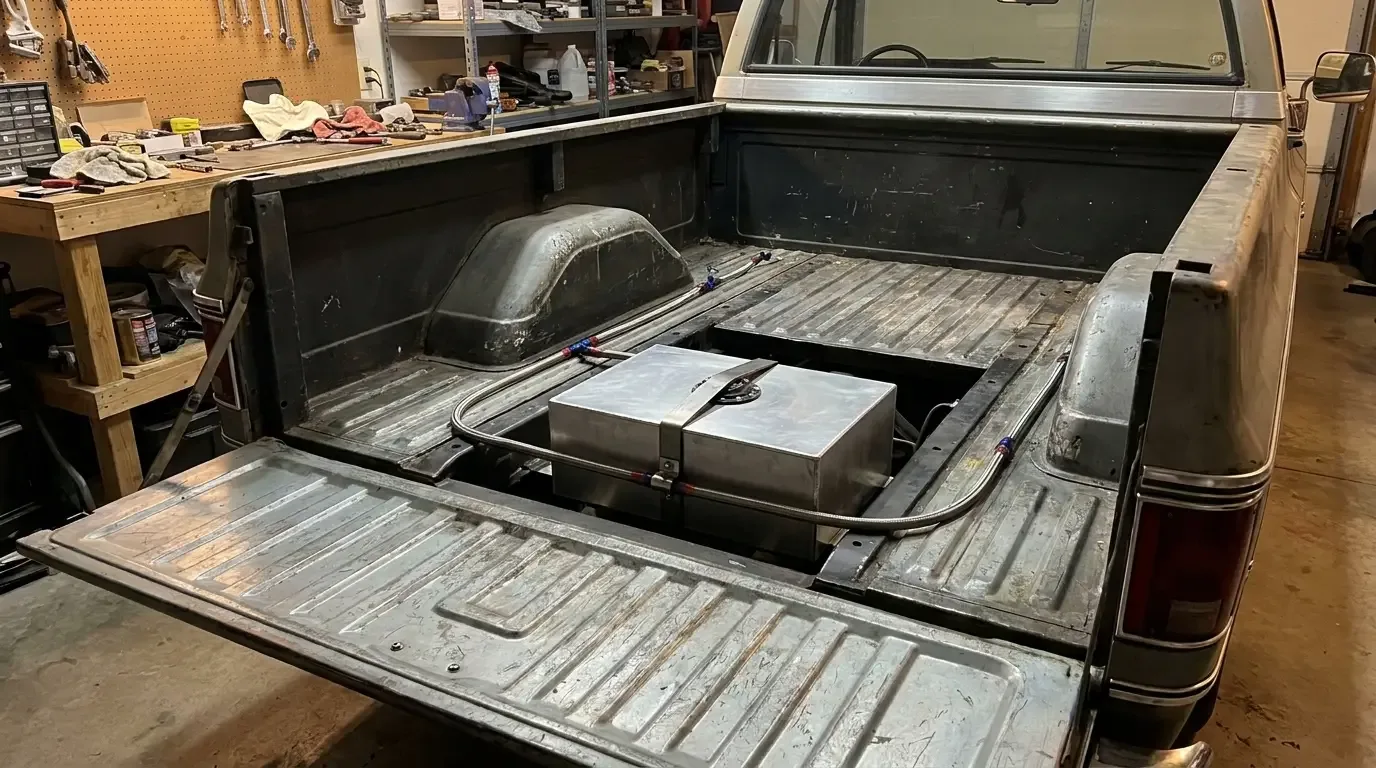
This is one of those jobs that looks like plumbing and is actually a fuel-delivery-under-load problem. Get the pump, pickup baffling, and line sizing wrong and the truck runs fine on a level street and starves for fuel the first time you take a hard corner or climb a steep grade with the tank under half full. That's not a rare failure mode. It's the single most common complaint I hear on EFI swaps that skipped the fuel system.
Why the factory tank doesn't work for EFI
The stock in-tank setup on these trucks was built around a mechanical fuel pump and low pressure, with a pickup tube that assumes fuel sloshes around gently and stays roughly where it's supposed to be. Ask that same tank to feed a high-pressure EFI pump under hard acceleration or cornering, with the fuel sloshing away from the pickup at the exact moment you need it most, and you get fuel starvation, lean spikes, and in the worst case a burned piston from a lean condition that never should have happened on a truck that was otherwise tuned correctly.
A proper fuel cell solves this with internal baffling built around the pump location, keeping fuel where the pickup can reach it regardless of what the truck is doing. That's the actual justification for relocating, not just clearance or looks.
Choosing a fuel cell and where it actually fits
Capacity first. Don't undersize the cell just because a smaller unit is easier to package. A tank that's too small means more fuel stops and a fuel level that swings through the unbaffled portion of even a good cell more often. Most guys land in the 15-19 gallon range for a truck this size, which lines up with what most aftermarket cell makers offer in this class, enough range without turning the mounting job into a fight for space.
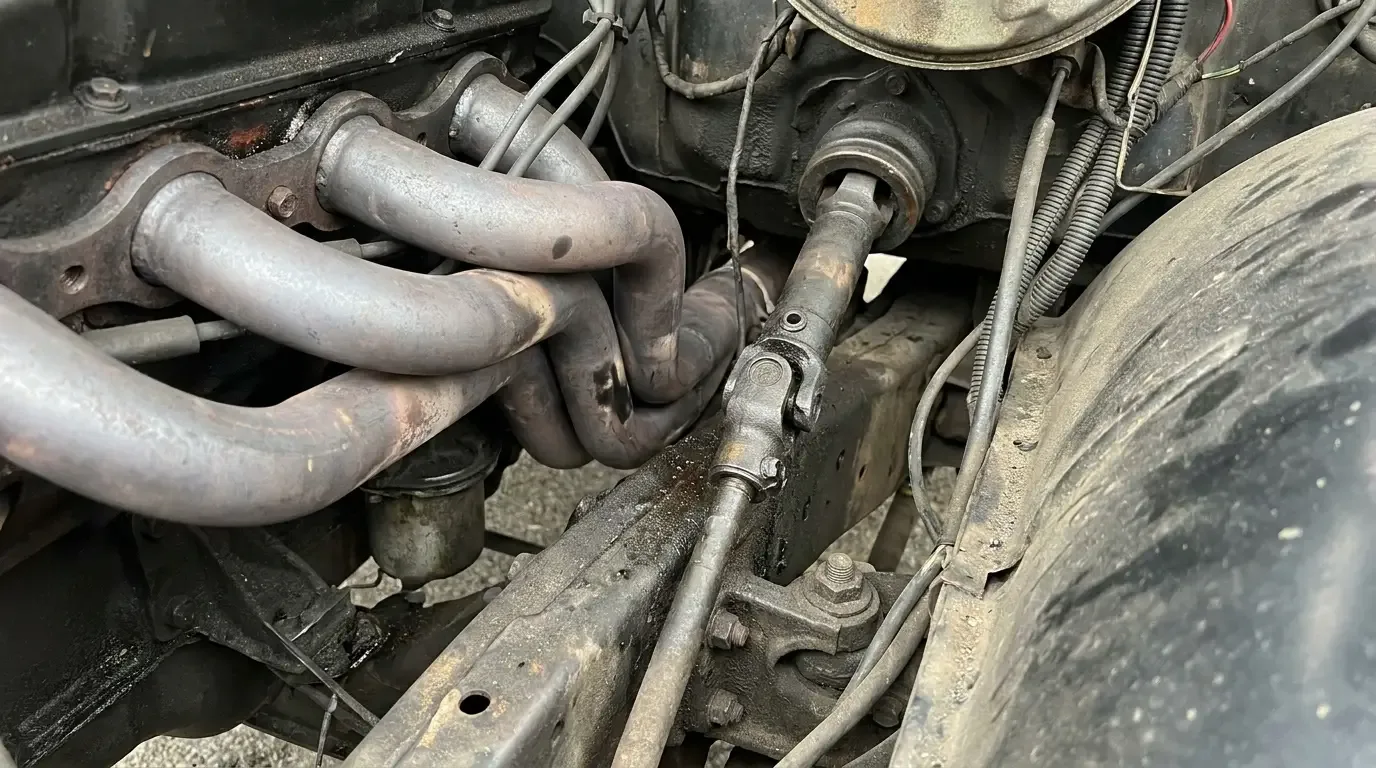
Mounting location depends on the bed and frame layout, but a fuel cell mounted forward in the bed, low and centered between the frame rails, keeps weight where it belongs and keeps the fuel lines shorter than a rear-of-axle mount. Whatever location you choose, make sure it clears the spare tire, the exhaust, and anything else already fighting for space back there, the same clearance discipline that comes up on the header clearance fight on the other end of the engine.
| Fuel system type | Approx. operating pressure | Pump style needed |
|---|---|---|
| Carbureted | ~4-7 psi | Low-pressure mechanical or electric |
| EFI, return-style | ~58 psi | High-pressure in-tank or external |
| EFI, returnless | Varies by ECU demand | High-pressure, PWM or demand-controlled |
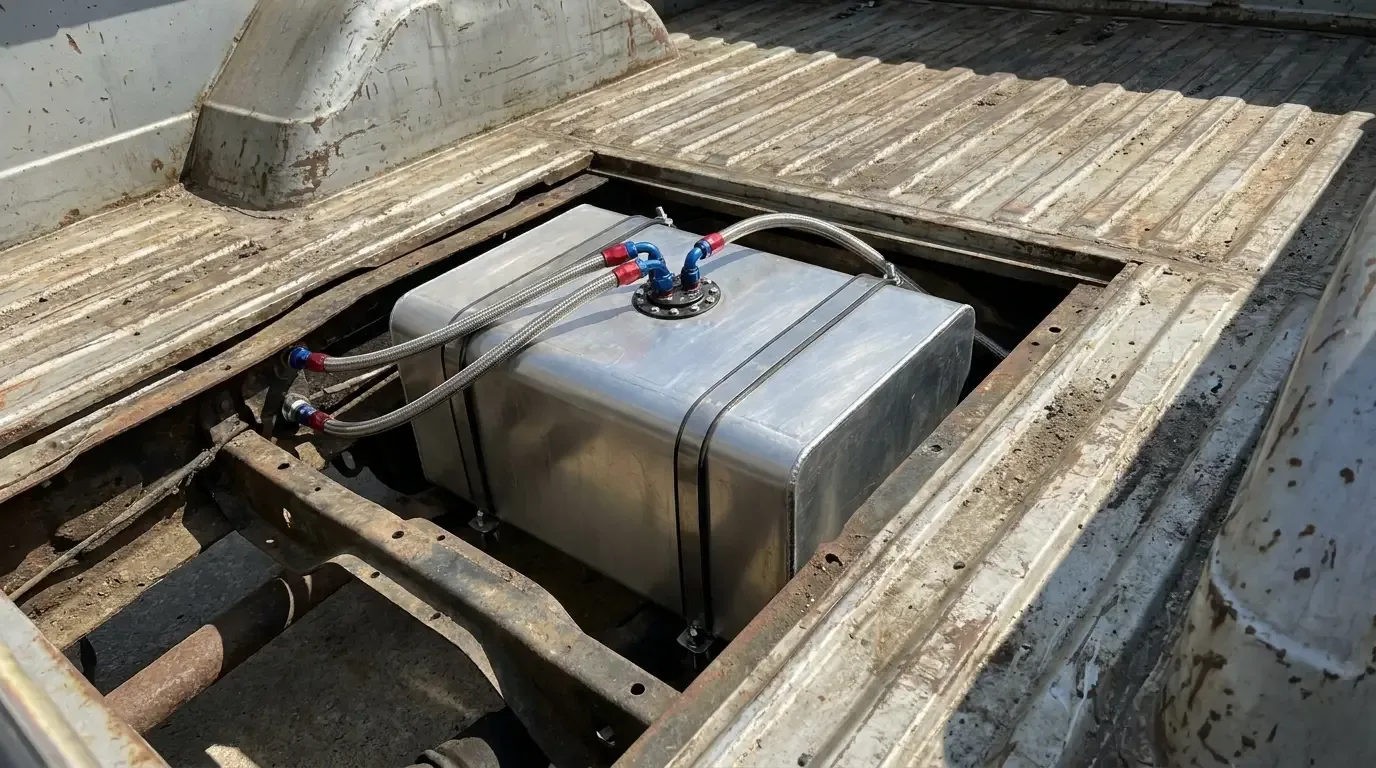
Pump selection and the numbers that matter
Pump flow rate has to cover peak fuel demand at your target horsepower, with headroom, not just enough to idle and cruise. Undersizing the pump shows up exactly like a baffling problem, fine at light throttle, starving under load, and it's easy to misdiagnose one as the other if you haven't confirmed pump flow against your actual horsepower target. If you're running boost or planning more power down the road, size the pump for where you're going, not just where the truck is today. Swapping a pump later means pulling the cell back out.
In-tank pumps run cooler and quieter because the fuel around them acts as a heat sink, and that's the setup I'd default to in a fuel cell built for it. External pumps have their place, but they need to be mounted low, as close to the tank as practical, and protected from road debris.
Plumbing, filters, and grounding
Run adequate line size for your pressure and flow target, typically -6 AN or equivalent for a feed line on a moderate-power EFI swap, sized up if you're planning serious power later. Put a filter before the pump rated for the coarser pre-filter debris, and a finer filter after the pump rated for injector protection. Skipping the pre-filter is how a pump takes in tank debris and dies early. Skipping the post-filter is how you find out the hard way what a clogged injector does to a cylinder's fuel trim.
Ground the fuel cell and pump wiring properly, a dedicated ground strap to the frame, not a reliance on the mounting bolts making incidental contact. A poor ground on a fuel pump circuit shows up as intermittent pump behavior that's maddening to chase because it's not consistent, and it's one of the easiest things to get right the first time and never think about again.
"Guys will spend real money getting the engine to make a number on the dyno and then run fuel line sized like it's still a carbureted 350. The fuel system doesn't get to be an afterthought on an EFI build. It's the thing that decides whether that dyno number happens on the street too."
Dan Reeves
Mounting, venting, and the safety checks
Strap the cell down with proper mounting brackets rated for the loaded weight, not just the empty weight, a full fuel cell is heavier than people expect when they're designing the mount. Vent it correctly per the cell manufacturer's instructions, usually routed down and away from the frame, never straight into the bed or cab area. Pressure test the fuel system for leaks before the first start, at operating pressure, not just a quick visual check with the engine off.
Cost on a quality fuel cell, pump, and plumbing kit typically runs somewhere between $500 and $1,200, depending on capacity, whether you're buying a basic street/drift-style cell or a higher-end FIA-rated racing cell, and pump specification. This isn't the place in the build to buy the cheapest option available, a fuel system failure on the road is a different category of problem than most other things that can go wrong on one of these trucks.
Sources and notes
- How do you decide what fuel pressure to run?: LS1Tech
- Mastering the LS Swap Fuel System: Pumps, Lines & EFI Guide: Evil Energy
- How much pressure does a stock mechanical fuel pump have?: The H.A.M.B.
- Replacement Baffling Foam for Fuel Cell: Fuel Safe
- Why You Don't Mess With Fuel Cell Foam: Building Speed
- Fuel Cell Tank Kit, 5/10/15 gallon options: Evil Energy
Related Reading
Have a
Chevrolet C10
for Sale?
Reach thousands of serious classic car collectors across the US.
Sell It Here →
Are You a Classic Car Dealer?
List your full inventory and connect with targeted classic car buyers.
Join as a Dealer →

About the author
Dan Reeves
Performance engine builder from North Carolina's motorsports corridor, focused on swaps, forced induction and making real, repeatable power.
Related Listings - Chevrolet C10


More in Restoration & Tech


Comments
Be the first to comment on this article.