
Stock steering ratio on these trucks sits around 16:1 to 24:1 depending on year and whether the box is manual or power-assisted, manual boxes ran the slower 24:1 ratio, factory power steering boxes were quicker, typically 16:1 to 20:1, which works out to roughly four full turns lock to lock on a typical factory power steering box. That was fine when the truck weighed what it weighed from the factory and nobody expected it to change direction fast. Drop a heavier iron-block LS or add front sway bar and tire width from a suspension upgrade, and that slow ratio turns from a mild annoyance into a truck that feels like it's steering through a garden hose.
Restoration & Tech
7 min read
Upgrading C10 Steering to a Quick-Ratio Box
Why a stock C10 steering ratio feels slow after an engine swap, and what a quick-ratio box actually changes at the wheel.
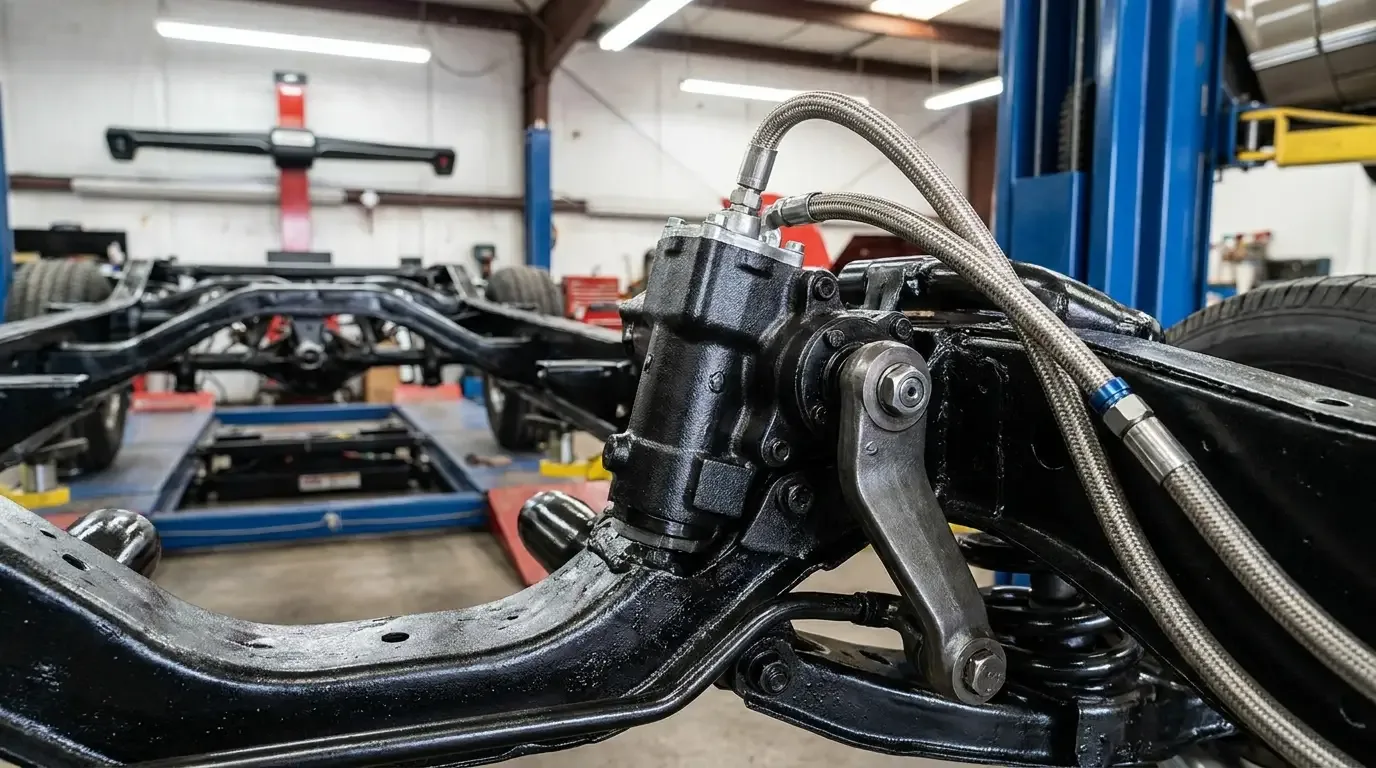
A quick-ratio box tightens that up, usually into the 12.7:1 to 14:1 range, cutting lock-to-lock turns down to roughly 3 to 3.5 turns instead of 4. That's not a subjective feel upgrade. It's a real number: less arm motion for the same amount of front wheel angle, which matters a lot more once you've gone through the LS swap guide and the front of the truck weighs different than it used to.
Why stock steering feels slow the day you add power
Nobody notices a slow steering ratio in a stock truck because the whole package is tuned to match. Slow steering, soft suspension, bias-ply-era expectations. Change one variable, engine weight up front or a suspension upgrade with more front-end grip, and the mismatch shows up immediately. You'll find yourself sawing at the wheel in a parking lot maneuver that should take a quarter turn, and on the highway, a truck that needs constant small corrections because the ratio is too slow to respond to what the front tires are actually doing.
This isn't unique to C10s, it's the same story on any old truck or car that gets a modern drivetrain and keeps the original steering geometry. The engine gets the attention and the budget. The steering box is an afterthought until somebody drives it and says something's wrong, and the answer is almost always the ratio, not a worn part.
| Spec | Stock steering box | Quick-ratio box |
|---|---|---|
| Approx. ratio | ~16:1-24:1 (power vs. manual) | ~12.7:1-14:1 |
| Lock-to-lock turns | ~4 turns (power steering) | ~3-3.5 turns |
| Effort at parking speed | Lower per turn, more turns | Higher per turn, fewer turns |
| Best paired with | Stock power steering, factory weight | Power steering pump upgrade, added front weight |
What "quick" actually means at the wheel
A quicker ratio means more front wheel angle per degree you turn the steering wheel. That's the whole trade. You get faster response and less arm motion, but you also get more effort per turn if your power steering pump and box combination isn't matched correctly. This is why I tell guys not to just bolt on the quickest ratio they can find and call it done. There's a real tradeoff between response and effort, and going too far in the quick direction on a heavy truck with a marginal power steering pump gets you a box that darts and feels twitchy at highway speed instead of just responsive.
Most guys doing this swap land somewhere in the middle, quick enough to feel the difference immediately, not so quick that the truck becomes nervous in a straight line. Test drive before you commit to buying if you can, because "quick" isn't one number, it's a range, and different boxes in that range feel noticeably different from each other.
Had a customer bring in an LS-swapped shortbed a while back complaining the truck darted at highway speed after he'd already put in a quick box on his own, no consultation, just parts-counter advice. He'd gone with the fastest ratio on the shelf and paired it with the stock power steering pump, and that combination made the truck twitchy above 60 and heavy at parking speed, exactly backwards from what he wanted. We swapped to a mid-range ratio and matched it with a higher-output pump, and the difference wasn't subtle. Same truck, same tires, completely different feel. The ratio number by itself doesn't tell you how the truck will actually drive. The pump and the ratio get picked as a pair or you're guessing.
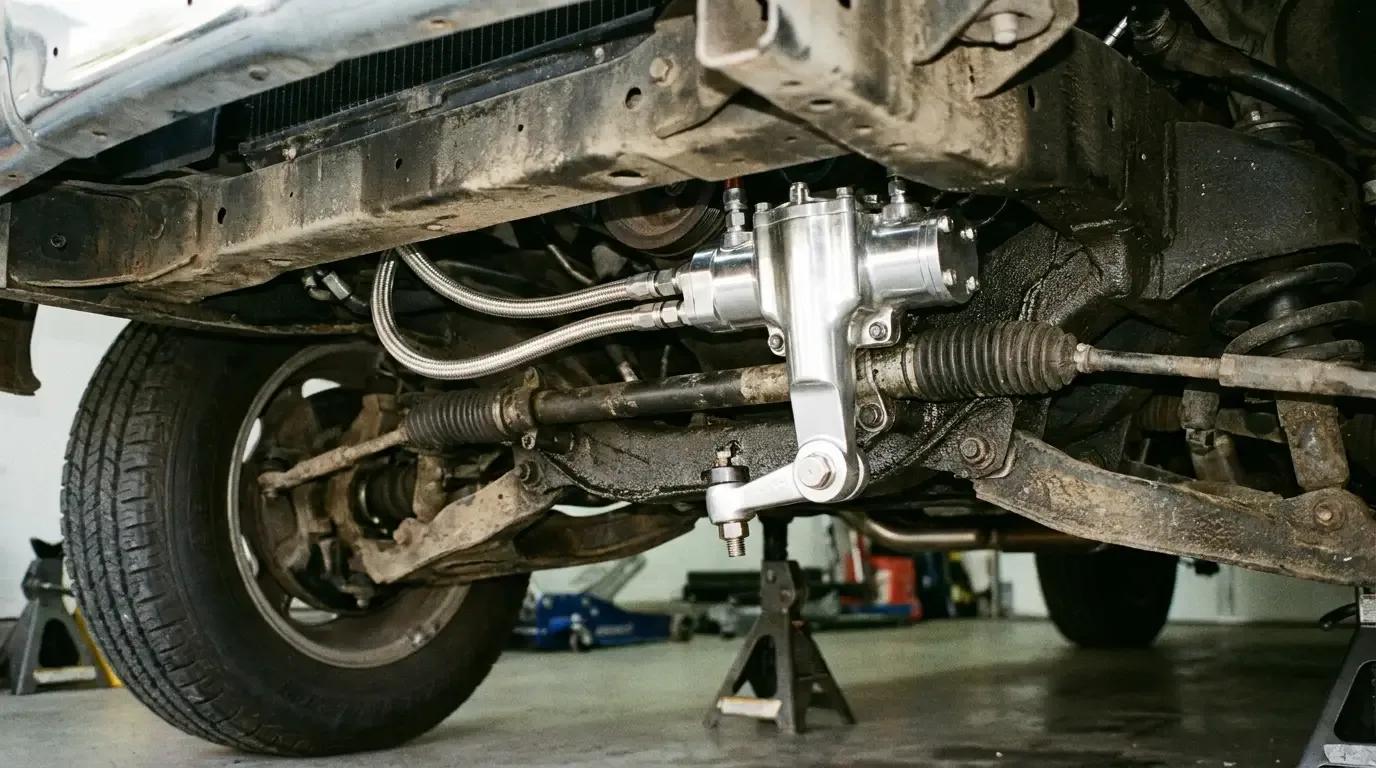
Pitman arm, alignment, and bump steer
Changing the steering box changes the geometry the pitman arm operates through, and a mismatched pitman arm is the single most common reason a quick-ratio install ends up with bump steer that wasn't there before. Get the correct pitman arm for the specific box you're running, not whatever one happened to bolt up from the parts bin. Bump steer shows up as the truck wanting to change direction slightly every time it hits a bump, and it's miserable to live with and easy to avoid by getting the arm right the first time.
Realign the truck after the box swap, full stop. Toe changes with any steering box swap, and driving it home "to check it out" before an alignment just wears the new tires unevenly for no reason. Do the alignment before you form an opinion about how the new box drives.
"Everybody wants to talk about horsepower numbers. Nobody talks about how many turns lock to lock their truck needs until they've already got 450 pounds of iron block sitting over the front axle and the stock box can't keep up. Fix the steering before you fix your opinion of the engine."
Dan Reeves
Break-in and where people get it wrong
Bleed the power steering system properly after the swap, same as any hydraulic steering job, and drive it easy for the first stretch to confirm there's no binding at full lock in either direction. Full lock binding usually means a pitman arm or steering shaft angle issue, not a defective box, and it's worth chasing down immediately rather than living with it.
Numbers worth writing down after the swap: turns lock-to-lock with the wheels on the ground, not up on a lift, since ride height changes the count slightly, and steering effort at a dead stop, which should drop once the pump is matched even though the ratio itself got quicker. Log both before you start second-guessing whether the install went right. Most of the "something feels off" complaints I get after this swap turn out to be a mismatched pump, not a bad box.
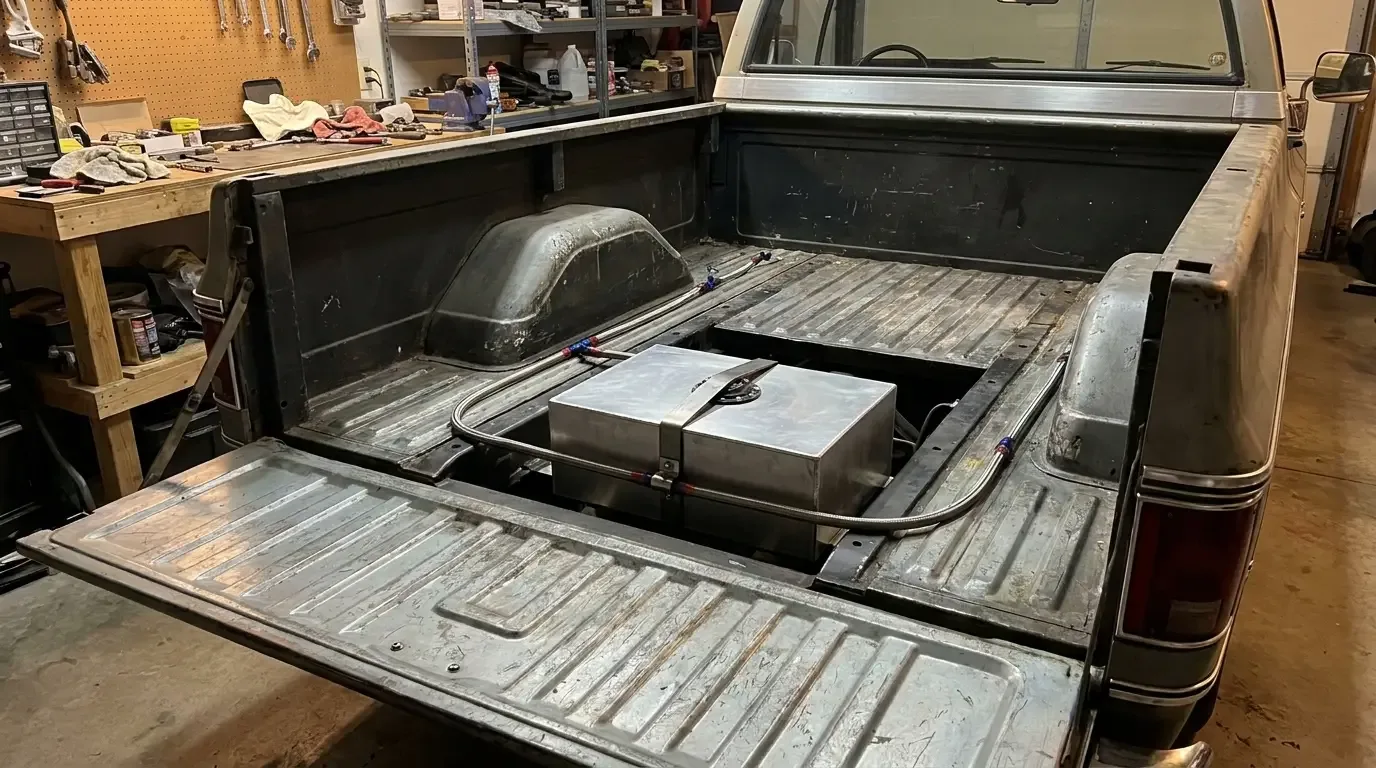
Cost on a quality quick-ratio box, correct pitman arm, and alignment typically runs somewhere around $600-1,000 for the box and hardware, more once professional alignment and shop time are added, depending on brand and whether the truck also needs a power steering pump upgrade to match. If you've already sorted the front end, the fuel system is usually next on a build like this, and feeding that engine from a relocated fuel cell tends to be the item that follows once the truck actually steers the way it should.
Sources and notes
- Quick Ratio vs Stock Steering Box: The Complete Performance Guide: Borgeson Universal
- Borgeson Street & Performance Series, C-10, 12.7:1 Ratio (800132)
- C10 Truck Power-Steering Fix: Borgeson Has What You Need: Chevy Hardcore
- Which Fast Ratio Steering Box?: C10Trucks.com Forum
- Quick Ratio Power Steering Conversion Gear Box, 14:1 Ratio, 1967-1972 C10: Amazon listing spec sheet
Related Reading
Have a
Chevrolet C10
for Sale?
Reach thousands of serious classic car collectors across the US.
Sell It Here →
Are You a Classic Car Dealer?
List your full inventory and connect with targeted classic car buyers.
Join as a Dealer →

About the author
Dan Reeves
Performance engine builder from North Carolina's motorsports corridor, focused on swaps, forced induction and making real, repeatable power.
Related Listings - Chevrolet C10
More in Restoration & Tech
Comments
Be the first to comment on this article.