
The stock headlights on a C10 were never good, even the day they left the factory. Sealed beam units from that era put out a fraction of what a modern car takes for granted, and forty-plus years of hazy lenses and tired reflectors haven't helped. Most owners find this out the hard way, driving one of these trucks on a dark two-lane road for the first time and realizing the high beams barely reach past the hood. The good news is you can fix this without rewiring the whole truck, if you go about it the right way and skip the shortcuts that cause more problems than they solve.
Restoration & Tech
7 min read
Upgrading C10 Bulbs to High-Visibility LEDs
Stock sealed beams and filament tail lights leave a C10 hard to see by and hard to see with. Here's what changes with an LED swap and the wiring quirks that trip people up.
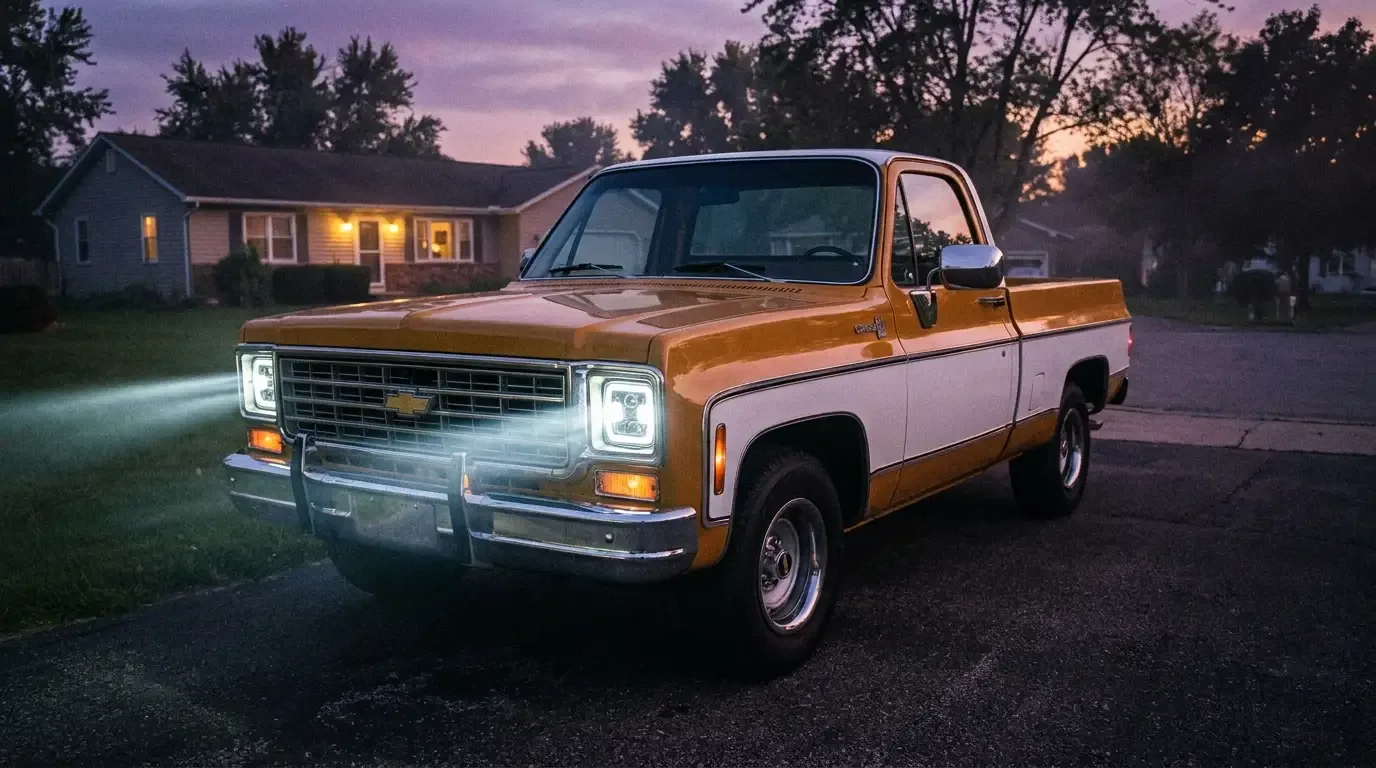
Why the stock bulbs never were that good
Sealed beam headlights were a compromise from the start. The whole bulb, reflector, and lens were one sealed unit, which meant if the reflector clouded or the lens yellowed, there was no fixing it short of replacing the entire assembly, and most owners just lived with it instead. Tail lights and interior bulbs weren't much better. They used simple filament bulbs that draw real current, produce most of their energy as heat instead of light, and dim noticeably as voltage drops even slightly, which ties right back into whatever shape the truck's grounds and wiring are in.
None of this was a design failure so much as it was 1960s and 1970s bulb technology doing what it could with the materials of the day. It's just that the rest of the automotive world moved a long way past it, and a C10 running original-spec lighting is genuinely hard to see by and hard to see with, especially at night in rural areas without street lighting. It's a small irony given Chevrolet's half-ton legacy as a workhorse built to be used after dark on ranches and job sites as much as in daylight.
What actually changes when you go LED
LED headlight and tail light bulbs solve the brightness problem and the current-draw problem at the same time. A quality LED headlight bulb puts out considerably more usable light than a sealed beam or the halogen replacements that came later, and it does it while pulling less current, which matters on a wiring harness that's been carrying the same load since before you were likely born. Tail lights and brake lights see a similar jump, and LEDs light up close to instantly instead of the slight lag a filament bulb has, which is a real safety margin in the second it takes the car behind you to register your brake lights.
The other change is heat. Filament bulbs run hot enough to matter inside an enclosed housing, and that heat is part of what degrades old lenses and gaskets over time. LEDs run cooler at the bulb itself, though the driver electronics on the back of the bulb still need airflow, so don't go stuffing them into a housing with zero ventilation and expect them to last.
| Bulb type | Typical output | Current draw | Notes |
|---|---|---|---|
| Stock sealed beam | Baseline, dim by modern standards | Higher | Non-serviceable sealed unit |
| Halogen replacement | Modest improvement | Moderate | Common upgrade path, still filament-based |
| LED replacement | Significant improvement (roughly 2,000-4,000+ lumens vs 700-1,200 for a stock sealed beam) | Lower | Requires housing that clears the driver module |
Picking the right bulbs without chasing hype
The LED bulb market is full of manufacturers claiming numbers that don't hold up once you put a light meter on the actual output, and a lot of cheap kits throw heat and radio interference problems into the bargain along with disappointing brightness. Stick with bulbs sized specifically for a proper beam pattern in a reflector housing built for a filament bulb, not a projector housing. A mismatched bulb throws light in a pattern the reflector was never designed for, which can blind oncoming traffic or leave your own beam pattern worse than the stock bulb you replaced.
Check that the bulb's driver module physically fits behind your headlight bucket before you buy. Some LED replacement bulbs have a driver housing bulky enough that it won't clear the back of a sealed beam bucket or an aftermarket housing without modification, and finding that out after installation is a frustrating way to spend an afternoon. This is also where a truck coming out of a longer maintenance guide pays off, because a truck that's already had its wiring and grounds gone through cleanly is a much better candidate for an LED conversion than one that hasn't.
Installation and the wiring quirks that trip people up
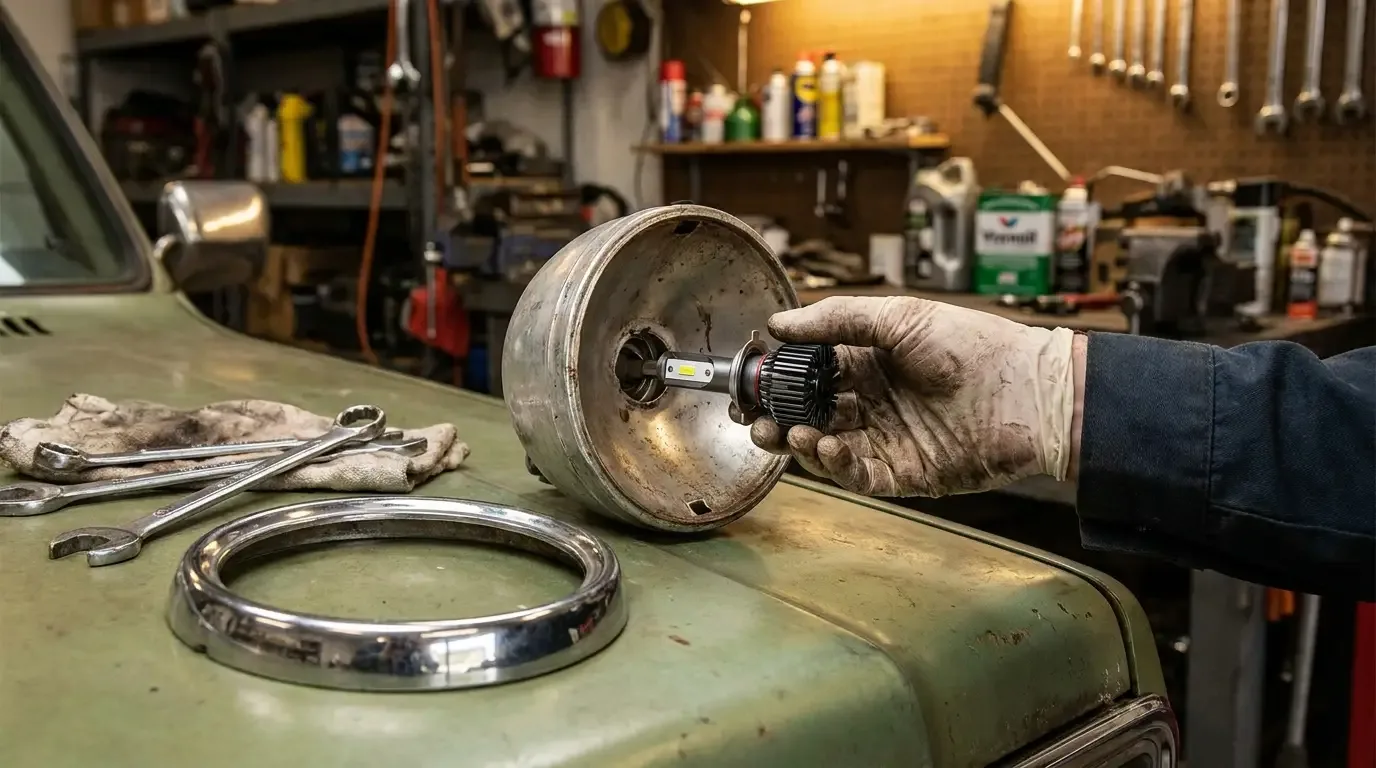
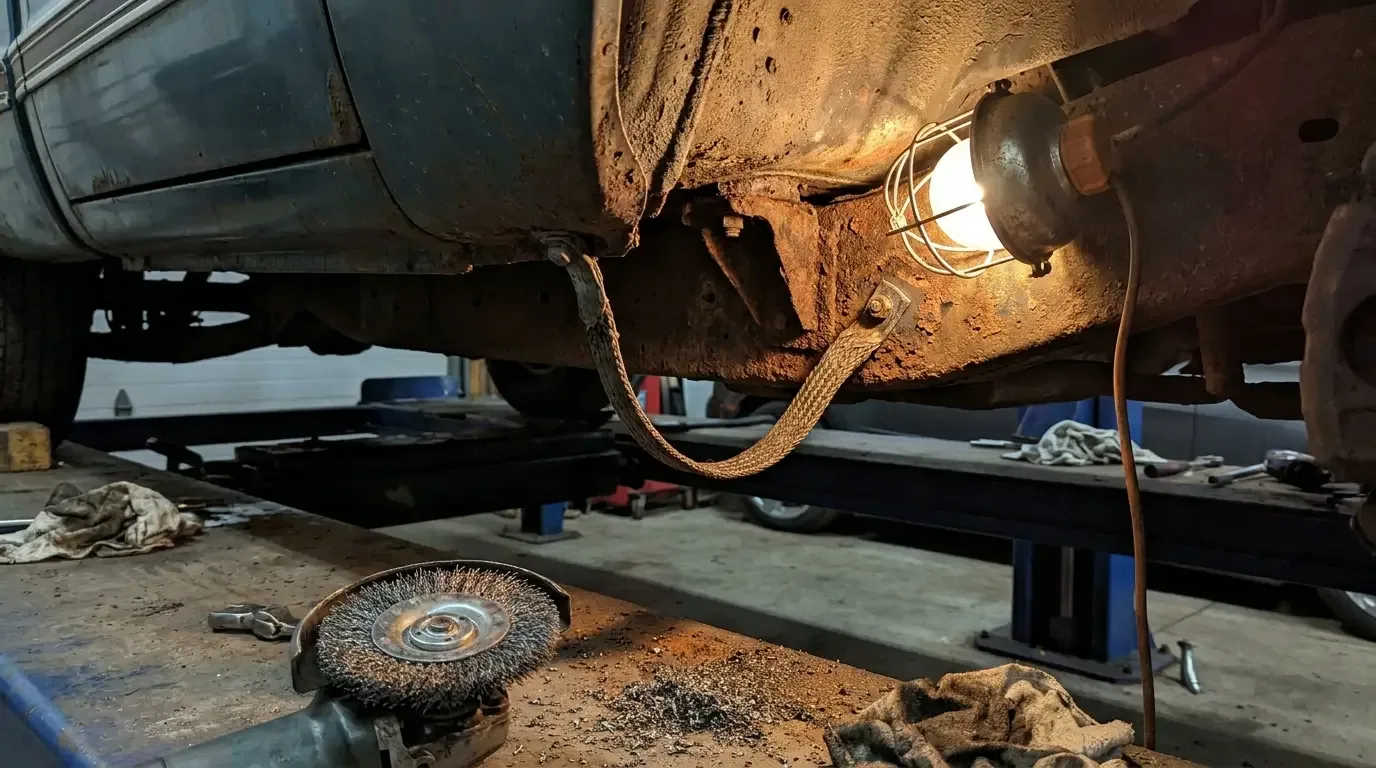
The install itself is usually simple, pull the old bulb, drop in the new one, plug in the connector. Where people run into trouble is everything around that swap. LED bulbs are far less tolerant of a marginal ground than the old filament bulbs were, and a truck with any corrosion in its lighting circuit will show flickering, strobing, or dashboard warning behavior on the new bulbs that the old ones simply hid by running a little dim instead of misbehaving outright. If you haven't already gone through the grounding on this truck, do that first. It'll save you from chasing a "bad bulb" that's actually a bad connection.
Some trucks also need a resistor or a decoder module added into circuits that originally relied on the higher current draw of the old bulbs to trigger things like turn signal flasher timing or a dash warning light for a burned-out bulb. LED bulbs draw so little current by comparison that they can trip a hyperflash on the turn signals or leave a bulb-out warning triggered even with a working bulb. This is a known quirk, not a defect, and it's solved with a small add-on part rather than by giving up on the LED swap.
Living with it
Once the swap is sorted and the wiring quirks are handled, the difference is immediate and it's not subtle. Rural roads that used to feel like driving with a candle in front of you become genuinely manageable, and tail lights that used to be an afterthought now register clearly to the car behind you the instant you touch the brake. It's one of the cheapest, most noticeable upgrades you can put into one of these trucks, and it plays well with other work on the truck's electrical side, including wheel bearings, the maintenance item nobody remembers until it howls, since both jobs reward an owner willing to get underneath the truck and deal with the parts that don't get attention until something forces the issue.
"I don't care how good your paint is or how straight your bed is if I can't see the truck coming at dusk. Lighting is safety equipment before it's anything else, and it's one of the few upgrades on an old truck that costs you an afternoon and pays you back every single time you drive it after dark."
Robert Halloran
Sources and notes
- Get Illuminated: All About Automotive Headlights & Light BulbsOnAllCylinders breakdown of halogen versus LED lumen output and efficiency.
- Halogen vs. LED: Which One is Right for You?DSPORT Magazine's bench test showing a sealed-beam halogen setup drawing roughly 98-145 watts versus about 30 watts for an equivalent LED conversion.
- LED Load EqualizerSylvania's explanation of hyperflash, flicker, and bulb-out warnings caused by LED bulbs' lower current draw, and how a load equalizer resolves it.
- LED vs. Halogen Headlights: Pros, Cons and Real Differencesconfirms mismatched LED retrofits can throw a beam pattern that blinds oncoming traffic in a reflector housing built for a filament bulb.
- Halogen vs. LED vs. HID Headlights: The Ultimate Comparison Guideconfirms halogen/sealed beam output of roughly 700-1,200 lumens versus 4,000-6,000 for LED, and that reflector housings pair best with LED bulb geometry.
Related Reading
Have a
Chevrolet C10
for Sale?
Reach thousands of serious classic car collectors across the US.
Sell It Here →
Are You a Classic Car Dealer?
List your full inventory and connect with targeted classic car buyers.
Join as a Dealer →

About the author
Robert Halloran
Texas-based classic truck enthusiast with decades of experience buying, restoring, and writing about American pickups from the 1940s through the 1980s.
Related Listings - Chevrolet C10
More in Restoration & Tech
Comments (1)
F
Frank DeLuca
2 months ago
The section on what a real restoration actually costs is something every buyer should read before deciding a project car is a bargain.