
Every muscle car restoration hits the same fork in the road eventually. You need a part, the old one is toast, and now you have to decide what goes back on the car. Reproduction, NOS, or a cleaned-up original. I've made this call a few thousand times across Chevelles, Mustangs, Chargers, and GTOs, and the wrong answer costs you money either way. Buy repro when you needed original and you tank the value. Chase NOS when a good reproduction would have done the job and you burn cash that should have gone into the driveline.
Restoration & Tech
7 min read
Reproduction vs NOS vs Original Parts
Reproduction, NOS, or original muscle car parts? A restorer breaks down cost, correctness, and when each one is the right call for your build.
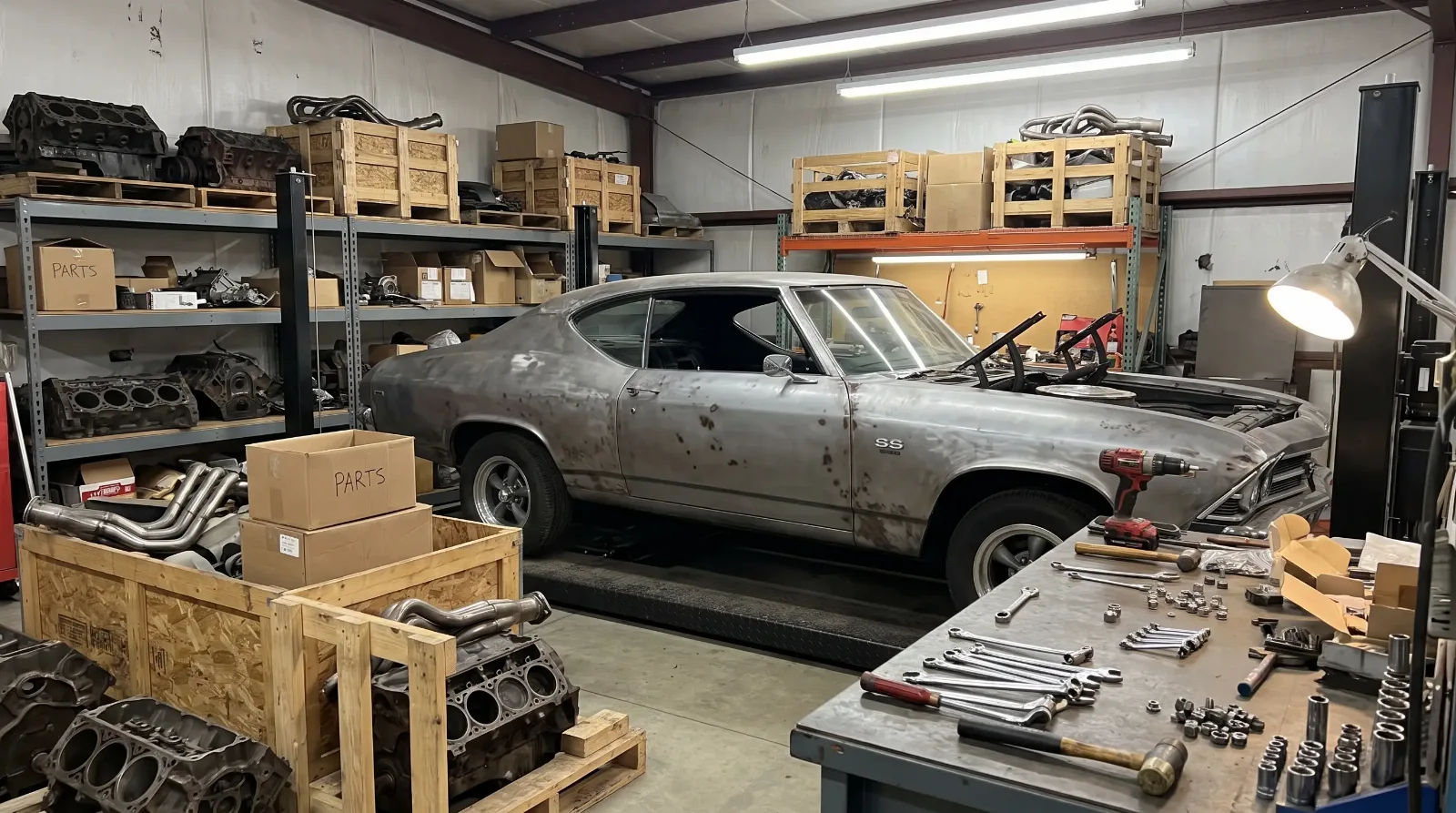
The three terms get thrown around loosely at swap meets, so let me sort them out first. Then I'll tell you where each one belongs, because the answer changes depending on the part, the car, and what you plan to do with it.
What each term actually means
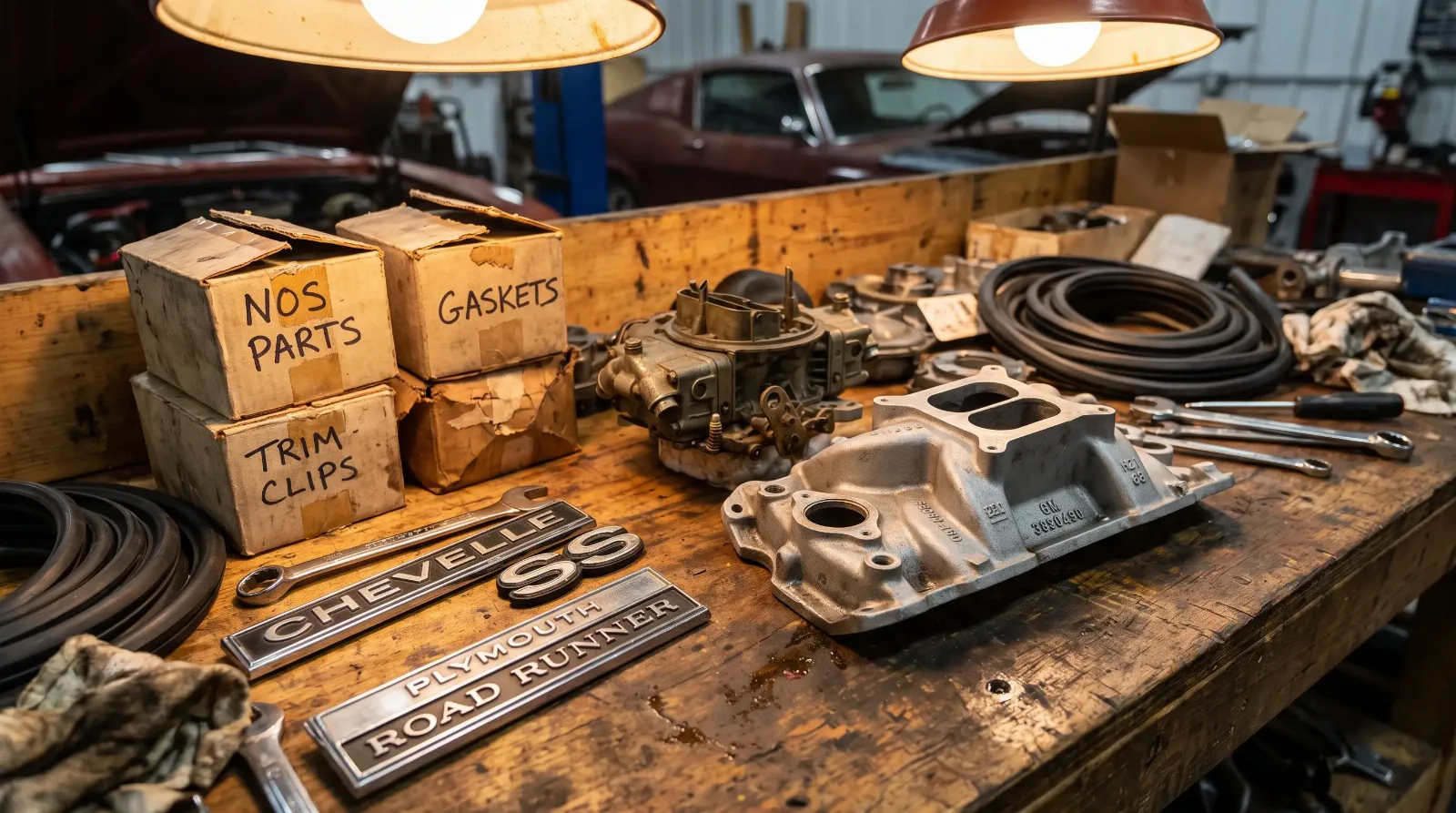
NOS stands for New Old Stock. That's a genuine factory part, made back in the day, that never got installed. Still in the box most of the time, sometimes with the original part number and the dealer sticker. It is the real thing, unused. NORS, which people confuse with it, means New Old Replacement Stock, an aftermarket part made during the period but not by the factory. Not the same, and worth less to a judge.
Reproduction is a new part made today to look and fit like the original. Some repro is excellent. Some of it is junk that fits like it was measured in the dark. Original means the part that came on the car, now worn, that you either keep as-is or rebuild. A rebuilt original carburetor with the correct casting number is still an original part. That matters more than most first-time restorers understand.
| Type | Availability | Typical cost vs repro | Best use |
|---|---|---|---|
| NOS | Scarce, drying up | 2x to 10x higher | Show cars, judged classes, rare trim |
| Reproduction | Wide for popular models | Baseline | Drivers, wear items, hard-used parts |
| Original (rebuilt) | What's already on the car | Rebuild cost only | Numbers-matching mechanicals |
Where NOS still makes sense
NOS earns its price in two places. First, on a high-end car headed for judged competition, where correctness scores points and a repro stamp gets you docked. Second, on parts nobody reproduces well, or at all. Certain trim clips, specific date-coded glass, a correct heater box for an oddball option combination. When the aftermarket never tooled up for it, NOS or a good original is your only honest path.
Here's the catch. NOS is finite and it's disappearing. The stuff that sat in dealer basements for fifty years has mostly been picked over. Prices climb every year on the desirable pieces. I've watched NOS taillight bezels for a second-gen Camaro go from beer money to a car payment inside a decade. If you're building a concours car and you find the correct NOS part at a fair number, buy it when you see it. It won't be cheaper next season.
When reproduction is the smart call
For most people building a car they actually intend to drive, reproduction is the right answer more often than not. Weatherstrip, floor pans, quarter panels, carpet, wiring harnesses, emblems, bushings. These are wear-and-tear or consumable parts, and a good repro from a reputable supplier will serve you fine and save you real money. Nobody deducts points at a cruise night because your door seals came from a catalog.
Quality varies wildly, though, and that's where guys get burned. Reproduction sheet metal in particular ranges from excellent to unusable. I've fit repro quarters that dropped right in and repro quarters that needed so much massaging I'd have been money ahead buying a rust-free original from Arizona. Ask what stamping the panel comes from, read the forums for your specific model, and buy from suppliers with a track record on your platform. A cheap panel that fights you for forty hours is not cheap.
Judging original parts worth keeping
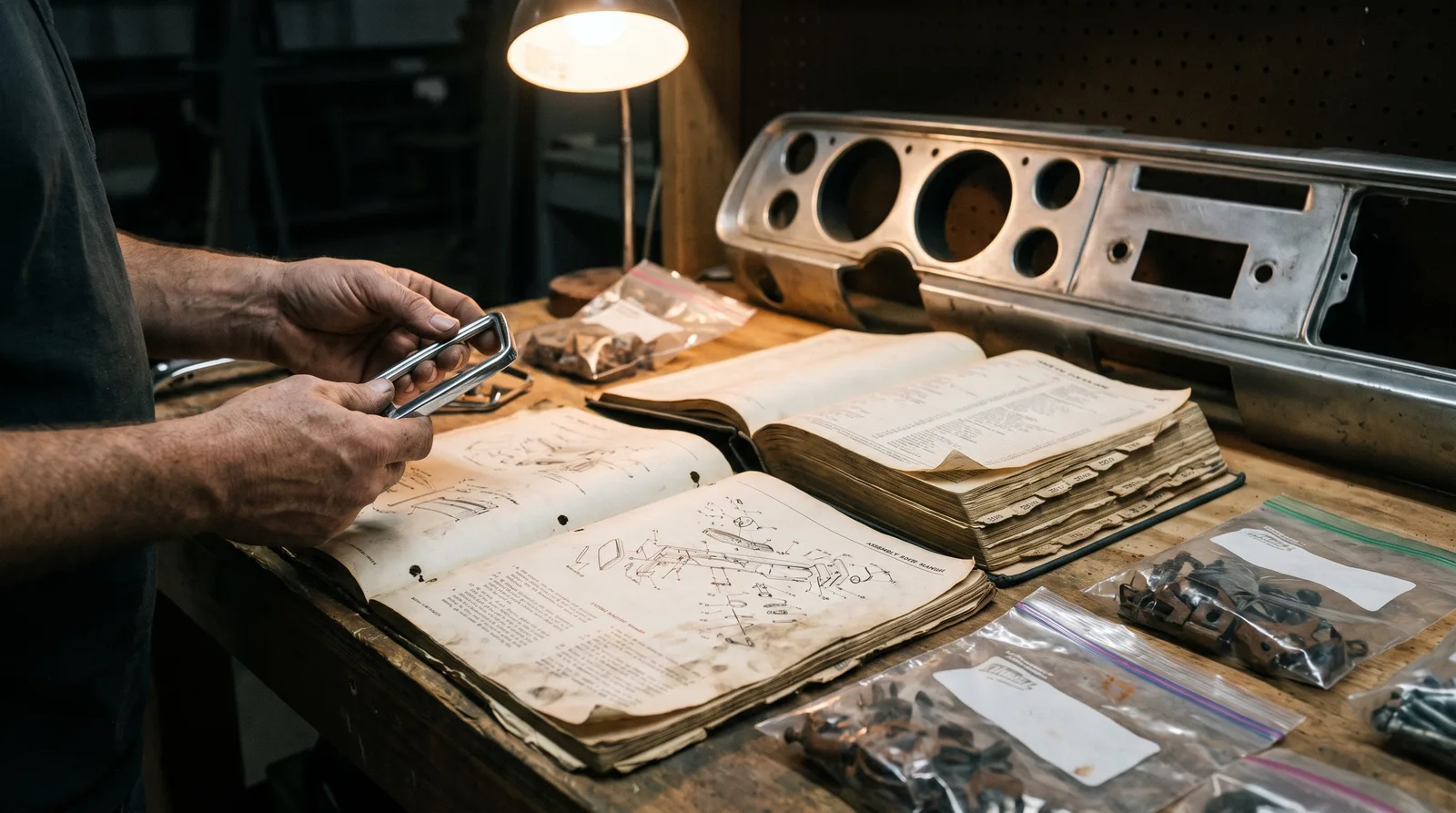
The instinct on a first restoration is to throw everything away and buy new. Fight that. A worn original part is often more valuable than a shiny reproduction, especially anything with a casting number or date code that ties to your car. A tired but correct intake manifold, a dented but original valve cover, the factory master cylinder. Clean them, rebuild them, replate them. That's how you protect the car's originality, which is a big piece of why anyone pays for a genuine numbers car in the first place. If you want to understand how deep that rabbit hole goes on the driveline side, the debate over a full teardown versus a lighter approach is worth reading before you commit, and you can dig into that in the read the full story.
The parts you genuinely should not reuse are safety items and anything degraded past rebuild. Brake hoses, fuel lines that have gone hard, cracked rubber, glass that's delaminating. Correctness never trumps a part that could get you hurt.
"The worst mistake I see is a guy who chucks the correct original carb in the scrap bin, bolts on a shiny repro, then wonders two years later why his numbers car appraised like a clone. Save the original. You can always rebuild it. You can't un-throw it away."
Mike Sullivan
How to decide part by part
There's no single rule, but there's a way to think it through. Start with the car's mission. A weekend driver you plan to keep and enjoy doesn't need NOS anything, and money spent chasing correctness there is money not spent on brakes and suspension. A documented, numbers-matching car headed for the show field is the opposite. There, original and NOS protect the investment, and repro shows up only where it won't cost you points.
Then go part by part. Is it visible? Is it judged? Does it carry a casting or date code that ties to your car? Is a good reproduction even available, and is it any good on your platform? Answer those and the right choice usually falls out on its own. This part-by-part discipline is the same mindset that runs through a proper classic muscle car restoration from the first day you roll the car into the shop.
Get this call right across the whole car and you end up with something that's honest about what it is. A driver that drives, or a show car that scores. What you don't want is a mismatch, a car dressed in expensive NOS trim sitting on a repro floor over rusty frame rails. Spend where it counts for the car you're actually building, and let the rest go to the catalog.
Related Reading
Have a
Classic Car
for Sale?
Reach thousands of serious classic car collectors across the US.
Sell It Here →
Are You a Classic Car Dealer?
List your full inventory and connect with targeted classic car buyers.
Join as a Dealer →

About the author
Mike Sullivan
Detroit-area muscle car enthusiast and restoration specialist with three decades of hands-on experience working on American iron.
More in Restoration & Tech
Comments
Be the first to comment on this article.