
Numbers-matching is one of the most used and least understood phrases in the muscle car hobby. People throw it around to mean everything from a fully documented factory car to nothing more than an engine that happens to be the right size. The truth is more specific, and it comes down to what the factory actually recorded and stamped when the car was built. Understanding numbers matching muscle cars is really about learning to read the records the plant left behind.
Restoration & Tech
6 min read
Numbers-Matching: What It Means and Why It Matters
What numbers matching muscle cars really means: casting numbers vs VIN stamps, documentation, value premiums, and how to verify a seller's claim.
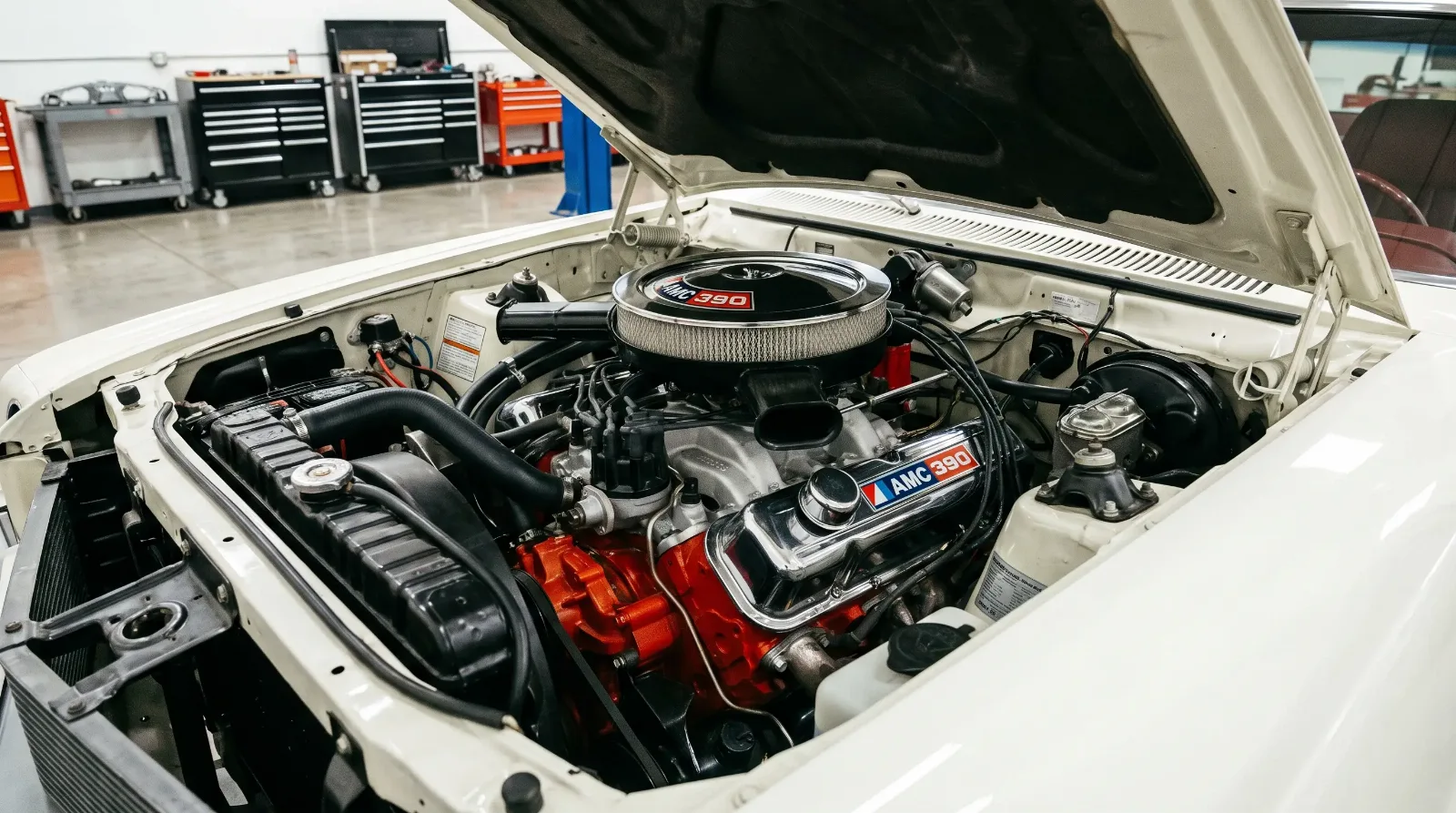
At its core, the term means the major components on the car carry the identifying numbers the factory assigned to that specific vehicle. The most important of these is the engine, which on most muscle cars was stamped with a partial VIN or a sequence that ties it to the car's body. When people say a car is numbers-matching, they usually mean the engine block was proven to be the one that left the assembly line in that car. Everything else is a matter of degree, and this is where careful language matters.
What the numbers actually are
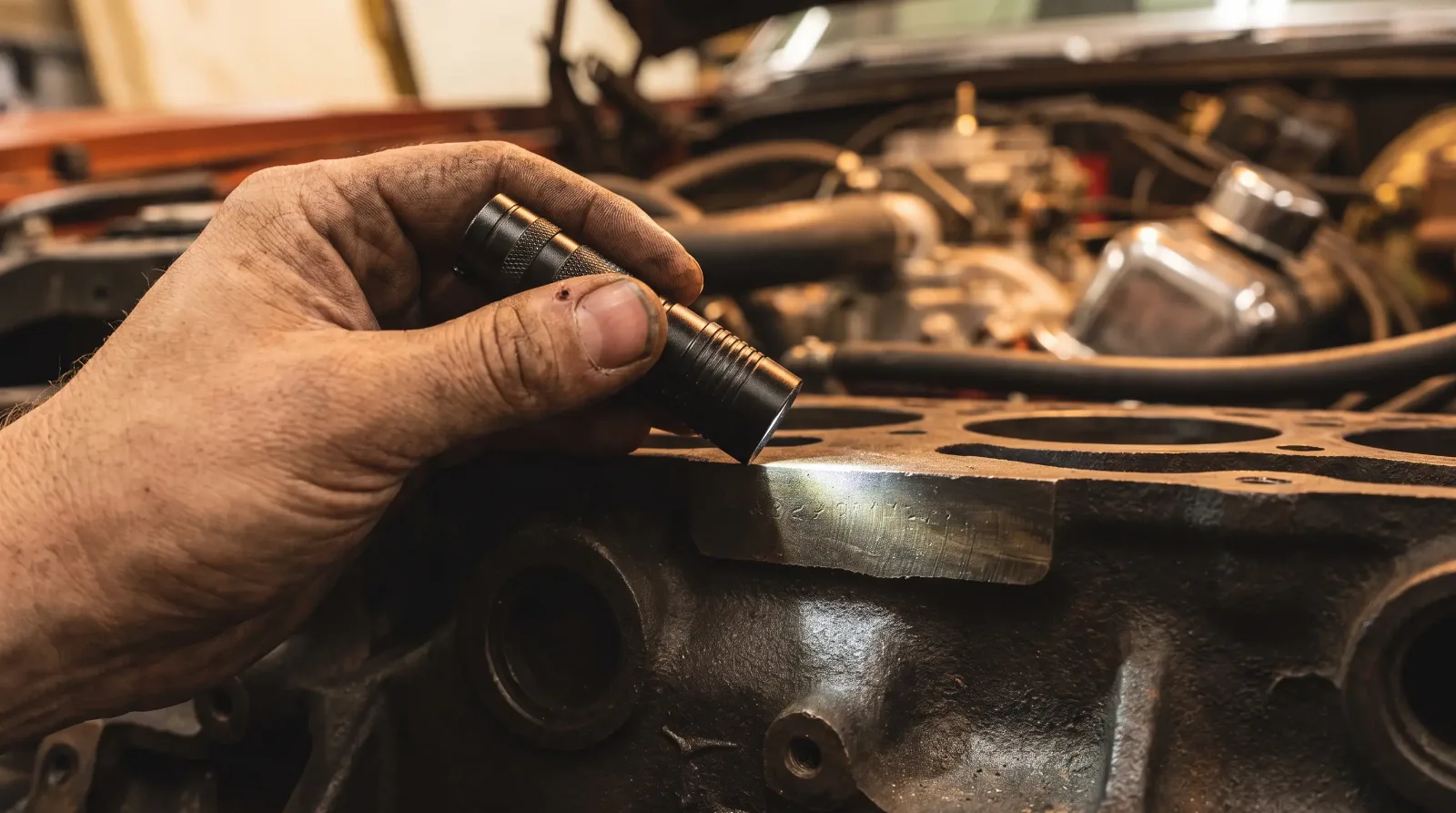
There are two different kinds of numbers on these cars, and confusing them causes most of the arguments. The first is casting numbers, which identify the part itself: this block, this head, this intake, cast in this pattern during this era. Casting numbers tell you a part is the correct type and was made in the right time frame. They do not tie the part to your specific car. A correct-casting block is a good sign, but it is not proof of anything by itself.
The second kind is the stamped VIN derivative or partial VIN, applied at the plant to link a major component to one specific body. This is the stamp that makes a car numbers-matching in the strict sense, because it connects the engine to the VIN. The trouble is that these stamps can be, and have been, restamped by people who understood exactly how much a matching number was worth. This is why documentation matters as much as the stamp, and we cover it in detail elsewhere for buyers who want the deeper background.
What documentation proves and what it does not
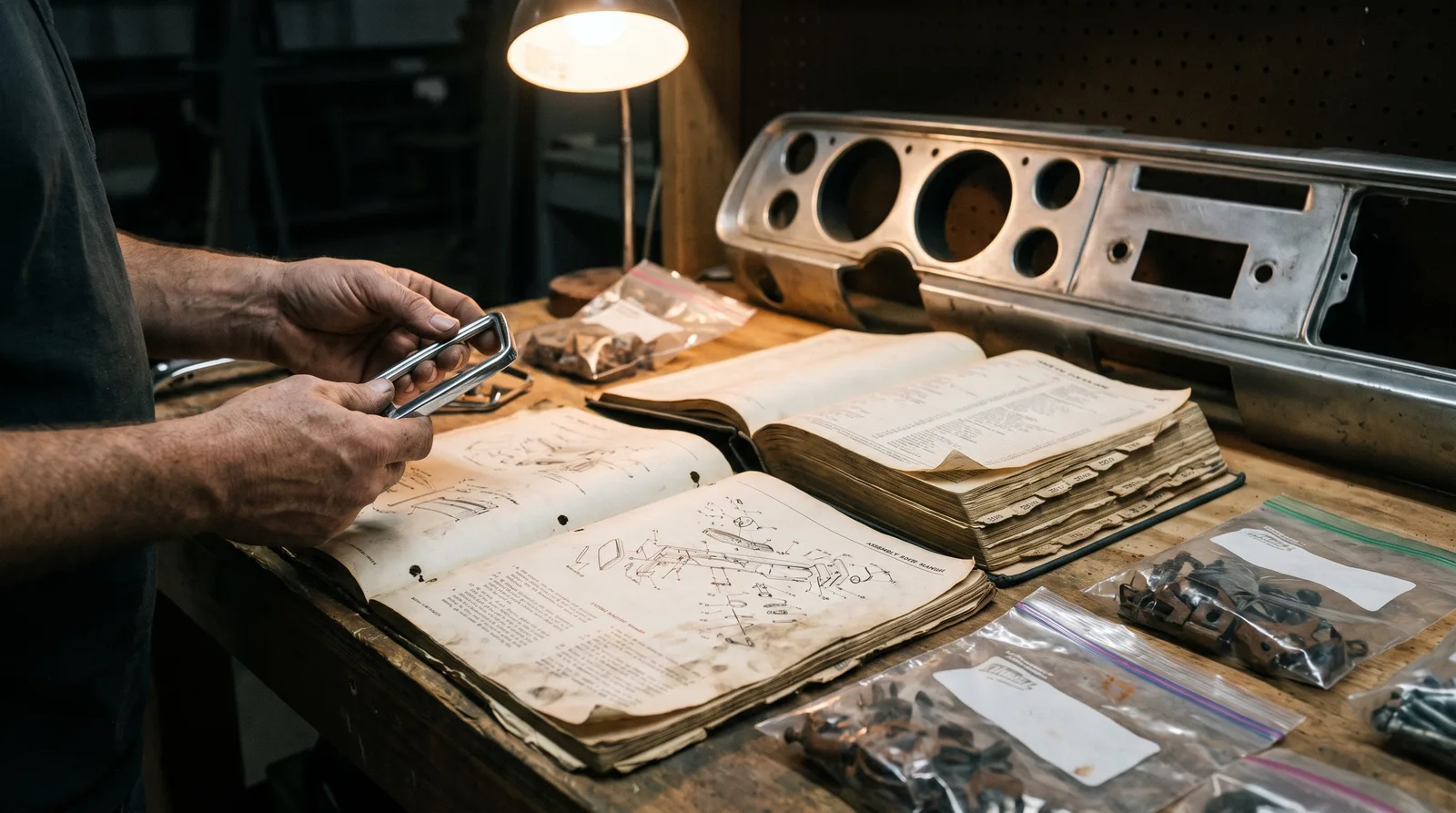
A stamp on its own is a starting point, not a conclusion. The strongest cases pair the physical numbers with paper: a build sheet, a factory invoice, a Protect-O-Plate or equivalent, a window sticker, or original registration history. When the paper and the stamps agree, you have a documented numbers-matching car, and that is the version the market actually rewards.
I want to be careful here, because the hobby overstates certainty all the time. Documentation makes a strong case. It does not make an absolute one, because paper can be forged and stamps can be faked. The honest position is that provenance is a weight of evidence, not a single yes or no. The best cars have several independent pieces of evidence that all point the same direction, and an experienced authenticator knows where to look for the tells.
| Term | What it means | Strength of proof |
|---|---|---|
| Casting number | Part is the correct type and era | Weak on its own |
| VIN-derivative stamp | Component tied to a specific body | Strong if verified genuine |
| Build sheet / invoice | Factory record of the car's spec | Strong when it matches the car |
| "Date-code correct" | Part dated to fit the build window | Supporting, not conclusive |
| "Matching-type engine" | Right engine family, not the original | Not numbers-matching |
"A casting number tells you what kind of part you are looking at. A VIN stamp backed by paperwork tells you it belongs to this car. Those are not the same claim, and the difference is worth a lot of money."
Tom Ramirez
Why it matters to value
The reason all of this attention exists is that numbers-matching status moves prices, sometimes dramatically. A documented numbers-matching example of a desirable model can be worth a substantial premium over the same car with a correct replacement engine. The premium varies by model and rarity, but for sought-after cars it is real money, often tens of thousands of dollars. For a common car it matters less, and that is worth saying plainly.
The flip side is that a car with a non-original engine is not worthless, and buyers who only chase matching numbers miss good cars. A well-restored car with a correct-type replacement engine drives exactly the same and costs less. If your goal is to enjoy the car rather than to hold a documented collectible, the matching-numbers premium may not be worth paying. That is a personal call, and there is no wrong answer, only an informed one.
🔧 Inspection Priorities
- Verify the engine stamp against the VIN. This is the core of the claim. A stamp that does not match, or shows signs of restamping, undoes the whole premium.
- Cross-check the paperwork. A build sheet or invoice that matches the car strengthens the case. Missing documentation weakens it.
- Confirm casting numbers and dates line up. Correct castings dated within the build window support authenticity. Wrong dates raise questions.
- Bring in a marque expert for high-value cars. Restamping is sophisticated. On a car where the premium is large, an authenticator earns their fee.
How to read a claim honestly
When a seller says numbers-matching, ask what specifically matches and how they know. A precise seller will point to the engine stamp, explain how it ties to the VIN, and show you the supporting paper. A vague seller will wave at a correct-casting block and call it a day. The gap between those two answers is the gap between a documented car and a hopeful one.
Different models stamp and document their cars differently, so the specifics depend on what you are looking at. A Camaro is not verified the same way as a Mopar or a Ford, and the details matter. If you are shopping a specific platform, learn its exact system before you write a check, and for that platform in particular you can read the full story on how its numbers work. It also helps to understand how original, reproduction, and new-old-stock parts factor into a correct car, which you can read the full story on separately.
Numbers-matching is not magic and it is not a marketing word. It is a factual claim about what the factory recorded, and it can be checked by anyone willing to do the work. Learn the difference between casting numbers and VIN stamps, insist on documentation, and treat certainty with the skepticism it deserves. Do that and you will read these cars far better than most of the people selling them. For the wider context of why these machines earned their following, the full muscle car story is worth your time.
Related Reading
Have a
Classic Car
for Sale?
Reach thousands of serious classic car collectors across the US.
Sell It Here →
Are You a Classic Car Dealer?
List your full inventory and connect with targeted classic car buyers.
Join as a Dealer →

About the author
Tom Ramirez
Corvette researcher and historian based in Bowling Green, Kentucky. Two decades documenting Corvette production history from original factory records.
More in Restoration & Tech
Comments
Be the first to comment on this article.