
A C10 that won't crank isn't always a starter problem, and it isn't always a battery problem either. More often than people expect, it's the ignition switch itself, a part that lives down behind the dash on these trucks and gets blamed last because it's out of sight and, on the surface, seems too simple to fail. It's not simple. It's mechanical, it's decades old, and it wears in ways that mimic half a dozen other electrical gremlins.
Restoration & Tech
7 min read
Troubleshooting Ignition Switch Failure on a Classic C10
How to tell a failing ignition switch apart from a bad starter or battery cable on a classic C10, test it correctly, and replace it without getting the column reassembly wrong.
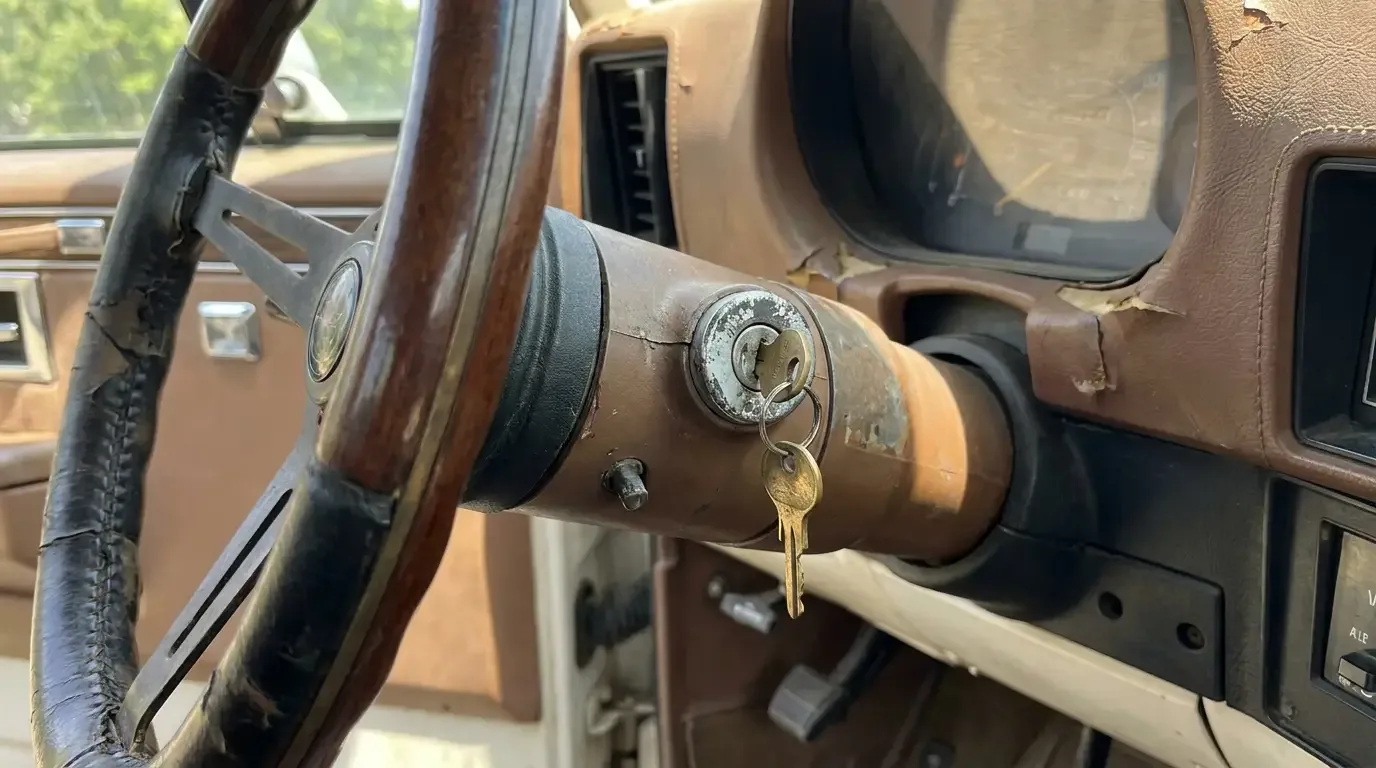
I've chased more no-start calls back to a tired ignition switch than I care to count, usually after somebody's already swapped a starter solenoid or a battery cable that didn't need it. Before you throw parts at a C10 that won't crank, or one that cuts out at random on the road, it's worth understanding how this switch is actually built and where it tends to give out first.
How the switch is built and why it fails the way it does
On these trucks the key cylinder up on the column and the actual electrical switch are two separate pieces connected by a rod, not one unit like a lot of newer vehicles use. The lock cylinder up top, where you put the key, just rotates a shaft. That shaft, through a rod and a detent mechanism, moves the real switch down lower on the column, and that's the part making and breaking the contacts for accessory, run, and start. It's a clever setup for its time, but it means there are two separate failure points instead of one, and they wear differently.
The rod and its detent plate wear from decades of key cycles, and the switch itself has contacts inside that pit and carbon up from years of arcing every time you crank the engine. A rod with slop in it can let the switch drift out of the run position under vibration, which is exactly why some of these trucks stall for no obvious reason on rough pavement. The switch contacts themselves just wear thin over time, the same way any set of points does, and eventually they don't make a clean connection every time you turn the key.
Symptoms that point to the switch and not somewhere else
The trick with this diagnosis is telling switch failure apart from a bad starter relay, a corroded battery cable, or a neutral safety switch that's out of adjustment, because a couple of these symptoms overlap. A truck that cranks fine on some attempts and does nothing on others, with no pattern to it, is telling you something different than a truck that clicks once and quits, which usually points at the starter or the battery instead.
| Symptom | Likely cause | Quick check |
|---|---|---|
| Key turns, absolutely nothing happens | Dead switch contacts or a sheared rod | Wiggle the key while listening for any relay click |
| Truck stalls turning the wheel or over a bump | Worn rod or detent letting the switch slip out of run | Have someone jiggle the column while it idles |
| Intermittent no-crank, works on the next try | Worn start-position contacts | Try cranking three or four times in a row, note the pattern |
| Accessories and gauges work, but no crank at all | Failed crank circuit inside the switch | Jump the starter solenoid directly to confirm the starter itself is fine |
Testing before you buy a part
Before ordering a new switch, confirm it's actually the problem with a multimeter and a wiring diagram for the year you're working on, since the terminal layout has changed enough across production that guessing at wire colors will send you chasing the wrong circuit. With the connector unplugged from the back of the switch, check for continuity between the correct terminals in each key position, off, accessory, run, and start, moving the key slowly and watching for a connection that drops out partway through a position instead of staying solid.
A switch that shows continuity in accessory and run but goes intermittent right at start is telling you exactly where the wear is. If every position tests clean on the bench but the truck still stalls intermittently on the road, look harder at the rod and detent mechanism up at the lock cylinder before you condemn the switch itself. Chasing this one right the first time saves you buying a part twice.
Pulling the column and swapping the switch
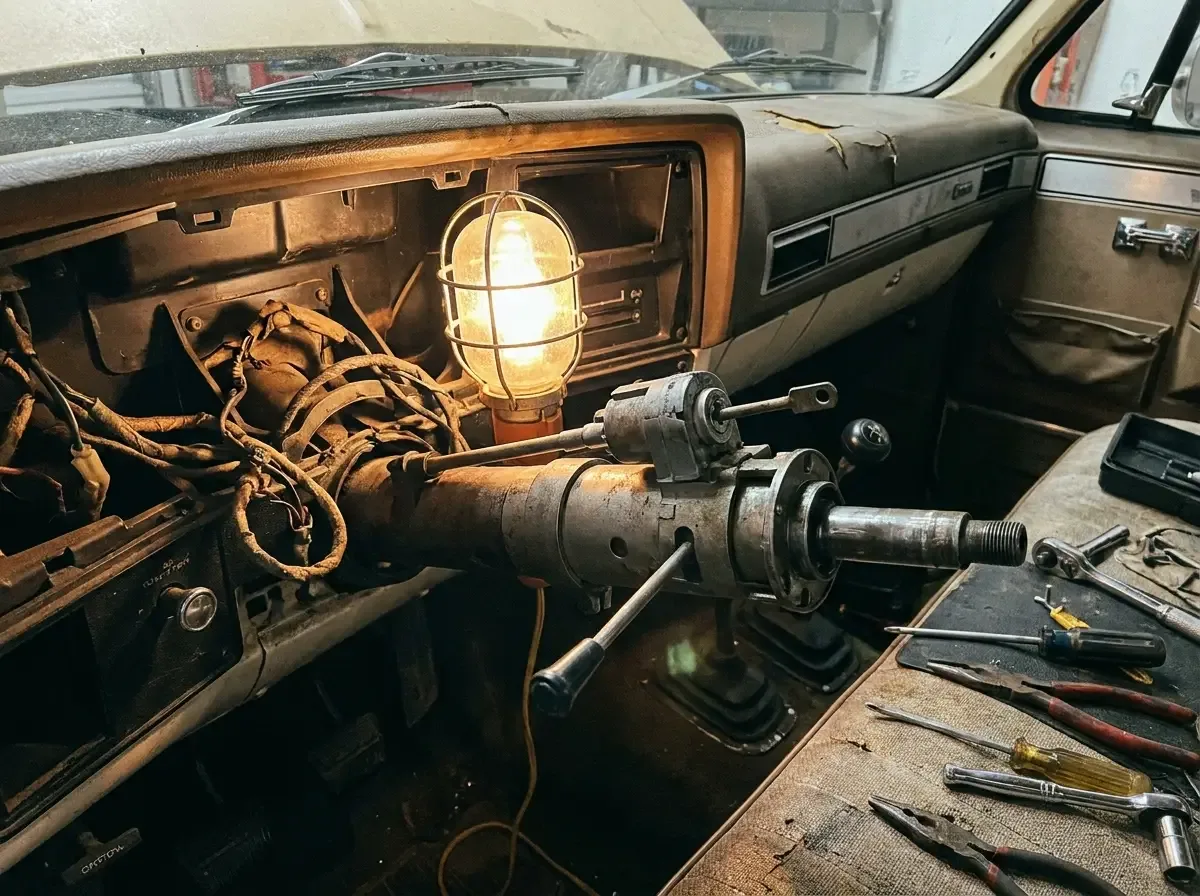
Disconnect the battery first, every time, before you touch anything under the dash on one of these trucks. The horn contacts and turn signal wiring live close enough to the column that a wrong move with the battery still hot turns a simple job into a blown fuse or worse. Getting to the switch usually means dropping the steering wheel, pulling the horn contact and turn signal switch out of the way, and working the old ignition switch loose from its mount without losing track of how the actuator rod indexes into the lock cylinder above it.
That indexing is the part people get wrong. Put the new switch in the wrong detent position relative to the key and you'll find the truck starts in what feels like the wrong key position, or the accessory circuit doesn't kill when you shut it off. Match the rod position to the lock cylinder's actual position before tightening anything down, and confirm all four key positions work correctly before you put the column trim back together. Doing that check twice costs you five minutes. Doing it once and being wrong costs you an afternoon.
"Half the ignition switch jobs I get called out for started as somebody replacing a starter that was never the problem. The switch is cheap and it's not glamorous, so it gets skipped over for the parts people can actually see. But on these trucks it's a mechanical part just like anything else, and mechanical parts wear out. Test it before you assume it's something bigger."
Robert Halloran
What else to check while you're already under the dash
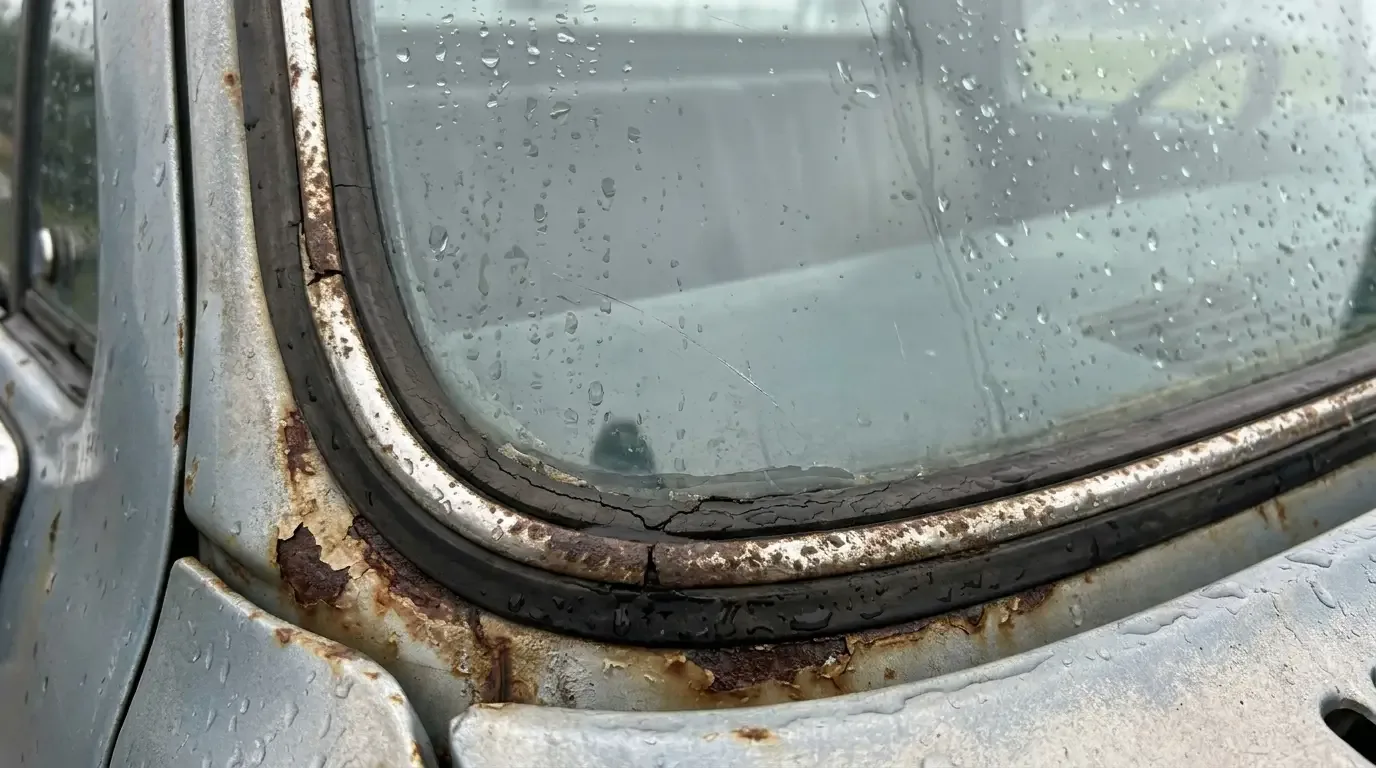
Once the column is apart, it's worth spending a few extra minutes on the wiring and connectors around the switch, since corroded terminals or a cracked connector shell will cause the exact same symptoms as a worn switch and won't be fixed by a new part. This is also a good moment to trace where the harness runs near the cowl and firewall, because these trucks are prone to water leaks that cause their own electrical headaches, and a harness that's been sitting damp for years will corrode from the inside out in ways that look identical to a bad switch until you actually open the connector up.
Keeping the ignition circuit healthy is really just one piece of the bigger picture covered in the maintenance guide, treating small electrical problems as routine maintenance instead of waiting for a no-start on a Monday morning. A switch that gets tested and replaced proactively at the first sign of trouble is a lot cheaper than one that leaves you stranded and guessing.
Sources and notes
- Old Chevy Trucks -- ignition switch design and changes
- GM Square Body Forum -- diagnosing a stiff or worn ignition switch
- GMT400 Forum -- possible bad ignition starter switch symptoms
- CarParts.com -- ignition switch problems, signs, and causes
- JustAnswer -- how the actuator rod connects to the ignition switch
- Steering Column Services -- GM ignition actuators and rack gears
Related Reading
Have a
Chevrolet C10
for Sale?
Reach thousands of serious classic car collectors across the US.
Sell It Here →
Are You a Classic Car Dealer?
List your full inventory and connect with targeted classic car buyers.
Join as a Dealer →
#Restoration
#chevrolet c10
#steering column
#ignition switch troubleshooting
#electrical diagnosis
#no-crank

About the author
Robert Halloran
Texas-based classic truck enthusiast with decades of experience buying, restoring, and writing about American pickups from the 1940s through the 1980s.
Related Listings - Chevrolet C10
More in Restoration & Tech
Comments
Be the first to comment on this article.