
Classic Mercury Cougar Buyer's Guide
Definitive buyer's guide for classic Mercury Cougar 1967-1973. First-generation pony-car authentication, XR-7 trim verification, FE V8 identification, current pricing.

The Mercury Cougar launched for 1967 as Mercury's upmarket pony car — sharing platform and drivetrains with the Ford Mustang but featuring distinctive styling (hidden headlights and sequential turn signals), slightly longer wheelbase, and more refined interior trim. The 1967-1973 first-generation Cougars represent the actively-collected era; the 1974-onward second-generation Cougars moved to the Torino platform and are dramatically less collectible. This guide focuses on the 1967-1973 first-generation cars, including the legendary 1968-1969 GT-E (with the 427 or 428 Cobra Jet V8, only 394 produced), the 1969-1970 Eliminator performance package, and the XR-7 high-trim luxury variants. From a collector standpoint, well-equipped first-generation Cougars represent the smart-money entry into Ford-platform pony-car ownership at slight discount versus equivalent Mustangs.
Overview
The Cougar ran for seven first-generation model years (1967-1973), each with its own buyer profile. The 1967-1968 cars are the launch and refinement era. The 1968-1970 era includes the legendary GT-E and Eliminator high-performance variants. The 1971-1973 cars represent the post-emissions de-tune era — federal regulations took the steam out of factory performance.
Generations Worth Knowing
Launch Era (1967-1968)
The original. Mercury's response to the success of the Mustang — featuring distinctive hidden headlights, sequential turn signals, and slightly longer wheelbase. Engine options included the 289 V8 (1967), 302 V8 (1968), 390 V8 (1968), and the rare 427 V8 (1968 GT-E). The XR-7 high-trim package was offered from launch. Driver-quality cars run $22,000-$48,000.
Refinement Era (1969-1970)
The 1969 redesign brought sharper styling and the introduction of the Eliminator performance package. The Eliminator featured distinctive paint colors (Bright Yellow, Competition Orange, Bright Blue), unique graphics, performance suspension, and high-performance V8 options (351W, 351C, 390 GT, 428 CJ, Boss 302). Driver-quality 1969-1970 Cougars run $25,000-$55,000. Documented Eliminator cars: $42,000-$95,000.
Federal Era (1971-1973)
The 1971 redesign brought larger proportions and federal 5-mph bumpers. Engine options were de-tuned for emissions. The 1971-1973 cars represent the bargain entry into first-generation Cougar ownership. Driver-quality cars run $18,000-$38,000.
What to Look For (in person)
Marti Report
For any 1967-and-later Cougar priced over $25,000, the Marti Report ($25 basic) is essential. Marti Auto Works has Ford's exclusive licensed access to original production records. The report confirms original engine, transmission, axle ratio, paint, and options.
Engine Verification
The 5th digit of the VIN identifies the engine. The most desirable engines: 390 GT (1968), 427 V8 (1968 GT-E only), 428 Cobra Jet (1968-1970), Boss 302 (1969-1970 Eliminator only). Cross-reference VIN engine code with block casting number.
Pricing Tiers
| Tier | Description | Price Range (2024) |
|---|---|---|
| Driver | 1971-1973 Cougar or 1967-1968 base Cougar with 289/302/351, decent paint, runs and drives | $20,000-$42,000 |
| Survivor | 1968-1970 XR-7 GT or 1969-1970 Eliminator with original drivetrain, Marti Report | $38,000-$70,000 |
| Concours | Documented 1968-1969 GT-E or 1969-1970 Eliminator with Boss 302 or 428 CJ, frame-off restoration | $80,000-$160,000+ |
Common Pitfalls
The biggest pitfall in Cougar buying is paying GT or Eliminator money for a base Cougar with cosmetic trim added. Marti Report instantly resolves this. The second pitfall is paying GT-E money for a 427 or 428 swap into a base Cougar. Specialist authentication mandatory.
"The Cougar shares the Mustang platform and drivetrains. The market premium for a documented Eliminator or GT-E versus a base Cougar with cosmetic trim is real — $20,000-$50,000 — and that's real money worth verifying. Spend the $25 on Marti Report before you spend $50,000+ on the car. Marti Auto Works has Ford's exclusive licensed access to original production records — they don't lie."
— Mike Sullivan
Final Verdict
The Cougar market rewards documentation and patience. Documented GT-E and Eliminator cars are blue-chip Mercury investments. Driver-quality first-generation Cougars represent the smart-money entry into Ford-platform pony-car ownership at slight discount versus equivalent Mustangs.
For new buyers, start with a 1969-1971 base Cougar XR-7 with the 351 Cleveland V8. They're affordable, parts support is excellent (shared with Mustang), and the cars offer distinctive Mercury styling unavailable on Mustang. From there, the upgrade path is clear: 1968 XR-7 GT, then Eliminator, then GT-E.
Browse Mercury Cougar listings
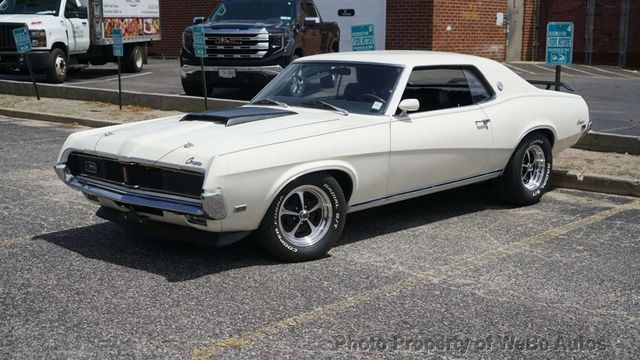 Dealer
 United States
1969 Mercury Cougar
 Dealer
United States
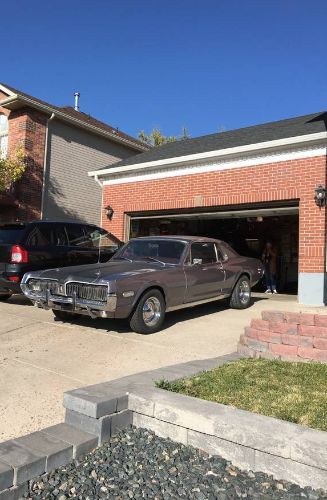
Dealer
United States
1968 Mercury Cougar
What to Look For
Marti Report is the gold-standard verification for any 1967-and-later Cougar. Marti Auto Works has Ford's exclusive licensed access to original 1967-2007 production records. The Marti Report ($25 basic, more for elite) confirms original engine, transmission, axle ratio, paint, and options. Mandatory for any premium-trim claim.For GT-E claims (1968 only), demand specialist authentication. Only 394 GT-E Cougars were produced across two model years (357 cars in 1968 with 427 V8, 37 cars in 1969 with 428 Cobra Jet V8). Every chassis number is documented in the marque registry.
For Eliminator claims (1969-1970 only), verify the unique Eliminator paint color (Bright Yellow, Competition Orange, Bright Blue, Pastel Blue, Bright Green, Wimbledon White, Vermilion) and graphics package via Marti Report. The Eliminator package was offered with multiple engine options including the rare Boss 302 and 428 Cobra Jet.
Engine verification is essential. The 5th digit of the VIN identifies the engine code. Cross-reference against the engine block casting number. The most desirable engines: 390 GT (1968), 427 V8 (1968 GT-E only), 428 Cobra Jet (1968-1970), 428 SCJ Ram Air (1969-1970), Boss 302 (1969-1970 Eliminator only).
Unibody integrity is the second non-negotiable. Pop the hood and look at the shock towers — cracks radiating from the upper shock mount are common on Big Block cars. Inspect torque boxes (front and rear) from underneath. Lift the trunk mat and look at the trunk drop-offs. Pull the rear seat and check the floor where the seat bolts down.
For 1967-1970 cars with hidden headlights, test the headlight system through full open and close cycle. Failed vacuum actuators are common on neglected cars.
Document the car. Photograph every panel, every chassis number stamping, every engine bay component, every dataplate, and every identifying tag. Order Marti Report before negotiating final price.
Pre-Purchase Checklist
-
Order Marti Report for any 1967+ Cougar over $25K
Marti Auto Works has Ford original production records. $25 confirms original equipment. -
Verify VIN engine code with block casting
5th digit of VIN identifies engine. 289, 302, 351 W/C, 390, 428 CJ each have specific casting numbers. -
For XR-7 claims, verify trim package via Marti Report
XR-7 was high-trim luxury package. Adds value when documented. -
For Eliminator claims (1969-1970), demand specialist auth
Eliminator was performance package on 1969-1970 Cougars. Specific equipment verification mandatory. -
Inspect Mustang-platform unibody for rust
Same chassis as Mustang. Torque boxes, cowl seam, floor pans, rear quarters universal rust zones. -
Magnet test rear quarters and rocker panels
Body filler is non-magnetic. Common on driver-quality cars. -
For 1968-1970 GT-E claims, demand specialist auth
GT-E was rare 427/428 high-performance Cougar — only 394 produced 1968-1969. -
Check shock tower welds for cracks
Big-block cars suffer from cracked shock towers. Common on hard-driven examples. -
Examine torque boxes from underneath
Front and rear torque boxes are critical structural elements. Rotted boxes = chassis flex. -
Compression test all eight cylinders
Should read 145-185 PSI uniformly. 428 CJ cars run higher.
Common Issues
Cougar rust patterns mirror Mustang patterns since the cars share platform. The torque boxes (front and rear, where unibody meets floor pans) are structural killers. Cowl rust hides under the dashboard where the windshield base meets the firewall. Floor pans rust through from underneath. Rear quarters, lower fenders behind front wheels, and trunk drop-offs are universal rust zones. The 1971-1973 cars (larger Big Body proportions) have additional rust concerns at the rear shock towers.Mechanically, Mercury Cougars used Ford engines: 289 (1967), 302 (1968-1973), 351W (1969-1973), 351C (1970-1973), 390 (1968), 427 (1968 GT-E), 428 Cobra Jet (1968-1970), Boss 302 (1969-1970 Eliminator). All are bulletproof when maintained. Common issues include broken motor mounts on big-block cars, worn timing chains, leaky valve covers and oil pan gaskets, and tired Holley or Autolite carburetors.
The Toploader four-speed manual is bulletproof. The C4 and C6 automatics are robust but commonly leak from front pump seals. The 9-inch Ford rear axle is essentially indestructible.
Electrical issues are universal classic-car concerns. The original wiring harnesses are 50+ years old and prone to chafing. Headlight switches and ignition switches commonly fail. The hidden headlight system on 1967-1970 Cougars uses vacuum actuators that fail when vacuum lines crack — common issue on neglected cars.
Shock tower cracks on Big Block cars (390, 427, 428 CJ) are a known issue. Cracks radiating from the upper shock mount indicate a beaten chassis common on hard-driven Cougars.
More Cougar for sale
 Dealer
United States
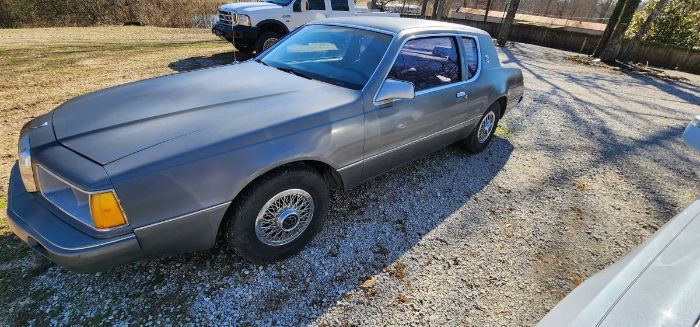
Dealer
United States
1986 Mercury Cougar
 Dealer
United States
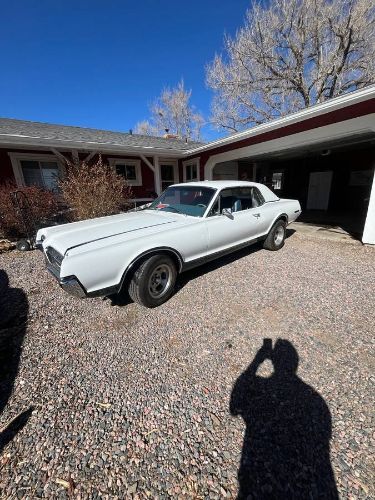
Dealer
United States
1967 Mercury Cougar
Pricing Guide
1967-1968 first-generation Cougars: driver-quality 289/302 V8 cars run $22,000-$42,000. Documented original cars: $35,000-$55,000. The 1967 launch year is more desirable than 1968.1968 Cougar XR-7 GT (with 390 GT V8): driver-quality cars run $32,000-$58,000. Documented numbers-matching cars: $48,000-$80,000.
1968-1969 Cougar GT-E (only 394 total produced): driver-quality cars run $70,000-$130,000. Documented numbers-matching cars: $90,000-$160,000+. The 1968 427 V8 GT-E is the most desirable variant.
1969-1970 Cougar Eliminator: driver-quality cars run $35,000-$70,000. Documented Eliminators with the Boss 302 or 428 CJ: $60,000-$120,000+. Eliminator with 351W or 351C: $42,000-$80,000.
1969-1970 Cougar XR-7 (base XR-7 trim): driver-quality cars run $25,000-$50,000. Documented original cars: $38,000-$65,000.
1971-1973 Cougar (larger Big Body proportions): driver-quality cars run $18,000-$38,000. The 1973 Cougar XR-7 is the most desirable variant of this era.
Convertible Cougars (1969-1973 only) command 25-35% premium over equivalent hardtops. Documented 1969-1970 Cougar Eliminator convertibles (extremely rare) command 50-75% premium.
Project Cougars start around $10,000-$22,000 across most years. Stripped roller candidates: $5,000-$12,000.
Fun Facts
The Mercury Cougar launched for 1967 as the Mercury counterpart to the Ford Mustang — sharing platform and drivetrains but featuring distinctive Mercury styling. The Cougar's hidden headlights with sequential turn signals were Mercury's deliberate styling differentiation from the Mustang. The longer 111-inch wheelbase (versus Mustang's 108 inches) provided more interior space and a more refined ride. The Cougar received Motor Trend's "Car of the Year" award for 1967 — significant recognition for a launch-year vehicle.The 1968 Cougar GT-E was Mercury's response to the Shelby GT350/GT500 — a low-production high-performance package designed to elevate the Cougar's performance image. Total GT-E production was only 394 cars, all in 1968 (357 with the 427 V8 and 37 with the 428 Cobra Jet V8). The GT-E was Mercury's most exclusive performance Cougar of the entire first-generation production run, and documented original GT-E cars now command $80,000-$160,000+ at auction.
The 1969-1970 Cougar Eliminator was Mercury's answer to the Mustang Boss series. The Eliminator package featured distinctive paint colors specifically chosen to be eye-catching on dragstrips and at car shows: Bright Yellow, Competition Orange, Bright Blue, and Vermilion. Engine options included the legendary Boss 302 (which homologated the engine for SCCA Trans-Am racing) and the 428 Cobra Jet. Mercury produced approximately 9,000 Eliminators across two model years — making them rare but more accessible than GT-E variants.
Frequently Asked Questions
Ready to find your Cougar?
Browse 6+ active Mercury Cougar listings on Classic Cars Arena.
View Listings →