
1967 Pontiac Firebird
$59,997
Vehicle Details
Pontiac
Firebird
1967
56,482 miles
223377U136163
Coupe
Automatic
400ci Ram Air V8
Description
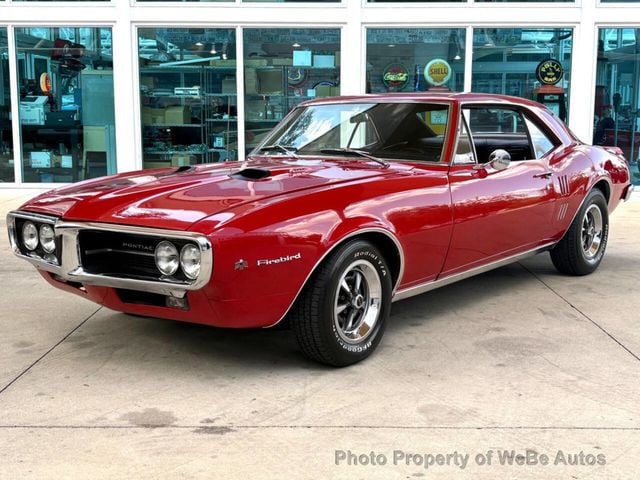
1967 Pontiac Firebird 400 Ram Air — First-Year V8 with Numbers-Correct Credentials Why This Car Is Special The 1967 Pontiac Firebird was introduced on February 23, 1967, as Pontiac's answer to the Ford Mustang and GM's own Chevrolet Camaro, which shared the same F-body platform. What made the Firebird distinct from the start was Pontiac's insistence on putting its own engineering stamp on the car — specifically, Pontiac-built engines rather than the small-block Chevrolet powerplants used in the Camaro. That decision gave the 1967 Firebird a character all its own.
Pontiac offered the Firebird in five distinct versions for 1967, each defined by its engine. The top of that lineup was the Firebird 400, which came with Pontiac's 400 cubic inch V8 — the same family of engines that had powered the GTO. Buyers who wanted even more could order the Ram Air option, which added functional hood scoops, a revised camshaft, and a sealed air cleaner that drew cooler outside air directly into the carburetor.
That combination is what this car carries. The VIN on this car decodes to confirm it was built at the Norwood, Ohio assembly plant, is a hardtop coupe body style, and carries the 400 cubic inch engine designation. The model year and assembly plant details encoded in the VIN are consistent with an early production 1967 Firebird, which makes this an especially interesting example from the car's introductory year.
Total 1967 Firebird production reached approximately 82,560 units across all body styles and engine combinations. The Ram Air 400 variant was a low-volume, performance-focused option, making surviving examples with their original drivetrain configurations increasingly sought after. Features List - 400ci Ram Air V8, 325hp / 410 lb-ft torque - TH400 3-speed automatic transmission - Floor-mounted console shifter - Functional Ram Air hood scoops - 400 hood badge - Pontiac Rally Wheels - BFGoodrich Radial T/A tires - Dual exhaust - Chrome valve covers - Woodgrain steering wheel - AM radio - Black vinyl bucket seats - Rear bench seat - Center console - Woodgrain dash trim - Black carpet - Lap seat belts - Chrome front and rear bumpers - Black undercarriage - First-year Firebird production Mechanical Under the hood sits Pontiac's 400 cubic inch V8 in Ram Air configuration, rated at 325 horsepower and 410 lb-ft of torque.
Those numbers reflect conservative factory ratings that were common practice in the late 1960s, partly to manage insurance costs for buyers. The Ram Air setup on the 1967 Firebird used a specific camshaft profile with increased lift and duration compared to the standard 400, along with a sealed air cleaner assembly that connected directly to the functional hood scoops. When the scoops are open and the car is moving, the engine draws outside air that is both cooler and denser than underhood air, which improves volumetric efficiency at speed.
The iconic '400.4 Ram Air' decal on the air cleaner lid is present and correct. Backing the engine is the Turbo-Hydramatic 400 three-speed automatic transmission — the TH400 — which Pontiac considered the correct pairing for the Ram Air 400 in street-driven applications. The TH400 was a robust unit well-regarded for its durability under load.
Power transfers through the floor-mounted console shifter, which is the correct presentation for this transmission and console combination. The undercarriage photos show a clean, black-painted floor pan with the dual exhaust system routing clearly visible. The chrome valve covers are correct for the period and add a finished look to the engine compartment, which retains its Pontiac turquoise block paint.
Interior The 1967 Pontiac Firebird interior in this car is finished in black vinyl throughout, which pairs directly with the red exterior. The front bucket seats show the correct ribbed vinyl pattern used on first-year Firebirds, and the seams and bolsters appear intact with no major cracking or tearing visible in the phot
Classic Pontiac Firebird Buyer's Guide
Pontiac Firebird Market Overview
Based on 120 Pontiac Firebird listings currently on ClassicCarsArena.com
Classic Pontiac Firebird Buyer's Guide
The Pontiac Firebird launched in February 1967 as Pontiac's F-body sister to the Chevrolet Camaro, and across thirty-five years of production it built one of the most loyal enthusiast followings in American automotive history. From the 1969 Trans Am (the launch of the iconic performance trim that would define Pontiac for decades) through the 1973-1974 SD-455 cars (the last truly raw muscle Pontiacs before federal emissions de-tuning), the 1977 Smokey and the Bandit Trans Am that kicked off second-generation pop-culture immortality, and the 1980s third-generation IROC-era cars, every Firebird era has its own buyer profile and its own pitfalls. This guide covers what every buyer should verify before paying premium money for any Firebird Trans Am or Formula variant.
What to Check Before Buying
Common Issues
What to Look For
Price Guide
Did You Know?
Also Consider
Similar classic cars shoppers also browse:
How Does It Compare?
Head-to-head matchups for the Pontiac Firebird:
1967 Pontiac Firebird
Contact Seller
Listed by dealer
Nationwide consignment dealer
WeBe Autos lists vehicles from sellers across multiple states. The vehicle may not be at the dealer's address shown. Contact the dealer to confirm the vehicle's actual location before traveling.
Buying safely?
Read our scam-avoidance tips before paying →
Listing Actions
Browse by Era
1960s Classics for SaleAll 1967 Classics
Browse all 1967 Cars for SaleGet classic car alerts
Latest arrivals, newest deals, and discount coupons — straight to your inbox.
Selling your classic car?
Reach millions of classic car enthusiasts on the largest US classics marketplace.
Sell Your Car →Similar Listings
 Dealer
 United States
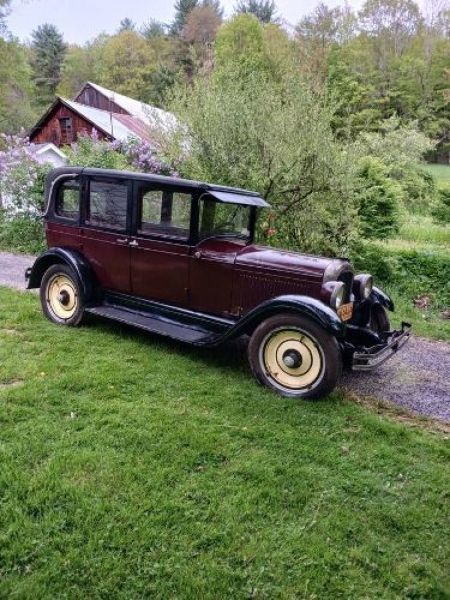
1927 Pontiac 355 Spyder
 Dealer
United States
Dealer
United States
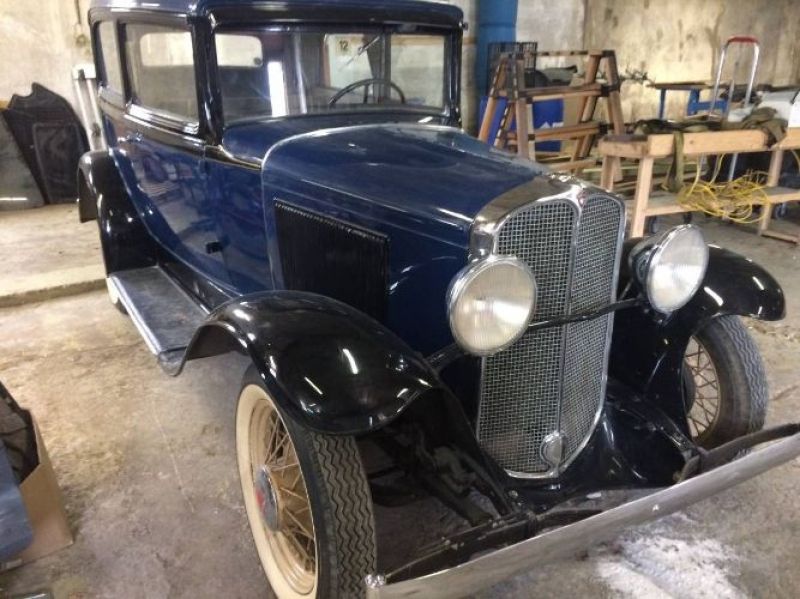
1931 Pontiac 355 Spyder
 Dealer
United States
Dealer
United States
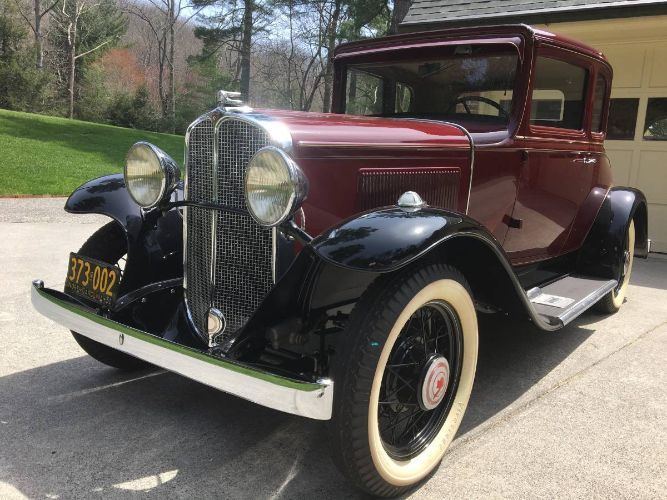
1931 Pontiac Sport Coupe
 Dealer
United States
Dealer
United States
1932 Pontiac Deluxe
Contact Seller
Call this seller?
You're about to call WeBe Autos about the 1967 Pontiac Firebird.
+1 (631) 339-0399
Report this Ad
Help us keep the marketplace clean. Our moderation team reviews every report within 24 hours.