
1969 Dodge Charger
$279,500
Vehicle Details
Dodge
Charger
1969
XP29F98236509
Other
Description
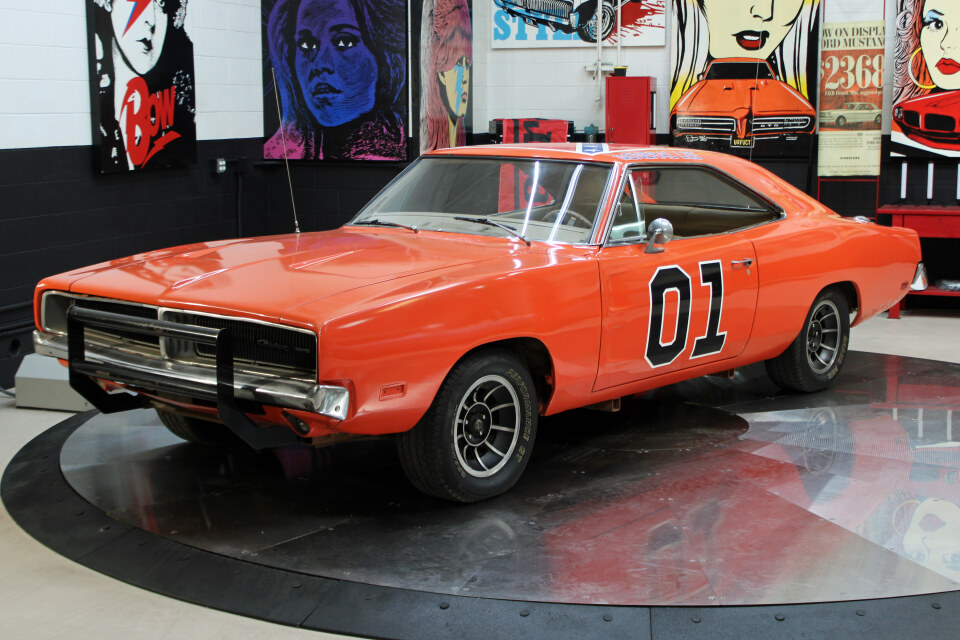
1969 Dodge Charger ' The Real Deal General Lee' TV MOVIE HERO CAR
The General Lee
Real Deal Hero Movie Car
Must See!! TV Icon
THE REAL GENERAL LEE — A RARE, SCREEN-USED HOLLYWOOD ICON
An Extraordinary Opportunity to Acquire a Genuine Piece of The Dukes of Hazzard TV History
CAR #3 | VIN #236509 | ORIGINAL HERO CAR ‘97 TV Movie
This is NOT a REPLICA inspired by a television legend. This is a Real Deal General Lee Hero Car with a documented connection to the productions, the cast, and the enduring legacy of The Dukes of Hazzard.
Opportunities to acquire authentic, screen-used Hollywood hero cars are exceptionally rare. Opportunities to acquire one with a history spanning the original cast and subsequent Dukes of Hazzard productions are rarer still. Now, for the first time, an extraordinary piece of television and film history is being offered for sale:
General Lee Hero Car #3, VIN #236509.
For the serious collector of iconic American automobiles, Hollywood memorabilia, and historically significant screen-used vehicles, this represents an opportunity that may not come again.
A GENERAL LEE WITH A HOLLYWOOD PEDIGREE UNLIKE ANY OTHER
Few television cars have achieved the legendary status of the orange Dodge Charger known around the world as the General Lee. It became one of the most recognizable vehicles in entertainment history, forever associated with the daring jumps, high-speed chases, and unforgettable personalities of The Dukes of Hazzard.
CERTIFICATE OF AUTHENTICITY
This is to certify the CINIMATIC
AUTHENTICITY of the 1969 Dodge Charger
VIN#: XP29F9B236509
This vehicle was used as a General Lee
In the Made For Television Movies
"THE DUKES OF HAZZARD REUNION"
and
"THE DUKES OF HAZZARD: HAZZARD IN HOLLYWOOD"
Signed by Fred Mejerski
Warner Bros Television
A private COA is available for inspection and it reads the above
But not all General Lees are created equal.
Many surviving examples are vehicles associated with only one production. This car's distinction is its reported use across multiple generations of the franchise, including the original television era and subsequent feature productions.
According to its production history, this vehicle appeared in two Dukes of Hazzard television reunion movies and the 2005 feature film. It was significantly used in production and driven by members of the original cast, including John Schneider and Tom Wopat, with Catherine Bach also associated with the original series.
It is described as one of only two vehicles used by both the original cast and the later production. That cross-production history gives this General Lee a particularly compelling place in the franchise's automotive legacy.
Its significance extends beyond its appearance. The vehicle was adapted and modified by Warner Bros. production personnel to meet the demands of filming. Those production-related characteristics, together with its documented history, are important elements of what distinguishes the genuine screen-used hero car. This is a car whose story is inseparable from the productions that made the General Lee a cultural icon. Recorded in multiple magazines and documented by enthusiasts, the vehicle was Sold at the General Auction Company Sale in Buena Park, Ca 2007 alongside other Rare General Lee Examples giving further credibility, the sales receipt also records its use as remote control vehicle distinguishing to buyers this vehicle was used for acting scenes inside the vehicle when driving or moving.
SCARCITY, AUTHENTICITY, AND COLLECTOR APPEAL
When the original series ended in 1985, the surviving General Lee vehicles became scattered among private owners and collections. The whereabouts and histories of many examples remained unclear for years.
Against that backdrop, a surviving vehicle with a substantial production history, identifiable vehicle details, and a connection to multiple installments of the franchise warrants special attention from collectors.
This is not simply about owning a recognizable car. It is about acquiring a piece of entertainment history with a specific identity and a story that cannot be duplicated.
The Distinction Matters.
A replica can reproduce the appearance of the General Lee. A beautifully restored Charger can recreate its look. But neither can recreate the original production history of a genuine screen-used vehicle.
Authentic provenance is the difference between owning a tribute to Hollywood history and owning a piece of that history itself.
For collectors who value originality, rarity, documented use, and historical significance, General Lee #3 deserves serious consideration.
WATCH THE VEHICLE'S HISTORY — SEE THE FACTS FOR YOURSELF
We strongly encourage every prospective buyer to watch the detailed video covering this vehicle's history, production use, and identifying details:
Vehicle history video:
The video provides important background on when and how this General Lee was used and why its history distinguishes it from other vehicles represented as General Lees.
For the discerning collector, this is essential viewing. We encourage buyers to review the available documentation, photographs, historical accounts, and vehicle details as part of their own due diligence.
The car's production history is central to its significance, and prospective buyers should understand that history before making an acquisition decision.
HOLLYWOOD HERO CARS HAVE ALREADY ESTABLISHED A REMARKABLE COLLECTOR MARKET
The market for historically important screen-used vehicles has demonstrated that the right automobile can transcend its original function and become a major collectible in its own right.
Consider these landmark examples:
1966 Batmobile: The iconic television car sold at auction for approximately $4.62 million, demonstrating the extraordinary appeal of a vehicle deeply embedded in popular culture.
2000 Nissan Skyline GT-R R34 associated with Fast & Furious and Paul Walker: A highly significant screen-used example sold for approximately $1.357 million, illustrating the demand that can surround a well-documented vehicle connected to a major film franchise.
Ford Mustang “Eleanor” from Gone in 60 Seconds (2000): One of the celebrated movie cars reportedly sold for approximately $1 million at a 2013 Mecum auction, reflecting the appeal of vehicles associated with memorable film productions.
1968 Ford Mustang GT 390 from Bullitt, driven by Steve McQueen: The celebrated surviving movie car sold for $3.74 million at Mecum Auctions in 2020. Its historic significance, authenticity, and connection to a legendary film helped establish its place among the most important movie cars ever sold.
These vehicles are different in their histories, provenance, and market circumstances. Yet they demonstrate a powerful principle: when an automobile becomes an irreplaceable part of entertainment history, its significance can extend far beyond its underlying automotive value.
This General Lee occupies a similarly distinctive place in television history. It is one of the most recognizable television cars ever created, and authentic examples with compelling production histories have a natural point of distinction from replicas and ordinary collector cars.
For a buyer evaluating the long-term significance of this vehicle, the relevant question is not simply what an ordinary Dodge Charger is worth. It is what the market may ultimately recognize in a rare, authentic, historically significant General Lee with this particular production lineage.
No future valuation or auction result can be guaranteed. Nevertheless, the combination of cultural recognition, scarcity, production history, and collector interest makes this a compelling vehicle to evaluate within the broader world of important Hollywood automobiles. Given our Fair Asking price this is an investment piece to could appeal and achieve records at auction.
THE QUESTION EVERY SERIOUS COLLECTOR SHOULD CONSIDER
What could a genuine General Lee hero car, with a history spanning the original cast and later productions, represent at a major collector-car auction?
Could a vehicle with this combination of authenticity, recognition, and historical significance command attention alongside other celebrated screen-used automobiles?
How might collectors value this car compared with a pristine restoration, a faithful replica, or another General Lee with a different production history?
These are questions worth considering carefully, this decision is yours, this investment is yours, its potential could be yours. Do Not hesitate or miss out this scare opportunity it is the buy of a lifetime.
For the right collector, the appeal is clear: This is the time This is the opportunity to acquire an identifiable piece of the Dukes of Hazzard legacy before its next chapter begins.
THE RAREST OPPORTUNITY — AVAILABLE FOR ACQUISITION
General Lee Hero Car #3, VIN #236509, has not previously been offered for sale by us and has been removed from the market for many years, and it is now being presented to the Current Collector market.
For the serious buyer, this is an opportunity to pursue a vehicle whose appeal goes beyond its appearance. It combines the unmistakable identity of the General Lee with a reported history of use across multiple productions and a connection to one of television's most enduring franchises.
Authentic Hollywood hero cars are finite. Their histories cannot be recreated, and opportunities to acquire particularly significant examples are inherently limited.
This General Lee deserves the attention of collectors who understand the difference of historically important screen-used automobiles.
The General Lee is an icon. This is an opportunity to own a part of its story.
We welcome inquiries from serious collectors, specialty vehicle buyers, and qualified parties interested in reviewing the vehicle's history and available documentation.
Additional photographs, historical details, and supporting information will be made available to qualified, genuinely interested prospective buyers. Vehicle is sold as, is no warranty no guarantees written or implied, Precious Metals Fine Motor Cars is not responsible for Documentation or Verification of History, Due Diligence of ten Buyer is required and assumed by teh buyer to verify and finalize any and all history, markings, condition, modification authentication etc to his satisfaction before moving forward.
General Lee #3 | VIN #236509
Dodge Charger Buyer's Guide
Dodge Charger Market Overview
Based on 39 Dodge Charger listings currently on ClassicCarsArena.com
Selling a classic? Here's how
Fees, audience and photo limits compared: compare the places to sell classic cars .
Dodge Charger Buyer's Guide
Mike Sullivan here, and the Dodge Charger needs no introduction. When people picture American muscle, they picture a Charger. The fastback roofline, the hidden headlights, the long hood, it's a design that photographers have been chasing since the day it rolled out of the Hamtramck assembly plant. Add a 440 or a 426 HEMI and you have a car that still makes professional racers nervous at stoplights.
The Charger's story runs from 1966 through 1978, but the definitive generation is the B-body era of 1968–1970. These are the cars that Bullitt and The Dukes of Hazzard made iconic, and they remain among the most sought-after, and most carefully scrutinized, classic cars in the market.
What to Check Before Buying
Common Issues
What to Look For
Price Guide
Did You Know?
Also Consider
Similar classic cars shoppers also browse:
How Does It Compare?
Head-to-head matchups for the Dodge Charger:
1969 Dodge Charger
Contact Seller
Listed by dealer
Car alert
Get an email when a 1964-1974 Dodge Charger is listed
At most one email a day. Stop anytime with one click.
Buying safely?
Read our scam-avoidance tips before paying →
Listing Actions
More in this area
Browse by Era
1960s Classics for SaleAll 1969 Classics
Browse all 1969 Cars for SaleGet classic car alerts
Latest arrivals, newest deals, and discount coupons, straight to your inbox.
Selling your classic car?
Reach millions of classic car enthusiasts on the largest US classics marketplace.
Sell Your Car →Similar Listings


 United States
1919 Dodge Rat Rod
 United States
1920 Dodge 1 Ton
 United States
1920 Dodge 1 Ton
Contact Seller
Call this seller?
You're about to call Precious Metals Fine Motor Cars of San Diego about the 1969 Dodge Charger.
+1 (619) 515-2220
Car alert
Get an email when a 1964-1974 Dodge Charger is listed
At most one email a day. Stop anytime with one click.
Report this Ad
Help us keep the marketplace clean. Our moderation team reviews every report within 24 hours.