
For most of the automobile's early life, the headlight sat out on its own, perched on a bracket ahead of the radiator like a lantern hung on a post. It looked like exactly what it was, a lamp that had been added to a car rather than designed as part of it. By the end of the 1930s, that lamp had sunk into the fender itself, smoothed into the sheet metal, and the change looked small on paper but it rewired how a car's whole face read.
Car Features
6 min read
Headlights Move Into the Fenders
Freestanding headlamps sank into the fenders by the late 1930s. A small shift that changed how every car's face read from then on.
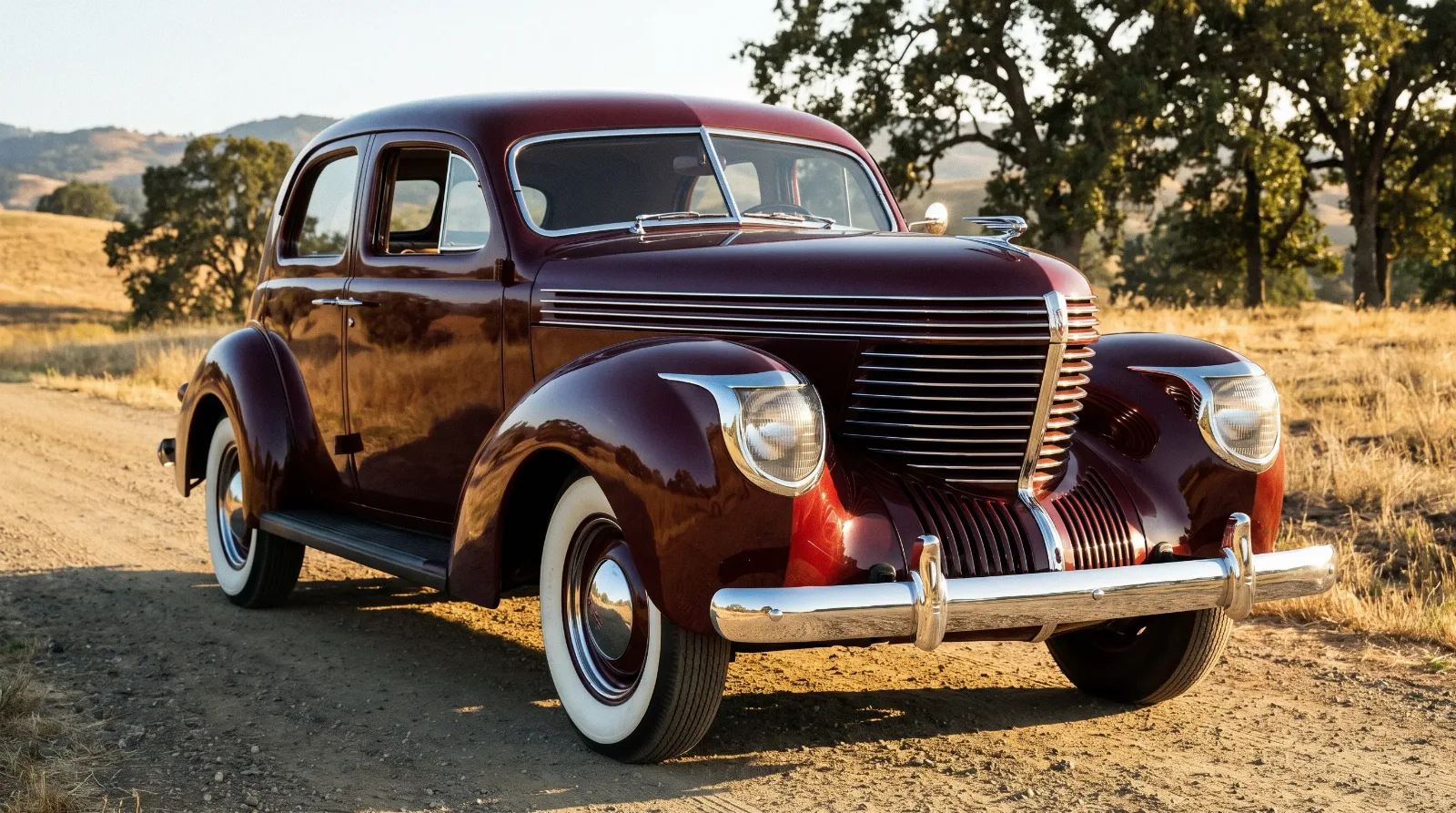
This shift, headlights moving into the fenders, is one of the clearest signals late 1930s design gives us of where cars were headed next.
The freestanding lamp era
Through the early and mid 1930s, headlights stood proud on their own brackets, usually mounted low and wide on either side of the radiator shell, connected to the body by thin support bars. Some cars dressed them up with chrome housings shaped like small bullets or teardrops, which was itself a step toward streamlining even while the lamp remained a separate object bolted to the car.
This layout was not an accident of taste. Freestanding lamps were mechanically simpler to wire and to service, and they let a single headlight design get reused across multiple body styles without reshaping the fender to match. For a manufacturer building several models off shared components, that flexibility mattered.
Why fenders swallowed the lights
Streamlining theory was the push behind the change. Designers and engineers, chasing lower wind resistance and a cleaner silhouette, started looking at every protrusion on a car as drag to be eliminated. A headlight standing proud on a bracket was exactly the kind of feature that theory targeted. Tuck the lamp into the fender, blend the housing into the surrounding sheet metal, and you removed a bump from the airflow while also giving the whole front end a more unified, sculpted look.
There was a styling motive running alongside the aerodynamic one. A car with lamps folded into its fenders looked faster standing still, more like a single flowing shape and less like a collection of parts. That mattered enormously to manufacturers competing on showroom appeal as much as on engineering, especially once streamlined trains and aircraft had trained the public eye to associate smooth integrated forms with speed and modernity.
How the transition actually looked
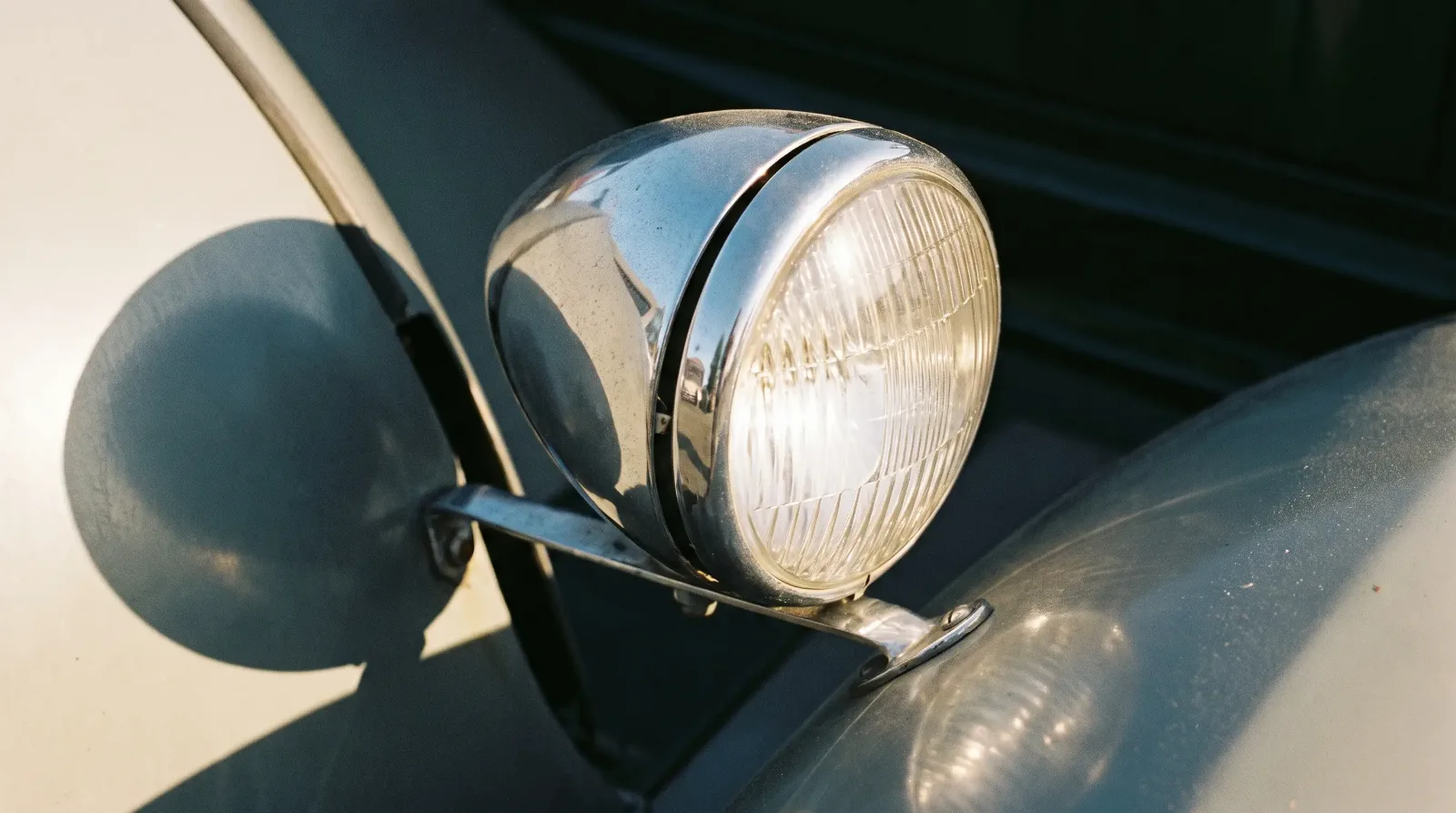
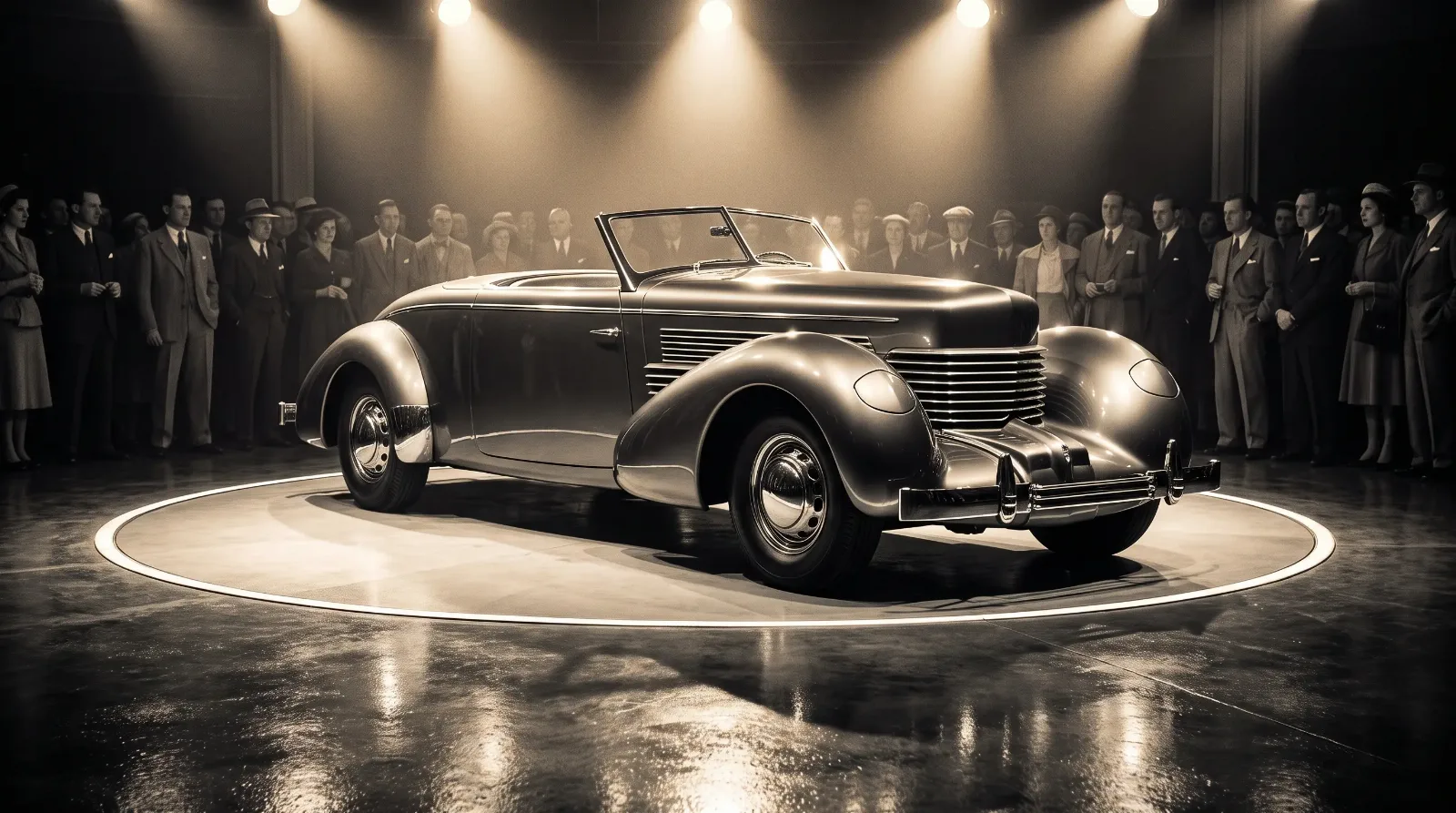
The move did not happen overnight, and tracking it model year to model year is one of the more satisfying ways to date a late 1930s car at a glance. Early transitional designs kept the lamp as a distinct pod but pulled it closer to the fender, shrinking the gap and the support bracket. Later designs went further, fairing the lamp housing directly into the top of the fender so the two surfaces read as one continuous shape, with only a ring of chrome trim marking where the lens sat.
By the very end of the decade and into the early 1940s, some designs had pushed the integration so far that the headlight became almost a decorative detail within a fully sculpted fender form, rather than a separate component the fender had been built around. That full integration would define mainstream car design for the following decade.
| Phase | Headlight treatment | Roughly when |
|---|---|---|
| Freestanding | Separate lamp on a bracket, own housing | Early-mid 1930s |
| Transitional | Lamp pulled close to fender, shrinking bracket | Mid-late 1930s |
| Integrated | Lamp faired into fender top, chrome trim ring | Late 1930s onward |
What this means for collectors and restorers
Headlight placement is one of the fastest ways to pin down a car's model year without checking a data plate, which makes it a useful skill at a swap meet or an auction preview. It also means originality matters here in a way that is easy to overlook. A car that has had its headlight buckets swapped, relocated, or replaced with reproduction parts from the wrong transitional phase will look subtly off to anyone who knows the sequence, even if they cannot immediately say why.
Sourcing correct lamp housings and trim rings for the integrated designs can be a real hunt, since these parts were often unique to a single model or even a single model year. Buyers chasing a numbers-correct restoration should expect to pay for that specificity.
"I can date a lot of these cars from twenty feet away just by where the headlight sits relative to the fender line. It is a small detail that tells a big story about when a design team decided speed should be visible, not just measured on a dyno."
Sarah Whitfield
This whole shift belongs to the wider late 1930s design story, one where more on late 1930s car design traces how these individual changes added up to a completely new visual language for the automobile.
The engineering side nobody talks about
Moving a headlight into the fender was not purely a styling exercise. The lamp housing now had to share space with suspension components, wiring, and in some cases the front wheel's turning radius, so engineers had to solve real packaging problems that a freestanding lamp never created. Wiring runs got longer and had to be routed through the fender structure instead of along an exposed bracket, which meant more careful sealing against water and road grime. A leaking or corroded fender-integrated headlight assembly was a genuinely new kind of service headache that mechanics of the freestanding-lamp era never had to think about.
Some manufacturers solved the packaging problem more elegantly than others. A few early transitional designs ended up with lamps that looked integrated from the front three-quarter view but still relied on an awkward bracket structure underneath the sheet metal, a compromise that split the difference between old and new without fully committing to either. The cars that got it right, where the fender was genuinely designed around the lamp from the start rather than reshaped to hide an old bracket, tend to be the ones people remember as the best-looking cars of the transition.
The bigger picture
Headlights sinking into fenders is a small mechanical change with an outsized effect on how we read a car's silhouette. It marks the moment manufacturers stopped treating the car as a chassis with parts attached and started treating it as a single sculpted form. That instinct did not stop at the headlights either. Some of the boldest expressions of it never made it past the show stand, and read on for a look at the concept cars that pushed this thinking furthest.
Sources and notes
Related Reading
Have a
Classic Car
for Sale?
Reach thousands of serious classic car collectors across the US.
Sell It Here →
Are You a Classic Car Dealer?
List your full inventory and connect with targeted classic car buyers.
Join as a Dealer →
#pre-war classics
#late 1930s car design
#headlight design
#streamlining
#vintage car styling
#fender design

About the author
Sarah Whitfield
Third-generation classic car collector specializing in pre-war American and European coachbuilt automobiles. Researcher and concours enthusiast.

Comments
Be the first to comment on this article.