
Picture a family sedan pulled to the shoulder of a country road in 1932, engine idling, windows cracked, everyone inside leaning toward the dashboard to catch a prizefight broadcast crackling out of a speaker the size of a dinner plate. That scene, repeated across the country through the decade, is where the modern relationship between the car and the radio really begins. It sits at the center of the 1930s car radio story, a small addition to the dashboard that changed what a car was for.
Car Features
6 min read
The First Factory Car Radios
A radio the size of a dinner plate turned a quiet drive into something families gathered around. Here is how the first car radios reached the dashboard.
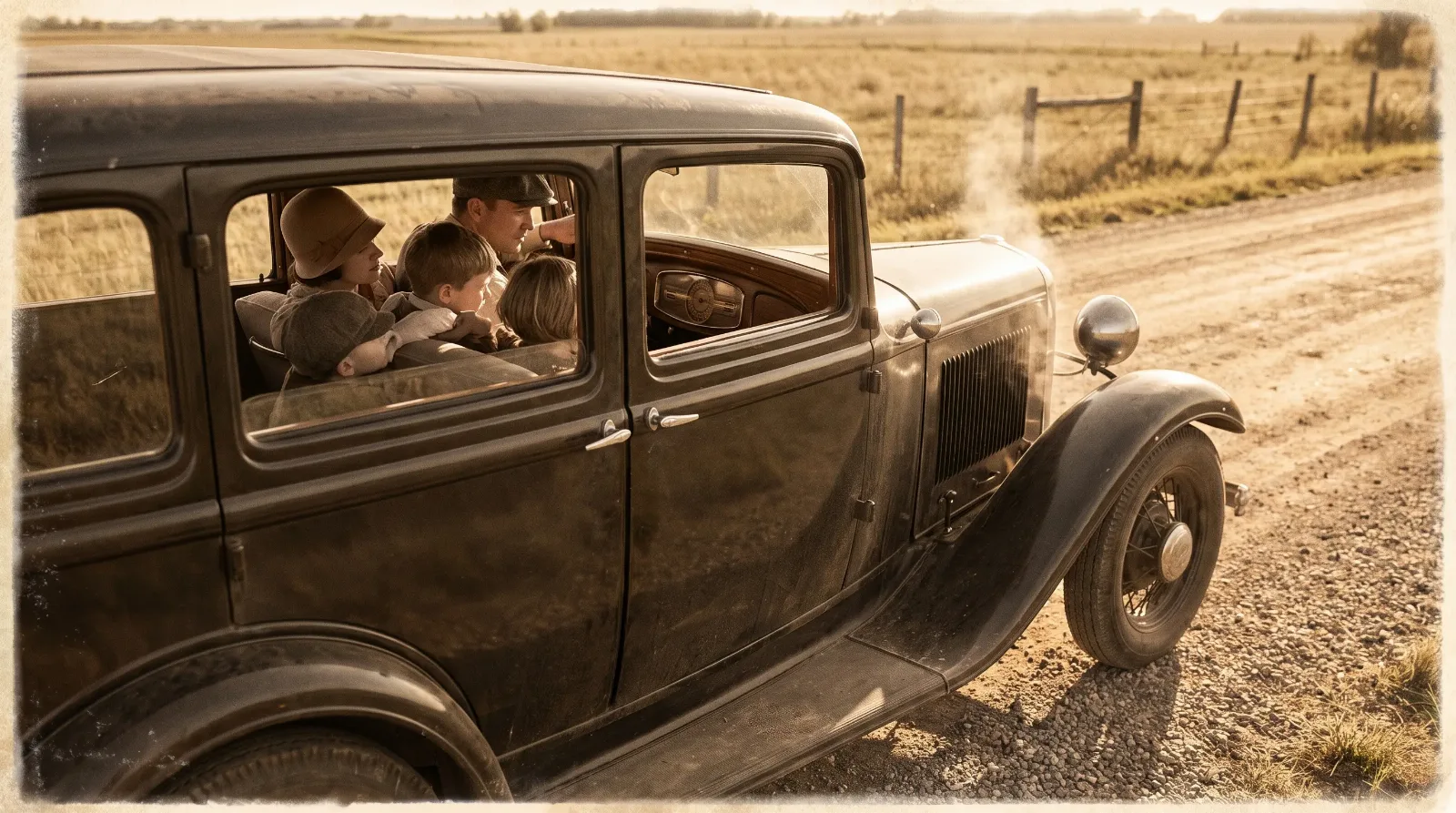
Before the 1930s, a radio in a car was a novelty for tinkerers, a bulky, battery-hungry, home-built assembly wired in by hand. What changed the equation was two brothers, Paul and Joseph Galvin, who took a home radio design, shrank it, ruggedized it against vibration and heat, and gave it a name meant to evoke motion and sound together: Motorola. The first Motorola car radios reached the market around 1930, and within a few years, factory-installed and dealer-installed radios had gone from curiosity to a genuine option line on showroom order forms.
Why it took an engineer's patience to make it work
The technical problem was harder than it sounds today, when a radio is a chip and an antenna. Vacuum tube radios of the era needed steady power, careful shielding from a car's own electrical noise, and cooling that could survive an engine bay's heat. Early installations were often aftermarket affairs, a separate speaker mounted under the dash, a control head that looked bolted on because it usually was, and an antenna that took real trial and error to route without picking up every spark from the ignition system as static.
Galvin's team solved the interference problem methodically, working through the ignition noise and generator whine that plagued early installs until the signal came through clean. That patience is easy to overlook now, but it is the reason a radio became something a factory could install with confidence rather than something only a hobbyist could get working reliably.
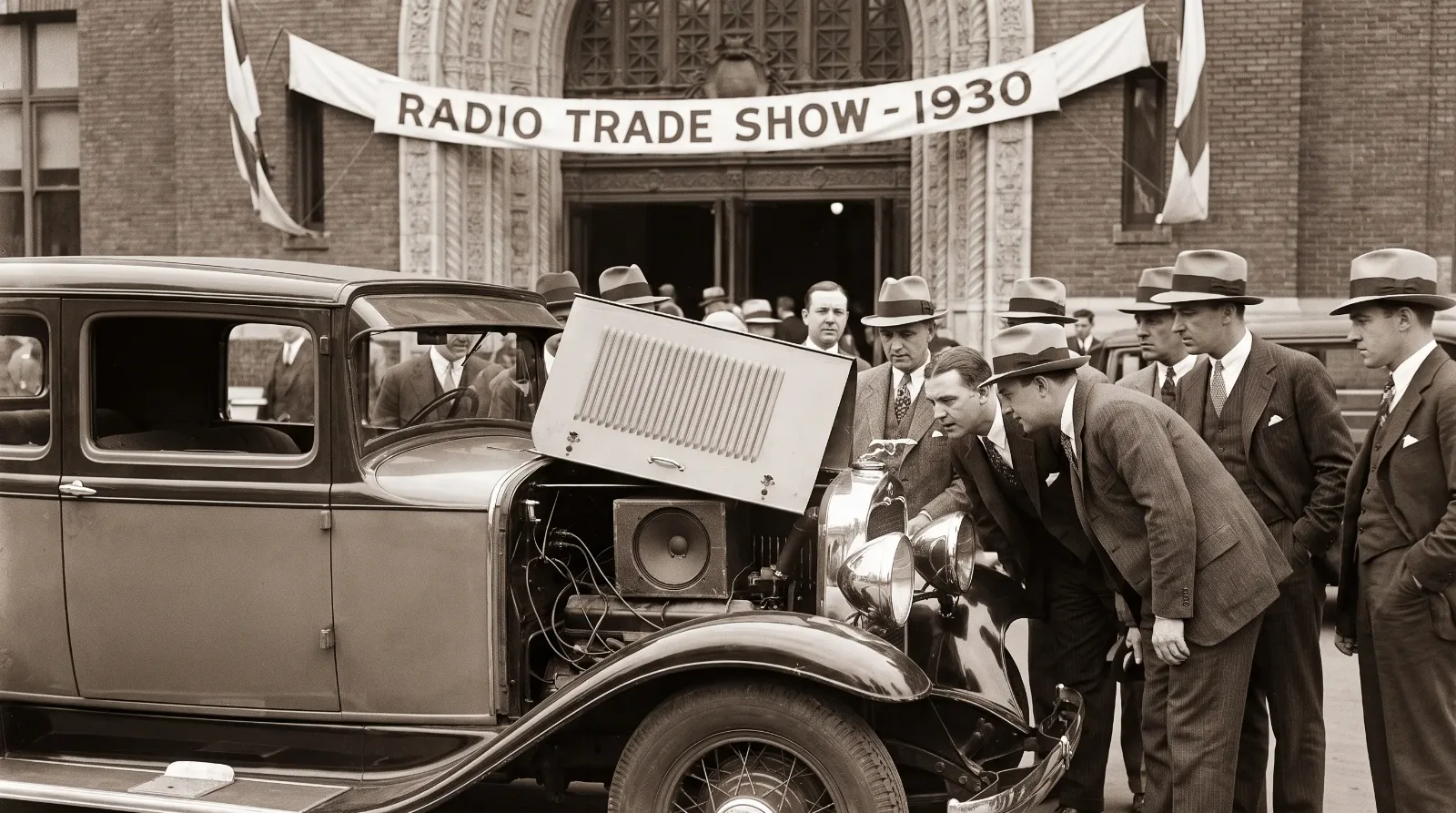
What a radio actually meant to a family in 1935
It is worth sitting with what this small dashboard addition actually changed in daily life. Before car radios, a long drive was a quiet drive, filled with conversation or nothing at all. After them, a family car became a place you could carry the news, a ballgame, or a favorite program with you, untethered from the living room set. For rural families especially, whose homes might not yet have reliable radio reception, a car radio parked in the right spot could pull in a station the house set never could.
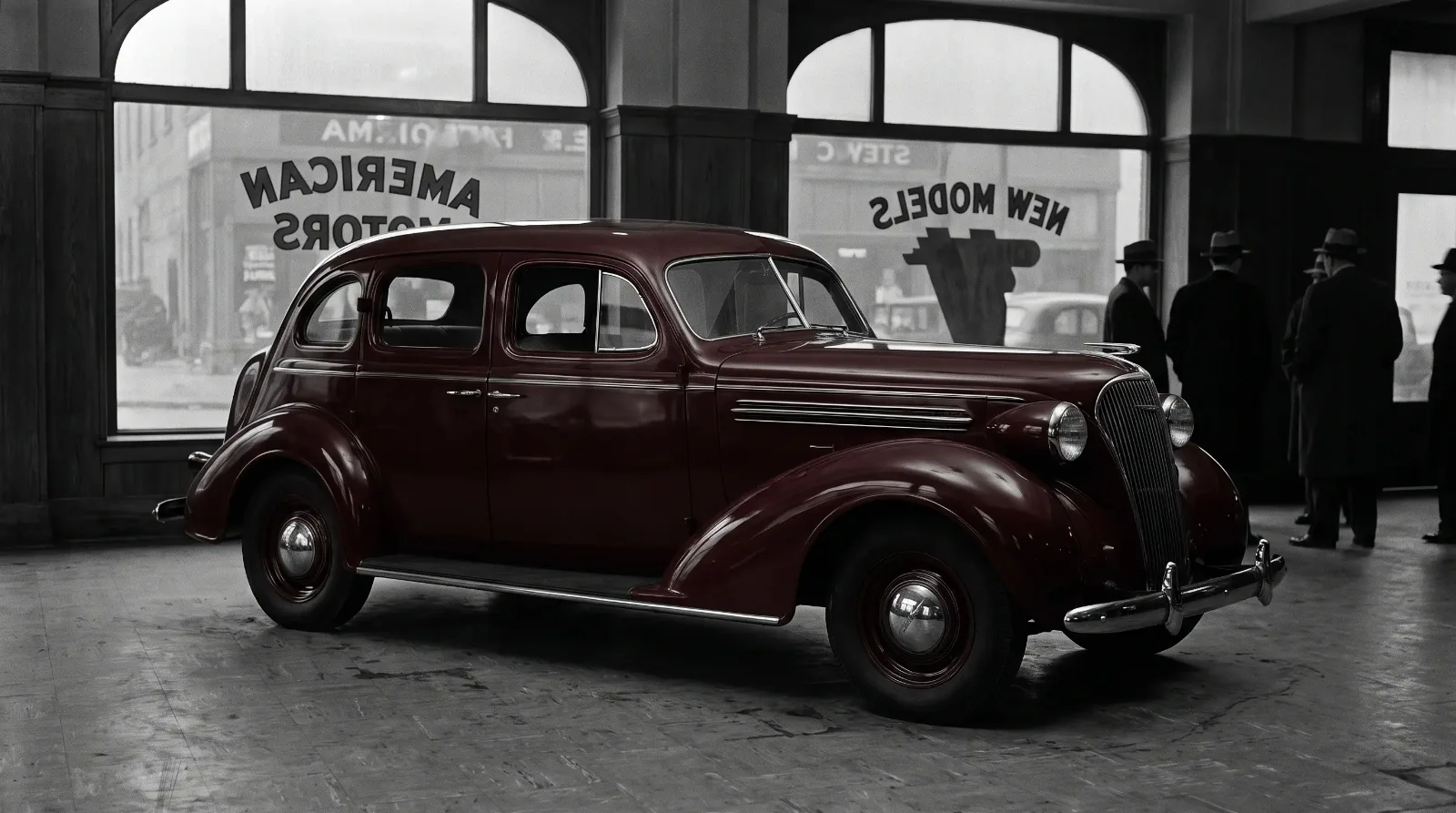
The cost kept it out of reach for many buyers at first. A factory or dealer-installed radio could add a meaningful percentage to the price of an already expensive car, which meant that through much of the decade, a radio antenna arcing over a trunk lid was a small, visible signal of what a family had chosen to spend money on, not unlike how a chrome accessory or a two-tone paint job announced a buyer's taste.
How the option spread across the industry
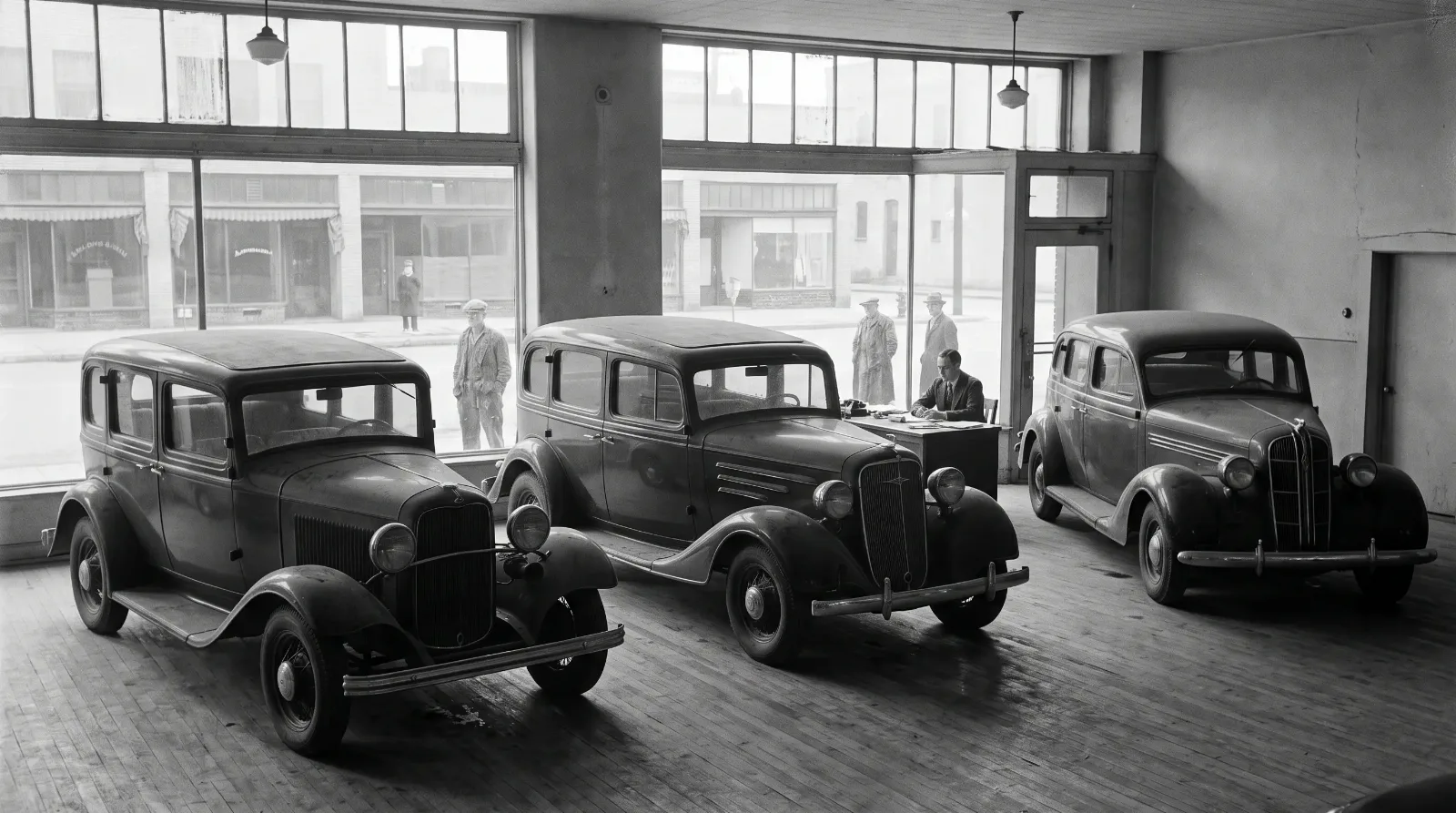
By the mid-1930s, most major manufacturers offered a factory or factory-approved radio option, though installation quality and integration varied widely. Some dashboards were designed with the radio opening built in from the start, a small rectangular bezel that looked intentional. Others were retrofitted with an obviously bolted-on unit that never quite matched the surrounding trim, a detail that restorers today use to help identify whether a radio was original to a given car or added later by a period owner.
The antenna itself tells its own quiet story. Early installations often ran a wire antenna along the underside of the roof, invisible from outside, while later, more confident designs moved to an external whip or cowl-mounted antenna that made no attempt to hide what the car now carried. Tracing which style a given model year used is one of the more reliable ways to date an original radio installation against a claimed production year.
"There is something almost tender about the first car radios. They were not trying to be impressive. They were trying to keep a family company on a long stretch of road, and that is a modest, human thing to build a whole industry around."
Nora Beckett
What survives, and why originality is fragile here
Original 1930s car radios are genuinely delicate survivors. Vacuum tubes fail, vibration damages the fragile internal components, and many owners over the decades simply removed non-functioning units rather than pay to have them repaired, leaving a hole in the dashboard where a radio once sat. A car with its factory-correct radio still in place and functioning is a small but meaningful mark of originality, one that specialist restorers look for alongside more obvious details like paint and upholstery.
A small community of specialists still rebuilds these units today, sourcing period-correct tubes and rewinding transformers by hand when a replacement part simply does not exist anymore. The work is slow and the parts are scarce, which keeps a correctly restored original radio a meaningfully more valuable detail on a car than a modern reproduction unit dressed up to look period-correct, even though the reproduction will likely play more reliably day to day.
The radio was only one piece of a broader wave of cabin comforts that arrived alongside it in this decade, as manufacturers folded more of the home's conveniences into the automobile. Read on to see how the same instinct, making the car feel less like a machine and more like an extension of home, reshaped the trunk and the body panels around it.
Sources and notes
Related Reading
Have a
Classic Car
for Sale?
Reach thousands of serious classic car collectors across the US.
Sell It Here →
Are You a Classic Car Dealer?
List your full inventory and connect with targeted classic car buyers.
Join as a Dealer →
#pre-war classics
#1930s car radio
#motorola history
#vintage car accessories
#pre-war interiors
#dashboard history

About the author
Nora Beckett
Automotive features writer and photographer who tells the human stories behind the cars, from show fields to cross-country road trips.




Comments
Be the first to comment on this article.