
Roughly 44 independent automakers were operating in the United States in 1929. By 1940, the number left standing was a small fraction of that. The Depression did not kill the auto industry, but it ran a brutal filter over it, and the pattern of who survived and who didn't tells you more about the era's cars than any styling trend does. This is our deep dive on great depression cars, built around the numbers rather than the nostalgia.
Car Features
6 min read
How Automakers Survived the Great Depression
Nearly two-thirds of US car sales evaporated by 1932. Here is the balance-sheet math behind who survived the shakeout and who didn't.
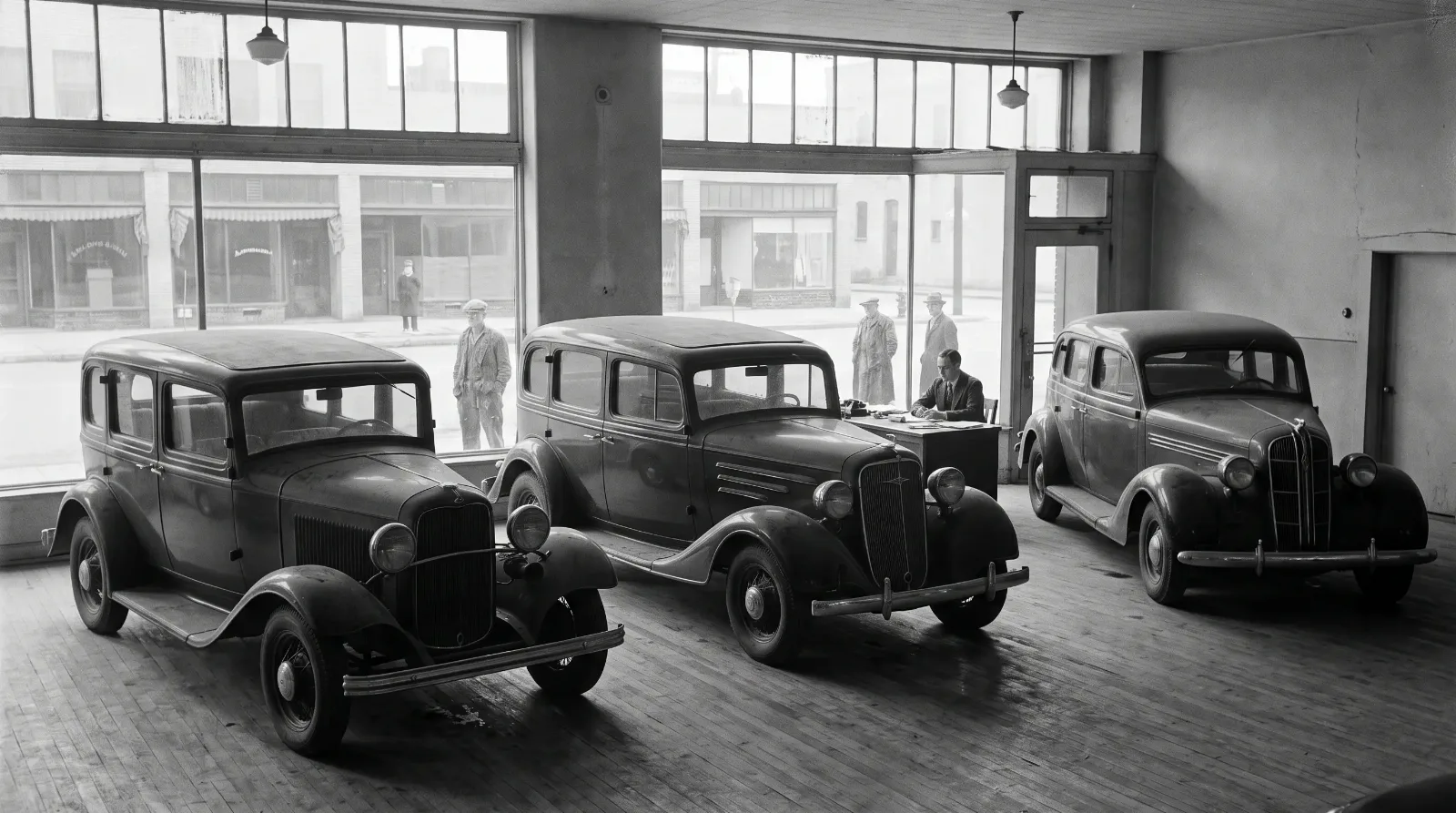
US passenger car sales collapsed from roughly 4.5 million units in 1929 to under 1.4 million by 1932, a drop of close to 70 percent in three years. That kind of demand shock does not spread evenly across an industry. It punishes thin balance sheets first, and by 1932 most of the independent manufacturers were operating with exactly that problem.
The math that killed the independents
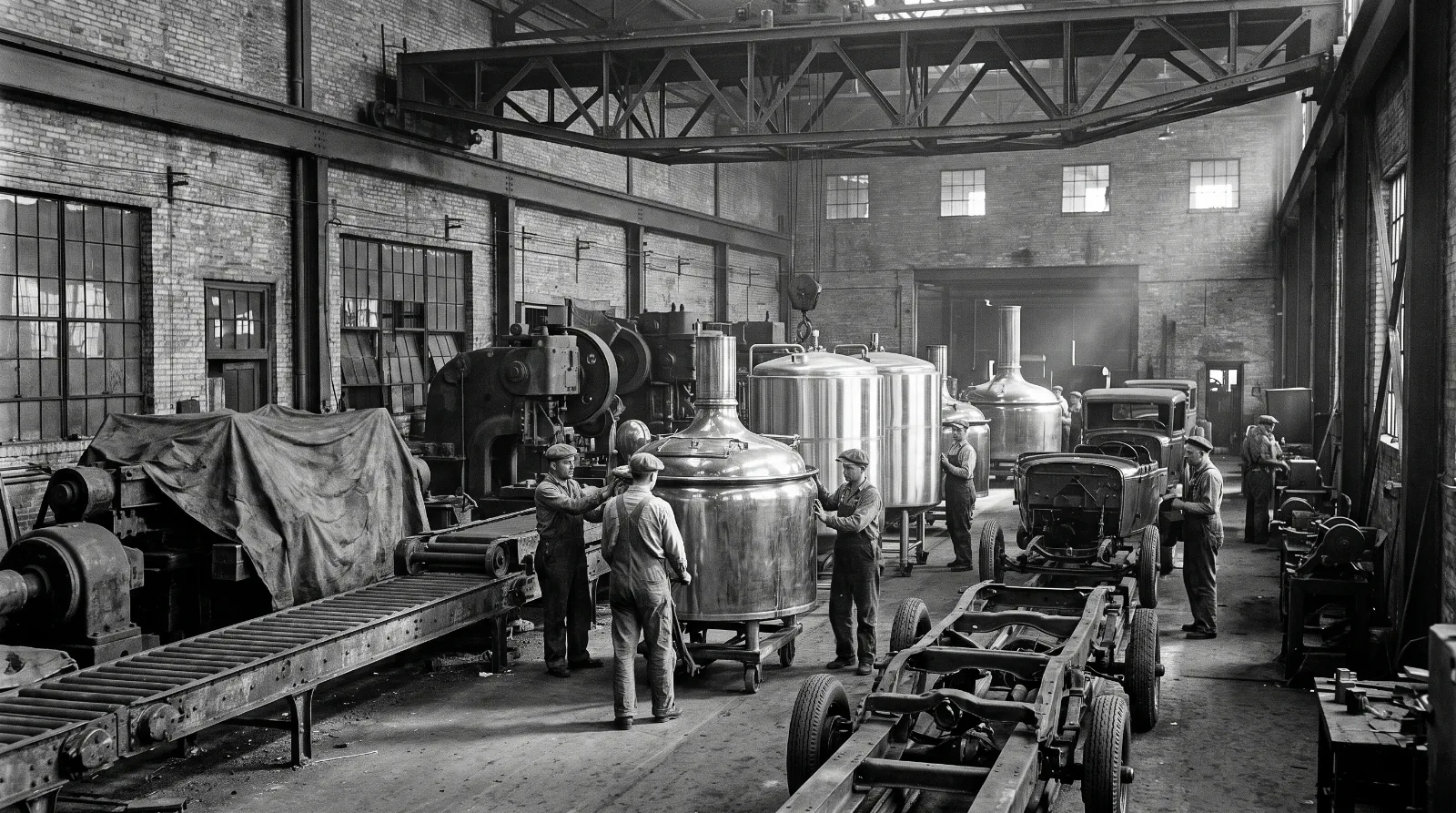
The companies that failed generally shared the same structural weakness: high fixed costs relative to volume, and no other product line to absorb the loss while car sales cratered. Marmon, maker of the ambitious V16 discussed elsewhere in this cluster, folded in 1933 after betting heavily on an ultra-luxury engine right as the market for anything expensive evaporated. Peerless left the car business entirely in 1931 and pivoted, memorably, to beer once Prohibition ended, which tells you something about how bleak the outlook for car manufacturing looked at the time.
Duesenberg, Pierce-Arrow, and Franklin all went under or were absorbed during the decade, each for a slightly different combination of reasons, but the underlying pressure was the same across all of them: a market that had shrunk by two-thirds could not support the number of manufacturers that had existed when credit was easy and demand was high.
Why the Big Three came out stronger
General Motors, Ford, and Chrysler did not merely survive the Depression. They emerged from it holding a larger share of the total market than they had going in. The reason is straightforward once you look at the balance sheets: all three had diversified product lines, dealer networks with enough scale to weather thin years, and, critically, enough cash reserves or credit access to keep investing in new engineering, like independent front suspension and hydraulic brakes, while smaller rivals were cutting research spending just to make payroll.
That gap compounded. A manufacturer that kept developing new features through the downturn came out the other side with a more competitive lineup, which pulled even more of the shrinking market share away from competitors who had frozen product development to conserve cash. By the late 1930s, the Big Three accounted for something close to 90 percent of US car sales, up sharply from where they stood in 1929.
| Manufacturer | Depression-era outcome |
|---|---|
| General Motors | Grew market share; continued major R&D investment |
| Ford | Weathered heavy losses early, recovered by mid-decade |
| Chrysler | Grew market share; Airflow was a rare high-profile misstep |
| Marmon | Ceased car production, 1933 |
| Peerless | Exited car business, 1931 |
| Duesenberg | Ceased production by decade's end |
How buyers changed, and what that did to design
The collapse in demand did not just reduce the number of cars sold. It shifted what kind of car sold. The market for ultra-luxury, low-volume flagship models, the V16s and coachbuilt one-offs, contracted far more sharply than the market for mid-priced, mainstream cars. A buyer who might have stretched for a Cadillac or Packard in 1928 was far more likely to buy a well-equipped Chevrolet or Ford in 1933, if they were buying anything at all.
This is the economic pressure that pushed manufacturers toward selling engineering as the differentiator rather than pure luxury. Streamlined styling, independent suspension, and hydraulic brakes were, in part, a response to a buyer who wanted to feel like they were getting genuine value and modern technology for a price they could still justify. The industry did not abandon luxury entirely, but it stopped being the primary battleground, and mainstream engineering became the place where real competitive pressure showed up.
Financing also changed the shape of demand in ways that outlasted the Depression itself. Installment buying, already growing before 1929, became close to essential once household savings evaporated, and manufacturers with in-house financing arms, GM's finance division chief among them, had a structural advantage over rivals who depended on independent banks that had grown far more cautious about lending against a depreciating asset like a car. That financing edge is a less visible part of the Big Three's growing dominance than the styling or engineering headlines, but the balance sheet evidence points to it being just as important.
"Every recession produces a shakeout story, but the 1930s auto industry is one of the cleanest examples on record. The companies with diversified revenue and cash reserves used the downturn to widen their lead, and the ones without it simply ran out of runway."
David Mercer
What survives from this period, and why it's scarce
For collectors, the Depression-era shakeout has a direct effect on what turns up at auctions today. Cars from failed independents like Marmon, Peerless, and Duesenberg exist in genuinely small numbers because production stopped years, in some cases most of a decade, before the end of the pre-war era. That scarcity is part of why they command outsized prices relative to their period sales volume, a pattern that shows up again and again once you start comparing original production figures against current auction results.
Even inside surviving cabin comforts of the era, the Depression's fingerprints are visible. Options that had been common on 1928 luxury cars, factory radios among them, became rarer and more carefully rationed as manufacturers watched every dollar of production cost, and the ones that did make it into showrooms tended to arrive on stronger financial footing than they might have in flusher times, since a manufacturer risking a new option line during a downturn had less room to absorb a costly failure.
The lesson generalizes past this single decade. Downturns tend to reward the operators who were already disciplined before the crisis hit and punish the ones who were coasting on easy credit and growing demand, and the 1930s auto industry is about as clean a case study of that pattern as exists in American business history.
Keep reading to see how one of those small luxuries made it into cars despite the economic pressure squeezing every other line item. For the broader arc connecting this decade's economics to the styling and engineering choices around it, the full pre-war story lays out how it all fits together.
Sources and notes
- Hagerty Media - Stock market crash and the end of automakers
- Wikipedia: Automotive industry in the United States
- EBSCO Research Starters - American automobile industry in the 1930s
- Engine Stories - From Boom to Bust: The American Auto Industry in the 1930s
- Automotive News - The Great Depression tested NADA and dealers
Related Reading
Have a
Classic Car
for Sale?
Reach thousands of serious classic car collectors across the US.
Sell It Here →
Are You a Classic Car Dealer?
List your full inventory and connect with targeted classic car buyers.
Join as a Dealer →
#pre-war classics
#great depression cars
#1930s auto industry
#marmon motor car
#peerless motor company
#big three automakers

About the author
David Mercer
Classic car market analyst with two decades of experience tracking collector car valuations, auction results, and investment trends.




Comments
Be the first to comment on this article.