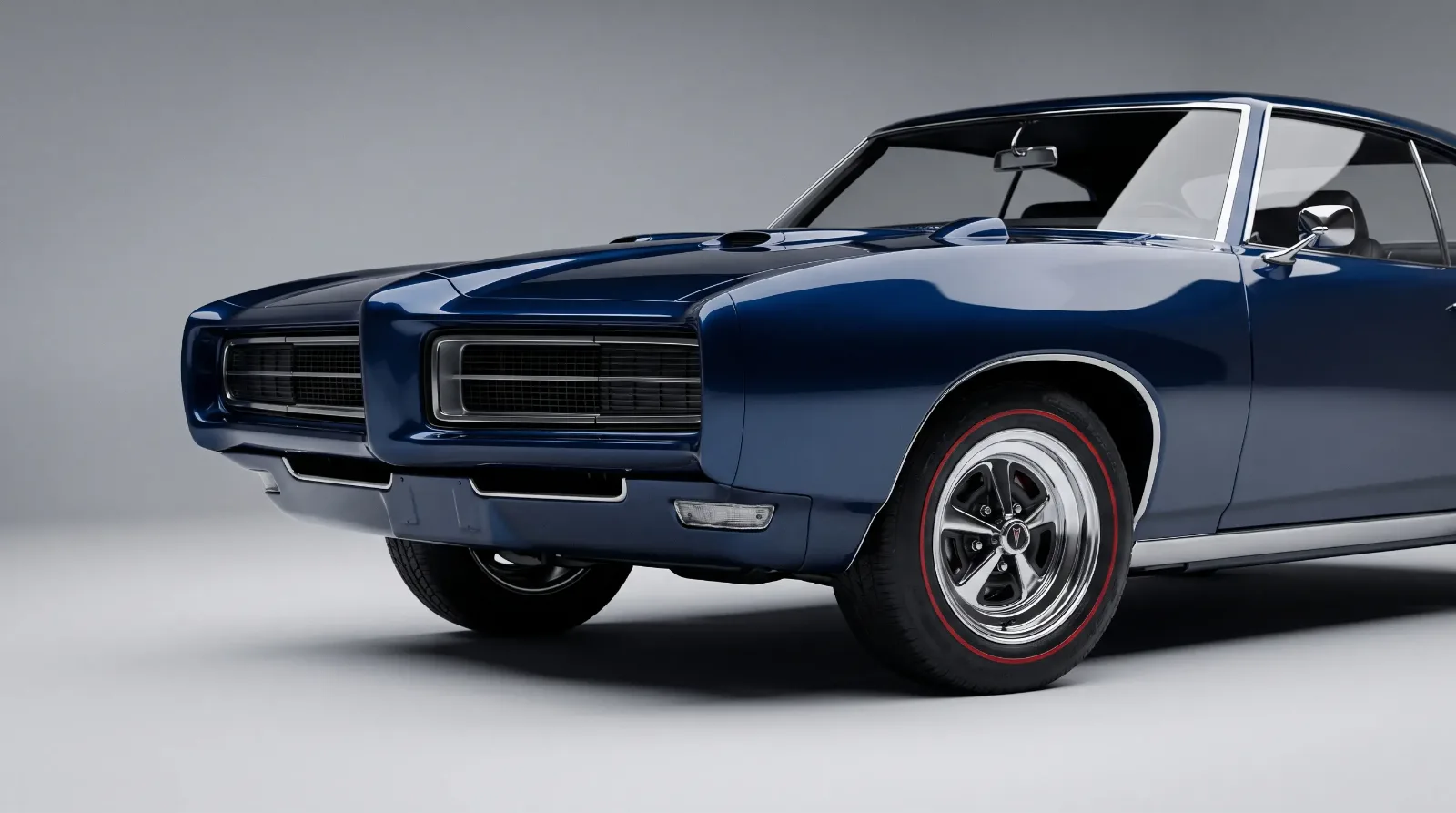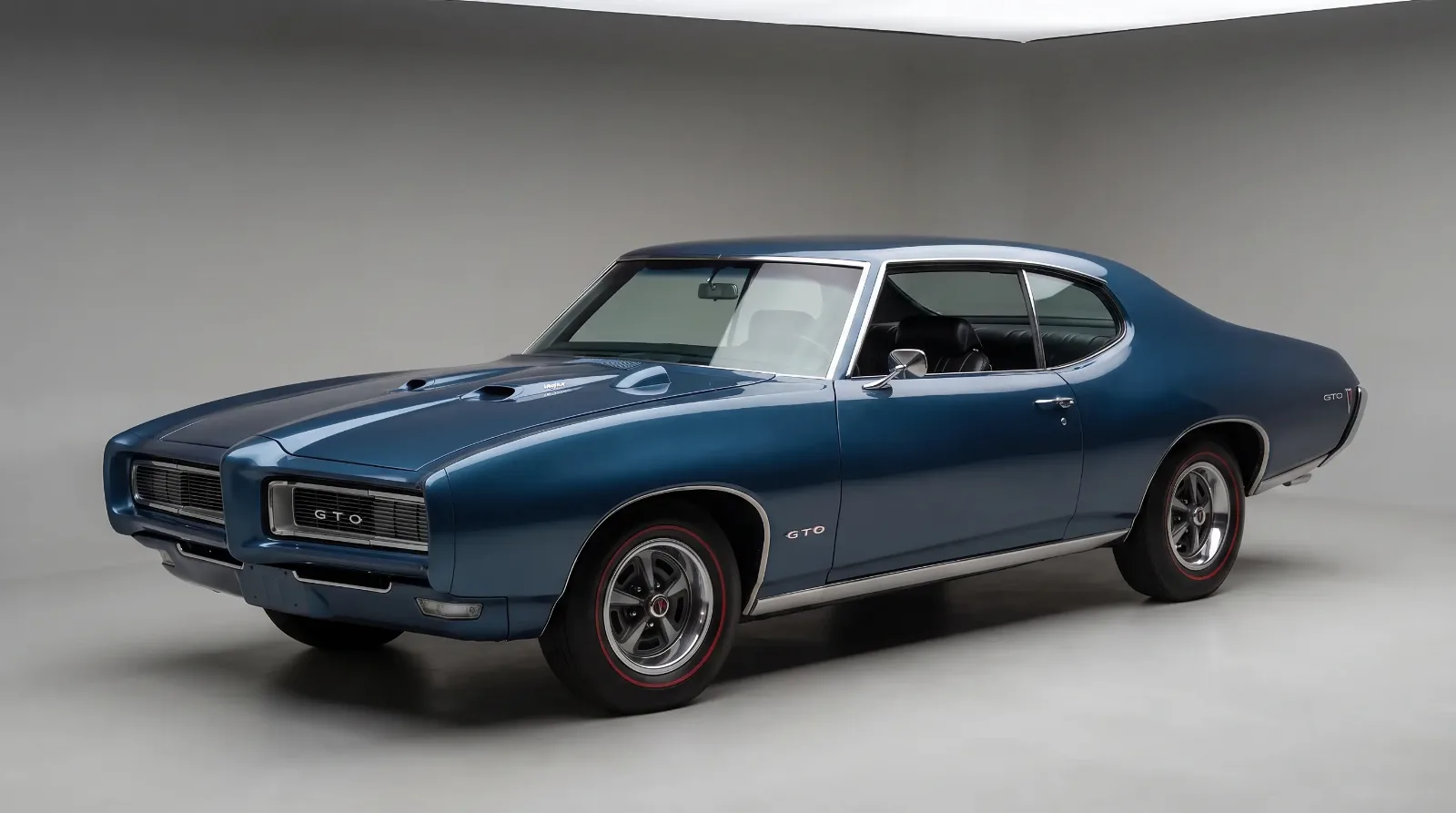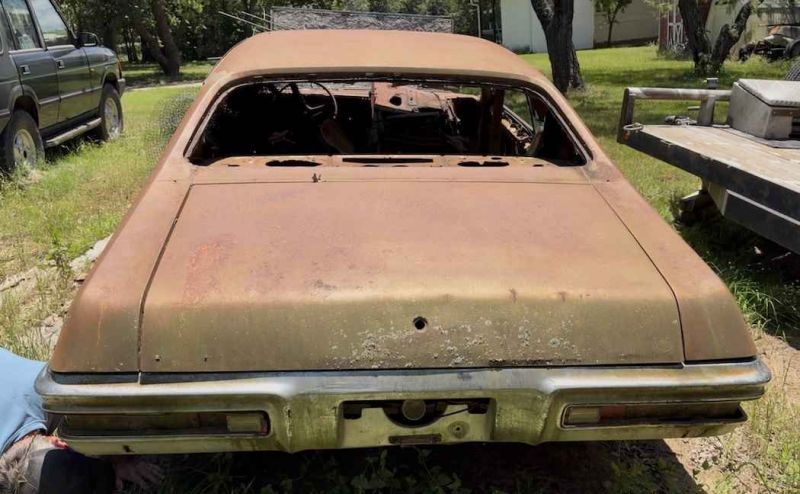
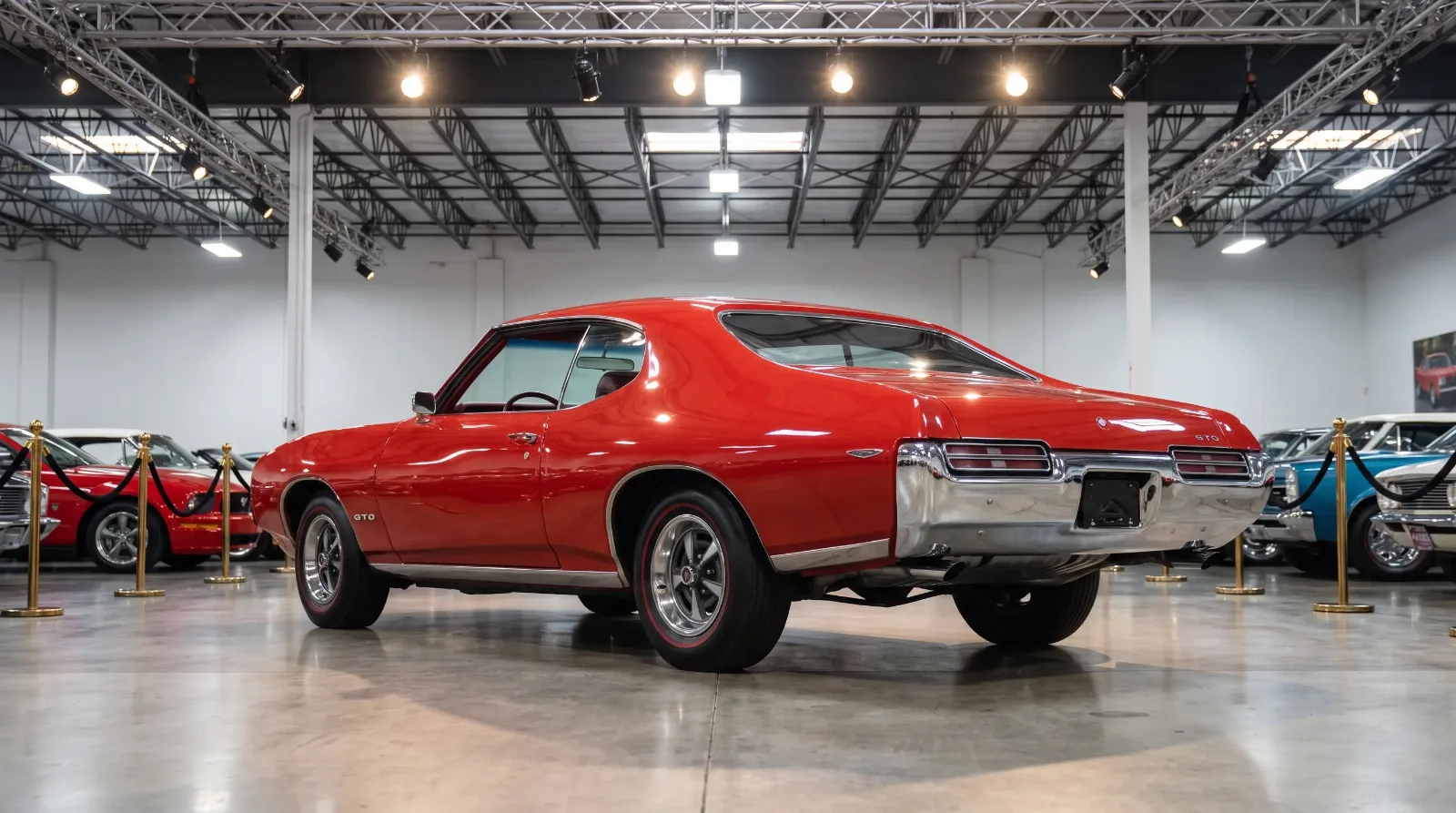
A production number by itself tells you almost nothing about value. It's the ratio between what was built and what survives, documented, that actually moves an appraisal. The 1969 GTO is a useful case study in why, because the raw build totals sound substantial, and the surviving-and-documented subset is considerably smaller, and that gap is where the real money sits.
What Pontiac actually built in 1969
Total 1969 GTO production, across hardtop and convertible body styles, ran to 72,287 units for the model year, a figure that reflects a car still riding high commercial momentum from its 1968 restyle but beginning to feel competitive pressure from every other GM division and Ford's own muscle offerings crowding the same buyers. The Judge package, introduced mid-year, accounted for a comparatively small slice of that total, and the various Ram Air engine options split the remainder further into subsets that get progressively rarer the higher up the performance ladder you go.
What matters for valuation isn't the total production number in isolation. It's cross-referencing that number against how many cars with a specific engine, transmission, and body style combination actually survive today with documentation intact. A car that was one of several thousand built in 1969 but is one of a documented handful with its original engine, original build sheet, and a clean title chain is a fundamentally different asset than a car that shares its VIN prefix but has none of that paper trail.
| Configuration | Relative rarity | Documentation impact on value |
|---|---|---|
| Base 400 hardtop, automatic | Common | Moderate premium for verified numbers-matching |
| Base 400 convertible | Less common than hardtop | Meaningful premium, body style scarcity |
| Ram Air III equipped | Uncommon | Strong premium, documentation essential |
| Ram Air IV equipped | Rare | Substantial premium, documentation can double value swing |
| The Judge package | Rare relative to total production | Highest premium, forged/recreated Judges are a real risk |
Why survivorship matters more than the original count
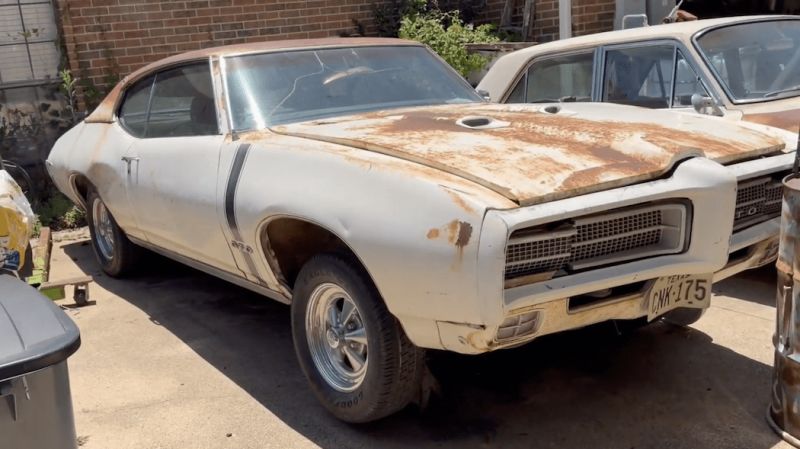
Muscle cars of this era had a rough middle age. Fuel prices, insurance surcharges on high-performance models, and simple attrition through daily use and accidents took a real toll on the surviving population through the 1970s and into the 1980s, before the collector market recognized these cars as appreciating assets worth preserving. A meaningful percentage of 1969 GTOs built didn't survive to see collector status. Some were modified beyond recognition of their original specification, engines swapped for whatever was available, bodies patched with mismatched panels, VIN tags occasionally separated from their original chassis during a resale decades ago.
That attrition is exactly why documentation carries such disproportionate weight in today's market. A build sheet found under a back seat, a tank sticker still legible in the trunk, a dealer invoice preserved by a careful original owner, these aren't nice-to-have curiosities. They're the difference between an appraisal that treats a car as a well-restored example of its type and one that treats it as a documented, numbers-matching artifact worth a genuine premium over a comparable car without paper.
The forged-Judge problem
Because The Judge commanded a real premium even relatively soon after production ended, and because the visual differentiators, stripe kit, spoiler, specific badging, are reproducible without enormous difficulty, the market has a known problem with recreated or "cloned" Judges built from base GTOs. This isn't a dark secret. It's a well-documented risk that any serious appraiser flags before signing off on a valuation. A car presenting as a numbers-matching Judge needs its build sheet, its VIN decode consistent with Judge-specific option codes, and ideally a documented ownership chain before that premium is defensible. Absent that documentation, you're valuing a very nicely presented base GTO with Judge trim, not an actual Judge, and the price difference between those two things is not small.
For anyone chasing the top of this specific pyramid, read on about the Ram Air IV cars specifically, because that engine option intersects with the documentation problem in ways that make careful verification even more important than it is for the broader 1969 lineup.
Reading a build sheet against the car in front of you
When I'm asked to appraise a 1969 GTO, the build sheet, if one survives, gets checked line by line against the physical car before I trust a single claimed number. The build sheet lists the engine code, transmission type, rear axle ratio, paint code, interior trim code, and factory-installed options, and every one of those codes should correlate to something verifiable on the car itself. A build sheet claiming a specific axle ratio should match the actual ring gear count if the differential is original. Paint code should match evidence of the original color found in unexposed areas like door jambs or under trim, assuming the car hasn't been stripped to bare metal.
Discrepancies aren't automatically disqualifying. Engines get rebuilt or swapped for legitimate reasons over fifty-plus years, sometimes by an original owner who blew up a motor and replaced it with a factory-correct crate unit rather than something exotic. What matters to an appraisal is whether the discrepancy is disclosed and explainable, or whether it's presented as original when it demonstrably isn't. I've walked away from appraisals where a seller insisted a car was numbers-matching and the casting date on the block postdated the car's build date by two years. That's not a gray area. That's a car being misrepresented, intentionally or through inherited bad information from a prior owner.
What this means for a buyer working with a limited budget
Not every buyer needs or can afford a fully documented, numbers-matching Judge or Ram Air IV car. There's a real, healthy market for honest, undocumented or partially documented 1969 GTOs bought to drive and enjoy rather than judged at a concours event. My advice to that buyer is different from my advice to an investment-focused client: buy the best-condition, most mechanically sound car you can find within your budget, get an honest disclosure of what is and isn't original, and don't pay a documentation premium for a car that can't support one. There's nothing wrong with a driver-quality 1969 GTO with a replacement engine and no surviving build sheet. Just don't let a seller price it like it's something it isn't.
Condition still matters, obviously. A rough, incomplete example of a rare configuration isn't automatically worth more than a beautifully restored common one. But when I'm asked to put a number on the Endura nose years GTO, the first thing I ask isn't "what's the mileage." It's "what's the paper trail," because that answer reshapes every other number in the appraisal.
"A #2 condition car with a thin paper trail isn't a #2 car once the check has to clear. It's a #3 car with a good story, and the appraisal has to reflect that difference honestly, not the story the seller wants to tell."
— Marcus Feld
Production numbers set the ceiling on how rare something could be. Documentation determines how rare it actually is, and that's the number that ends up on the check.