
Picture a Los Angeles showroom in the last week of February 1968. The Mustangs on the floor look the way Mustangs had looked for a year, except one. Its grille is blacked out around a pair of fog lamps, its trunk lid lifts at the very end into a small spoiler, and the taillights come from another Ford entirely. On February 22, Coberly Ford in Los Angeles ran the first dealer ad for that car, the 1968 Mustang California Special, and for about five months it belonged to one coast. Mostly.
Car Features
6 min read
The 1968 California Special (GT/CS)
A sales manager's idea, a Shelby prototype's tail and 4,118 San Jose hardtops: the story of the 1968 Mustang California Special and its Denver twin.
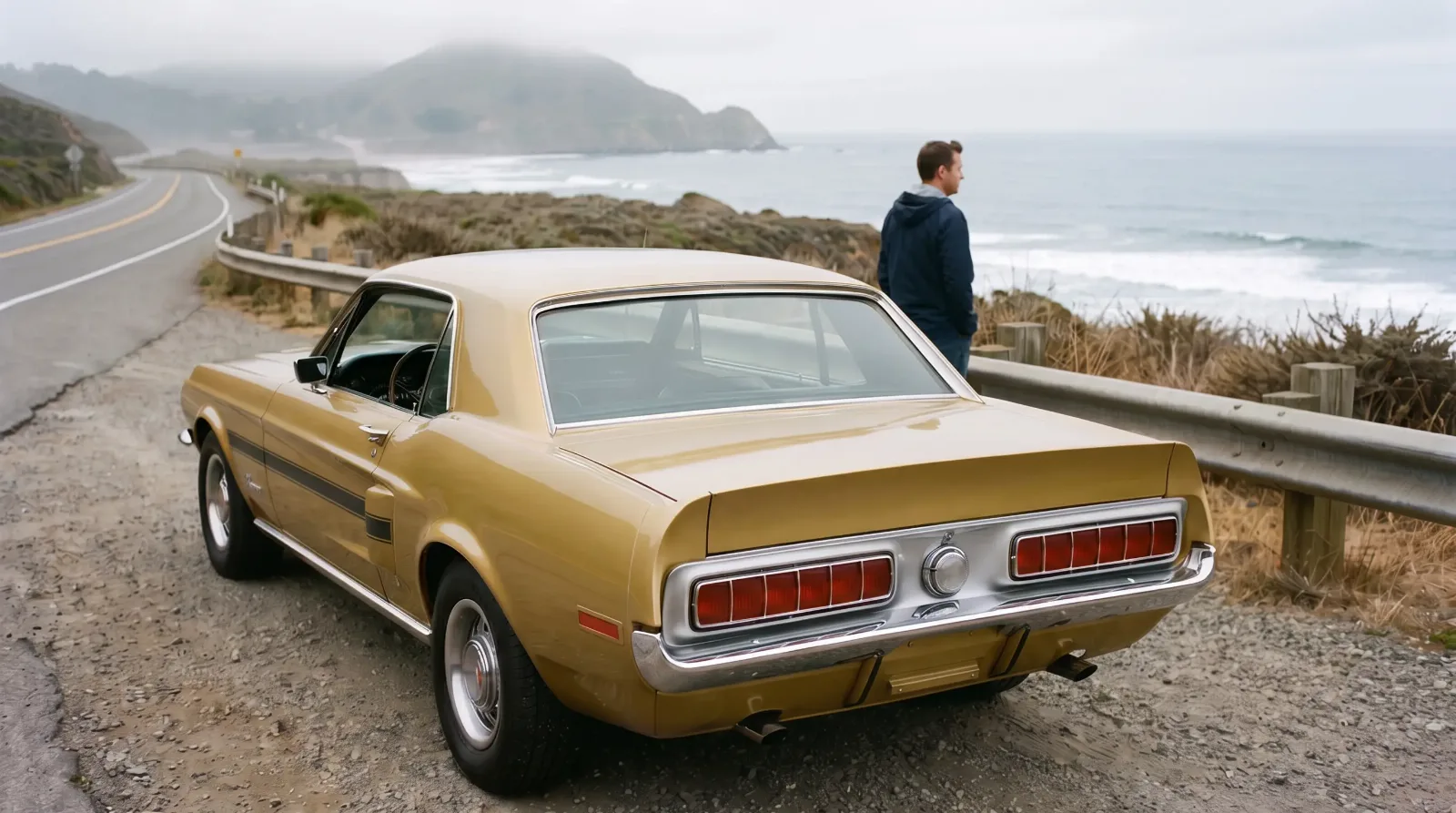
It was a regional special, one of several Ford ran in the late 1960s, and it is easy to file it beside the paint-and-badge promotions of the period. It deserves a closer look than that. The 1968 car sat in the middle of the first generation's long run, after the 1967 enlargement and before the 1969 restyle, and there is more on that here. The California Special was that year's most ambitious attempt to make a plain hardtop look like something else.
A district sales manager's idea
The idea came from Lee Grey, Ford's district sales manager for Southern California. District managers lived with the monthly numbers in a way designers and engineers never had to, and a Mustang that looked special was a Mustang a customer might stop to look at twice. Lee Iacocca backed the plan, which is the kind of support that turns a regional notion into a production order.
The look already existed. In 1967 Shelby had built a GT500 notchback prototype, Shelby car 0131, the car enthusiasts now call Little Red. It was a development car that carried a Paxton-supercharged big block among its experiments, and under Iacocca it became the model for the California Special. The brief that followed is simple to say and harder to do: take the Shelby's tail and put it on an ordinary Mustang hardtop that a buyer could order with anything on the regular sheet.
There is a quiet logic to that. The Shelby was a specialist's car with a specialist's price. The California Special offered the silhouette of one to someone who wanted the look for the drive to work.
What made a 1968 Mustang California Special
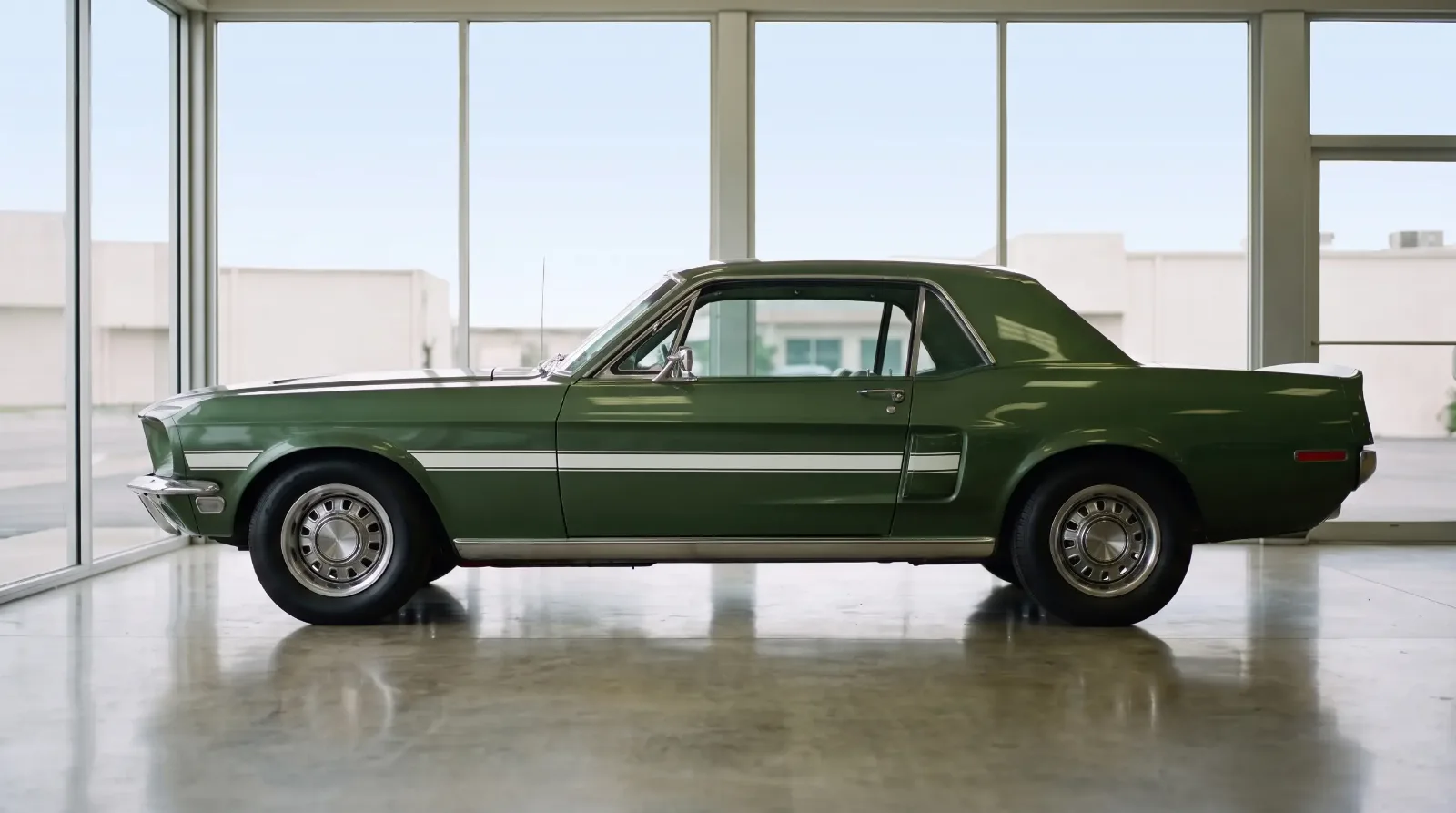
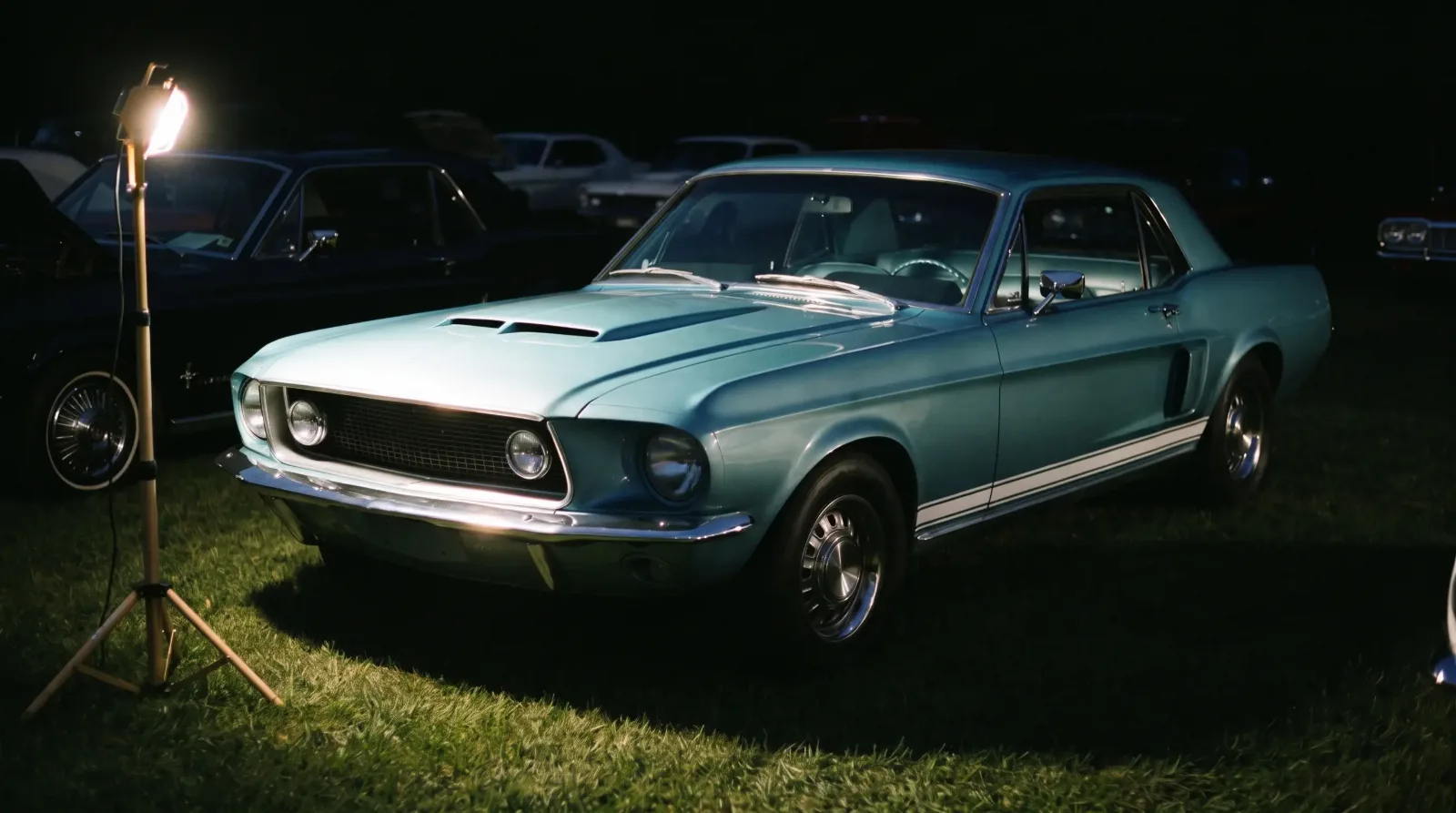
Walk around one slowly and the changes arrive in order. At the front, the grille is blacked out and carries fog lamps. Along the sides, fiberglass scoops sit in the sculpted panels, and side stripes run the length of the car in one of four colors: white, black, red or metallic medium blue. The body itself could wear any standard 1968 Mustang color, so no two lots of them looked quite alike.
The rear is where the Shelby lives. A fiberglass decklid with an integrated spoiler, fiberglass end caps and a new taillight panel holding taillights from the 1965 Thunderbird. Unlike the same lamps on the 1968 Shelby, they did not flash in sequence. A pop-off gas cap finishes it. Shelby Automotive designed the parts, and A.O. Smith of Ionia, Michigan made the fiberglass pieces. It was only ever a hardtop. There was no California Special fastback and no convertible.
Built in San Jose, sold on the coast
Production began on February 17, 1968, at Ford's San Jose plant and nowhere else. The heaviest stretch came in the middle of March, between the 15th and the 20th, when the line turned out California Specials in earnest. Every one of their VINs begins 8R01: the 8 for 1968, the R for San Jose, the 01 for the hardtop body.
The cars went mainly to Ford's two California sales districts, DSO 71 around Los Angeles and DSO 72. The target was 5,000. The final count was 4,118, including the 251 cars that went to the Denver district under another name, and the run ended in late July or early August 1968. Set beside the 317,404 Mustangs Ford built that model year, it is a small number. Set beside the 4,450 Shelby Mustangs built for 1968, it is almost the same one, which says something about how many people wanted the look without the Shelby price.
| Item | 1968 California Special |
|---|---|
| Concept | Lee Grey, Ford Southern California district sales manager; backed by Lee Iacocca |
| Production start | February 17, 1968 |
| First dealer ad | February 22, 1968, Coberly Ford, Los Angeles |
| Plant | San Jose only (VIN begins 8R01) |
| Body | Hardtop only |
| Parts sets first ordered | 6,180 |
| Production target | 5,000 |
| Built | 4,118, including 251 High Country Specials |
| End of production | Late July or early August 1968 |
Ordinary engines under an unusual tail
The parts were special. The mechanicals were not, and that was the point. A California Special could be ordered with any standard 1968 Mustang engine, transmission or axle, from the 115 hp 200 six through the 195 hp 289 two-barrel and the new 302s, on up the order sheet. The combination built most often was the 289 two-barrel with the C4 automatic. The typical GT/CS was a small-block automatic: a car for the freeway and the beach road, not the drag strip.
That makes the California Special easy to underrate and easy to understand. Nobody bought one expecting a GT500 under the hood. They bought a car that looked like a coastal answer to the Shelby and drove like the Mustang their neighbor had. For a lot of buyers that was the whole appeal.
"Most of the people who signed for one were not chasing a Shelby. They wanted to come home in something that looked like it had a story, and for once Ford let a salesman write it."
Nora Beckett
The Denver cars and the end of the run
Not every California Special stayed in California. In June and July of 1968, 251 of them were built for the Denver sales district and badged as the High Country Special, the name Ford had used for its Denver-district cars since 1966. They carried the same fiberglass and could be painted in any standard color. A car designed for the Pacific coast ended its run heading for the Rockies, which is about as fitting an ending as a regional special can have.
By late summer the line had moved on. The 1969 Mustang was a new shape with four headlights, and the GT/CS stayed a 1968 story, shorter than a single model year. Its first parts order covered 6,180 cars and its sales target was 5,000. It landed at 4,118, a modest number that keeps every surviving car worth a pause at a show field today.
The tail still gives them away. If you scroll through the 1968 Mustangs listed right now, the hardtops with a spoiler on the decklid and fog lamps in a black grille are worth a second look, and a VIN that begins 8R01 is where that second look starts. The parts can be copied. The San Jose build and the paperwork that goes with it cannot.
Sources and notes
- California Special Mustang (Wikipedia): origin, parts, dates, DSOs, 4,118 built
- MustangSpecs: 1968 Ford Mustang California Specials guide
- Hagerty Marketplace: 1968 GT/CS California Special listing and production notes
- Old Cars Weekly: the 1967 Shelby GT500 EXP prototype Little Red found
- MotorCities National Heritage Area: Shelby production at A.O. Smith in Ionia
- Shelby Mustang (Wikipedia): 1968 production and the move to Michigan
Related Reading
Have a
Ford Mustang
for Sale?
Reach thousands of serious classic car collectors across the US.
Sell It Here →
Selling a classic? Here's how: compare the places to sell classic cars
Are You a Classic Car Dealer?
List your full inventory and connect with targeted classic car buyers.
Join as a Dealer →
#Ford Mustang
#1968 Mustang
#shelby
#California Special
#GT/CS
#High Country Special
#regional special editions

About the author
Nora Beckett
Automotive features writer and photographer who tells the human stories behind the cars, from show fields to cross-country road trips.
Related Listings - Ford Mustang
Comments
Be the first to comment on this article.