
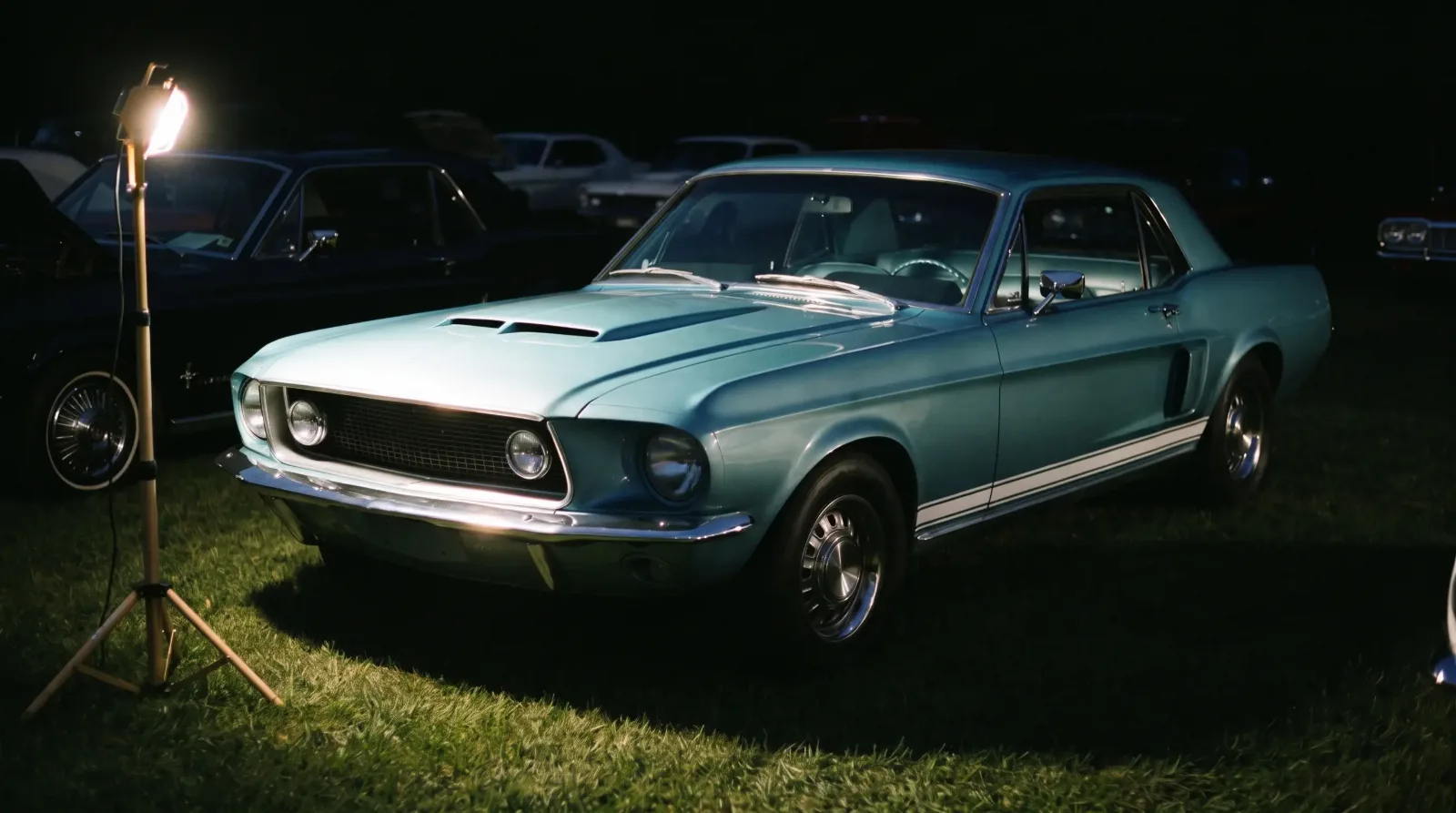
Late in the afternoon at a car show, when the light goes low and gold across the grass, people walk past a Timberline Green coupe without slowing down. It looks like any well-kept 1966 hardtop. Then somebody notices the small brass shield on the fender, leans in, and reads it, and you can watch the question form on their face. The answer is the Mustang High Country Special, a car that Ford built in California for buyers who lived far inland, at altitude, in places where a pony car had to earn its keep through a mountain winter. It was never a national model. It belonged to one sales district, and the people there gave it a name that sounded like home.
Car Features
7 min read
The High Country Special: Denver's Own Mustang
Denver's own Mustang: 333 cars in 1966 in three mountain colors, a 1967 encore, and 251 rebadged California Specials in 1968.
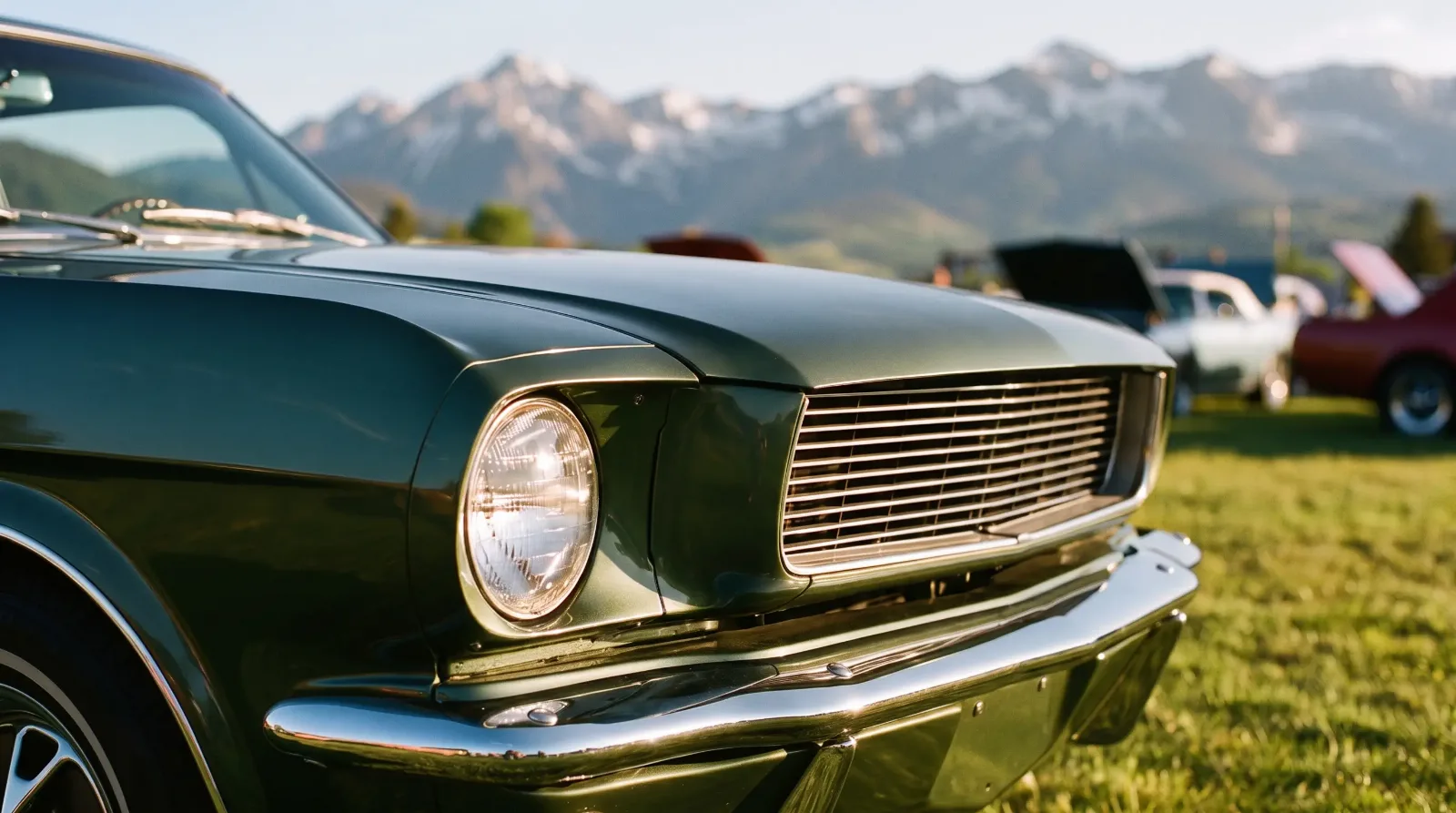
If you want the wider frame first, our first-gen history covers the years around it. This piece stays with the Denver cars: what they were, how many were built, and how to tell one from a Mustang that simply wears its paint well.
A Mustang for one sales district
In the 1960s Ford sold cars through regional district sales offices, and each one had a code that followed its cars onto the data plate. Denver was district 51. Its dealers covered Colorado, Wyoming and Nebraska, which is a lot of country to sell into, and much of it is high, cold and far from the nearest assembly plant.
The cars came from San Jose. That detail surprises people who assume a Rocky Mountain car would come out of Michigan, but the High Country Specials were built at the California plant and shipped east by rail to Denver for distribution. Picture a string of freight cars climbing out of the Sierra with Mustangs lashed on top, carrying three colors nobody in California could order, bound for showrooms in Cheyenne and Lincoln and Colorado Springs. It is a small thing, a regional paint program. It still feels like a gift addressed to a particular place.
The 1966 Mustang High Country Special
The first year set the pattern. Ford built 333 of the 1966 cars, and the body-style split is wonderfully lopsided: 274 coupes, 20 fastbacks and 39 convertibles. One general reference describes the 1966 run as fastbacks and convertibles only, but the specialist breakdown counts coupes as well, and the coupes were the bulk of it. Twenty fastbacks is a tiny number. If you ever see one, you are looking at a very rare 1966 Mustang.
What made them High Country cars was color. There were three, and each was named for the mountains: Columbine Blue, after the flower Colorado adopted as its own, Aspen Gold, for the trees that turn the high slopes yellow every fall, and Timberline Green, for the line on a peak where the forest gives up. They were not regular Mustang colors, and the data plate shows it. On a High Country car the paint code is left blank, because there was no standard code to stamp.
The other badge of membership is that brass shield emblem on the fender. Nothing in the records points to mechanical changes: under the paint these were ordinary 1966 Mustangs. The specialness was skin deep, and that was exactly the point. A buyer in Denver got a car that looked like nothing parked at the curb in Los Angeles.
1967: a second run and a winter cousin
Denver came back for the restyled 1967 Mustang with the same idea and the same three colors. The most precise count I have found for the 1967 run is 416 cars; other accounts say only that it went past 400, or round it down to 400. How those cars split between coupe, fastback and convertible is a question I have not seen answered with any confidence, and I would rather leave it open than guess.
The Denver office was busy that year. The same district ran a winter promotion called the Ski Country Special, with colors named for Colorado ski towns, a ski rack, a limited-slip axle and two snow tires, and one Denver dealership sold a small batch of pastel Mustangs of its own. Those cars belong to a different chapter, and you can read about the other regional specials in their own piece. What they show, taken together with the High Country cars, is a district sales team that understood its buyers and kept finding new ways to make a Mustang feel local.
"I love that these cars were built for a place rather than a racetrack. Nobody needed a High Country Special to go faster. They needed it to feel like theirs, painted in the colors of the hills they drove home through."
Nora Beckett
1968: the California Special goes to the mountains
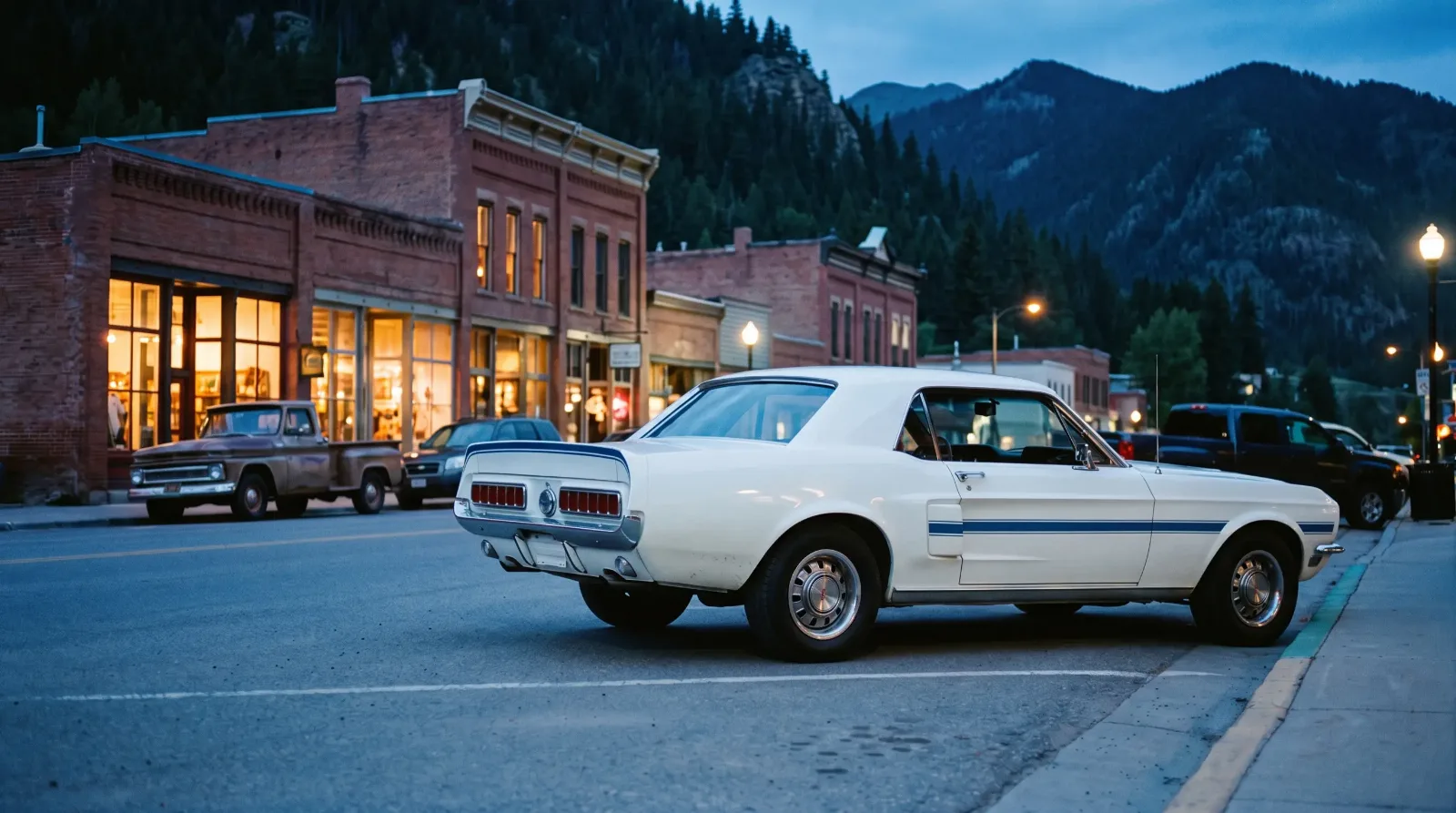
For the last year the High Country name changed shape completely. In 1968 Ford's California districts had their own regional car, the GT/CS, or California Special: a hardtop dressed with Shelby-designed parts, including a fiberglass decklid with an integrated spoiler, side scoops, 1965 Thunderbird taillights and a blacked-out grille with fog lamps.
Of the GT/CS cars, 251 went to Denver. They were built in June and July of 1968, at San Jose like every GT/CS, and badged as High Country Specials. The three mountain colors were gone. A 1968 High Country car could be ordered in any standard 1968 color, so what set it apart was the badging and the destination, not the paint.
It is a strange and slightly wistful ending. The 1966 and 1967 cars were Denver's own idea, painted in Denver's own colors. The 1968 car was California's idea with a Colorado name on it. It is also the scarcest of the three years, and the one most often confused with the car it was built from.
| Model year | Production | Base car | Colors |
|---|---|---|---|
| 1966 | 333 (274 coupes, 20 fastbacks, 39 convertibles) | Regular 1966 Mustang, built at San Jose | Columbine Blue, Aspen Gold, Timberline Green |
| 1967 | 416 (some accounts: about 400) | Regular 1967 Mustang, built at San Jose | Columbine Blue, Aspen Gold, Timberline Green |
| 1968 | 251 | GT/CS (California Special) hardtop, built June and July 1968 | Any standard 1968 color |
How a real High Country car tells its story
Because the 1966 and 1967 cars were mechanically ordinary, the paperwork does the talking. A genuine one starts life at San Jose, so the plant letter in the VIN is R. The district code on the data plate is 51 for Denver. On the 1966 cars the date code researchers associate with the program is 15G. And the paint code is blank, which on almost any other Mustang would be a red flag and on this one is the signature.
That last point is also why the cars are easy to imitate. Paint a 1966 coupe Aspen Gold, add a reproduction brass shield, and from ten feet away you have a High Country Special. Up close, the data plate either agrees with the story or it does not. For the 1968 cars the test is different: a real one is first a real GT/CS, a San Jose hardtop whose VIN begins 8R01, and then a Denver-district car on top of that.
Most of these Mustangs spent their first years in places with salt on the roads and snow on the passes, which means survivors are thinner on the ground than the production numbers suggest. The ones that remain carry something you cannot reproduce with a paint gun, which is a record of where they were meant to go. To see where these regional cars sit in the bigger picture, here is the history of the Ford Mustang in one place.
Back on that show lawn, the light is nearly gone, and the Timberline Green coupe has gathered a small crowd. Someone is crouched by the door, reading the data plate out loud. The paint code space is empty. Everybody nods, as if that blank were a name.
Sources and notes
- MustangSpecs: 1966 High Country Special Mustang
- MustangSpecs: 1967 Mustang High Country Special guide
- MustangSpecs: 1968 Ford Mustang High Country Special guide
- Wikipedia: California Special Mustang
- ClassicCars.com Journal: the High Country Special Mustangs
- MustangSpecs: 1967 Ford Mustang Ski Country Special
Related Reading
Have a
Ford Mustang
for Sale?
Reach thousands of serious classic car collectors across the US.
Sell It Here →
Selling a classic? Here's how: compare the places to sell classic cars
Are You a Classic Car Dealer?
List your full inventory and connect with targeted classic car buyers.
Join as a Dealer →
#Ford Mustang
#1967 Mustang
#1968 Mustang
#1966 Mustang
#California Special
#High Country Special
#regional special editions

About the author
Nora Beckett
Automotive features writer and photographer who tells the human stories behind the cars, from show fields to cross-country road trips.
Related Listings - Ford Mustang
Comments
Be the first to comment on this article.