
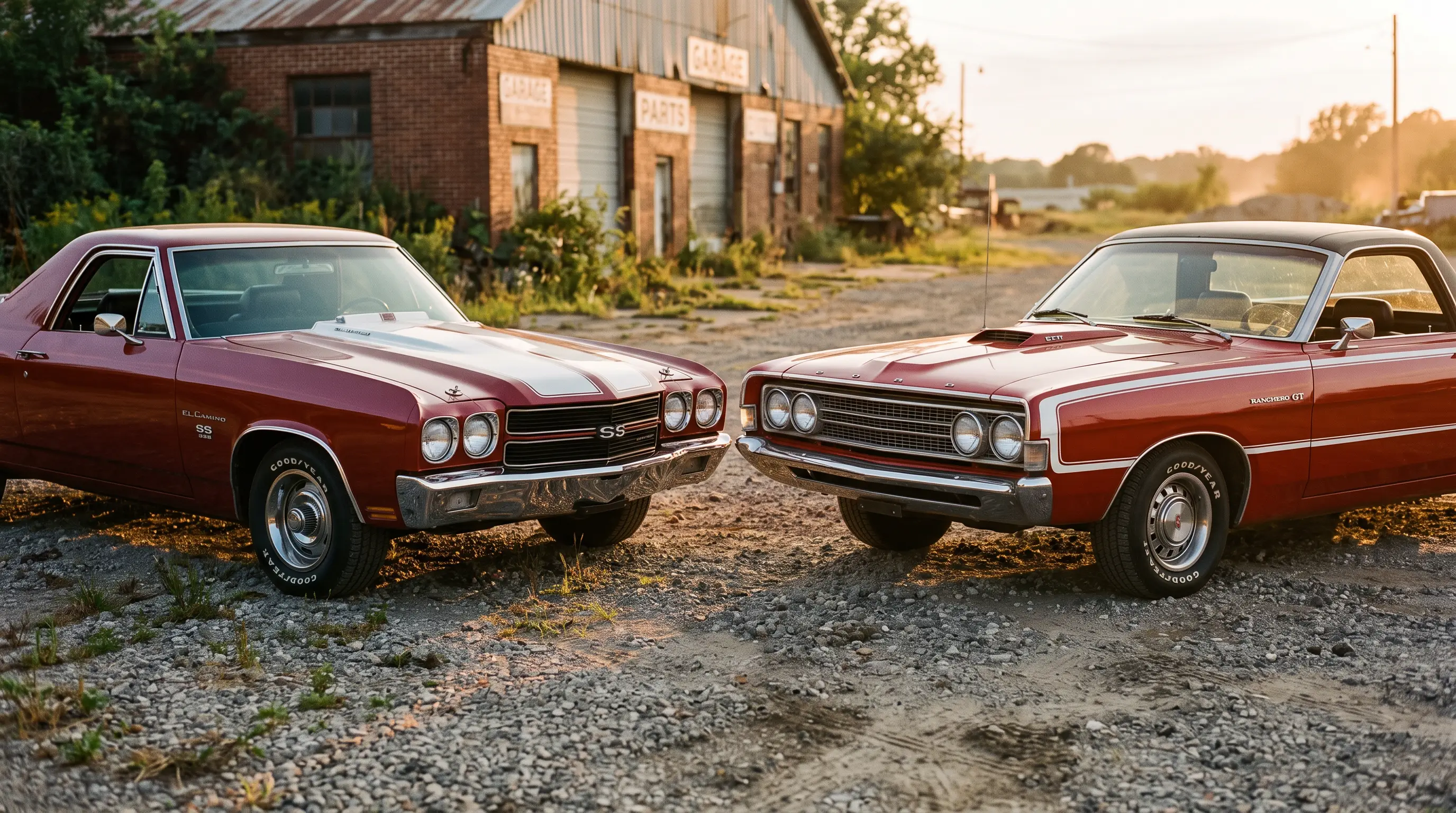
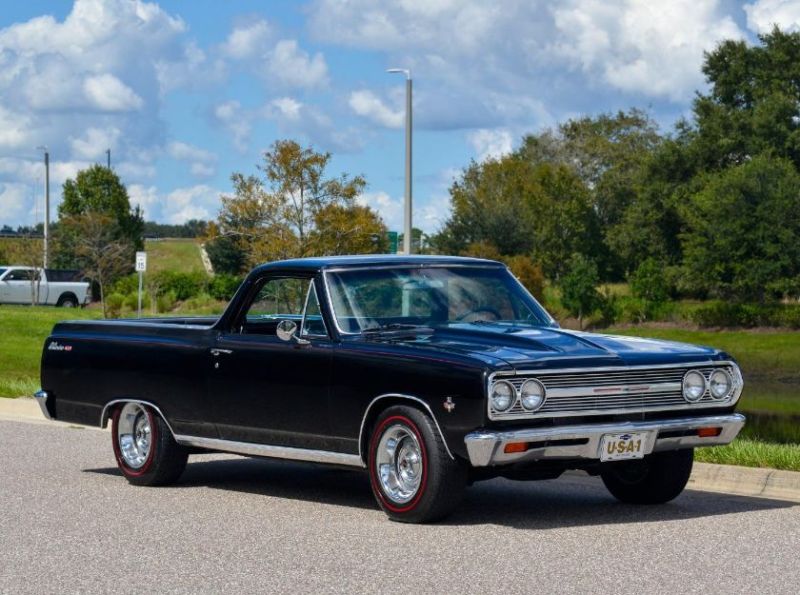
Look at the numbers and the el camino vs ranchero 1970 big block war resolves into a fairly simple engineering story: two automakers pushed displacement and compression as high as insurance underwriters and premium gas would allow, then both backed off within two years. The 1970 El Camino could be ordered with the SS454 package, putting a 454 cubic inch big-block into a body that had started life, six years earlier, as a mildly dressed-up Chevelle wagon substitute. The Ranchero, now fully committed to the Torino platform, offered the 429 cubic inch Cobra Jet and Super Cobra Jet as its own answer. Neither company was hiding the intent. This was the peak year for factory-installed displacement in both nameplates, and it happened at the same time for a reason: emissions and insurance pressure were both about to hit, and 1970 was the last uncomplicated shot either side had.
1970: The Big-Block Peak of the Rivalry
1970 was the peak displacement year for both nameplates, with the El Camino SS454 LS6 and Ranchero Super Cobra Jet marking the ceiling neither company would ever push past again.
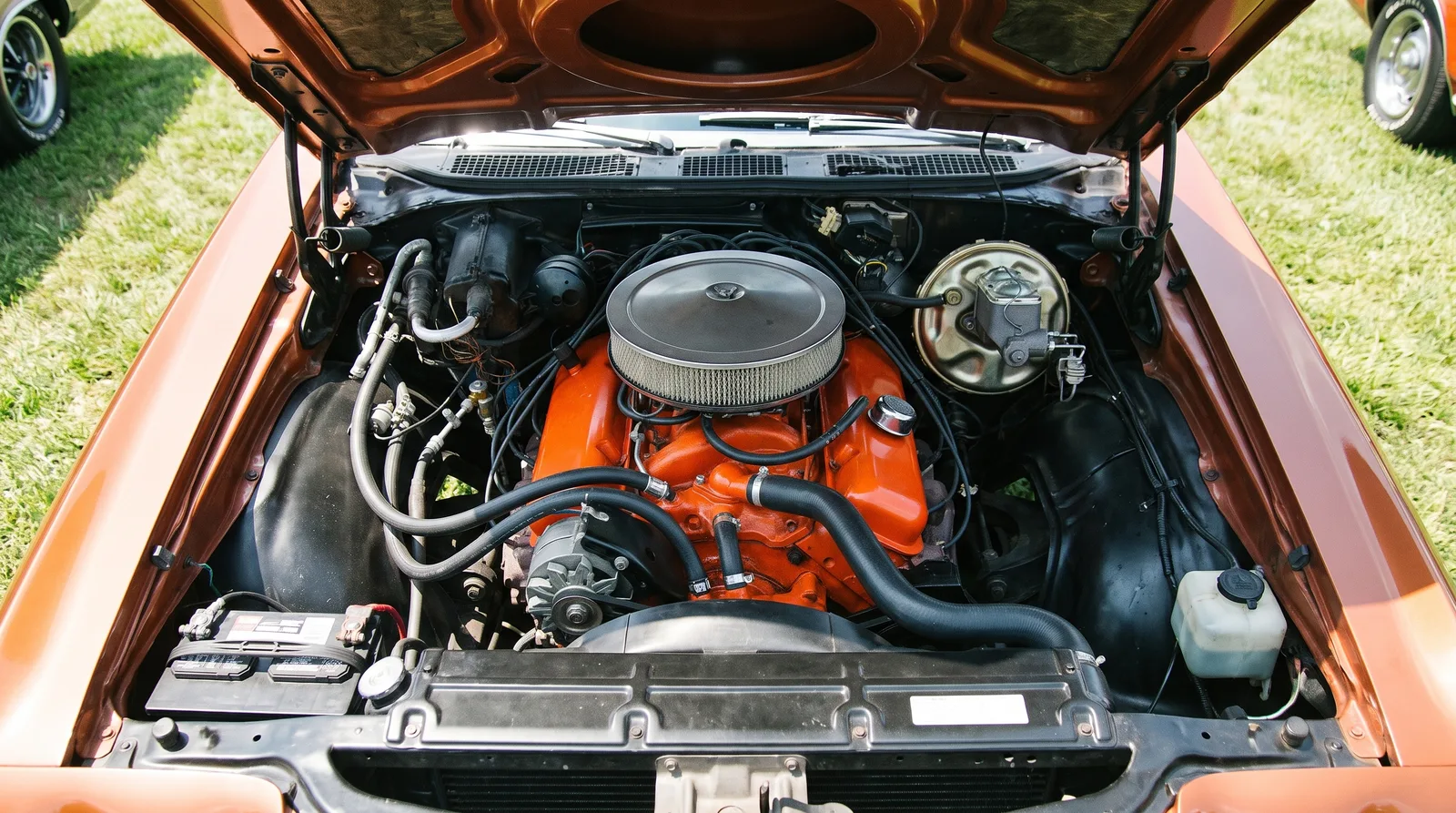
Two engines under one SS454 badge
The El Camino's SS454 came in two distinct flavors that matter enormously to anyone evaluating a car today. The LS5 was rated at 360 horsepower and was the more common of the two, built for a broad base of buyers who wanted big-block torque without the compromises of a solid-lifter engine. The LS6, by contrast, was rated at 450 horsepower and 500 lb-ft of torque, used a high-compression solid-lifter valvetrain, and was built in far smaller numbers. Of the roughly 4,475 LS6 454s built across the Chevelle and El Camino for 1970, nearly 4,000 went into Chevelles, leaving only about 500 El Caminos so equipped, a figure that works out to roughly one percent of that year's El Camino production, largely because the LS6 demanded premium fuel and careful tuning that most daily buyers had no interest in managing. The gap between those two engines is the difference between a big-block cruiser and a genuine drag-strip weapon, and it is why LS6-documented cars command a real premium over LS5 cars in the market today.
| Spec | 1970 El Camino SS454 | 1970 Ranchero Cobra Jet |
|---|---|---|
| Base big-block option | 454 cu in LS5, 360 hp | 429 cu in Cobra Jet |
| Top performance option | 454 cu in LS6, 450 hp | 429 cu in Super Cobra Jet |
| Valvetrain (top option) | Solid lifter, high compression | Solid lifter, ram air available |
| Documented rarity | LS6 build numbers low | Ram Air Cobra Jet uptake low |
The Ranchero's own split-tier big-block
The Ranchero's 429 Cobra Jet and Super Cobra Jet followed a similar internal split. The standard Cobra Jet used a hydraulic valvetrain and was aimed at the same broad-appeal buyer Chevrolet was chasing with the LS5, while the Super Cobra Jet added a solid-lifter cam, four-bolt main bearing caps, and in some configurations a functional ram air induction system pulled straight from the Torino Cobra parts bin. Ford did not build Super Cobra Jet Rancheros in meaningful volume, and most surviving examples with genuine documentation trade at a level that reflects just how few buyers actually checked that specific box on a work-capable truck rather than a two-door coupe.
What solid lifters actually demanded from owners
Honest evaluation of this era requires admitting where the marketing outran the reliability. Solid-lifter big-blocks in a truck-bodied vehicle asked more of the valvetrain than most owners were prepared to maintain, and both the LS6 and Super Cobra Jet had reputations, even at the time, for needing more frequent adjustment and more careful tuning than the hydraulic-lifter versions sitting one option box down the sheet. That is not a knock on either engine's engineering, it is simply what solid lifters demand, and it is worth knowing before assuming every surviving car ran flawlessly from the factory floor onward. A cared-for example of either engine is a genuinely strong performer today. A neglected one reveals exactly why so few buyers in 1970 chose the top option in the first place.
"The spec sheet says LS6 and Super Cobra Jet were close. The maintenance logs say something different. Horsepower on paper and horsepower you can actually live with are not the same claim."
- Emily Chen
Production and sales data from 1970 make clear that most buyers of either truck picked the mid-range big-block rather than the top option, which is exactly what you would expect once you account for insurance rates that were already climbing sharply for anything over 400 cubic inches. The rarity of the true top-spec trucks from both companies is therefore not an accident of low demand from enthusiasts, it reflects a market that was already pricing performance out of reach for a lot of ordinary buyers even as the factories kept building the option available for the ones who could still afford it.
Drivetrain choices and why documentation is everything
Transmission and rear-end gearing choices from 1970 are worth examining alongside the engine numbers, because a big-block figure on a window sticker means little without knowing what was behind it. Both the LS6-equipped El Camino and the Super Cobra Jet Ranchero were commonly paired with heavy-duty four-speed manual transmissions and numerically high rear-axle ratios intended for acceleration rather than cruising, choices that made these trucks genuinely quick in a straight line but noticeably less pleasant for daily errands than the LS5 or standard Cobra Jet versions most buyers actually drove home. That tradeoff, real performance in exchange for a rougher daily experience, is exactly why the mid-range engine outsold the top option on both sides of this rivalry, and it is a pattern that shows up again whenever a manufacturer pushes a factory option to its practical limit.
Cooling system capacity is another detail that separates a well-documented 1970 big-block from a corner-cut one. Both Chevrolet and Ford specified larger radiators and, in many configurations, additional oil cooling for the top-tier engines, changes that added real cost to the option and that some dealers reportedly tried to talk buyers out of ordering in favor of the cheaper mid-range engine. A genuine LS6 or Super Cobra Jet car found today should still show evidence of that heavier-duty cooling hardware, and its absence is often one of the first things a knowledgeable appraiser checks when verifying whether a car's engine bay matches its claimed build sheet.
Documentation matters more for these two engines than almost any other detail collectors chase, since the visual difference between an LS5 and an LS6, or between a standard Cobra Jet and a Super Cobra Jet, can be nearly invisible after decades of engine bay changes, repaints, and swapped air cleaners. A cowl tag, a broadcast sheet, or a factory invoice showing the original RPO code is often the only reliable way to confirm which engine a given El Camino left the factory with, and the same is true of Ford's build sheets for a Ranchero. Buyers chasing the top-tier engine option purely because of its reputation should treat verification as a non-negotiable step rather than an afterthought, since the price gap between a documented LS6 and an undocumented claim of one is substantial enough to justify the extra research every time.
1970 as the ceiling neither side ever revisited
1970 stands as the ceiling for both nameplates, not because either company planned it that way, but because the regulatory and insurance environment simply would not allow a repeat. Anyone assessing a 1970 El Camino or Ranchero today is really assessing the last uncompromised year of a fight that had been building since the mid-1960s and that neither side would ever escalate past again. For the broader arc of how this rivalry built up to its 1970 peak and what came after, read the background on the full car-truck war. And if the LS5 and LS6 story above has you wondering what factory-documented big-block examples currently look like on the market, it is worth taking the time to find a classic El Camino and compare condition, paperwork, and asking prices directly.
Sources and notes
Related Reading

Bay Area engineer with a deep focus on vintage Japanese and European performance cars. Approaches classic car research and restoration with an analytical eye.
Related Listings - Chevrolet El Camino

Comments (1)
Same thing at Buick. '70 GS 455 Stage 1, 510 lb-ft of torque, and two years later it was gone. Gone! Who decided that?