
Look at a Chevelle SS build sheet from early 1970 and then look at one from 1972 and you are reading two different eras, even though only two model years separate them. The factory records tell the story better than the magazines of the time did, because the buff books were still writing about horsepower while the engineering departments were already writing about compression ratios, emissions certification and insurance actuarial tables. Those are the three things that actually ended the A-body muscle war, not any single bad model year.
Car Features
6 min read
1972: The Year the A-Body Muscle War Ended
Compression cuts, net horsepower ratings and insurance surcharges: how 1972 quietly ended the Chevelle-GTO-442-GS muscle war.
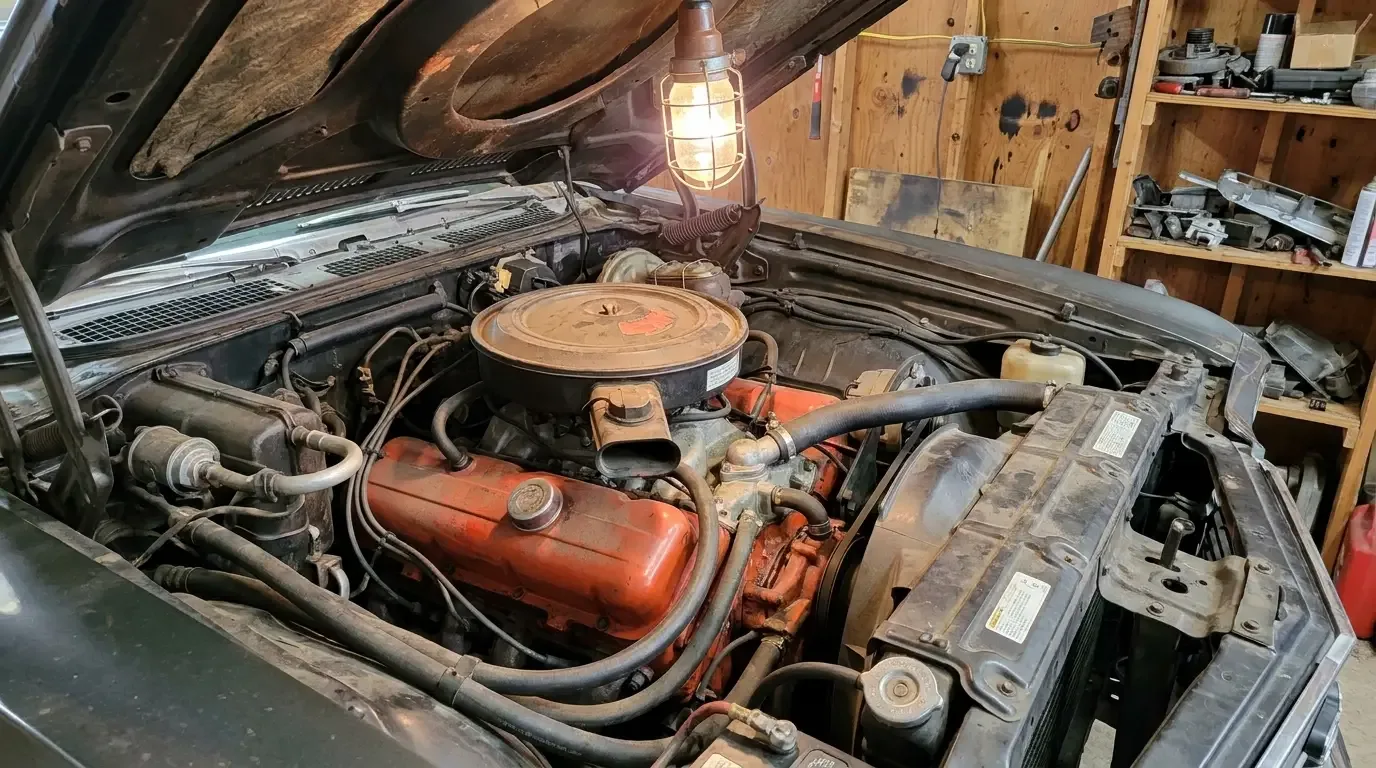
This is the year the numbers stopped meaning what they used to mean, and it is worth walking through exactly why, because the change was deliberate and documented, not some vague industry mood shift.
The compression drop started a year earlier
General Motors began lowering compression ratios across its performance engines for 1971, ahead of a federal push toward unleaded fuel and tighter emissions standards that would fully arrive later in the decade. The Chevelle SS 454's LS5 engine, which had carried a gross rating of 360 hp for 1970, came back for 1971 with compression cut from 10.25:1 to 8.5:1, yet the rating actually held at 365 hp gross, thanks to reworked cylinder heads that clawed back what the lower compression cost. Peak power arrived 600 rpm sooner and torque dropped by 35 lb-ft, so the sticker number hid a real, if modest, softening. The LS6, the top option that had made real headlines in 1970, was not even offered in the Chevelle for 1971. By the time 1972 arrived, the compression reductions that started as a 1971 change were fully baked into every engine option Chevrolet offered in the A-body lineup.
This was not a Chevrolet-specific decision. Every GM division followed the same corporate mandate, which is exactly why the entire A-body war contracted at the same time instead of one make pulling ahead while the others held the line.
Net horsepower changes the conversation for 1972
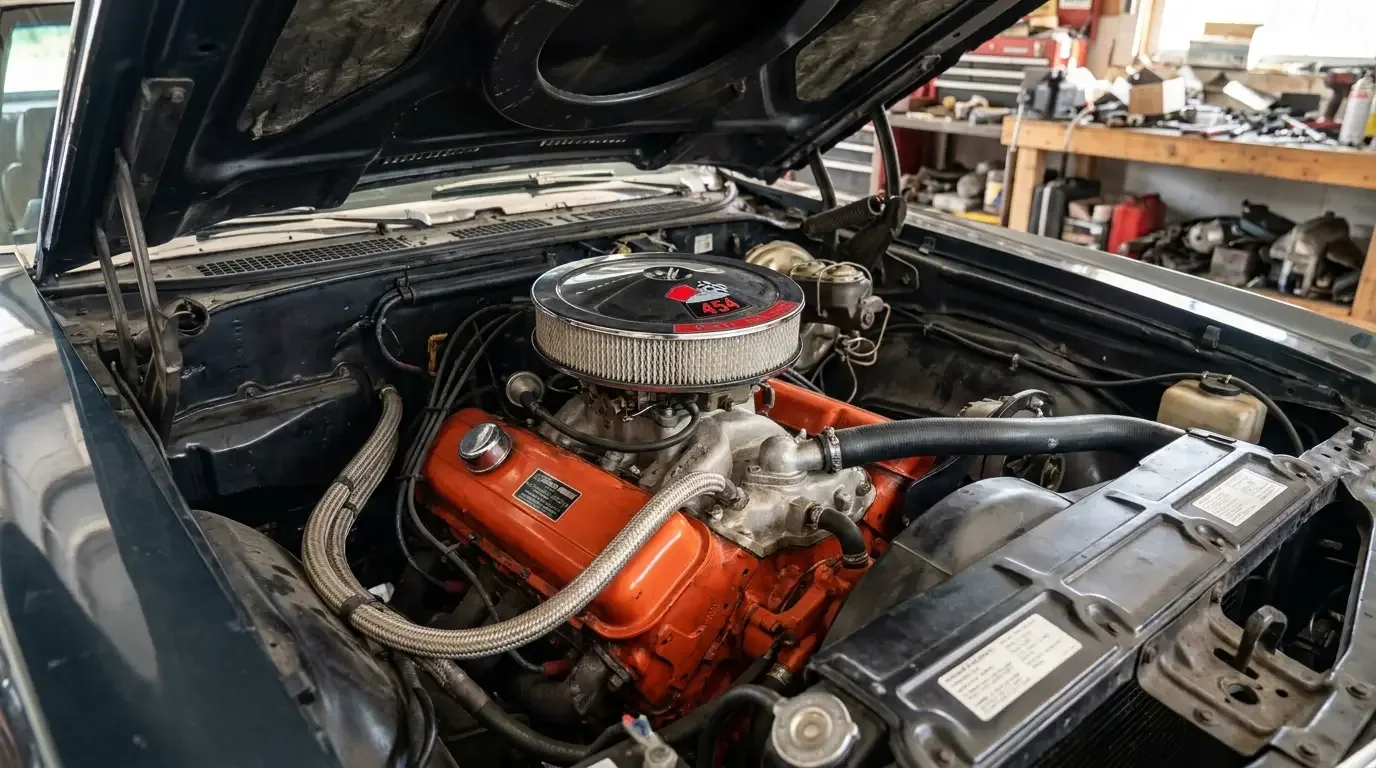
The bigger shift for 1972 specifically was the industry-wide move from gross horsepower ratings to net horsepower ratings, or a blend of both depending on the source you check for that transitional year. Gross ratings were measured on a dyno with the engine stripped of accessories, exhaust restriction and other real-world losses. Net ratings included all of that. A 1972 Chevelle SS 454 carried a factory rating of 270 net horsepower, a number that reads like a collapse next to 1970's LS6 figure, even though the actual mechanical loss in output was smaller than the number suggests.
This matters for anyone researching these cars now, because the horsepower drop between 1970 and 1972 looks catastrophic on paper and reads far more modestly once you account for the measurement change. It is one of the most common things people get wrong when they compare model years, and it is worth correcting before you make a buying decision based on a raw number alone.
Insurance underwriters did what the engineers could not
Compression ratios and net ratings explain the engineering side. Insurance surcharges explain why buyers stopped ordering the big engines even when they were still technically available. By the early 1970s, insurance companies had built specific underwriting categories around engine displacement, vehicle weight and horsepower-to-weight ratio, and a big-block Chevelle SS fell squarely into the highest bracket regardless of who was actually driving it. A young buyer looking at a 454 option and the insurance quote that came with it increasingly walked away and ordered a small block, or skipped the SS package altogether.
Production numbers back this up. SS 454 orders fell sharply through the early 1970s as buyers shifted toward less punishing insurance categories, and Chevrolet's own build data shows the SS package becoming a smaller share of total Chevelle production each year after 1970.
| Model year | Top Chevelle SS engine | Rating basis | Factory rating |
|---|---|---|---|
| 1970 | LS6 454 | Gross | 450 hp |
| 1971 | LS5 454 | Gross, reduced compression | 365 hp |
| 1972 | LS5 454 | Net | 270 hp |
Emissions standards closed the door the rest of the way
Federal emissions regulations tightened steadily through the early 1970s, with catalytic converters arriving industry-wide for the 1975 model year, but the groundwork for that shift, retarded ignition timing, leaner carburetor calibrations, exhaust gas recirculation on some engines, was already showing up in the 1972 lineup. None of this made the cars undriveable. It made them measurably less aggressive than the cars that came before, and it meant the entire performance calculus that had defined the A-body war since 1964 no longer applied the same way.
By the time all three forces landed in the same model year, the compression cuts, the net rating switch and the insurance penalty, the war effectively ended not because any single manufacturer surrendered, but because the conditions that made the fight possible were gone.
"People look at a 1972 build sheet and assume the engine got worse. Most of the time it didn't get worse, it got measured differently and taxed more heavily by an insurance underwriter who never drove the car. That's a very different story than the one that usually gets told, and the factory paperwork backs it up if you actually go read it instead of repeating what you heard at a swap meet."
Tom Ramirez
What 1972 means for buyers today
None of this should scare off a buyer looking at a 1972 Chevelle SS. The cars are honest, well-built and increasingly appreciated by collectors who understand the net-versus-gross distinction and do not penalize the car for a measurement change it had no control over. What it does mean is that anyone comparing a 1970 LS6 car against a 1972 SS454 needs to compare like against like, gross to gross or net to net, rather than reading the sticker numbers at face value.
The end of the A-body muscle war was not a single dramatic moment. It was three regulatory and financial forces converging on the same model year, and understanding that is the difference between reading these cars accurately and misreading them the way a lot of casual histories still do.
The fight between GM's own divisions did not end the story either. Once the A-body war wound down, the real rivalry that outlasted it was closer to home, which is next: Chevelle vs Camaro.
Sources and notes
- 1970-1972 Chevrolet Chevelle SS 454: specs, history, performance
- HowStuffWorks: 1971 Chevrolet Chevelle SS 454 profile
- Automobile-Catalog: 1972 Chevelle SS 454 sport coupe specs (270 hp SAE net)
- Chevrolet Chevelle: Wikipedia, LS5/LS6 production and rating history
- Over-Drive Magazine: 1972 Chevrolet Chevelle fact sheet
- ClassicCars.com Journal: Pick of the Day, 1971 Chevelle SS 454
Related Reading
Have a
Chevrolet Chevelle
for Sale?
Reach thousands of serious classic car collectors across the US.
Sell It Here →
Are You a Classic Car Dealer?
List your full inventory and connect with targeted classic car buyers.
Join as a Dealer →

About the author
Tom Ramirez
Corvette researcher and historian based in Bowling Green, Kentucky. Two decades documenting Corvette production history from original factory records.
Related Listings - Chevrolet Chevelle


Comments
Be the first to comment on this article.