
The claim is simple: 1979 was the biggest year the Camaro ever had. The caveat is just as simple: a record is a production number, and a production number says nothing about any single car. Total 1979 Camaro production reached 282,571, the highest figure of any Camaro model year, before or since. That makes 1979 the most common second-generation Camaro on paper, and for a buyer or a seller today, being common is a fact with consequences. It shapes what these cars are worth, what makes one worth more than another, and how easy it is to sell one when the time comes.
Car Features
7 min read
1979: The Camaro's Best-Selling Year
1979 Camaro production reached 282,571, the highest of any model year. Here is the model split, what changed, and what a record year means for value today.
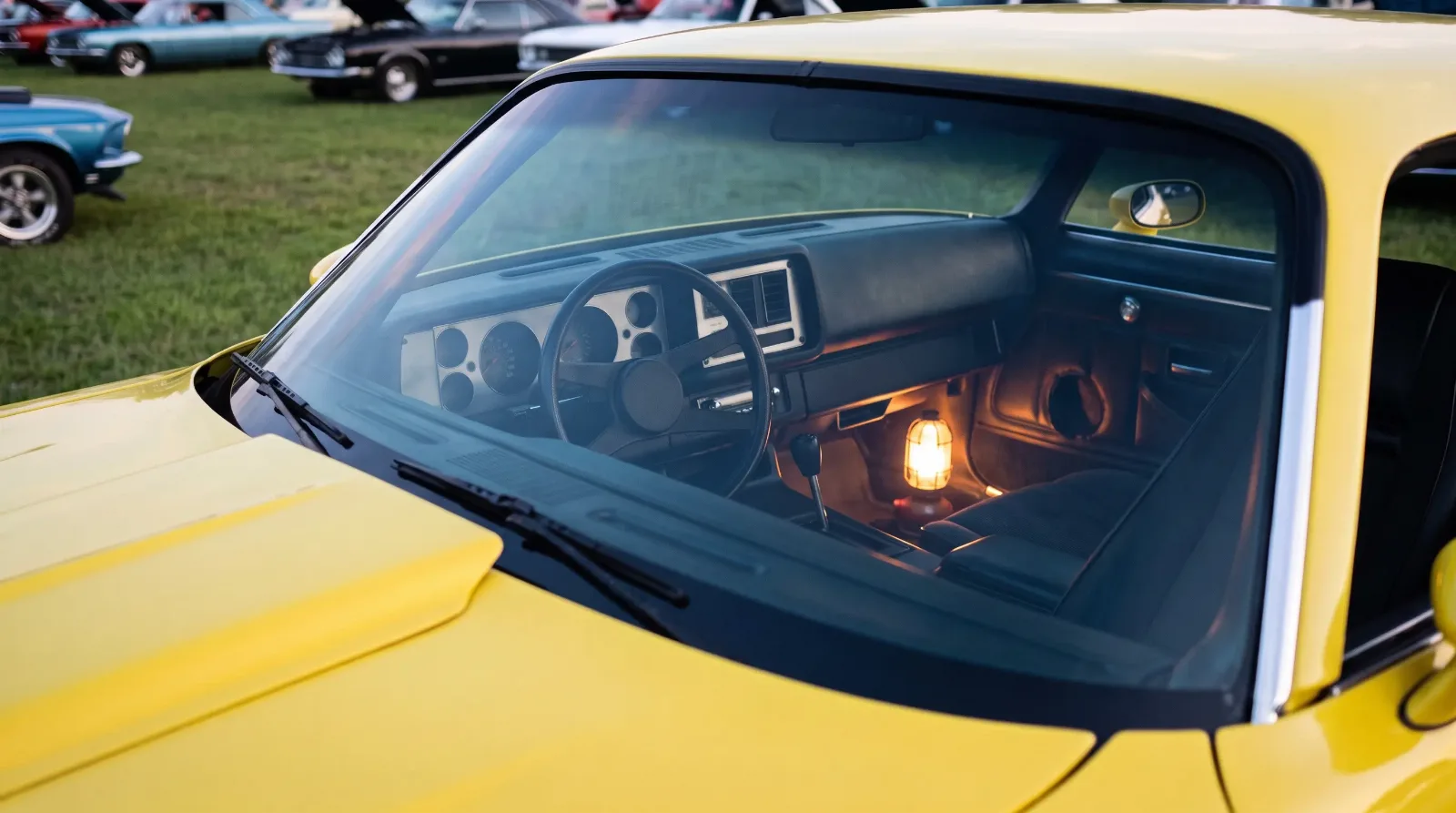
1979 Camaro production by the numbers
The record total is well documented. Two references give 282,571; one parts catalog gives 282,582, an 11-car gap that reads as a typing error rather than a real dispute. One source also calls the figure "sales," which is loose language: it is a model-year build count. The broader sales picture points the same way, though. Combined Camaro and Firebird sales peaked at nearly 500,000 in calendar 1979.
| 1979 model | Built | Share of total | Base price |
|---|---|---|---|
| Sport Coupe | 111,357 | 39 percent | From $4,670 |
| Z28 | 84,877 | 30 percent | $6,120 |
| Berlinetta | 67,236 | 24 percent | About $5,400 |
| Rally Coupe | 19,101 | 7 percent | $5,070 |
| Total | 282,571 | 100 percent | $4,670 to $6,120 |
The split matters more than the total. Nearly one car in three was a Z28. That is unusual for a performance model, and it means the 1979 Z28 is not a rare car in any sense of the word. The engine split tells the same story from a different angle: 260,658 cars had a V8 and only 21,913 had the six.
The engines themselves were modest by earlier standards. The 250 six made 115 hp, the two-barrel 305 made 130 hp, and the four-barrel 350 made 175 hp. The Z28 used that 350, rated at 175 hp at 4,000 rpm.
What changed for the record year
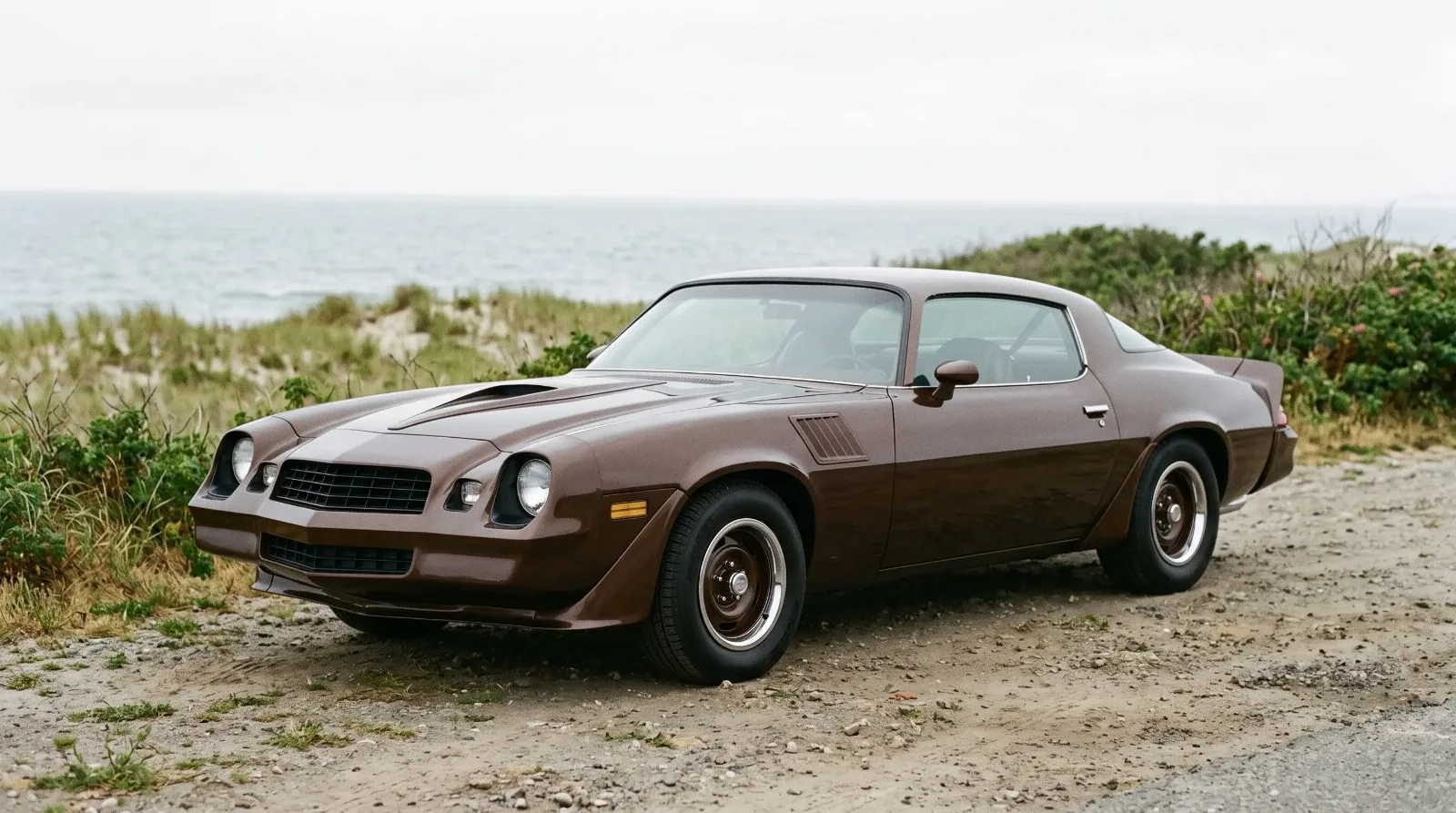
1979 was not a new car. It was the tenth model year of the second generation, and it built on a climb that was already under way. Production had risen from 218,853 in 1977, the first year the Camaro outsold the Mustang, to 272,631 in 1978. The 1979 total added roughly 10,000 more on top of that.
The changes were incremental and specific. The Type LT was retired and the Berlinetta took its place as the luxury model, with a custom interior, bright trim, a dual pinstripe and extra sound insulation. The Z28 gained a front air dam and fender flares, and its "Z28" decals now ran from the front flares down to the door bottoms. That is the quickest way to tell a 1979 Z28 from a 1978 at a distance. Across the line, the optional rear-window defroster changed from the old forced-air blower to an electrically heated rear glass, and every Camaro got brushed aluminum-style instrument panel trim.
The price ladder was wide, which helps explain the volume. A buyer could start at $4,670 for a Sport Coupe or go to $6,120 for a Z28, and the Rally Coupe and Berlinetta filled the space between. The record came from breadth, not from one hit model. For the full arc of the generation that produced it, the 1970 to 1981 run is covered here.
The other side of a record
A peak has a far side. For 1980, Camaro production fell to 152,005, a drop of about 46 percent in one year, and it fell again to 126,139 for 1981. The production records show the drop but not a single agreed cause, so this article does not assign one. What matters for the market is the shape: 1979 sits at the top of a sharp curve, and the cars built just after it are much scarcer.
Those later cars also had their own story, including the hood of the air induction Z28. Scarcity alone does not make them better buys, but it does change how the 1979 cars should be judged against them. A 1979 is the easiest of the late second-generation cars to find. It is not automatically the easiest to value.
"A record production year is good news for a buyer and neutral news for a seller. The supply is deep, so the price comes down to condition and paperwork, and a car with neither has very little to stand on."
Marcus Feld
What 1979 Camaro production means for value
Value on any collector car is condition, documentation and liquidity. A record year changes the weight of each. Liquidity is good: there are many cars and many buyers who know them, so a sound 1979 is not hard to sell. Condition becomes the main lever, because a buyer who passes on one car can usually find another. Documentation is the tiebreaker, and with this many cars built, it is often the only thing separating a good example from a merely tidy one.
Market data supports the general direction without making late second-generation cars expensive. In a May 2024 snapshot of Hagerty values, number 2 condition second-generation Camaros ranged from $11,200 for a 1980 base car with the lowest-output V8 to $84,800 for a 1970 SS 396 with the L78. Over the prior three years, quoted values for 1970 to 1981 Camaros had risen 32 percent. The same data shows the gap that trim creates: a 1981 Z28 rose 80 percent over four years, against 24 percent for a 1981 base or Berlinetta car. The same buyer's guide gives no separate value or trend figure for 1979 cars, so treat those numbers as a guide to direction, not a price for a specific 1979 car.
The practical reading is this. A 1979 Z28 should be priced as a common performance car, not a rare one. A 1979 Berlinetta or Sport Coupe should be priced as a driver unless the condition and paper argue otherwise. And any 1979 sold with a story about being special needs the documents to back it up.
Buying a 1979 Camaro today
For a buyer, the deep supply is the advantage. You can be selective, compare cars side by side and walk away from a seller who cannot answer questions. A current list of 1979 Camaros for sale is a useful starting point for seeing how condition and trim move asking prices in practice.
For a seller, the same supply is the risk. Your car competes with many others built the same year, often in the same trim. Clean condition, original parts and documents that tie the car to its build are what move it to the front of that line. If you want to place 1979 against the rest of the model's history, the story of every classic Camaro era puts the record in context. The record belongs to the year. The value belongs to the individual car.
Sources and notes
- Your handy 1970 to 1981 Chevrolet Camaro buyer's guide, Hagerty
- 1979 Chevrolet Camaro production, prices and engines, conceptcarz
- 1979 Chevrolet Camaro Z28 history, conceptcarz
- Chevrolet Camaro (second generation), Wikipedia
- Chevrolet Camaro production by model year, Wikipedia
- Camaro VIN decoder, Classic Industries
Related Reading
Have a
Chevrolet Camaro
for Sale?
Reach thousands of serious classic car collectors across the US.
Sell It Here →
Selling a classic? Here's how: sell my classic car
Are You a Classic Car Dealer?
List your full inventory and connect with targeted classic car buyers.
Join as a Dealer →
#camaro z28
#chevrolet camaro
#camaro production
#classic car values
#second generation Camaro
#1979 Camaro

About the author
Marcus Feld
Accredited collector-car appraiser who reads the market through hammer prices, condition tiers and risk.
Related Listings - Chevrolet Camaro




Comments
Be the first to comment on this article.