
Picture a showroom in the fall of 1978. A buyer walks past the Z28 with its decals and its spoilers, stops at a quieter car with thin twin pinstripes along its flanks, and opens the door. The cabin smells of new cloth. The door closes with a softer sound than the cheaper coupe beside it. That quieter car was the Camaro Berlinetta, and for eight model years, 1979 to 1986, it was Chevrolet's argument that a Camaro could be gentle without being dull. It sold very well at first, and then it faded, one year at a time, until a different badge took its place.
Car Features
6 min read
The Camaro Berlinetta, 1979 to 1986
The Camaro Berlinetta replaced the Type LT for 1979, sold 67,236 copies in its first year, carried the 1984 digital dash, then faded out after 1986.
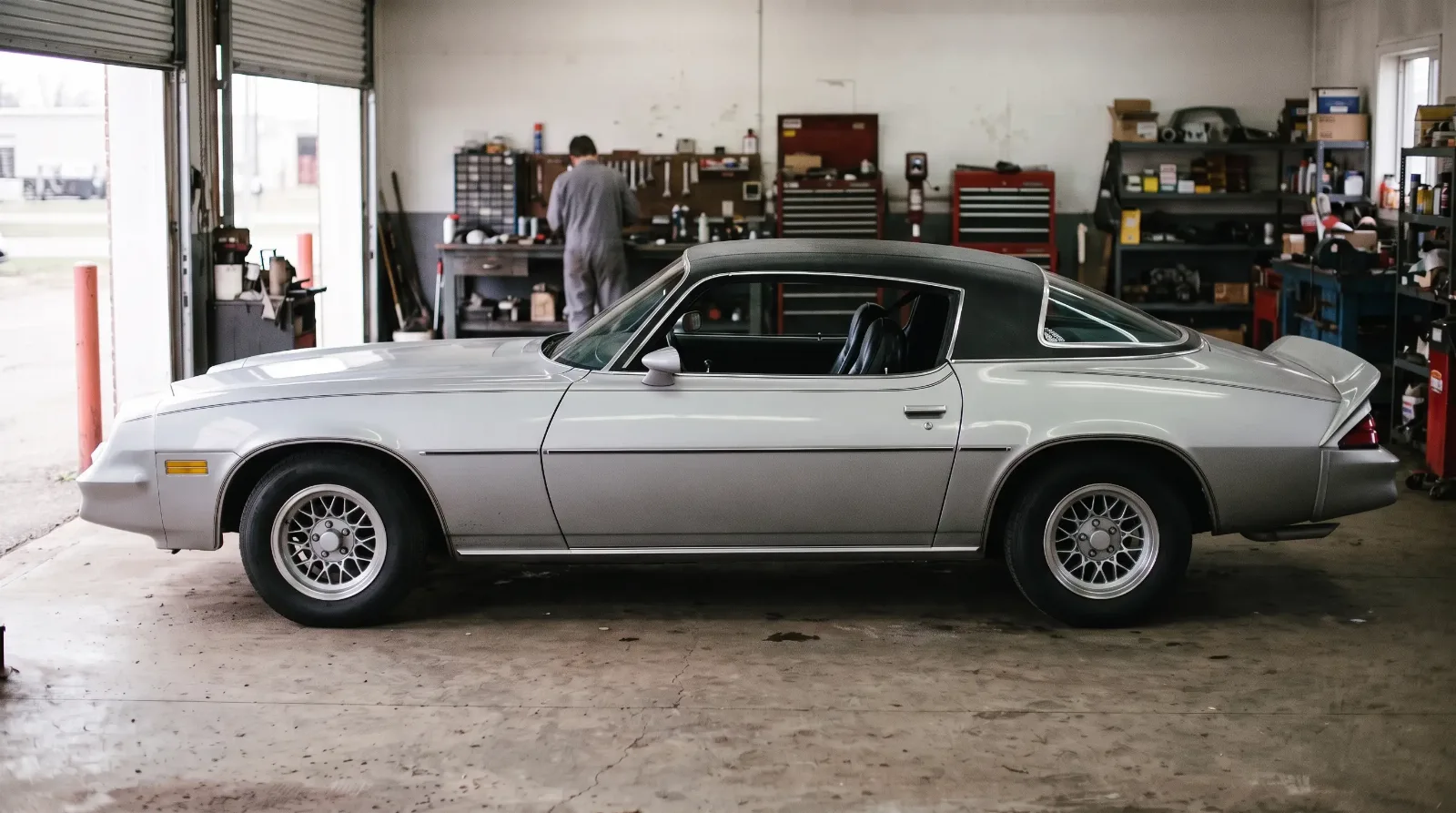
Why the Camaro Berlinetta replaced the Type LT
The Berlinetta did not arrive from nowhere. Since 1973 the dressed-up Camaro had been the Type LT, short for Luxury Touring, the car that took over the featured slot when the Super Sport was dropped. By the end of the decade the LT name had done its job, and for 1979 Chevrolet replaced it with something that sounded more exotic.
The new name was borrowed in spirit from Italy. In Ferrari's vocabulary a berlinetta is a closed coupe, and the second-generation Camaro had carried a Ferrari echo from the start: its long-hood shape and stance recalled the early 1960s 250 GT SWB Berlinetta and the 250 GT Berlinetta Lusso, cars the designers had studied. Calling the luxury Camaro a Berlinetta closed a circle that the stylists had opened nine years before. There is more on the second-gen cars and that shape in the generation story.
It was also good timing. The Camaro had passed the Mustang in 1977, the first year it ever did, and the longer story of that win explains how much momentum the car carried into the last years of the decade. A new luxury trim gave that momentum somewhere comfortable to go.
What the 1979 Berlinetta added
The 1979 car was about touch and sound more than speed. Chevrolet gave it a custom interior, a bright grille and bright moldings, a dual pinstripe, body-color mirrors and full gauges. It added Amberlite sound insulation to keep the road noise outside. It even had dual horns, a small detail that says a lot about who the car was for. This was a Camaro for someone who wanted to arrive rested.
The advertising leaned into feeling, too. One 1979 Berlinetta headline read, "A new way to take your pulse." It is a strange line for a luxury coupe. It also fits, because the Berlinetta was never meant to be a numb car; it was meant to be a calmer one.
Buyers agreed. Chevrolet built 67,236 Berlinettas for 1979, at a price of about $5,400. That was close to a quarter of the 282,571 Camaros built that year, the highest total of any Camaro model year, and a large part of why the record 1979 sales year happened at all.
The slide in numbers, 1979 to 1986
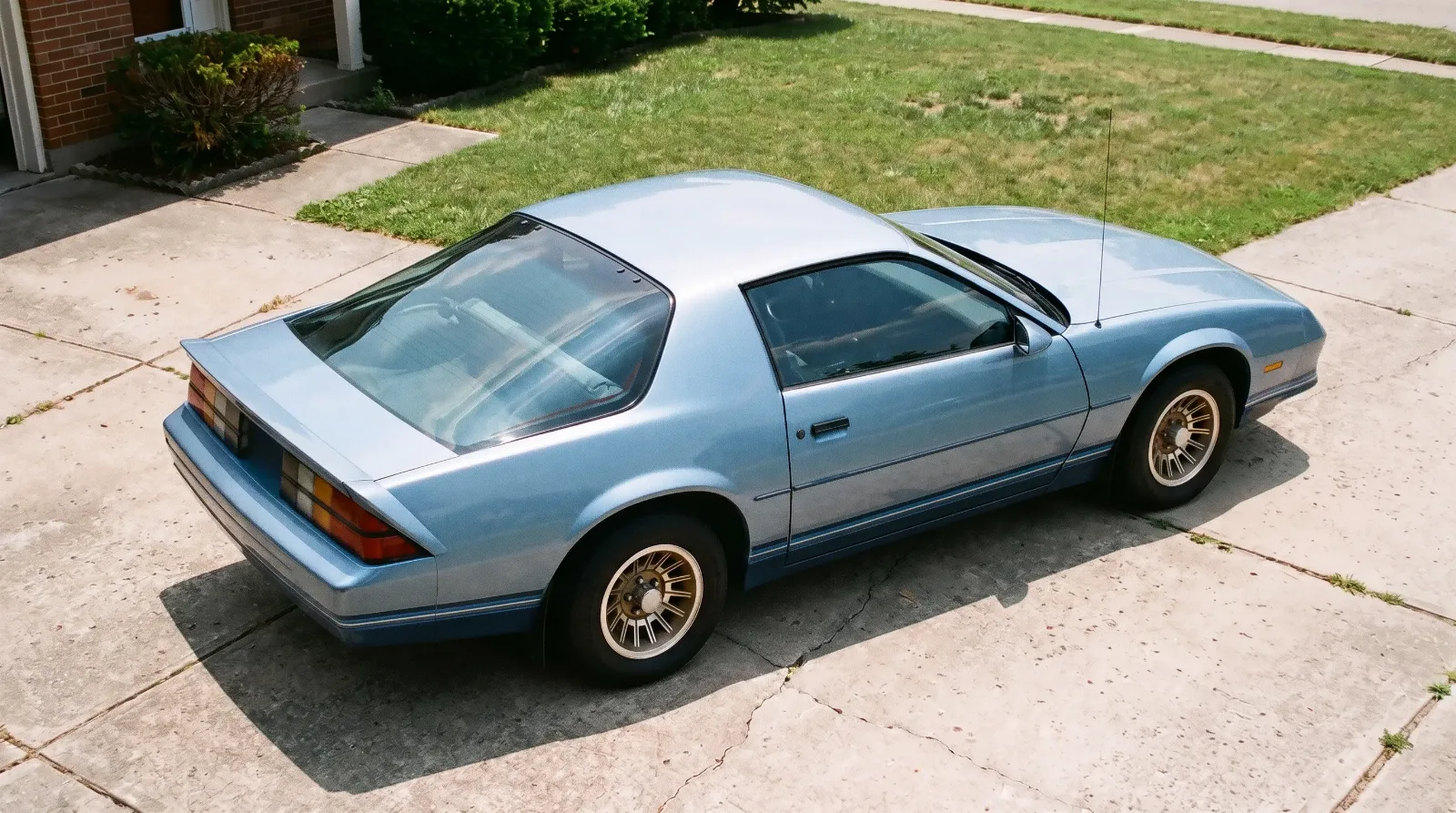
The year after the record, the Berlinetta's number fell by more than half. That was part of a wider drop, because the whole Camaro line fell to 152,005 cars for 1980, but the luxury car took the fall harder than most. The 1981 figure is unsettled: one set of sources gives 20,253 and another gives 43,272, with the Z28 figure swapped the other way. Both sets of numbers add up to the same 126,139-car total, which is why the question has never been closed.
| Model year | Berlinettas built | Notes |
|---|---|---|
| 1979 | 67,236 | First year; about $5,400 |
| 1980 | 26,679 | All Camaros: 152,005 |
| 1981 | 20,253 or 43,272 | Sources swap the Berlinetta and Z28 counts |
| 1982 | 39,744 | New third-generation body |
| 1983 | 27,925 | |
| 1984 | 33,400 | Electronic dash year |
| 1985 | 13,649 | 21,177 in one source is the IROC-Z count |
| 1986 | 4,479 | Last year; base $11,902 |
For the third generation in 1982, the Berlinetta became one of three trims, alongside the Sport Coupe and the Z28. The body was new, shorter and lighter, and the luxury car moved into it without losing its place. You can follow that body through the third-gen Camaro story; for the Berlinetta, the important year was 1984.
The 1984 cockpit, and a quiet last act
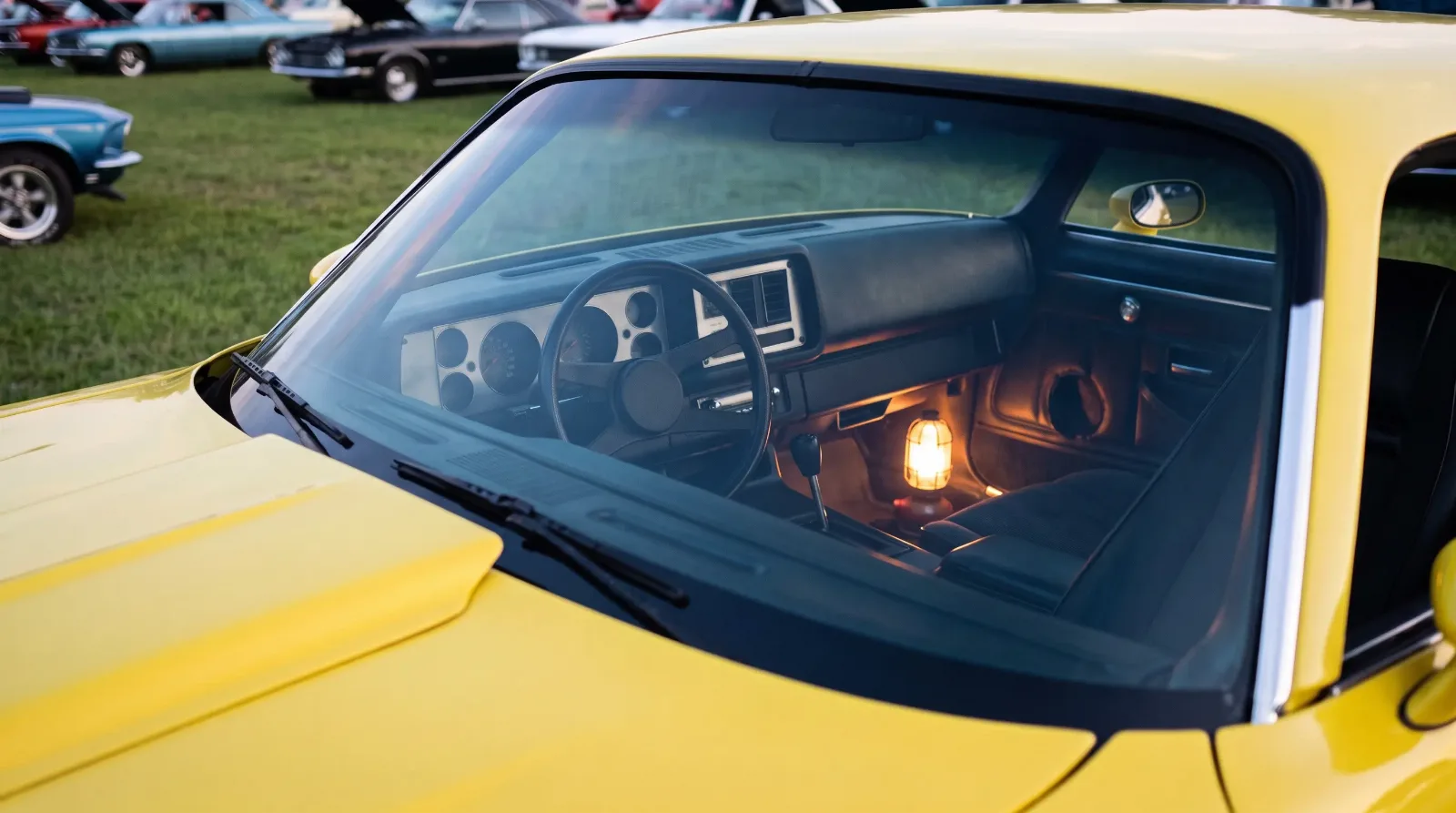
For 1984 the Berlinetta became the space-age Camaro. It got a vacuum-fluorescent digital speedometer and a bar-graph tachometer, push-button control pods on either side of the steering column, a radio on a swiveling pod the passenger could reach, and a roof console with a removable flashlight. That year it sold 33,400 copies at about $11,000. The standard engine was a 2.8-liter V6 of 107 hp, with a V8 optional, and a five-speed car needed about 14 seconds to reach 60 mph. It was a car to sit in. It was not a car to race.
After that the line thinned fast. Sales fell to 13,649 for 1985 and to 4,479 for 1986. The final car still had the electronic cluster, the pods and the flashlight in the roof. It now came with a multi-port fuel-injected 2.8 V6 of 135 hp as standard, and the 155 hp 305 V8 cost $450 more. Then, for 1987, Chevrolet retired the name and gave the luxury slot back to the LT. The Berlinetta simply stopped.
"I keep thinking about who bought these cars. Not the kid with the poster on the wall, but the person who wanted a Camaro and also wanted a quiet drive home. The Berlinetta was built for that second person, and there were a lot of them."
Nora Beckett
Finding a Berlinetta now
The market has treated the Berlinetta the way it treats most quiet cars. In one 2024 survey of second-generation values, the 1981 Z28 had climbed 80 percent over four years while the 1981 base and Berlinetta cars rose 24 percent. That gap is the opportunity and the warning in one line: a Berlinetta costs less to buy, and it will likely stay a car you keep for the pleasure of it.
Open the door of a good one today and the cabin still tells you what it was for. The insulation still mutes the road. The gauges still glow. It is the Camaro that never shouted, and it was never meant to.
Sources and notes
Related Reading
Have a
Chevrolet Camaro
for Sale?
Reach thousands of serious classic car collectors across the US.
Sell It Here →
Selling a classic? Here's how: the best sites to sell a classic car
Are You a Classic Car Dealer?
List your full inventory and connect with targeted classic car buyers.
Join as a Dealer →
#chevrolet camaro
#Camaro Berlinetta
#third generation Camaro
#second generation Camaro
#1979 Camaro
#Luxury Coupe

About the author
Nora Beckett
Automotive features writer and photographer who tells the human stories behind the cars, from show fields to cross-country road trips.
Related Listings - Chevrolet Camaro




Comments
Be the first to comment on this article.