
Gary Hensley was fourteen when he saw the black Trans Am jump the broken bridge in Smokey and the Bandit, and forty years later he was still trying to build his way back to that moment. Not the movie. The feeling of it, sitting in a dark theater in rural Georgia, watching a car do something a car had no business doing. By the time he finally had the money and the garage space, he didn't want a Trans Am. He wanted that Trans Am, right down to the snowflake wheels and the shaker hood scoop, and he spent three years and more money than he'll admit to his wife getting there.
Car Features
6 min read
Bandit Tribute Builds
Inside the community of owners building black and gold Trans Ams in tribute to the Bandit's screen car, one memory at a time.
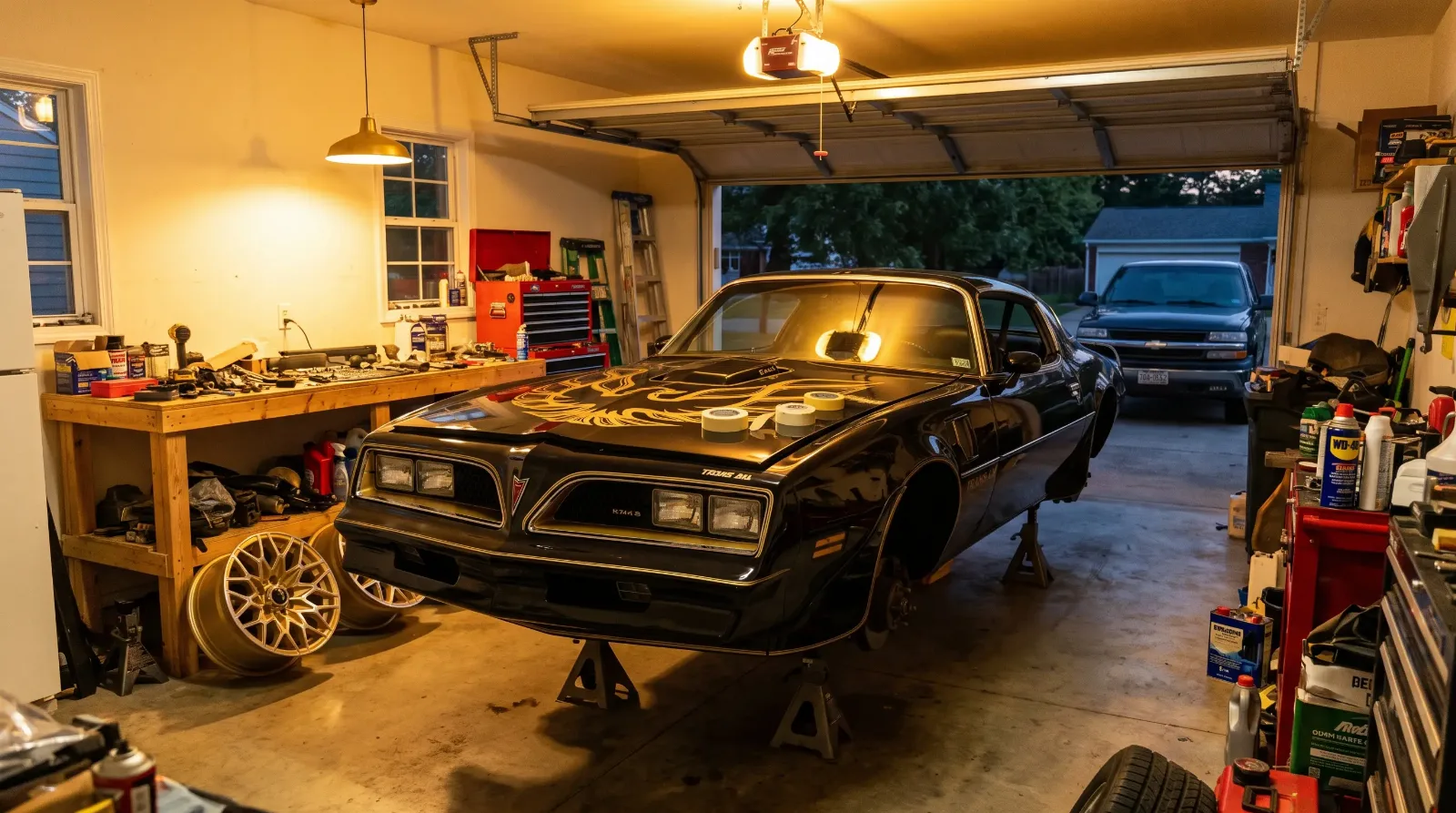
Gary is not unusual. He's one of hundreds of owners across the country who have built a bandit tribute build, a car assembled or restored specifically to replicate the black and gold 1977 Pontiac Trans Am from that film, and the community around these builds has quietly become one of the most active corners of Firebird ownership. Some are meticulous, chasing factory-correct decal placement and period-correct wheel offsets. Others just want the look and the sound, and they're happy with a modern crate engine under a shaker scoop that never actually shakes.
What actually makes a tribute build
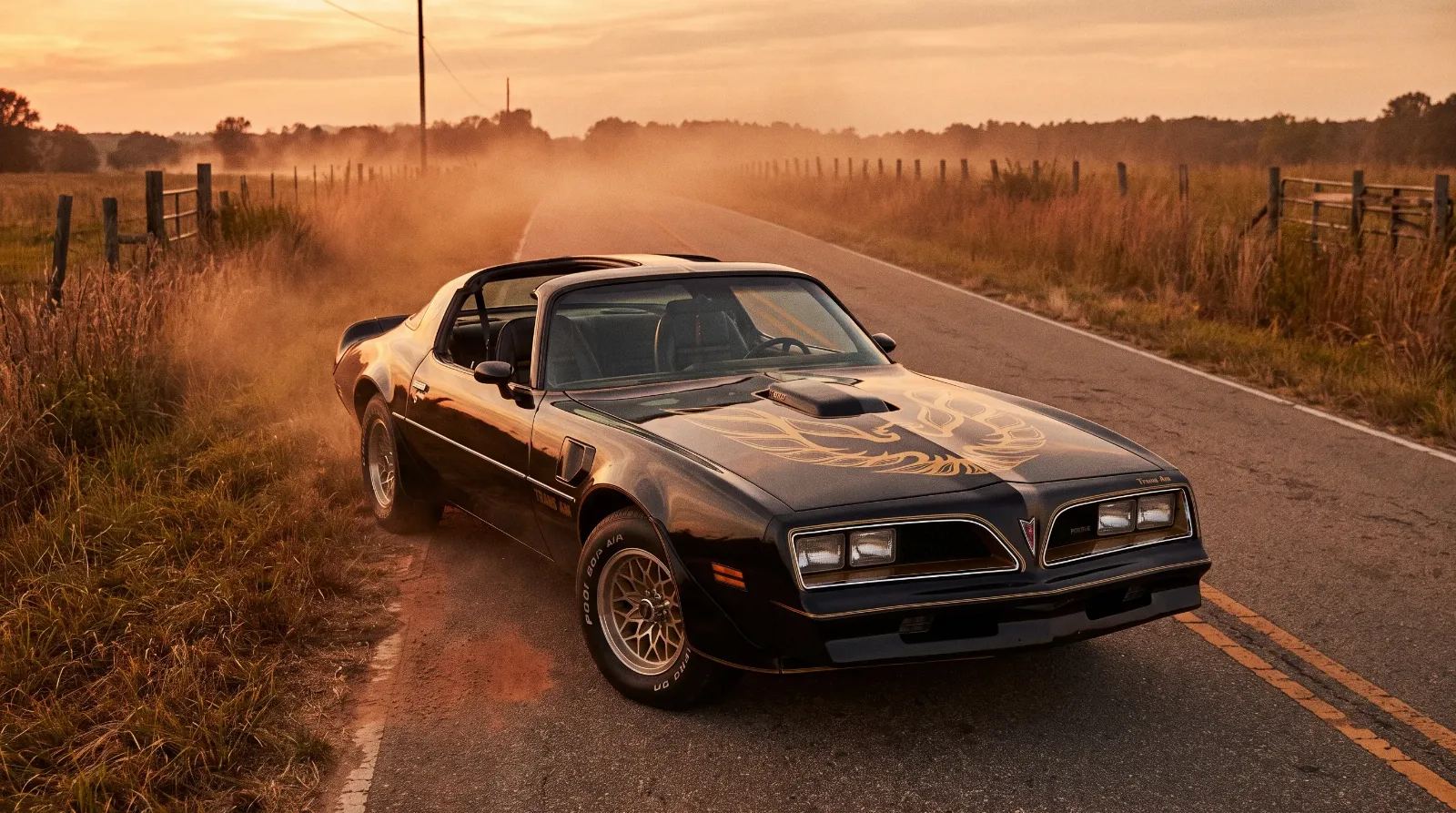
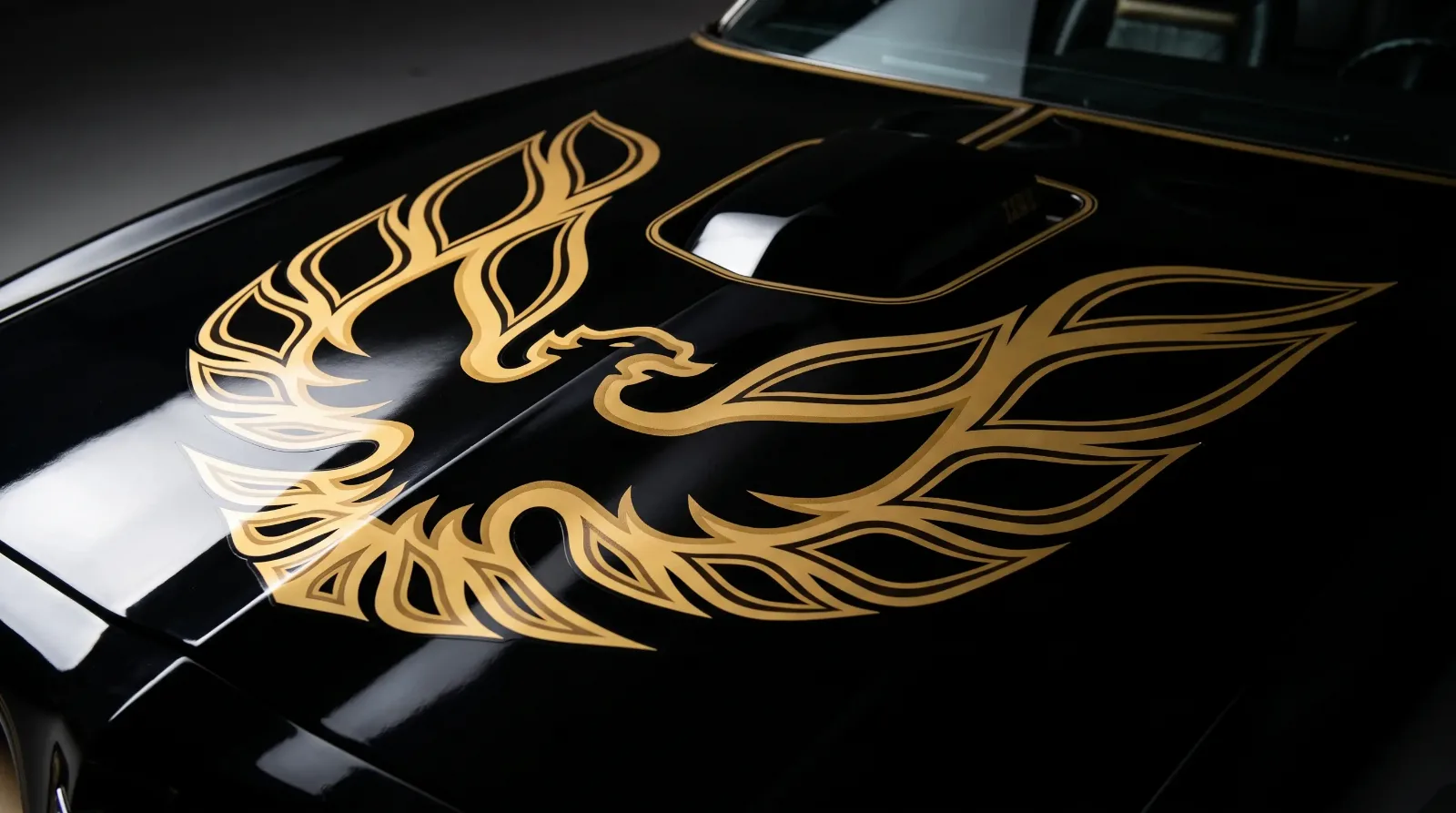
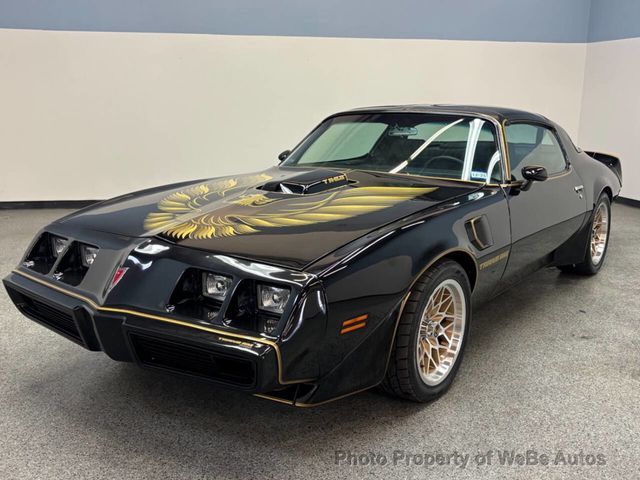
A real tribute build starts with a genuine second-generation Trans Am, usually a 1977 or 1978, because those are the years closest to the screen car's body style and trim. From there, the build follows a fairly consistent recipe: black paint, gold pinstriping, the gold snowflake wheels, and the full-hood firebird decal in gold over black. Purists go further, sourcing the correct T-top configuration and making sure the shaker scoop's outline matches what appeared on camera, since Pontiac offered several scoop variations across those years and not all of them match the film car exactly.
Engine choices split the community more than almost anything else. Some builders insist on a period-correct 400 or 403 cubic inch V8 because that's what would have been under the hood in period, even though the film cars themselves were swapped and doubled during production and didn't all share one drivetrain. Others, chasing drivability over accuracy, drop in a modern LS-based crate engine and keep the numbers to themselves at car shows. Neither approach is wrong. They're just answering a different question about what the build is actually for.
A rough build breakdown
| Element | What tribute builders typically source |
|---|---|
| Base car | 1977 to 1978 Trans Am, T-top or shaker hood |
| Paint | Black base, gold pinstripe kit |
| Hood decal | Full screaming chicken, gold over black |
| Wheels | Gold snowflake, period style or reproduction |
| Drivetrain | Either period-correct 400/403 V8 or modern crate swap |
The people behind the paint jobs
What separates this corner of Firebird ownership from ordinary restoration culture is how openly personal it is. Ask a tribute builder why they chose this specific car and you rarely get a mechanical answer. You get a memory. A father who owned one. A drive-in theater. A cousin who had the poster on a bedroom wall through most of the 1980s. The car becomes a way of holding onto a specific year of someone's life, and the build itself becomes almost secondary to the reason for building it.
That emotional weight shows up at gatherings too. Owners trade stories about tracking down the right pinstripe kit the way other people trade fishing stories, and there's a real generosity in the community about sharing sources, because everyone remembers how hard their own first search was. Facebook groups and regional clubs devoted entirely to tribute builds have grown steadily, and it's common for a newer builder to get a full parts list and three recommended vendors from a total stranger within a day of posting a question.
What it costs to chase the exact look
Building toward screen accuracy is not cheap, and it rarely stays within a builder's original budget. A clean donor Trans Am with a solid floor and no frame rust already commands a real price before any restoration work begins, and that's before the decal work, the wheel sourcing, and the paint and body labor that separates a good tribute from a great one. Owners who've done it more than once say the second build always comes in cheaper than the first, mostly because they've already learned which shortcuts cost more money down the road.
"He'd been carrying that bedroom poster around in his head for thirty years before he ever touched a wrench. The car in his garage wasn't really a Trans Am to him. It was proof that the fourteen-year-old kid who saw that movie got to grow up and build the thing he wanted."
Nora Beckett
Why the tribute keeps finding new builders
New builders keep arriving, and not all of them were alive when the film came out. Younger enthusiasts discover Smokey and the Bandit the way earlier generations discovered it in theaters, through streaming and reruns, and something about that black and gold silhouette translates across four decades without losing its pull. It helps that the underlying car, the second-generation Trans Am, has aged into genuine collector status on its own merits, so a tribute build today carries real value even for someone who has never seen the movie that inspired it.
What keeps the tradition going, more than any single part or paint code, is that the build is never really finished being personal. Every owner adds a small deviation, a detail only they know about, even inside a format built around exact replication. That tension between chasing an exact copy and still making it your own is, in a strange way, the whole appeal. For the wider history of how this one car took over American pop culture, the Bandit story covers the full arc, and the series continues from there. To see where the Trans Am's cultural footprint went next, keep reading the series.
Sources and notes
Related Reading
Have a
Pontiac Firebird
for Sale?
Reach thousands of serious classic car collectors across the US.
Sell It Here →
Are You a Classic Car Dealer?
List your full inventory and connect with targeted classic car buyers.
Join as a Dealer →

About the author
Nora Beckett
Automotive features writer and photographer who tells the human stories behind the cars, from show fields to cross-country road trips.
Related Listings - Pontiac Firebird




Comments
Be the first to comment on this article.