
Long before anyone thought a talking car could carry a prime time television show, the Pontiac Firebird had already spent the better part of a decade proving it could act. Smokey and the Bandit gets most of the credit for putting the Trans Am in front of a mass audience, and it deserves that credit. But the car's real reach into American living rooms came from what happened after the movie, when television producers, musicians, and album art directors all reached for the same silhouette because audiences already trusted it.
Car Features
6 min read
The Trans Am in Music and TV
From KITT's scanner light to album covers and music videos, how the Trans Am kept finding its way onto American screens after Smokey and the Bandit.
Knight Rider and the car that talked back
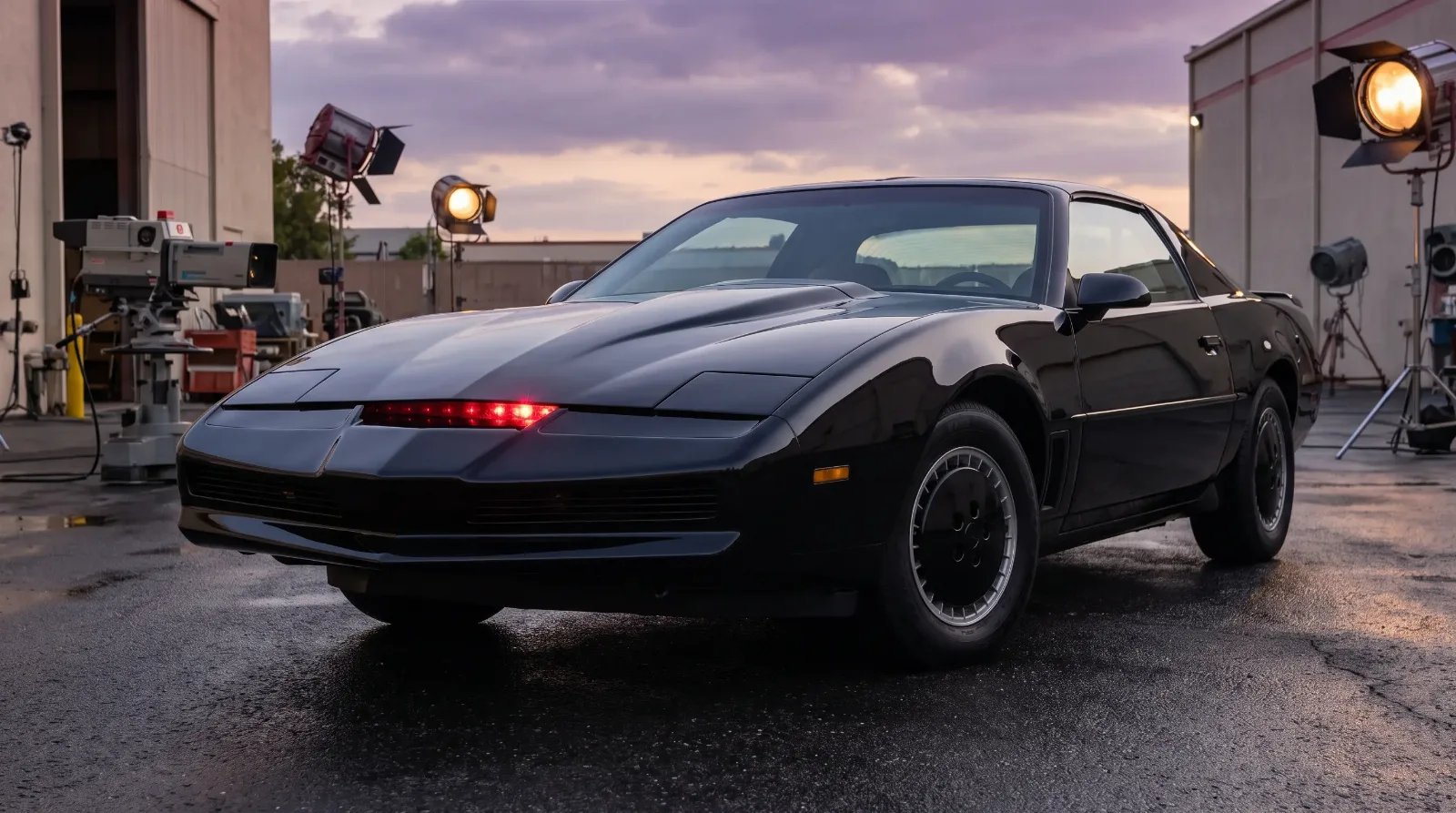
In 1982, Knight Rider gave the Trans Am a personality of its own. KITT, the artificially intelligent car driven by Michael Knight, was built from a heavily modified 1982 Pontiac Trans Am, and the show turned the car into a co-star rather than a prop. Where the Bandit's Trans Am communicated through tire smoke and a growling exhaust note, KITT talked, reasoned, and occasionally argued with its driver, giving the Firebird nameplate a second act just as the original Bandit fever was cooling.
What made KITT work as a piece of car culture, rather than just a television gimmick, was how much of the actual Trans Am silhouette survived the transformation. The wide flared fenders, the low nose, the general stance of the third-generation Firebird were still recognizably Pontiac under the red scanner light and the molded body panels. Kids who couldn't afford the real car grew up wanting a Trans Am specifically because KITT was one, and that generational pull kept Firebird interest alive through the 1980s in a way a straight sales pitch never could have.
Album covers and music video cameos
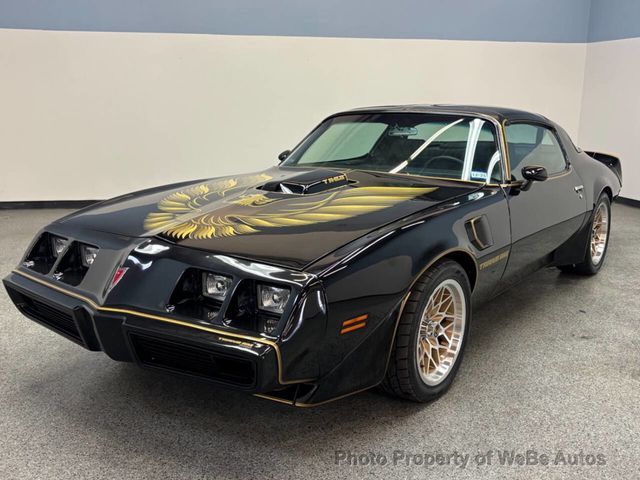
The Trans Am's visual language, that low black or gold body with a hood graphic loud enough to read from across a parking lot, made it a natural fit for album art and music videos throughout the late 1970s and into the 1980s. Southern rock and outlaw country acts in particular gravitated toward the car, since it matched the same rebellious, open-road identity their music was already selling. The car showed up in music videos as a visual shorthand for freedom and speed without a director needing to explain anything about it. Audiences already knew what the silhouette meant.
That kind of instant recognition is rare for a production car, and it's part of why the Trans Am kept appearing in television and film well past its commercial peak. Directors reach for images that don't need setup. A Trans Am pulling into frame told viewers everything about a character's attitude in under two seconds, which is a kind of efficiency that very few cars, of any era, have ever earned.
Local television stations weren't immune either. Several regional car dealerships and radio stations used a black and gold Trans Am in their own commercials through the late 1970s and early 1980s, borrowing the same visual shorthand the movie had already sold to a national audience. None of that advertising was licensed to Smokey and the Bandit directly. It didn't need to be. The image had become public property in the way a handful of cars manage every generation, recognized without a brand name attached to it.
Notable screen appearances
| Production | Trans Am's role |
|---|---|
| Smokey and the Bandit (1977) | The Bandit's black and gold 1977 Trans Am |
| Knight Rider (1982 to 1986) | KITT, built on a 1982 Trans Am |
| Various southern rock album covers | Visual shorthand for open-road freedom |
Why the car outlasted the shows
Television series and hit songs come and go, but the Trans Am's television and music appearances had a strange staying effect on the car's identity that outlived the original broadcasts. Reruns kept KITT in front of new viewers for decades, and Smokey and the Bandit became a cable television staple long after theatrical runs ended, which meant new generations kept discovering the car even as the actual production models aged into collector status. Very few cars get that kind of ongoing cultural refresh without a single new advertising dollar spent on them.
It also meant the Trans Am's reputation split into two slightly different lanes that still coexist today. There's the muscle car crowd, focused on displacement, gearing, and the mechanical story of what Pontiac actually built. And there's a wider, more casual audience who knows the car almost entirely through screens, who couldn't tell a 400 from a 403 but would recognize that hood graphic anywhere. Both groups show up at the same car shows now, for slightly different reasons, and the overlap has kept interest in these cars broader than it might otherwise be for a model line that ended production in the early 2000s.
"I met a guy at a show who told me straight out he'd never seen Smokey and the Bandit all the way through. He just grew up on Knight Rider reruns and decided at nine years old that this was going to be his car someday. Twenty years later, there it was in his driveway. That's a different kind of loyalty than horsepower ever built."
Patrick Walsh
A cultural footprint bigger than any single film
What separates the Trans Am from most cars that got a single memorable screen moment is the sheer range of places it showed up and stuck. It wasn't a one-film wonder. It became a recurring visual reference across an entire decade of American media, moving from a Southern car chase comedy to a network science fiction drama to album covers without ever needing a redesign to fit the new context. That range is a big part of why the model still draws interest from buyers who never lived through its original run. For the full account of the moment that started all of it, read how Hollywood made it a star, or see the complete Firebird saga for the model's whole history. The series continues with a look at how fans keep the road trip alive: keep reading the series.
Sources and notes
Related Reading
Have a
Pontiac Firebird
for Sale?
Reach thousands of serious classic car collectors across the US.
Sell It Here →
Are You a Classic Car Dealer?
List your full inventory and connect with targeted classic car buyers.
Join as a Dealer →

About the author
Patrick Walsh
Automotive journalist covering classic car shows, events, and the enthusiast community across North America.
Related Listings - Pontiac Firebird




Comments
Be the first to comment on this article.