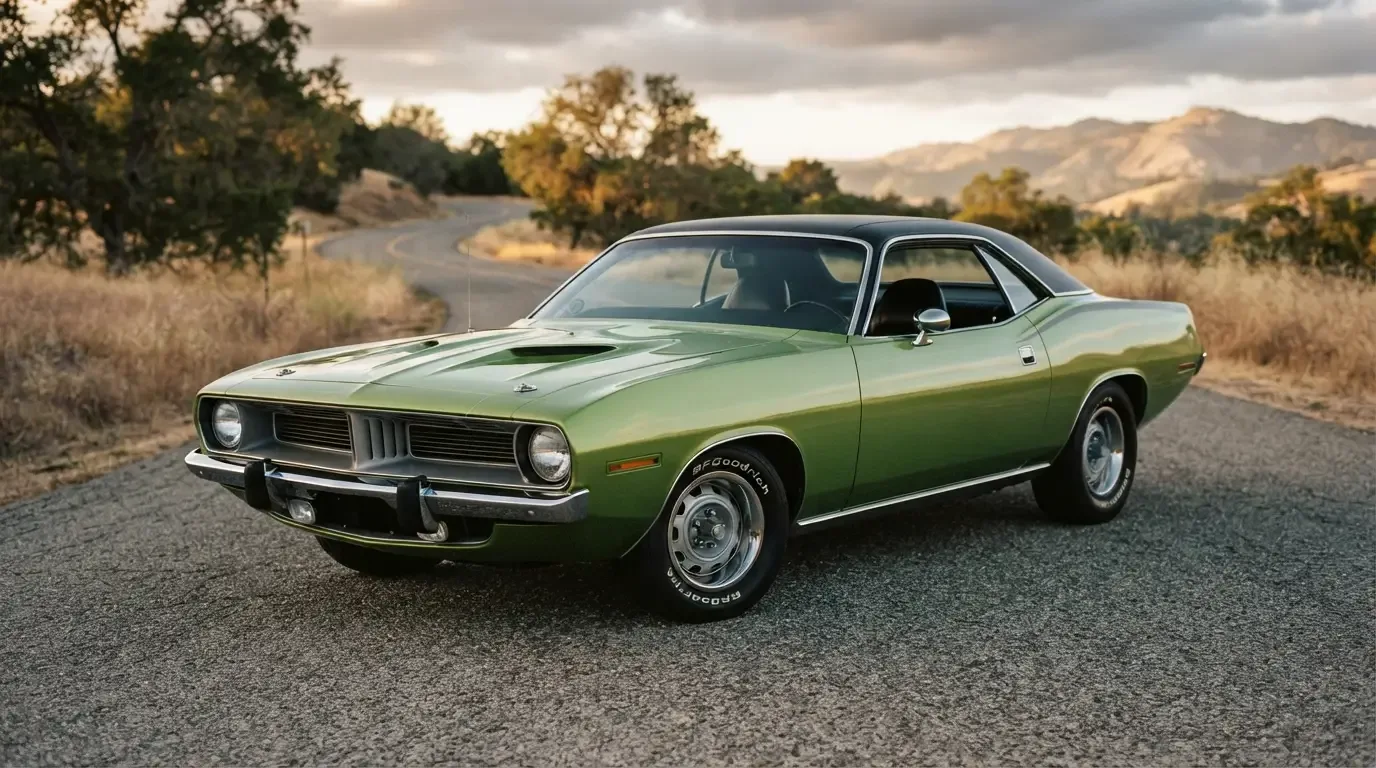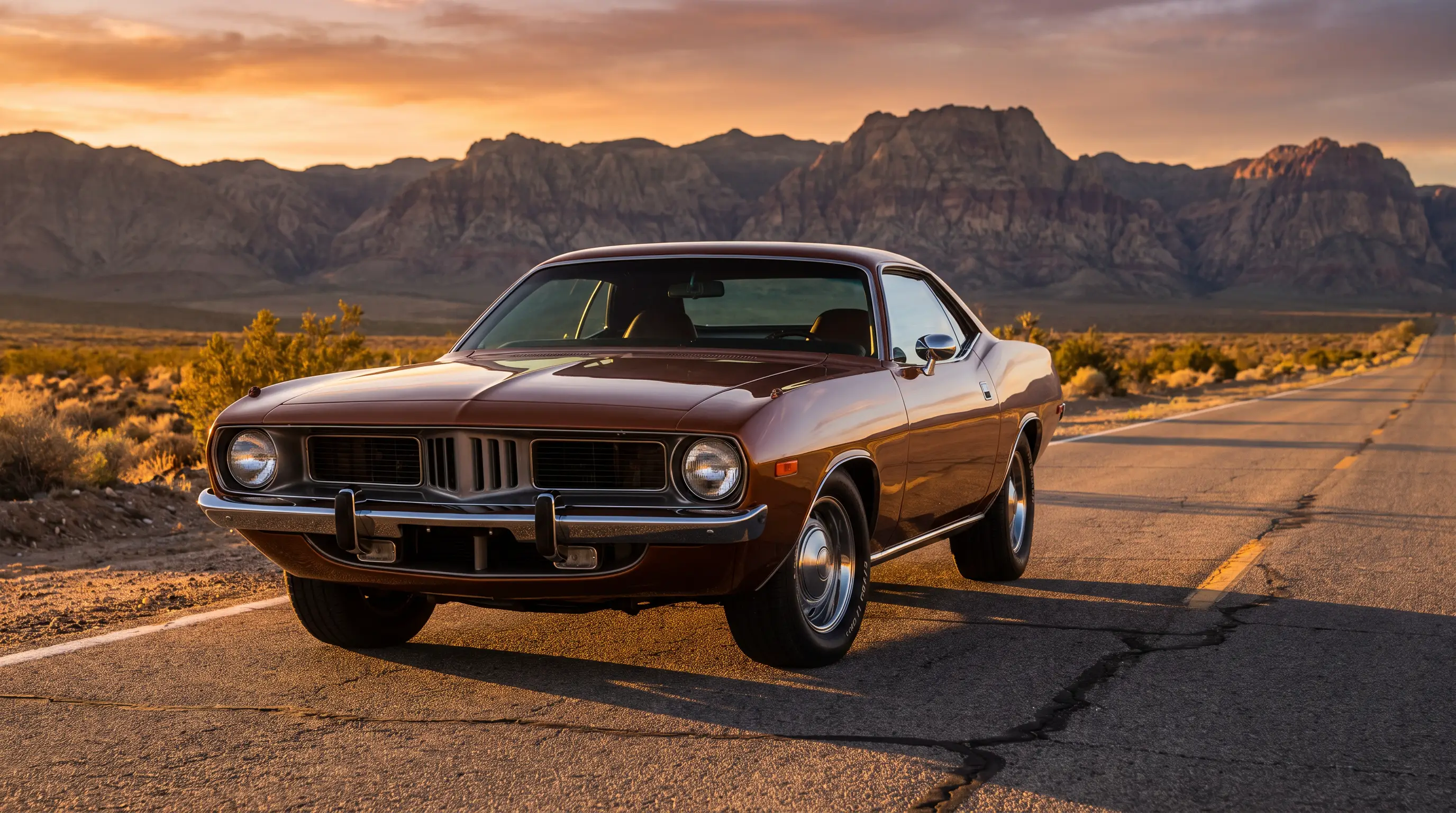

Every old car club has a member who will tell you emissions rules "killed" the muscle car, usually said with a shake of the head like it was a betrayal rather than a policy decision. The truth with the Plymouth Barracuda is more complicated and honestly more interesting, because the car did not die when emissions rules tightened. It adapted, awkwardly at times, but it kept rolling off the line for years after the regulatory pressure started reshaping what Chrysler's engineers were allowed to build.
Where the pressure actually came from
The story usually gets collapsed into a single villain, but there were really three separate forces squeezing the Barracuda at roughly the same time, and it is worth pulling them apart. Insurance companies had been raising premiums on high performance cars through the late 1960s and into the early 1970s, making a big block Barracuda a genuinely expensive proposition for a young buyer even before fuel or regulation entered the picture. Federal emissions rules, tightening year over year through the early 1970s under the framework established by the Clean Air Act, forced engineers to detune engines for cleaner combustion. And the horsepower rating change in 1972, from gross to SAE net figures, made the whole transition look even more dramatic on paper than it necessarily was under the hood.
Put those three things together and you get a car company pulling back on multiple fronts simultaneously, not because anyone at Chrysler had stopped caring about performance, but because the entire commercial and regulatory environment around performance cars had shifted underneath them in the space of just a few years.
How the Barracuda actually responded
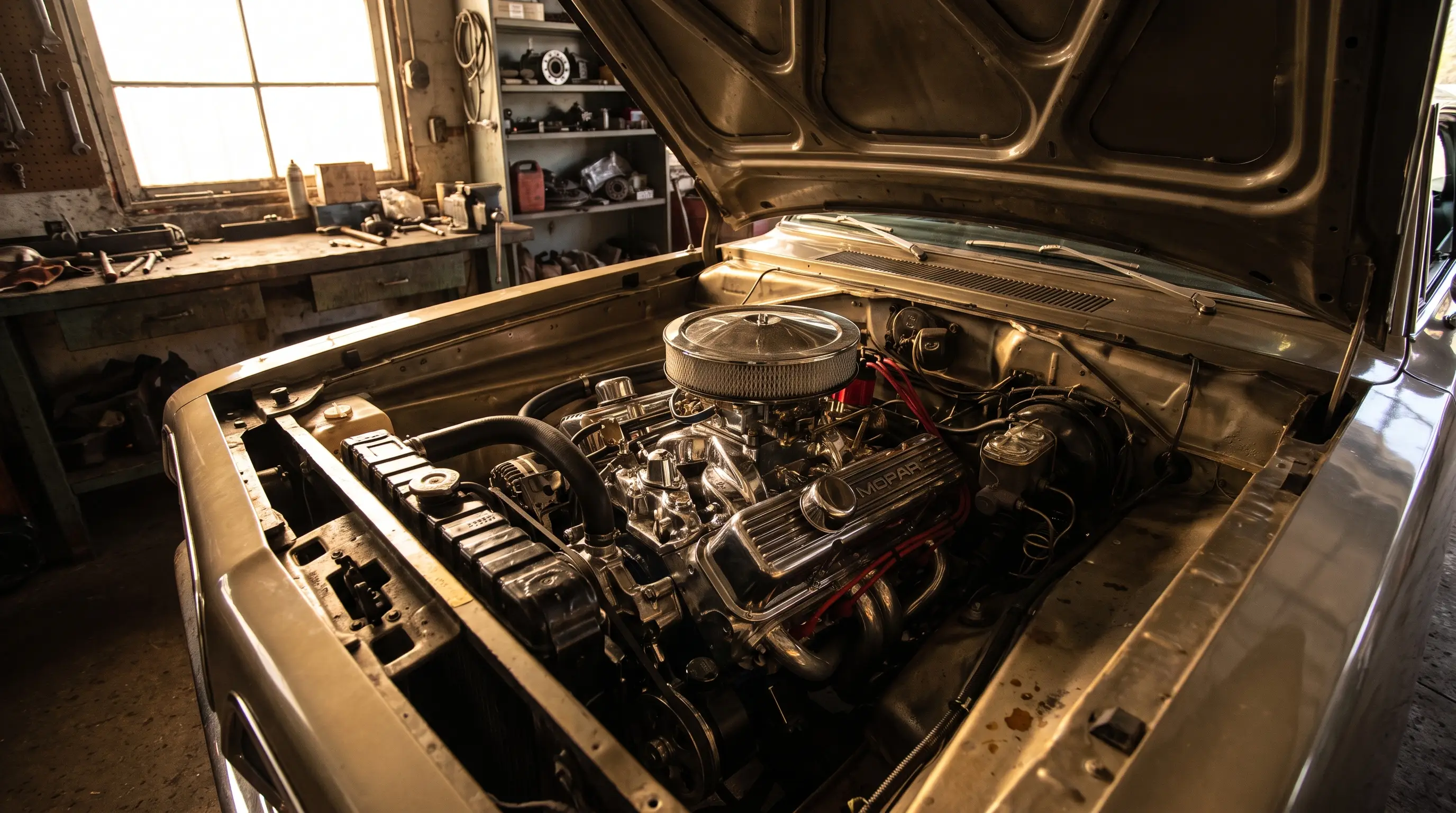
The most visible response was the disappearance of the 426 Hemi and the big block 383 and 440 engines from the Barracuda lineup after 1971, leaving the 340 as the performance ceiling starting in 1972. That is the change everyone talks about. Less discussed but arguably more important from an engineering standpoint was the quieter work Chrysler's engineers did recalibrating remaining engines for cleaner combustion, adjusting timing curves, compression ratios, and carburetion to meet tightening standards without simply gutting driveability entirely.
None of this was unique to Plymouth. Every American manufacturer went through some version of the same process during this period, and comparing how different companies handled the transition is its own fascinating subject. What matters for Barracuda history specifically is that the car kept a genuinely credible small block performance option, the 340 and later the 360, through the end of its production run, rather than collapsing entirely into a badge-only performance image the way some competitors' offerings arguably did.
The insurance angle people forget
If you want to understand why Plymouth pulled the big blocks even before federal regulation forced the issue entirely, look at insurance underwriting practices from this period rather than at Washington. Insurers had identified high horsepower cars, especially in the hands of younger drivers, as a significant claims risk, and premiums on cars like the Hemi 'Cuda climbed to levels that priced plenty of would-be buyers out of the option entirely regardless of what the factory offered. That market pressure arrived earlier than the strictest emissions rules and arguably did more to reshape actual buyer behavior than the regulations that get most of the historical blame.
This detail matters because it changes how you should read the Barracuda's later model years. The car was not simply complying with a single law. It was navigating a genuinely complex set of overlapping pressures from regulators, insurers, and a buying public whose priorities were shifting away from raw performance and toward economy and reliability, especially once the 1973 oil embargo hit.
| Pressure | Approximate timing | Effect on Barracuda |
|---|---|---|
| Insurance surcharges on performance cars | Late 1960s onward | Reduced demand for big block and Hemi options |
| Federal emissions tightening | Early 1970s | Engine recalibration, big blocks dropped after 1971 |
| Gross to net horsepower rating change | 1972 | Spec sheets show sharper apparent power drop |
| Oil embargo | Fall 1973 | Buyer priorities shift toward economy |
What this means for restoration choices today
Owners restoring a car from this specific window face a genuine decision about fidelity. Do you restore the emissions-era carburetion and timing exactly as the factory calibrated it, accepting the more modest driving character that comes with it, or do you quietly recalibrate for a livelier feel while keeping the visual presentation period-correct. Both approaches have defenders in the hobby, and neither is dishonest as long as the owner is transparent about what was done when the car eventually changes hands. What matters most is documentation of whichever path you choose, since an undisclosed recalibration discovered later by a buyer expecting factory-original tuning is exactly the kind of surprise that erodes trust in this market.
Reading a Barracuda from this era with the right context
Buyers and collectors who only know the Hemi headline version of Barracuda history often judge the 1972 through 1974 cars too harshly, treating them as a diminished afterthought to the "real" muscle car years. That framing misses what actually makes these later cars interesting: they represent Chrysler's engineers solving a genuinely hard problem in real time, keeping a recognizable performance identity alive under regulatory and market conditions that were actively working against that goal. If you want where this started in terms of how the restyle years unfolded model by model, it fills in the details behind the broader regulatory story covered here.
"Guys at the club meetings love to blame the government for killing these cars. Half the time the insurance company got there first, and nobody wants to talk about that part."
- Wayne Coburn
How other manufacturers compared
It helps to look outside Chrysler for a moment, because the Barracuda's experience during this period was not unique, and comparing it to competitors makes the picture clearer. Ford and General Motors both went through nearly identical processes with their own performance nameplates in the same window, dropping big block options, recalibrating remaining engines for cleaner combustion, and watching insurance surcharges push buyers toward smaller displacement choices across the board. Some companies handled the transition with more grace than others, and there is a genuine argument to be made that Chrysler's small block lineup, the 340 and later 360 among them, held up better under these constraints than several competing engine families did during the same stretch of years.
That comparative context matters because it pushes back against the idea that the Barracuda's later years represent some kind of unique decline specific to Plymouth. The whole industry was navigating the same regulatory and insurance landscape simultaneously, and judged against that full field, the Barracuda's response looks considerably more competent than the flattened, single-company version of this story usually gives it credit for.
Why this history still matters to today's buyers
Understanding the regulatory pressure of this era changes how you should evaluate a car from these model years. A 1972 to 1974 Barracuda was not built by a company that stopped trying. It was built by a company adapting under real constraints, and the resulting cars deserve to be judged against those constraints rather than against an unrealistic standard set by the 1970 Hemi cars built under completely different rules. For anyone shopping this era with that context in hand, you can find classic Barracuda for sale and evaluate what you are looking at with a clearer sense of why the car is the way it is.