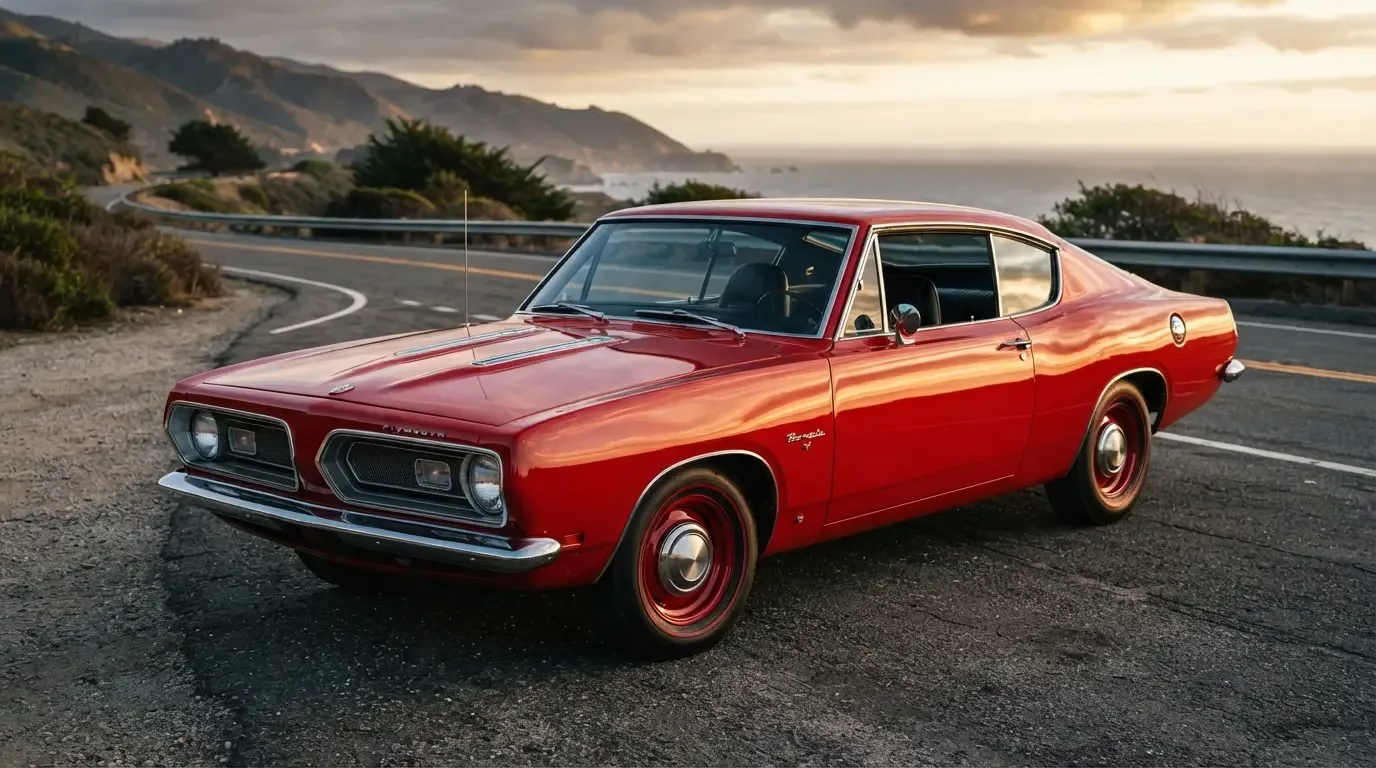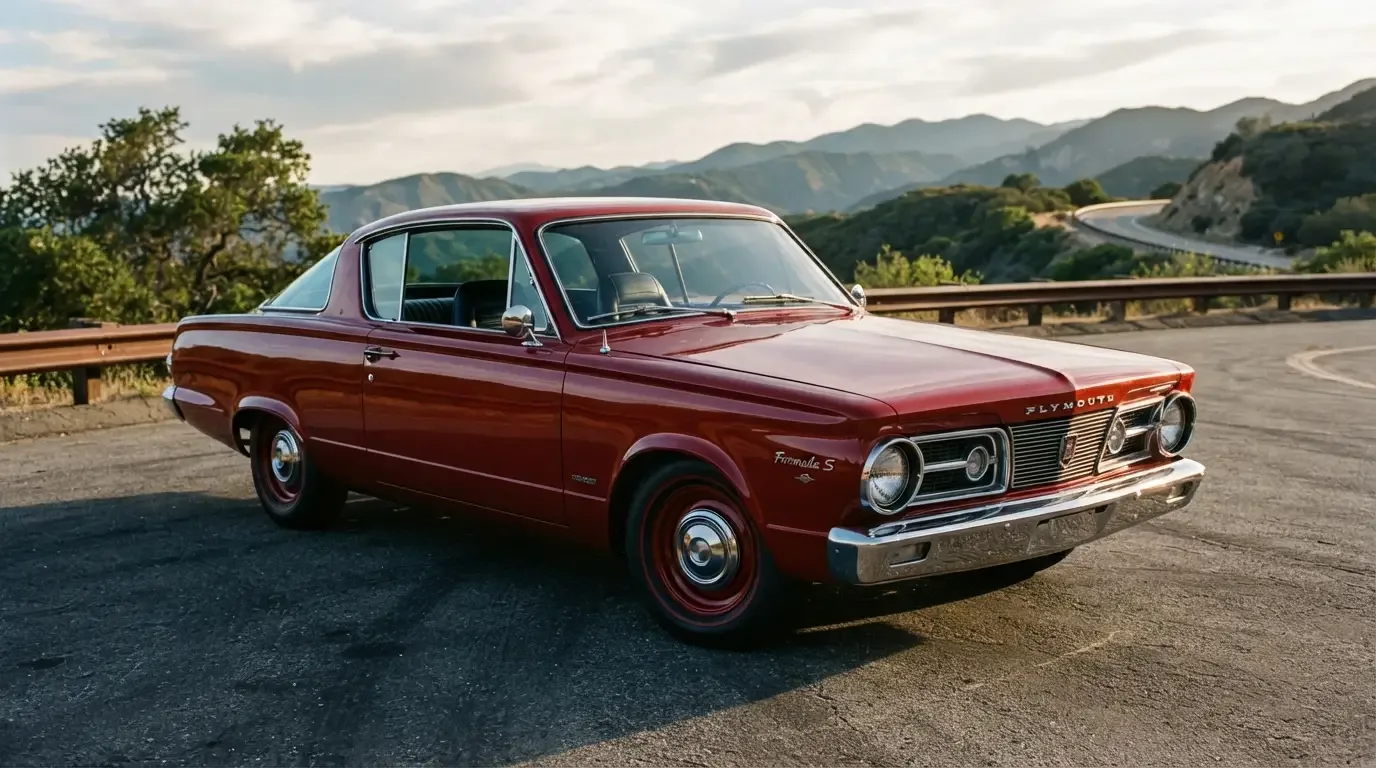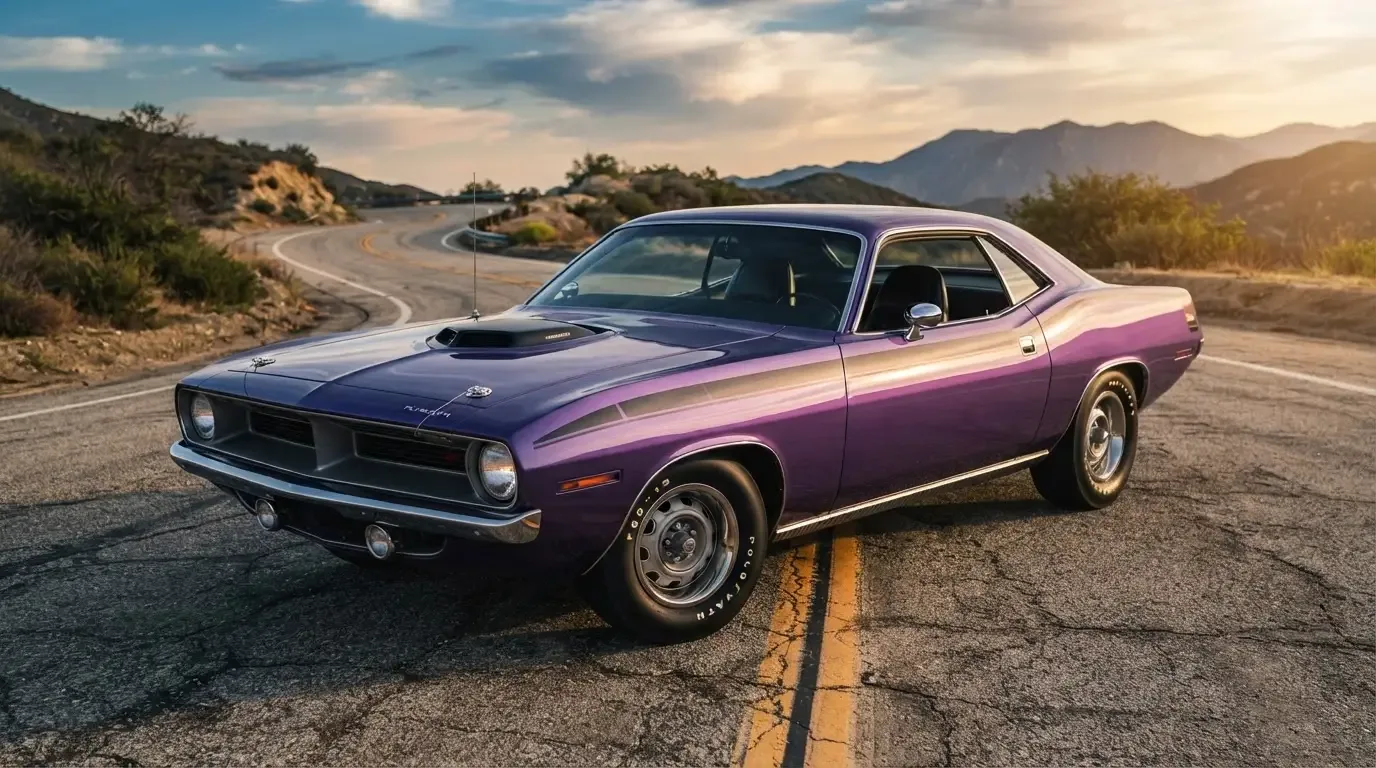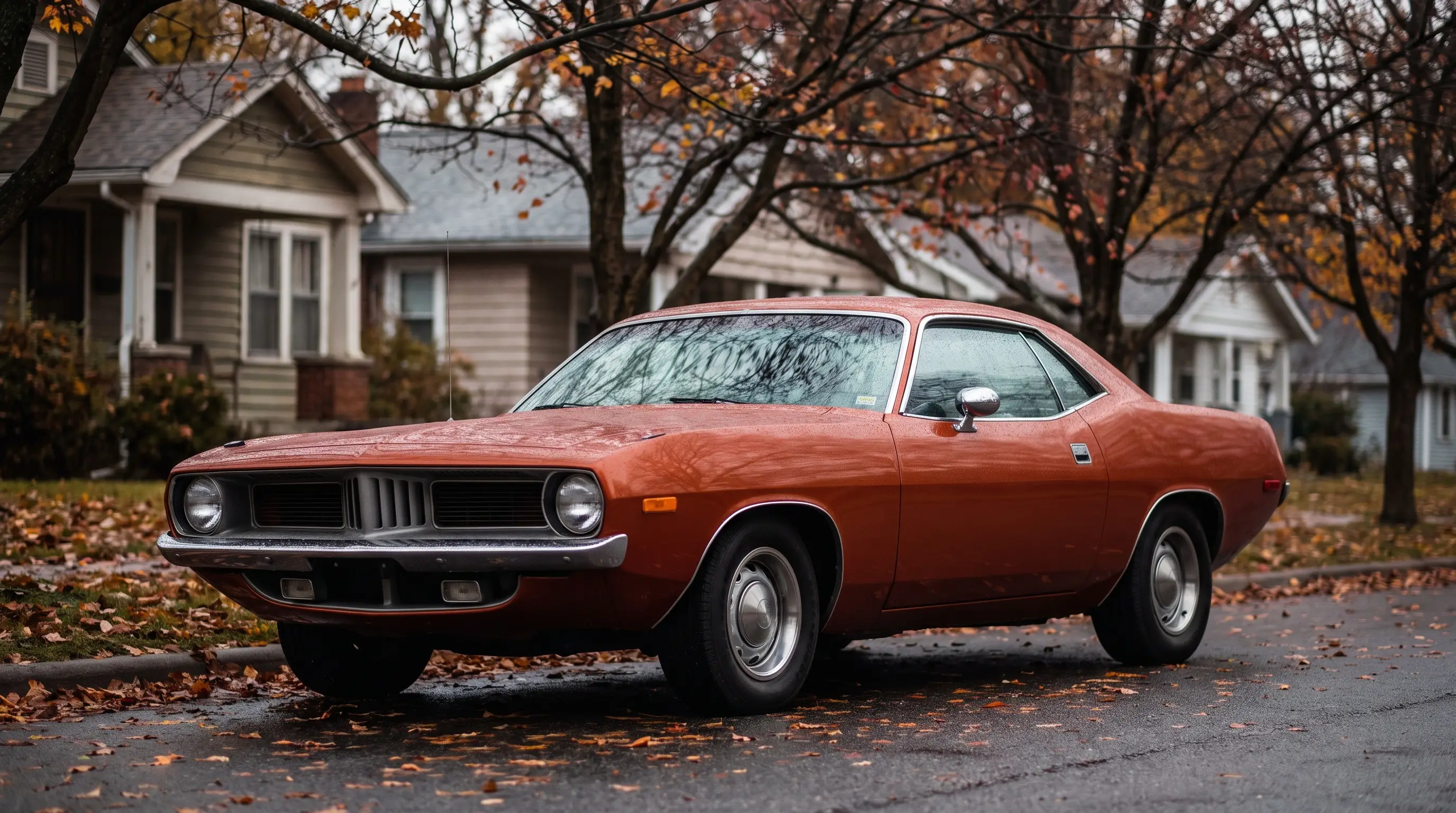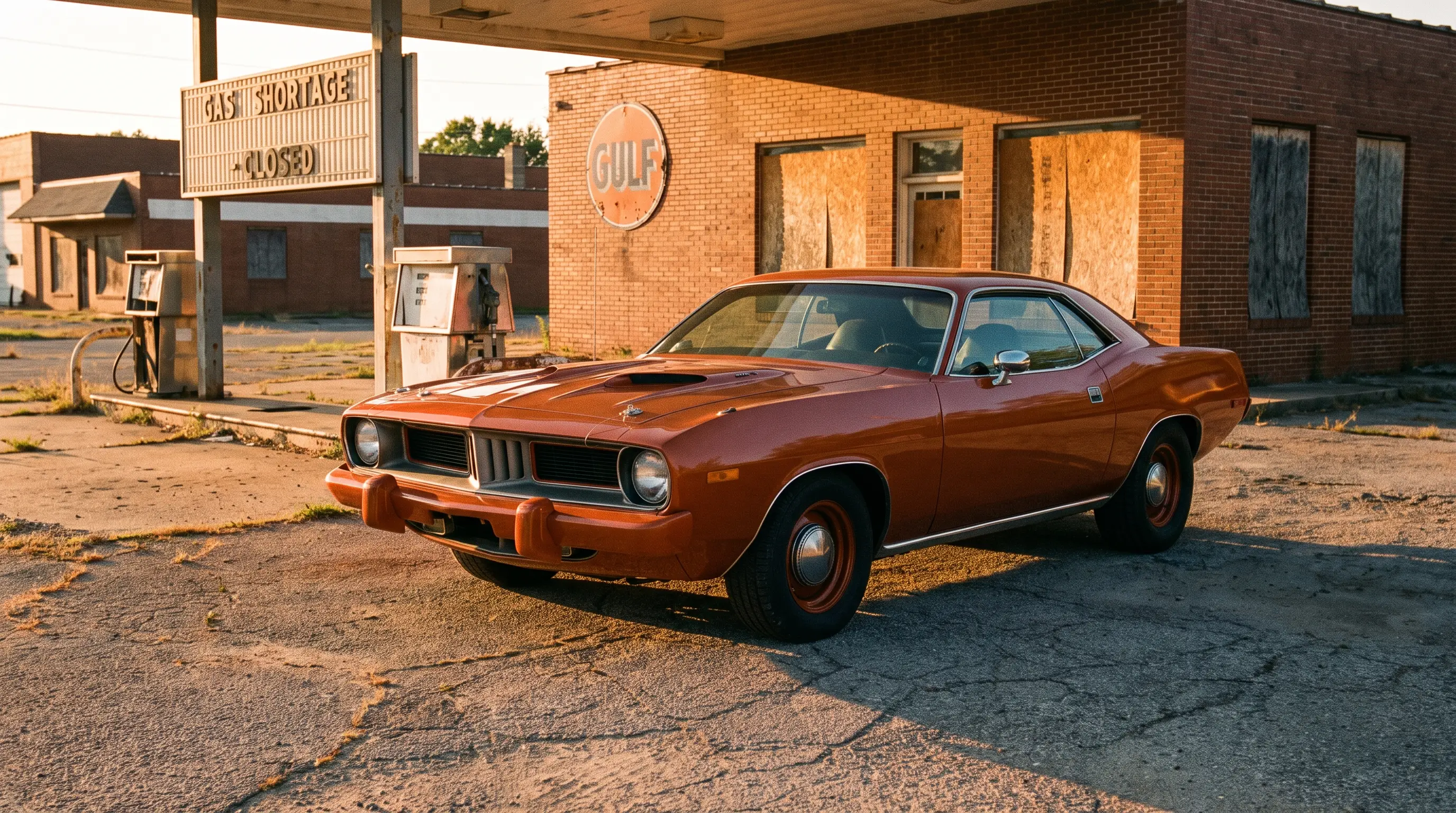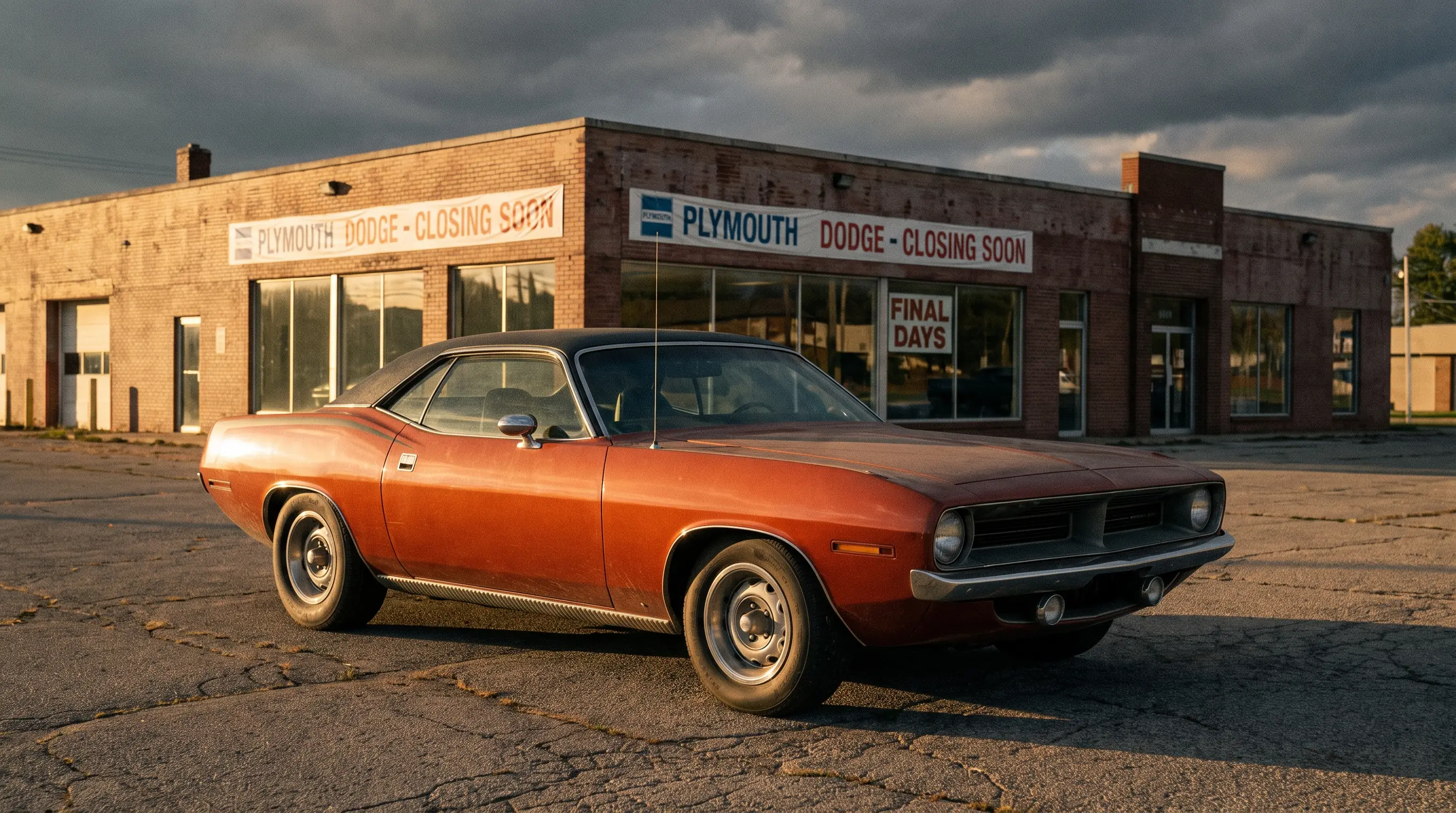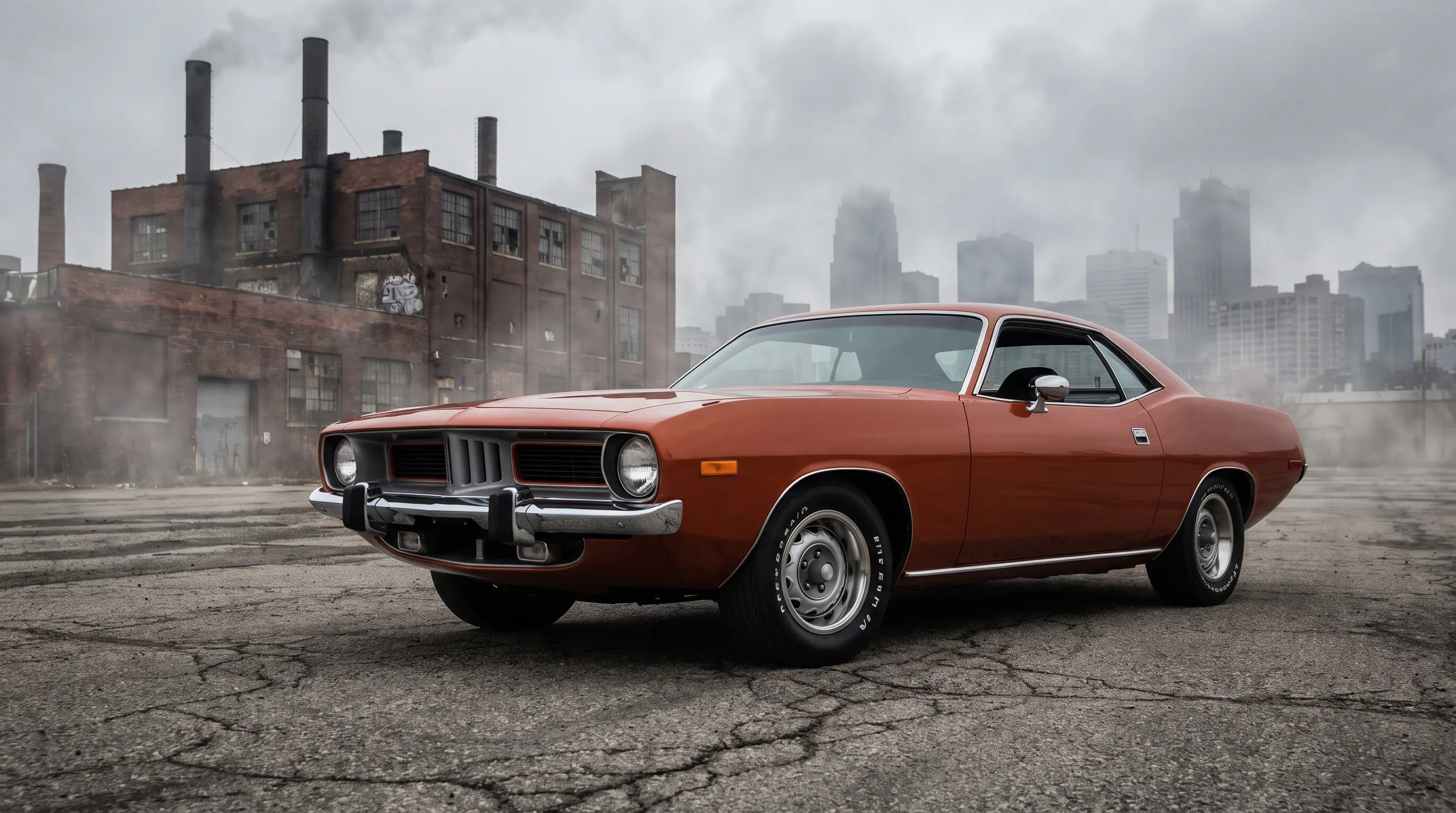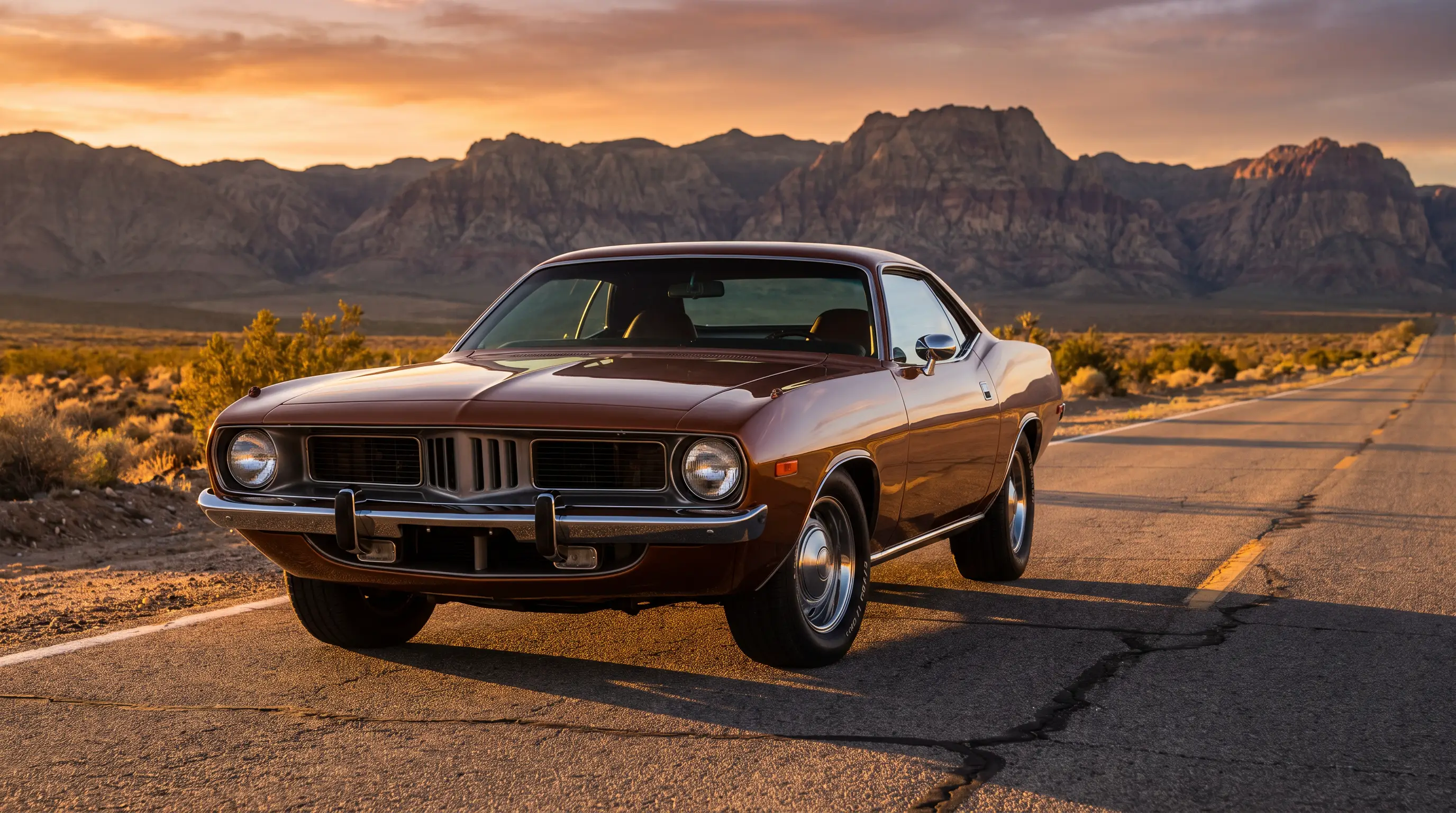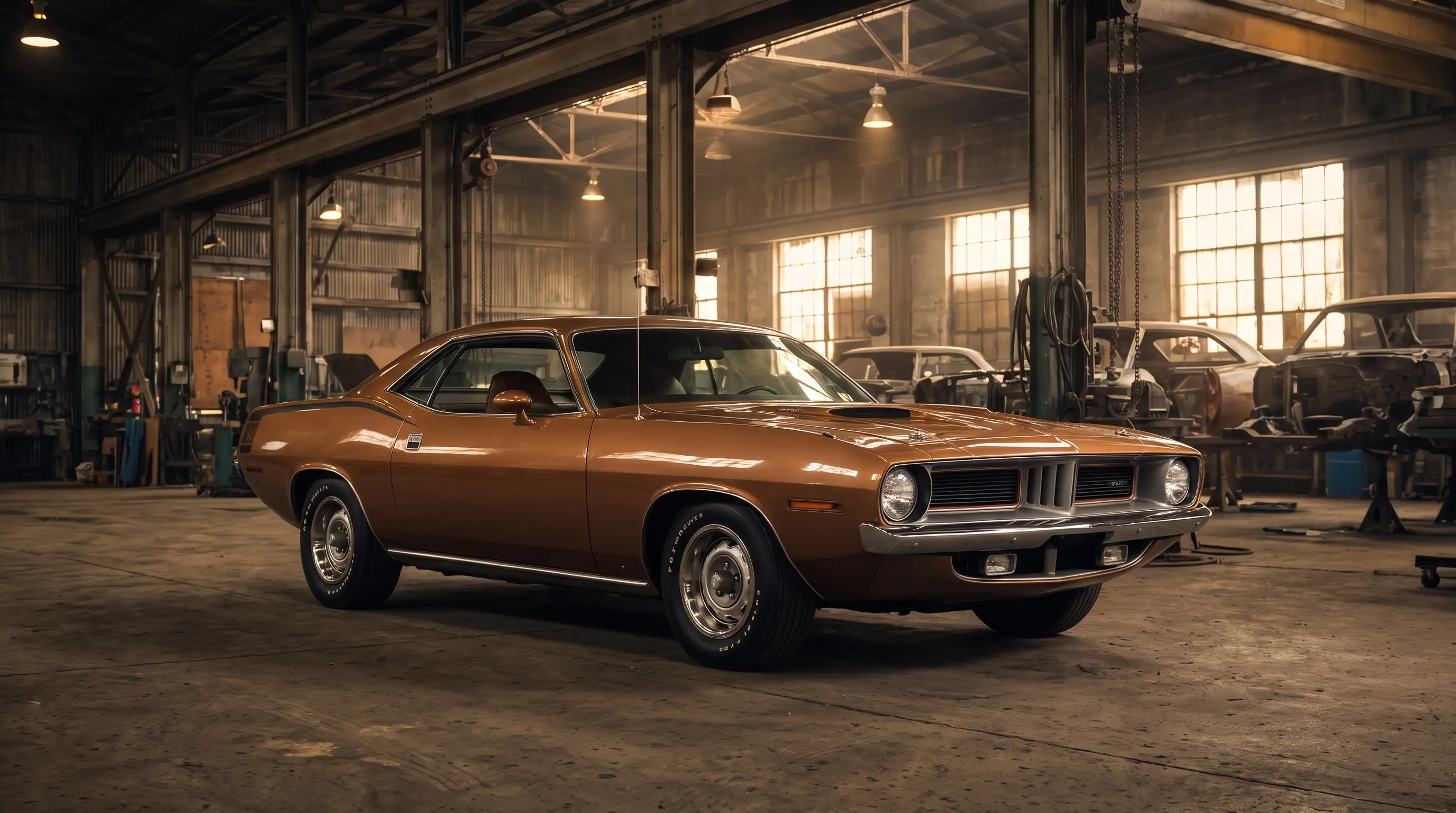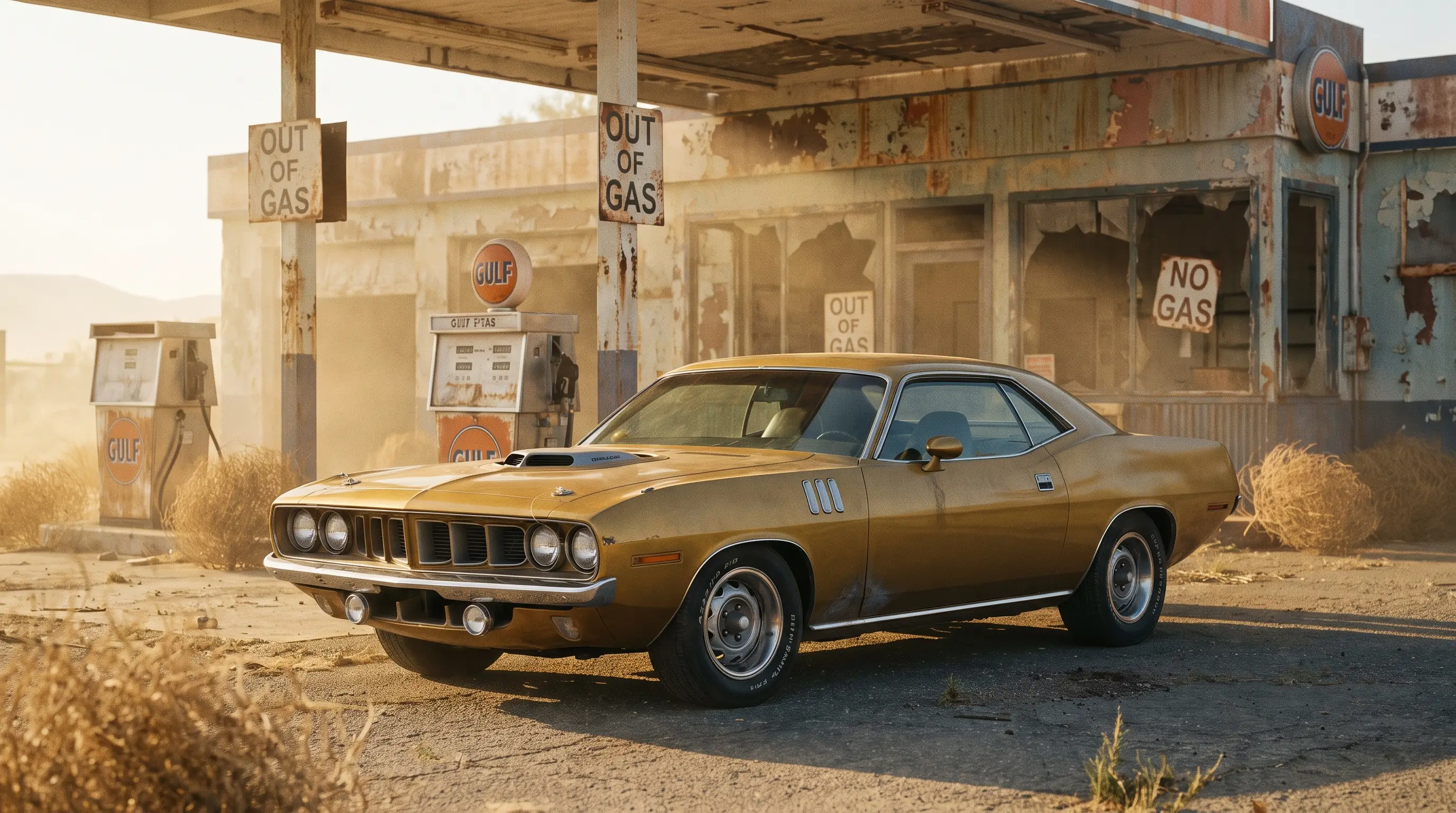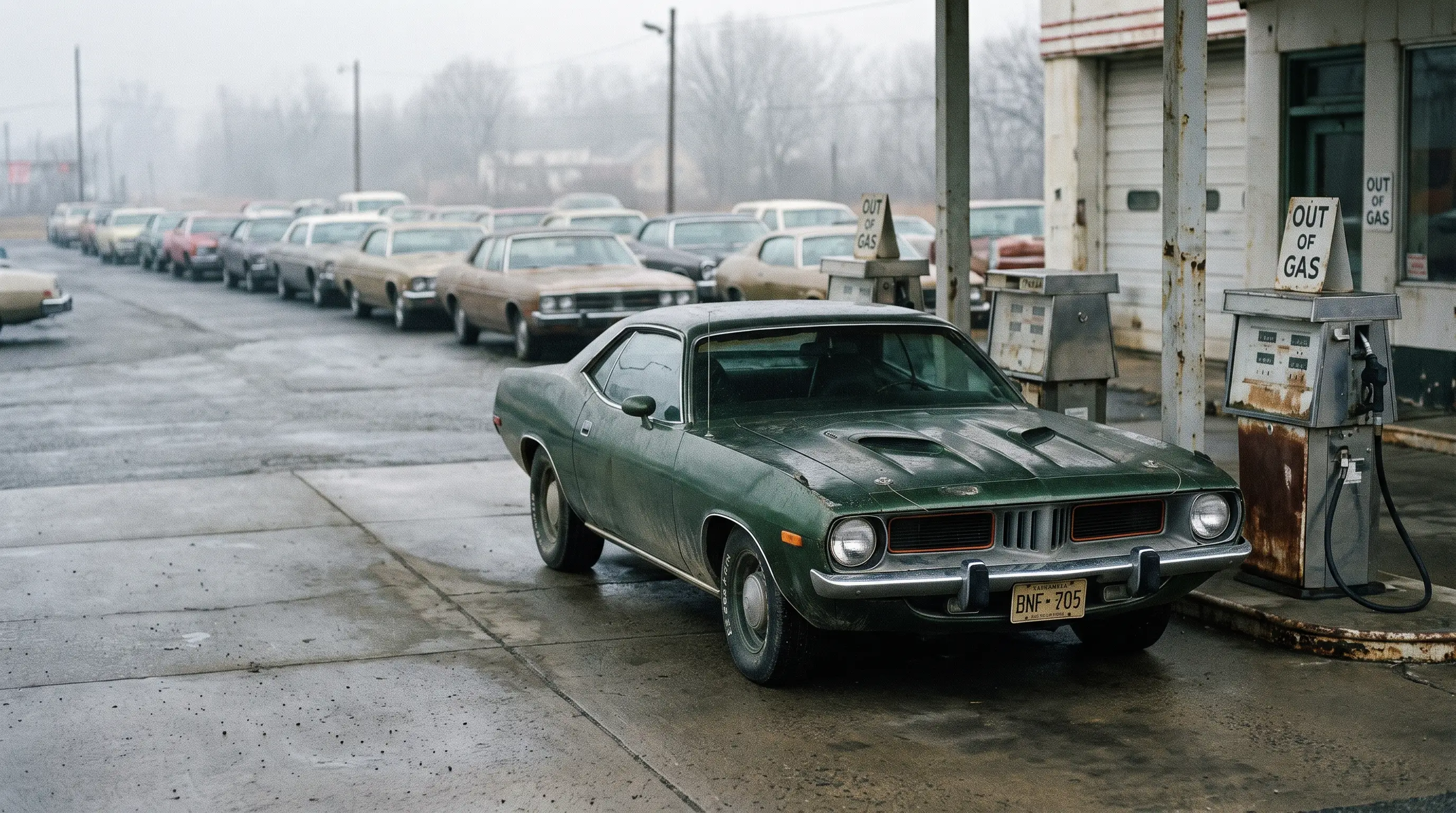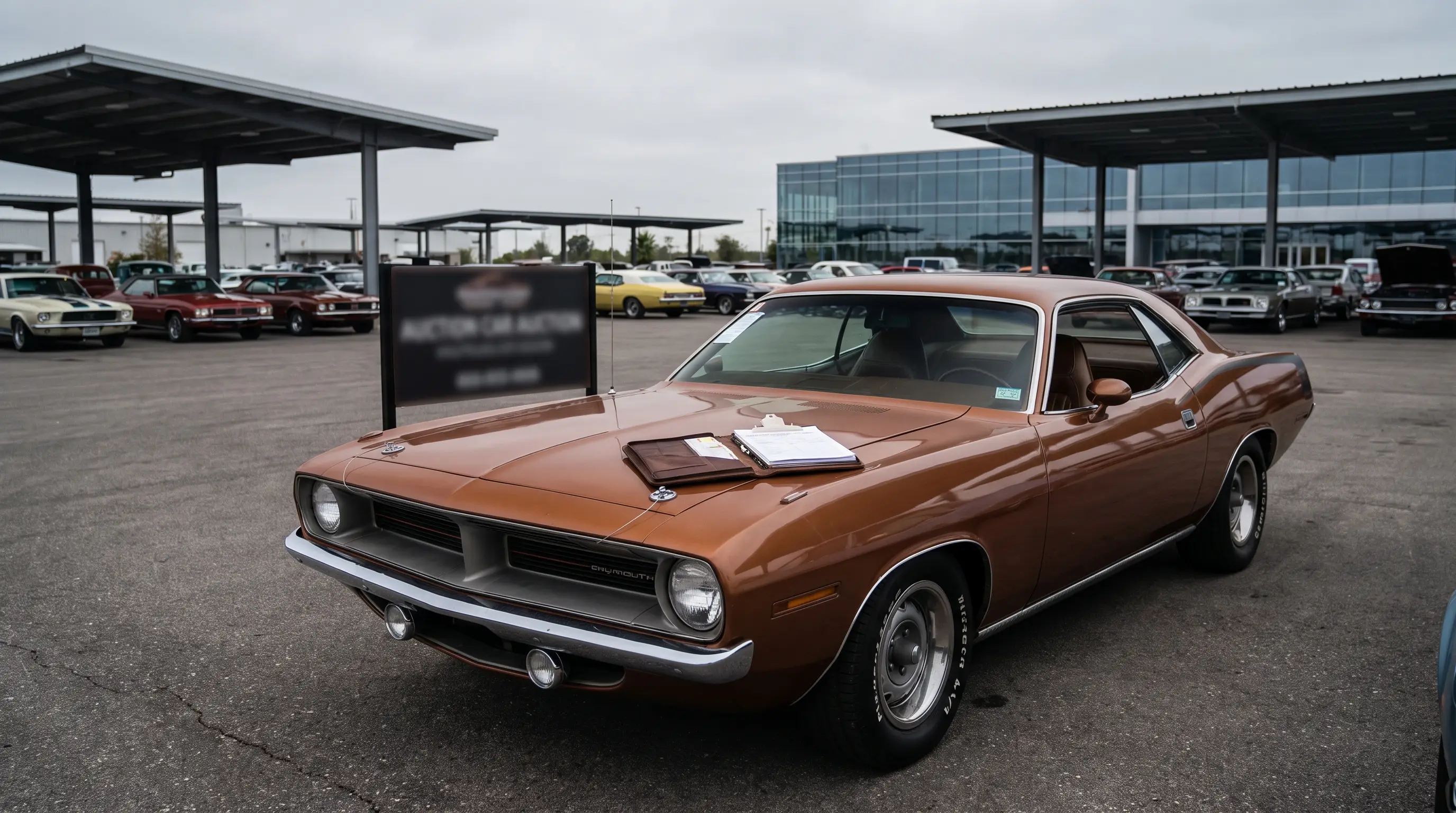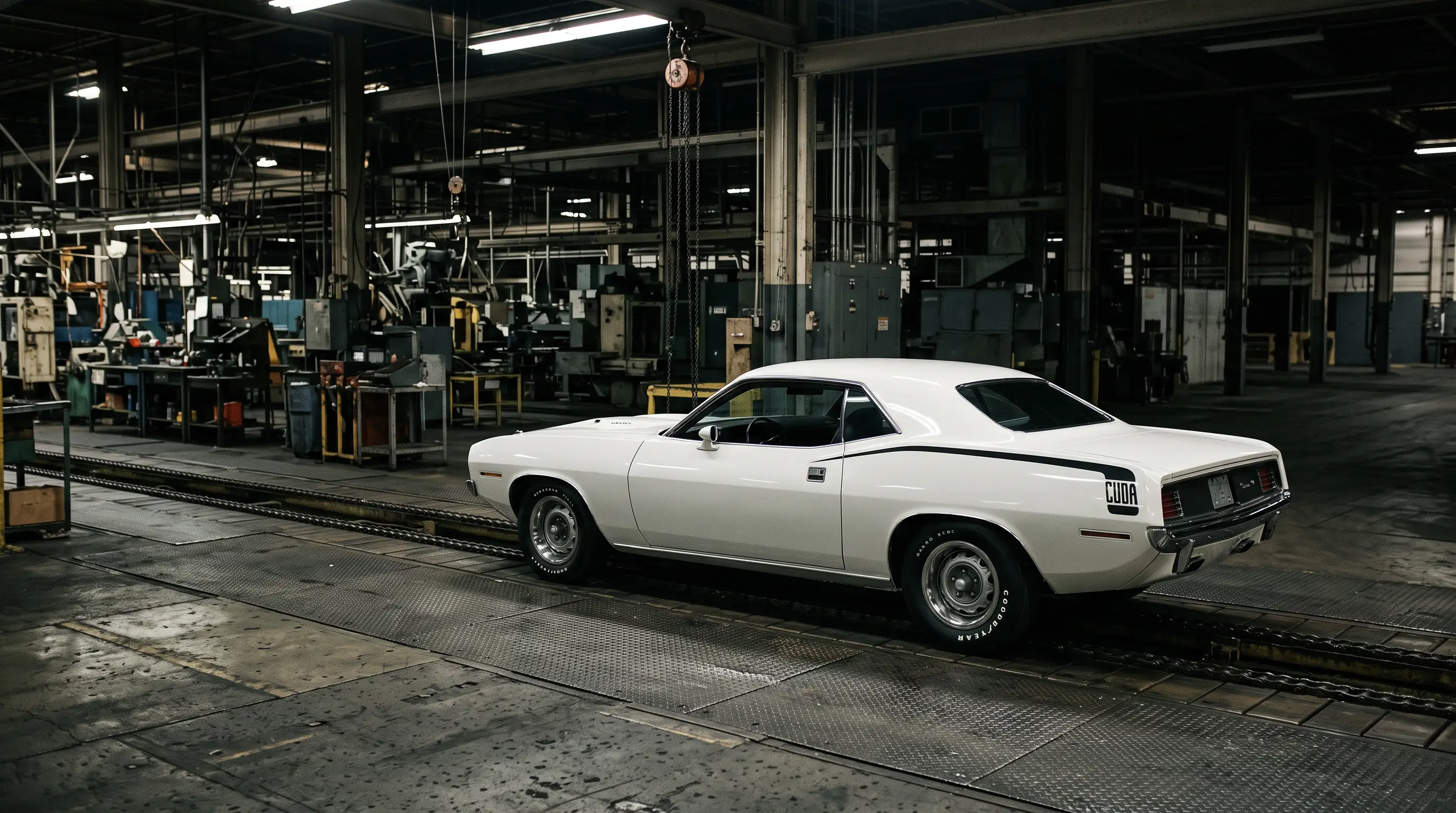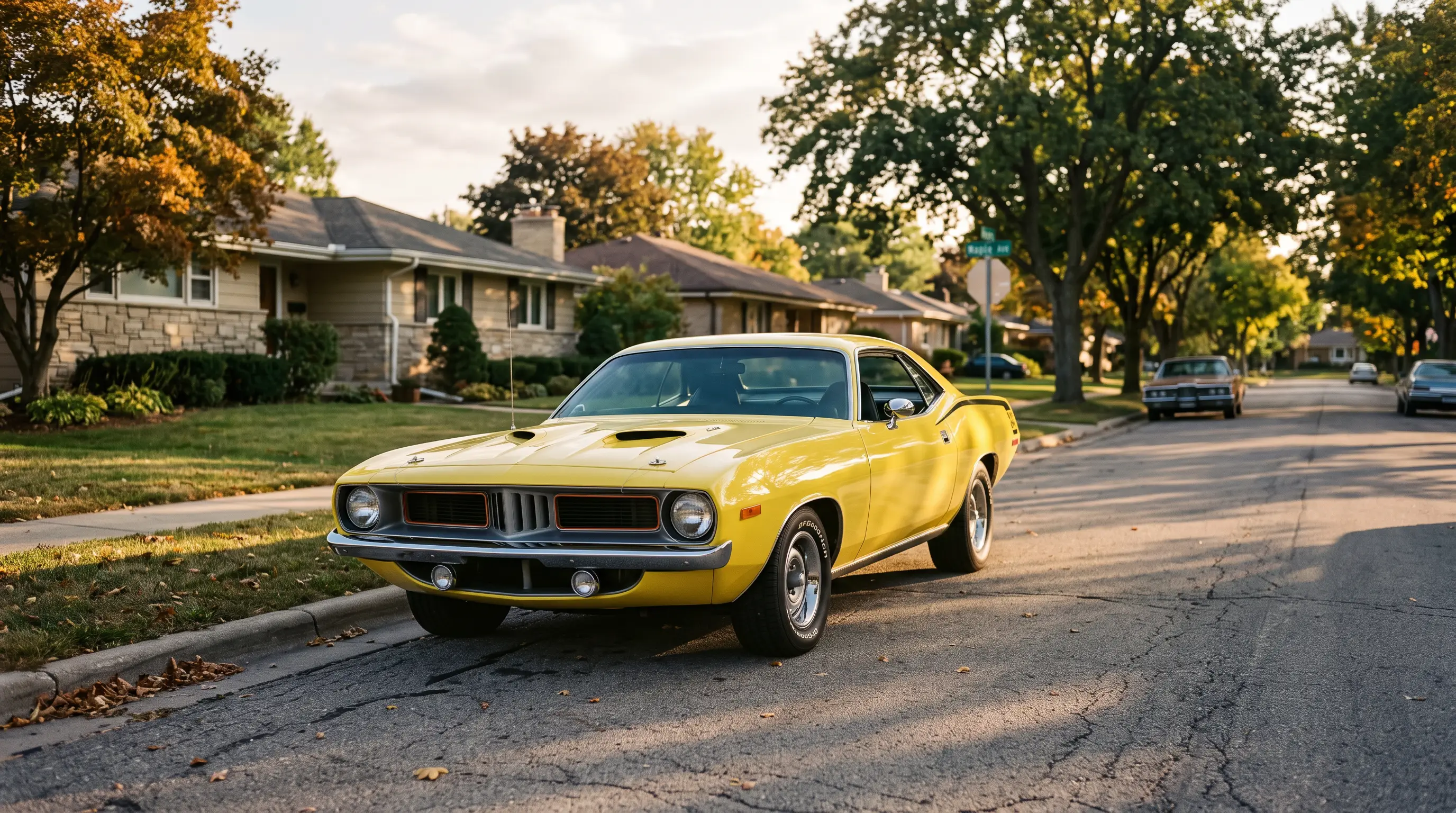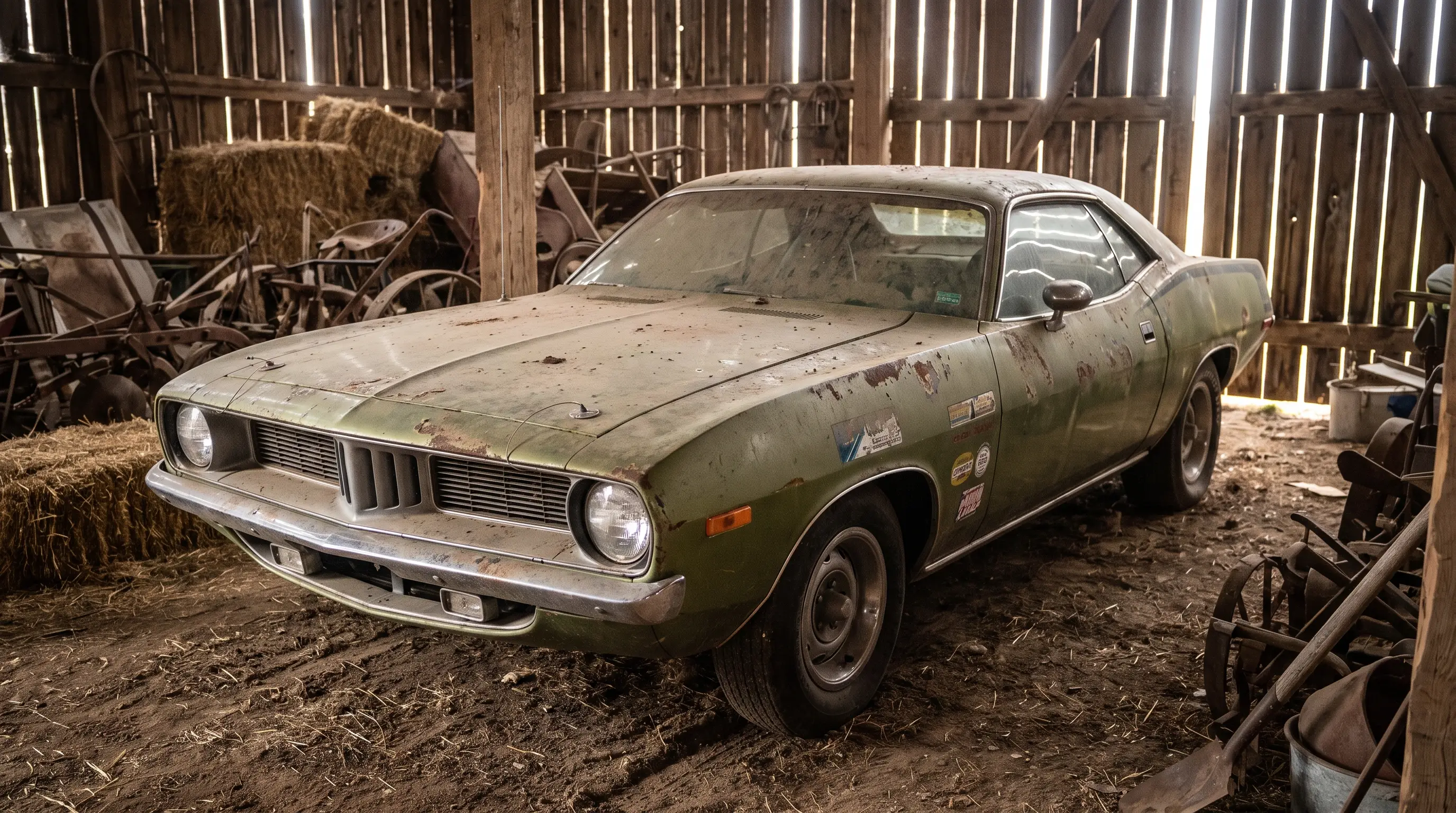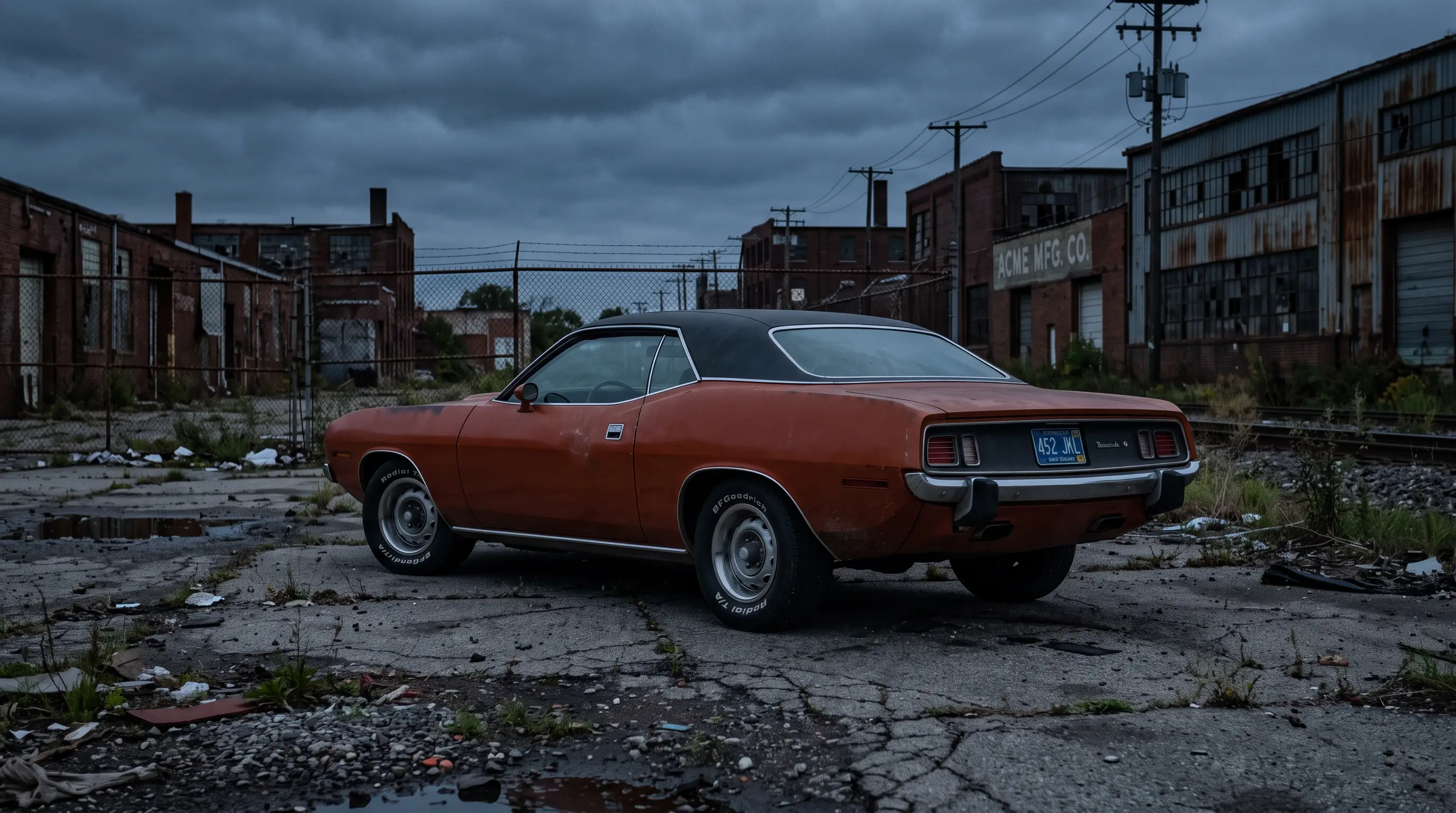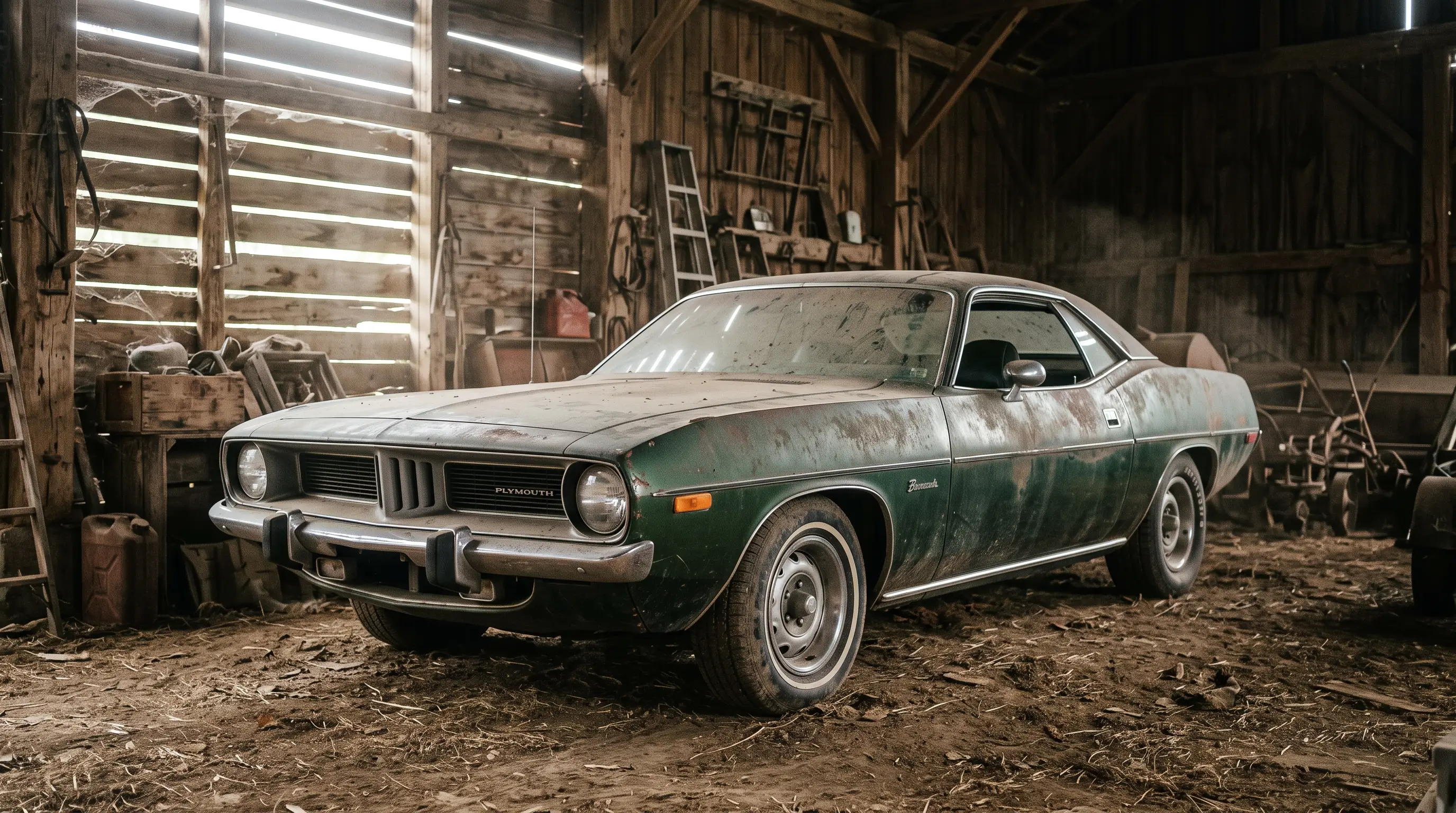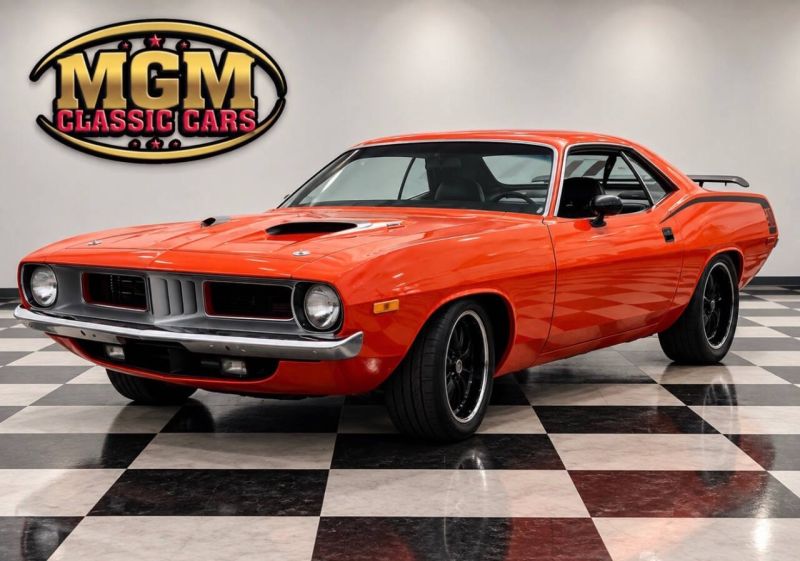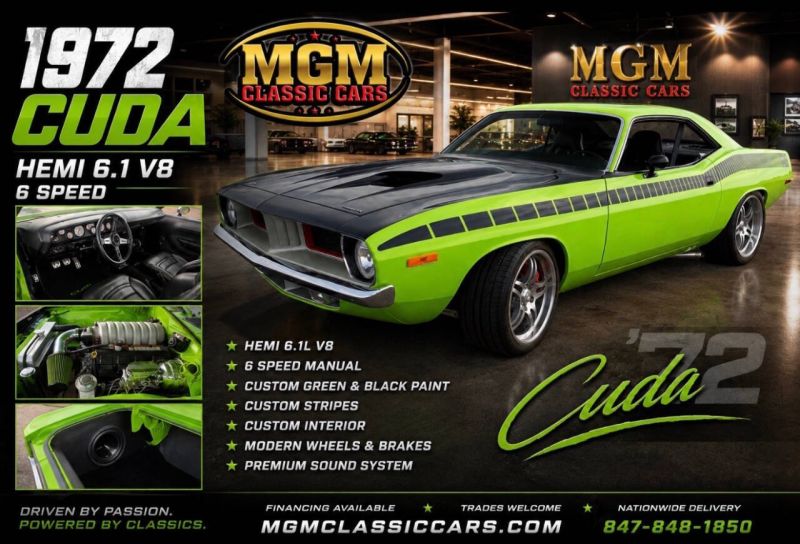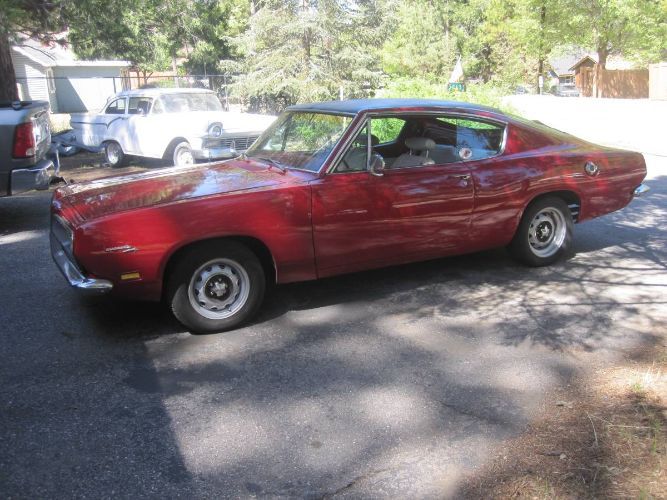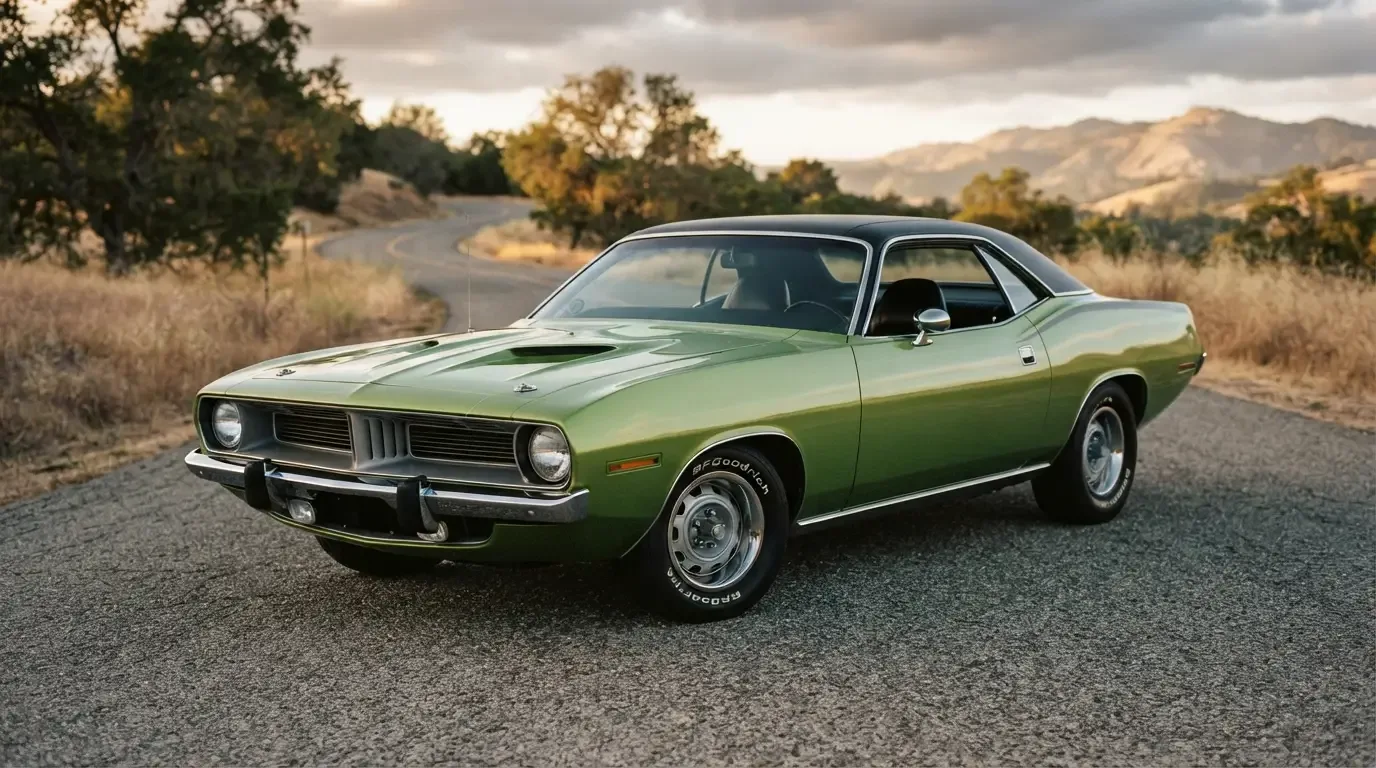
The 1972 Plymouth Barracuda is the car that gets misremembered. Enthusiasts talk about the E-body Barracuda as if it were all Hemis and 440s and high-impact paint, and for two seasons it very nearly was. Then 1972 arrived, and the biggest engines vanished from the order books. What remained was still a handsome car, but it was a different proposition, and the factory records make clear why. This is the part of the Barracuda story that the highlight reels tend to skip, and it deserves a careful, accurate telling.
The final three years of the Barracuda, 1972 through 1974, are best understood not as a decline but as a car adapting to a world that had changed underneath it. The paperwork tells that story precisely, and it corrects a few myths along the way.
What actually changed for 1972
The headline fact is the one people get wrong. For 1972, Plymouth dropped the 426 Hemi and the 440 big blocks from the Barracuda lineup. The reasons were not mysterious. Insurance surcharges on high-powered cars had climbed to the point of strangling sales, tightening emissions regulations made the biggest engines expensive to certify, and demand for that kind of car was falling. The Hemi Cuda that dominates auction coverage today was already gone by the time the 1972 models reached showrooms.
It is worth pausing on how sudden this was, because the timeline surprises people. The Hemi Cuda was offered for only two model years, 1970 and 1971, before it was gone. The car that dominates every auction highlight and every magazine retrospective was a very brief phenomenon, and the 1972 change did not so much end an era as confirm that the era had already been a short one. The cars that most people picture when they hear the word Barracuda were outnumbered many times over by the more modest machines that came before and after them.
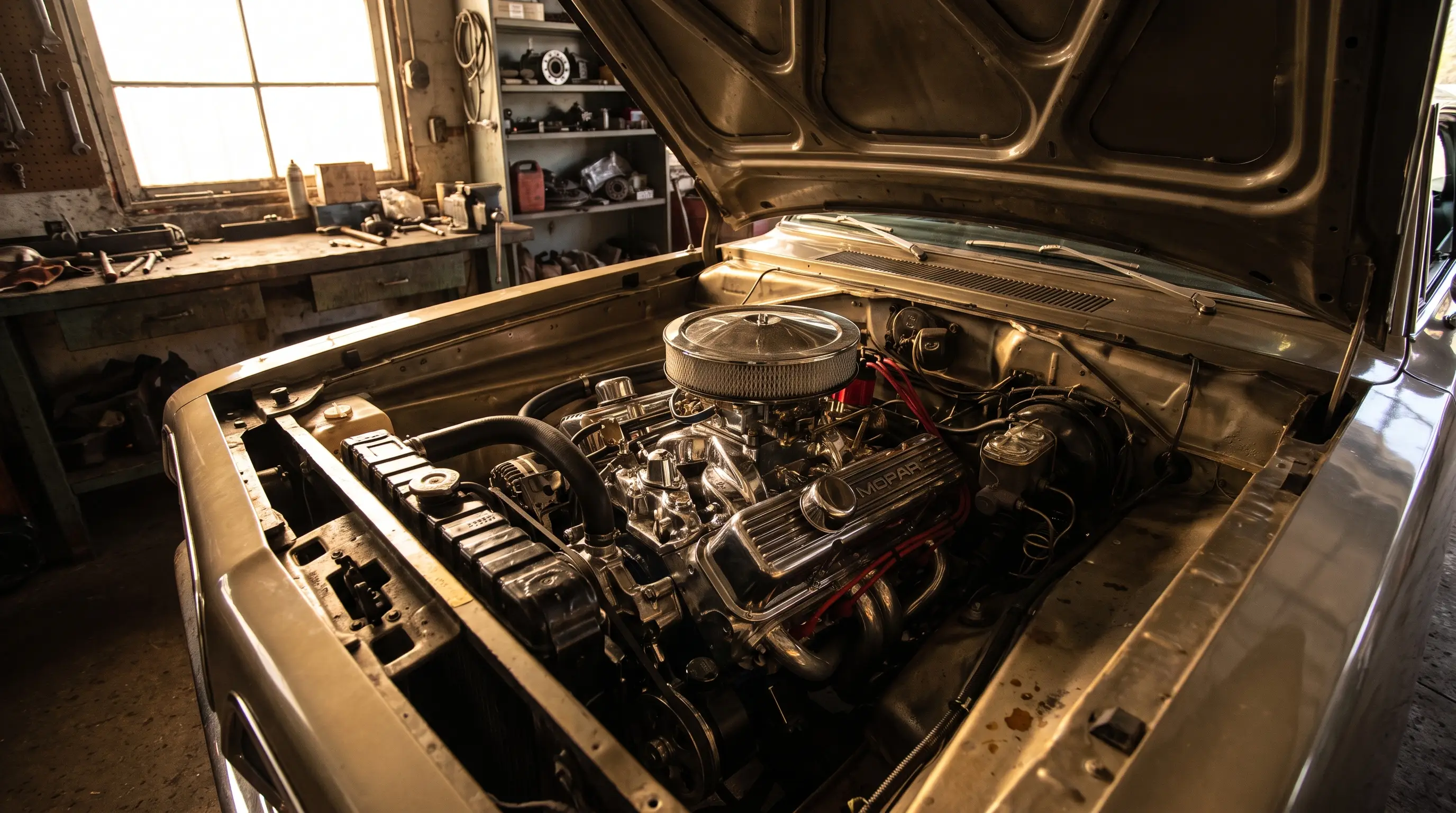
What Plymouth offered instead was a narrower menu built around the 318 cubic inch small block and the 340 cubic inch performance small block. Both were good engines. Neither was a 440. The 340, in particular, kept the Barracuda honest as a driver's car even as the fire-breathing options disappeared. In a car that had shed several hundred pounds of big-block iron off its nose, the 340 also made for a better-balanced machine than the heavy Hemi cars ever were, a point the surviving owners make often and with some justice. Buyers who want the full arc from 1964 fastback to this final phase can read our plymouth barracuda retrospective, which sets these years in their proper place rather than treating them as an afterthought.
The visual updates: four round headlights and a new grille
The 1972 restyle is easy to spot once you know it. Plymouth revised the front end to use four round headlights, replacing the earlier arrangement, and reworked the grille to match. The taillights changed as well. These were not dramatic reengineering efforts. They were the sort of annual freshening that let the factory keep the car current without the cost of new tooling, and they give collectors a reliable way to date a car at a glance.
Inside, the changes were similarly incremental. The E-body cabin carried over with detail revisions to trim and instrumentation as the years passed, and the options list gradually shifted toward comfort and convenience features that a broader, less performance-focused buyer wanted. This was Plymouth reading its market honestly. The person walking into the showroom in 1973 was, on average, a different customer from the one who had ordered a Hemi car in 1970, and the factory equipped the car to suit. There is nothing shameful in that. It is simply what a company does when the audience for a product moves.
The convertible, which had been part of the range in the earlier E-body years, did not survive into this period. From 1972 on, the Barracuda was a hardtop coupe only. That is a documentation point worth holding onto, because a car represented as a 1972 or later convertible is, by the factory record, not what it claims to be.
| Detail | 1972 to 1974 Barracuda |
|---|---|
| Body style | Hardtop coupe only, no convertible |
| Front-end change | Four round headlights from 1972 |
| Base V8 | 318 cubic inch small block |
| Performance engine | 340 cubic inch (through 1973) |
| 1974 performance engine | 360 cubic inch replaced the 340 |
| Dropped for 1972 | 426 Hemi and 440 big blocks |
| Final model year | 1974 |
Production numbers and the myth of collapse
Here is where I want to be careful, because the numbers get repeated loosely. Barracuda production did fall across these years compared with the model's earlier peak, but the year-to-year pattern is not a simple straight line down. Figures commonly cited put 1972 at roughly 18,450 cars, 1973 higher at roughly 22,213, and 1974 substantially lower at roughly 11,734 units before production ended. Treat any single hard number you see quoted, including those, as something to confirm against a primary registry rather than accept on faith.
The larger point stands regardless of the exact totals. The Barracuda did not fail in the marketplace so much as it aged out of a market that no longer supported its concept. The pony car segment that the Barracuda had competed in was contracting industry-wide. Plymouth ended the nameplate after 1974, and it did not return. That is not the story of a bad car. It is the story of a car that outlived the conditions that created it.
The forces that closed the door
To be fair to the car, the pressures that ended it were industry-wide and largely outside Plymouth's control. Three separate forces arrived at roughly the same time, and together they made the high-performance pony car very difficult to sell. Understanding them individually keeps the discussion honest, because it is tempting to blame the manufacturer for a shift that affected everyone.
The first was insurance. By the early 1970s, underwriters had identified young men in powerful cars as a claims problem, and the surcharges they applied to big-engine cars could rival the payment on the car itself. A buyer who could afford a Hemi Cuda often could not afford to insure one, and that quietly removed a large slice of the market. The second was emissions regulation. Tightening federal standards forced compression ratios down and made certifying the largest, most powerful engines an expensive proposition for a low-volume car. The third was fuel. The 1973 oil embargo landed squarely in the middle of this period and made a thirsty big block look like a liability almost overnight.
Put those three together and the picture is clear. The 1972 to 1974 Barracuda did not shrink because Plymouth lost interest. It shrank because the specific thing it did best, moving a young buyer quickly for not much money, had become expensive to insure, expensive to certify, and expensive to fuel, all within a few short years. The engineers did what they could within those limits, and the 318 and 340 cars are the honest result.
The 1974 finale and why the last cars are collectible
The 1974 Plymouth Barracuda holds a specific place because it is the last one. Final-year cars carry a weight that mid-cycle cars do not, and the 1974 models are no exception. With the 360 replacing the 340 and the biggest engines already three years gone, these cars were never going to out-muscle a 1970 Hemi Cuda. What they offer instead is finality, relative scarcity, and a clean, resolved version of the E-body shape.
There is a practical dimension to the appeal as well. A later Barracuda gives a buyer the unmistakable E-body shape, the one every enthusiast recognizes across a parking lot, without the seven-figure entry price that a documented Hemi car now commands. For someone who wants to own the design rather than the legend, the 1972 to 1974 cars are the sane way in. They look the part, they carry a genuine performance engine in the 340 and 360 versions, and they can still be enjoyed on the road without the constant worry that attends a museum-grade investment. That combination has quietly won these cars a following.
Collectors have come around to this. For years the 1972 to 1974 cars sat in the shadow of the earlier E-bodies, undervalued precisely because they lacked the giant engines. That gap has narrowed as buyers recognize that a well-kept 340 or 360 car from these years is a genuine piece of the story, not a consolation prize. If you want to see how they are valued today, you can look through classic Barracuda for sale and compare the later cars against the earlier ones directly.
Setting the record straight
The gentle correction I offer most often is this. The 1972 plymouth barracuda and its 1973 and 1974 siblings were not the moment the Barracuda got worse. They were the moment it got honest about the era it lived in. The Hemi left because the world that wanted the Hemi was disappearing, and the cars that remained were still well-built, well-proportioned Plymouths that happened to arrive at the end of a chapter rather than its middle.
I would go further and say these years are where the Barracuda earns a kind of respect the glamour years cannot. It is easy to admire a Hemi car. Anyone can. It takes a little more attention to appreciate a company keeping a well-made coupe in production through a hostile market, refining it year by year, and sending it off with a decent engine and its dignity intact. The 1974 cars did not go out with an apology. They went out as complete, honest automobiles, and the fact that so few people were buying them by then is a comment on the era, not on the car.
Understanding these years accurately makes the whole Barracuda story better, not smaller. It shows a nameplate that began as a compact fastback, reached a violent peak, and then met its end with a measure of dignity when the market moved on. For a look at the culture, color, and screen life that ran alongside all of this, our feature on the model's wider legend is a good place to keep exploring.
"The records are clear that the 1972 plymouth barracuda lost its biggest engines to insurance and emissions, not to any failure of the car itself. Read the paperwork and the so-called decline looks a lot more like adaptation."
- Tom Ramirez
The last Barracudas rolled out in 1974, and Plymouth closed the book on one of the more memorable American nameplates of its generation. The final cars are worth knowing, worth documenting, and worth defending against the easy myth that the story ended badly. The factory record says otherwise, and the factory record is where this one should be settled.