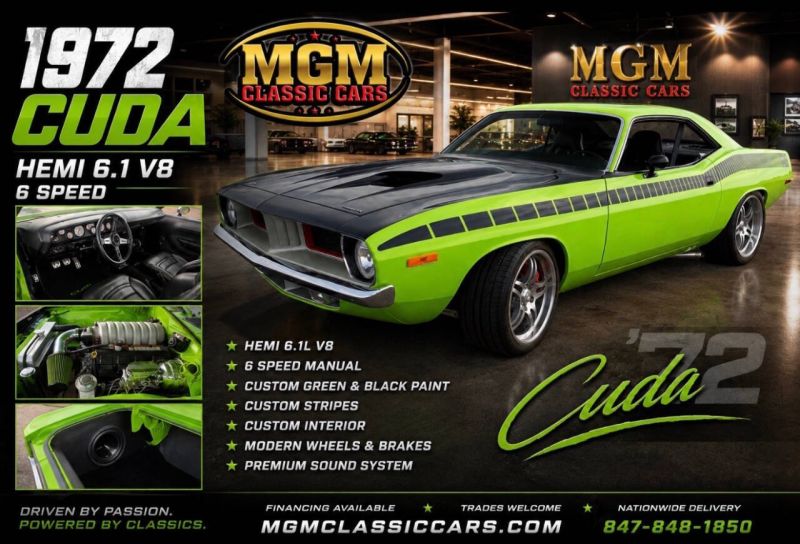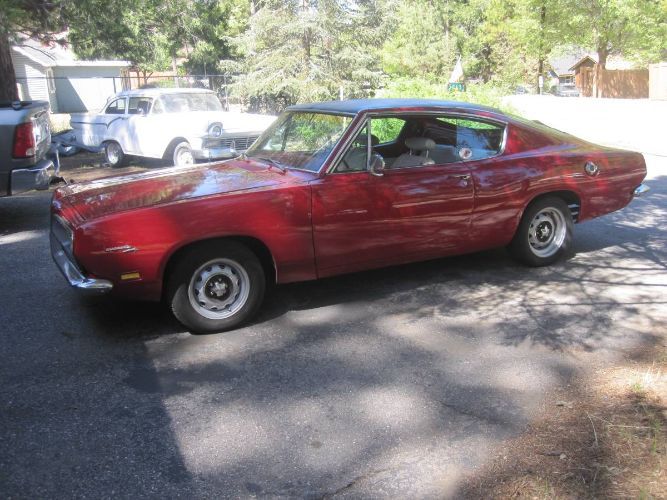
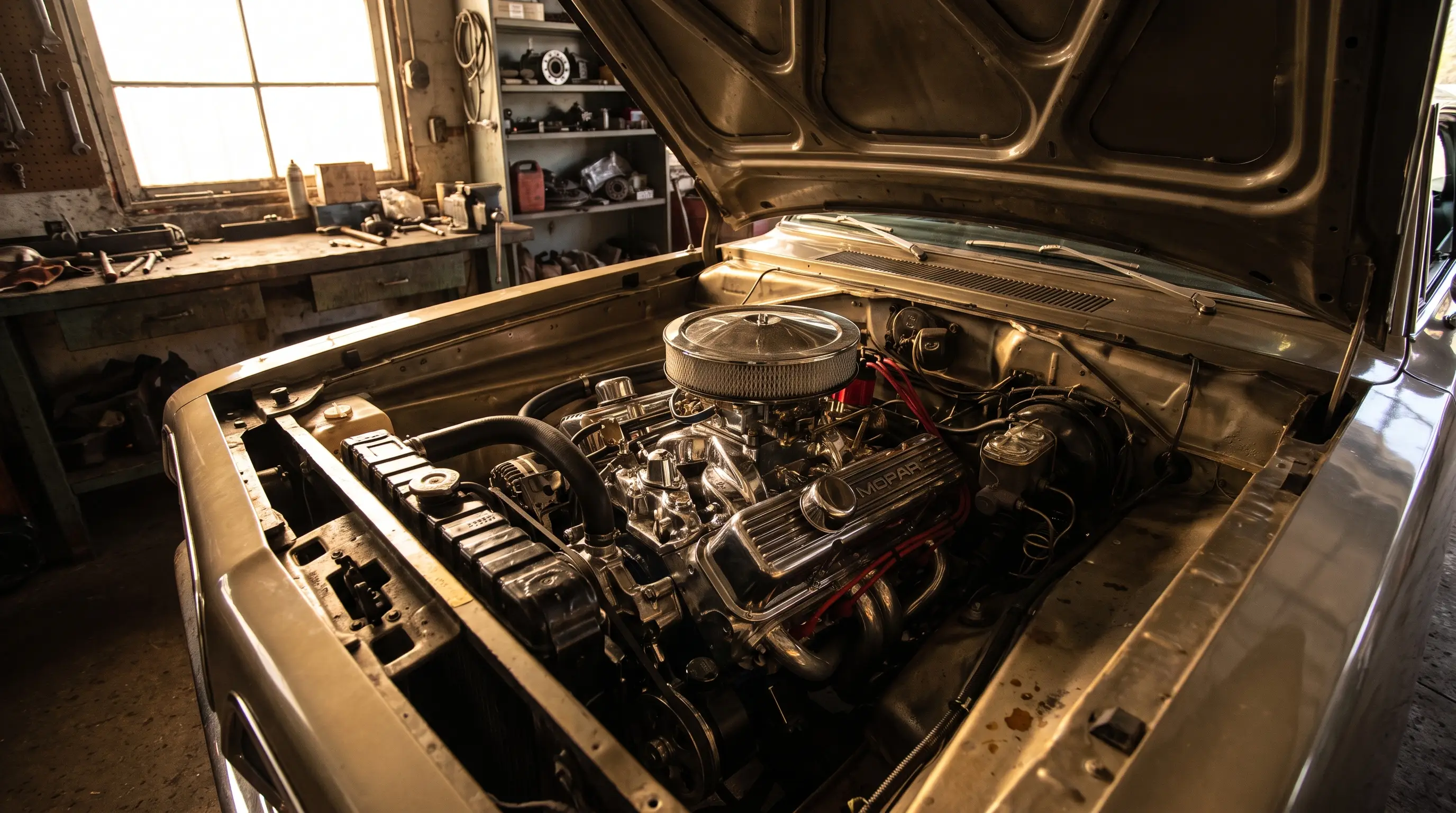
Look at a spec sheet comparing the 1970 Barracuda engine lineup to the 1972 lineup and the change is stark enough to make you wonder if the engineers gave up. They did not. What happened to the 340 and the 360 between roughly 1971 and 1974 is a genuinely interesting engineering story about a company adapting to insurance pressure and tightening emissions rules in real time, and it deserves a more careful look than the usual shorthand of "the big blocks disappeared."
The 340: still a real performer, just no longer the ceiling
The 340 cubic inch small block had been a strong performer in Chrysler's lineup since its introduction in the late 1960s, prized for a favorable power to weight ratio and genuinely aggressive breathing characteristics for a small displacement engine. Once the 383, 440, and 426 Hemi disappeared from the Barracuda order sheet after 1971, the 340 became the top available engine by default rather than by design, and it acquitted itself well in that role through 1972 and 1973.
The number that gets misunderstood most often when people compare these years is the horsepower rating. Starting with the 1972 model year, the entire American auto industry switched from gross horsepower figures, measured on a test stand with accessories removed, to SAE net horsepower figures measured with the engine in something closer to its actual installed configuration, accessories and exhaust restriction included. A 340 rated at a certain gross figure in 1971 could show a meaningfully lower net figure in 1972 without the engine itself losing nearly as much real world capability as the number on paper suggests. Anyone doing a direct year over year comparison needs to account for that measurement change or they will draw the wrong conclusion about how much power actually disappeared.
Why the 340 gave way to the 360
The changeover did not happen cleanly at a model year boundary. Chrysler introduced the 360 cubic inch V8 as an additional option partway through the 1973 model year, running it alongside the 340 for a stretch before the 340 was retired entirely and the 360 took over as the sole performance engine for 1974. This was not a simple bore and stroke exercise. The 360 was designed with an eye toward Chrysler's broader small block strategy for the mid 1970s, built around durability and emissions compliance rather than chasing peak output figures the way the 340 had been developed a few years earlier. A four barrel version came standard in the 1974 'Cuda for buyers who wanted reasonable performance, but the engineering priorities behind the engine had shifted noticeably compared to the muscle car era mindset that produced the 340.
The practical result for a 1974 buyer was an engine that, while down on the outright character of an early 340, offered better long-term durability and easier emissions compliance in an era when both of those things were becoming genuinely important to Chrysler's engineering roadmap. It is easy with hindsight to treat this as a step backward, and in terms of pure excitement it probably was, but from a pure engineering standpoint the 360 represented Chrysler solving for a different set of constraints than the ones that shaped the 340.
| Engine | Years in Barracuda | Character |
|---|---|---|
| 340 four barrel | Through 1973 | High-revving small block, performance-focused development |
| 360 four barrel | Introduced mid-1973, sole performance engine for 1974 | Durability and emissions-focused redesign |
| 318 two barrel | Throughout the period | Economy-focused base V8 option |
| Slant six | Dropped after 1972 | Base engine only through 1972, not offered again |
What this means for buyers evaluating engines today
If you are comparing a 1972 or 1973 340 car against a 1974 360 car, the decision should not hinge purely on displacement or the horsepower number printed on a brochure from either year. It should hinge on what you actually want from the car. The 340 has a reputation among enthusiasts for a livelier, more eager feeling under load, while the 360 tends to deliver a broader, more relaxed torque curve that some owners find easier to live with day to day. Neither is objectively wrong. They represent two different engineering philosophies separated by only a couple of model years but shaped by very different regulatory pressure.
Parts availability favors the 360 slightly, since it remained in production across other Chrysler models for years after the Barracuda itself was discontinued, while 340-specific parts sourcing has gotten progressively harder as the broader small block parts market has consolidated around more common displacements. Neither engine is difficult to maintain by classic car standards, but buyers budgeting for long-term ownership costs should factor this difference in. For the full context on how these engines fit into more on the 1972 plymouth barracuda and the broader restyle era, it helps to read the engine story alongside the styling and market changes happening at the same time.
"People love to say the 340 was better than the 360 like it's a simple fact. It's not that simple. They were built to solve different problems, a few years apart, under very different rules."
- Emily Chen
What owners actually notice behind the wheel
Spec sheet comparisons only go so far, and the more interesting data point for anyone who has actually driven both engines back to back is how differently they deliver their power in practice. The 340 tends to reward higher engine speeds, building momentum progressively as the tachometer climbs, which is exactly the kind of character that made it a favorite among enthusiasts who liked to work an engine rather than simply point the car and go. The 360, by comparison, delivers a noticeably flatter, more accessible torque curve lower in the rev range, which some owners describe as less exciting and others describe as more genuinely usable in everyday traffic. Neither description is wrong. They are describing two engines built to different priorities a couple of years apart.
This distinction also shows up in how each engine ages under ordinary ownership conditions. Small block Chrysler engines from this era are generally regarded as robust when maintained properly, but owners of 340-powered cars more frequently report the kind of high-mile wear patterns you would expect from an engine that got driven harder over its life, simply because it was more fun to drive that way. That is not a knock on the engine. It is a reminder that how a car gets driven shapes its condition just as much as how it was built.
The bigger picture on Barracuda engine evolution
Tracing the 340 through the 360 and understanding why Plymouth made the switch tells you more about the broader collapse of the muscle car era than almost any other single data point in the Barracuda's history. Insurance underwriters, emissions regulators, and shifting buyer priorities all converged on the engine bay in a remarkably short window, and the E-body Barracuda happened to be in production the entire time, absorbing every one of those pressures model year by model year. If you want where this started, the full arc of the car's history puts this engine transition into its proper place within a decade of genuinely rapid change. For buyers ready to shop with this context in mind, there are classic Barracudas on the market representing both sides of this engineering transition, and knowing the difference will make you a sharper buyer either way.